



Georgian Blue Wine Glass
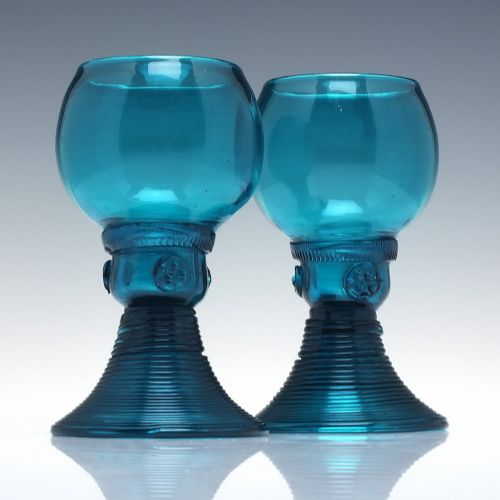
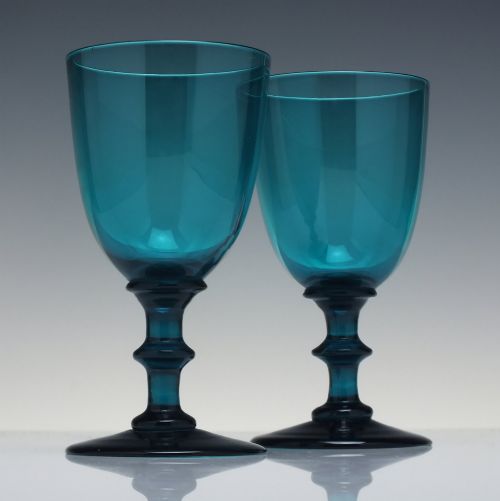
A georgian blue wine glass brings deep cobalt and peacock tones to the table, offering a striking contrast to clear crystal.
Georgian Blue Wine Glass
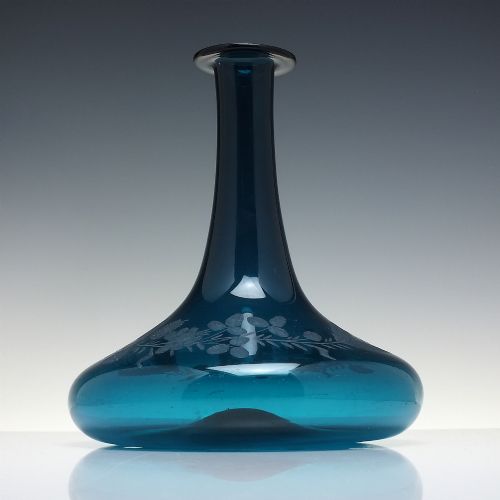
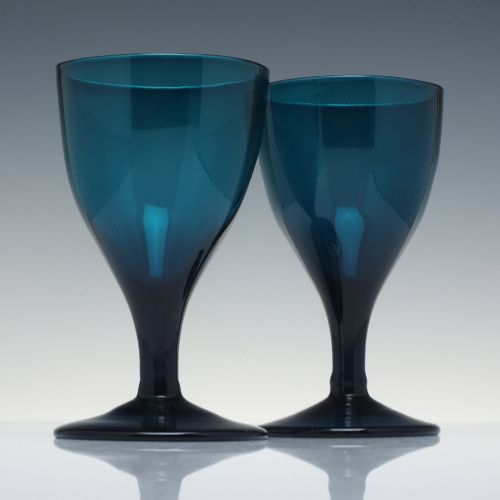
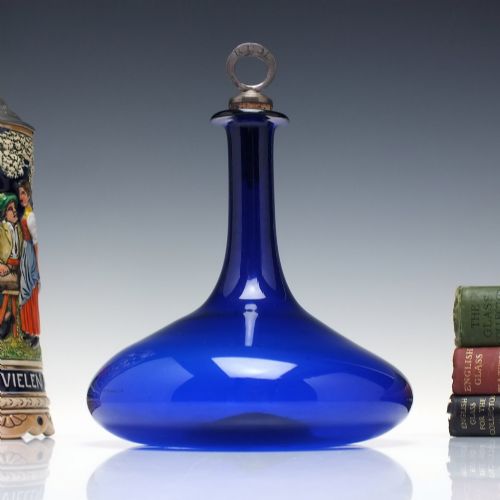
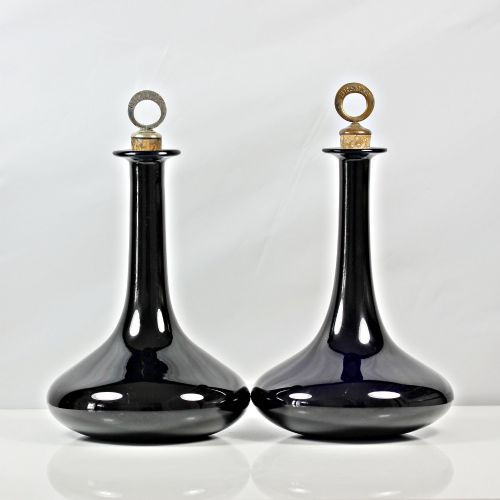
A georgian blue wine glass is a drinking vessel produced during the Georgian and Regency periods, shaped with a distinct bowl, stem, and foot. These pieces survive in rich shades including peacock, emerald, and Bristol blue, alongside related forms such as cordial glasses and mell decanters.
The versions most commonly met on this page date from around eighteen ten to eighteen thirty, often appearing as matched pairs or small sets. They reflect the decorative ambitions of the early nineteenth century through vibrant colour and varied optical effects.
Materials and manufacture
These vessels are fashioned from hand-blown lead glass, incorporating metallic oxides to achieve deep cobalt and turquoise hues. The glassblower shapes the bowl and draws the stem by hand, resulting in subtle irregularities that confirm traditional workshop methods.
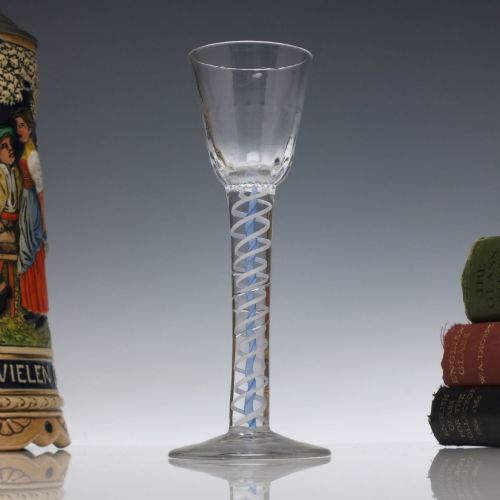
Some examples utilise specialised techniques like colour twists within the stem, while others feature wheel-engraved decoration on the bowl. The metal composition gives the glass a heavier feel and a distinct resonance when struck gently.
Some nineteenth-century drinkers apparently enjoyed their wine through glass so intensely blue it practically concealed the vintage within.
Assessing quality and character
The depth and saturation of the blue colour set the visual standard for each piece, with richer peacock and emerald tones commanding attention. The uniformity of pairs and sets also influences desirability, as matching colour and proportions require exceptional skill from the glasshouse.
Refinements such as delicate stem twists or precise wheel engraving elevate an individual piece above standard production wares. The overall balance of the bowl, stem, and foot dictates the visual harmony of the finished glass.
The Georgian Blue Wine Glass Glossary
- Bristol blue
- A deep, intense cobalt glass traditionally associated with production in Bristol during the late eighteenth and early nineteenth centuries. It remains a benchmark for rich colour in table glass.
- Colour twist
- A decorative technique within the stem where threads of coloured glass are pulled into a spiral pattern. It requires immense dexterity during the blowing process.
- Lead glass
- Glass containing lead oxide, which increases brilliance, weight, and workability for cutting and engraving. This material forms the foundation of quality Georgian drinking vessels.
- Cordial glass
- A small stemmed vessel intended for strong liqueurs or cordials, frequently produced with elaborate stem structures. They sit smaller and narrower than standard wine glasses.
Georgian Blue Wine Glass: Frequently Asked Questions
What is a georgian blue wine glass used for?
These glasses were originally employed for serving wines and dessert beverages during formal Georgian dining. Today, collectors typically display them as decorative items or use them sparingly for special occasions.
Because of their rich colour, they add a dramatic focal point to a dining table or cabinet. Modern owners often keep them separate from everyday tableware to protect the antique glass.
How do I identify a georgian blue wine glass?
Look for the characteristic weight and hand-blown traits of early nineteenth-century lead glass, such as pontil marks on the base. The shades typically range from deep cobalt to peacock and emerald rather than modern bright blues.
Stylistic cues like heavy mell shapes, distinct stem forms, and occasional wheel engraving help place them in the Georgian or Regency eras. Comparing the hue to documented period examples confirms the authenticity of the colour.
Are these glasses safe to use?
While technically functional, most owners choose not to use antique lead glass for regular dining due to its age and fragility. Hand washing in tepid water is essential if they are ever used.
Harsh detergents and dishwashers can permanently damage the surface and dull the historic glass. Gentle handling preserves both the material and the delicate coloured finish.
How should I display blue glass?
Displaying these pieces near natural light highlights the saturation and depth of the cobalt or peacock tones. Enclosed cabinets protect the fragile stems and thin bowls from accidental knocks.
Avoiding direct, intense sunlight prevents any potential fading of the coloured glass over many years. Proper spacing allows each glass in a set to be viewed clearly.