



Antique Blue Glass Stemware
These antique blue glass stemware selections bring vibrant colour and historic form to any table, offering rich shades from peacock to turquoise across various eras.
Antique Blue Glass Stemware
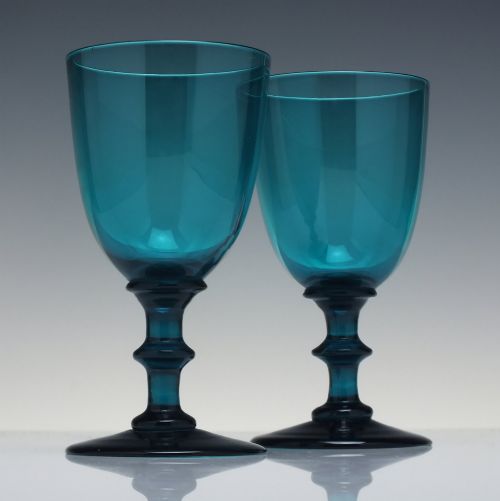
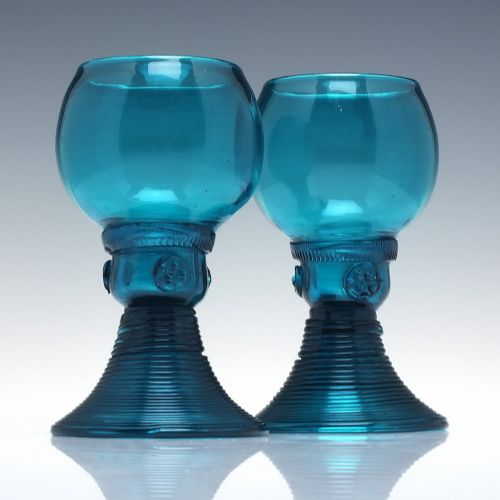
When searching for antique blue glass stemware, buyers encounter drinking vessels and display pieces spanning the Georgian, Victorian, and later twentieth-century periods. These items include wine glasses, champagne flutes, and large comports in striking shades of emerald, peacock, and turquoise blue.
The selections most frequently met on this page range from early nineteenth-century Georgian pairs to Edwardian goblets and Art Deco comports. Their forms serve both functional dining purposes and decorative display within historic table settings.
How these pieces were made
The construction of these items relies on hand-blown glass and lead crystal, shaped by skilled makers using traditional glassblowing techniques. Artisans often utilised lead glass to achieve greater brilliance and weight in the finished stems and bowls.
Decoration was achieved through meticulous methods such as intaglio engraving, surface enamelling, and the application of delicate gold leaf details. Certain workshops applied Venetian Revival techniques or Wiener Werkstätte designs to shape distinct contours and surface patterns.
Antique Blue Glass Stemware Retail Price Guide 2026
Typical asking prices for blue glass stemware among the pieces listed under this phrase on Sellingantiques today, from the lower quarter to the upper quarter. They describe what is for sale here now, not the wider market.
Decorative techniques visible across the current selection include intaglio engraving, surface enamelling, and applied gold leaf.
What varies in quality
Quality differences emerge in the depth and uniformity of the blue colouration, alongside the precision of the hand-blown forms. Superior examples demonstrate crisp proportions and clean lines without distortion in the glass body.
The refinement of surface decoration, such as intricate intaglio engraving or careful enamel placement, separates standard production from exceptional artistry. Pieces carrying distinct attribution to notable designers or workshops exhibit higher levels of execution.
Salviati·Fritz Heckert·Moser Crystal·Otto Prutscher
The Antique Blue Glass Stemware Glossary
- Intaglio engraved
- A technique where designs are carved into the surface of the glass rather than raised in relief. This method creates subtle, sunken motifs that catch the light.
- Lead crystal
- A high-clarity glass containing metal oxide that increases weight and refractive index. It allows for deeper cutting and sharper definition in stemware.
- Comport
- A raised bowl or dish used for serving fruit or sweets on the dining table. They frequently feature deep bowls supported by a central stem and foot.
- Enamelled
- Decorated with fused glass powder applied in patterns and heated to bond permanently. This process adds rich colour and opaque detail to the vessel surface.
Antique Blue Glass Stemware: Frequently Asked Questions
What periods do these blue glass items cover?
The available pieces span from the Georgian and Regency eras through the Victorian period and into Edwardian times. Later examples extend into Art Deco designs of the early twentieth century.
This broad chronological spread allows collectors to find items representing shifting aesthetic movements, from early nineteenth-century silhouettes to Vienna Secession styling.
How should antique stemware be cleaned?
Gentle hand washing in lukewarm water with mild soap is recommended for all historic glass. Avoid sudden temperature changes to protect the material from thermal shock.
Harsh detergents and automatic dishwashers can damage delicate gold leaf accents or enamel work applied to the surface over a century ago.
Were these coloured glasses used daily?
Many fine Georgian and Victorian blue wine glasses were produced for formal dining and special entertaining. Their rich hues added visual drama to wealthy households during feasts and receptions.
Larger vessels like comports served as centrepieces for displaying fruit or sweetmeats, combining utility with ornamental presentation.
How do I identify a Georgian wine glass?
Georgian examples often display hand-blown characteristics with pontil marks on the underside of the foot. Their bowls frequently exhibit rich peacock or emerald blue tones shaped by early nineteenth-century techniques.
Proportions tend to be sturdy yet elegant, reflecting the prevailing drinking customs and glasshouse standards of the period.