

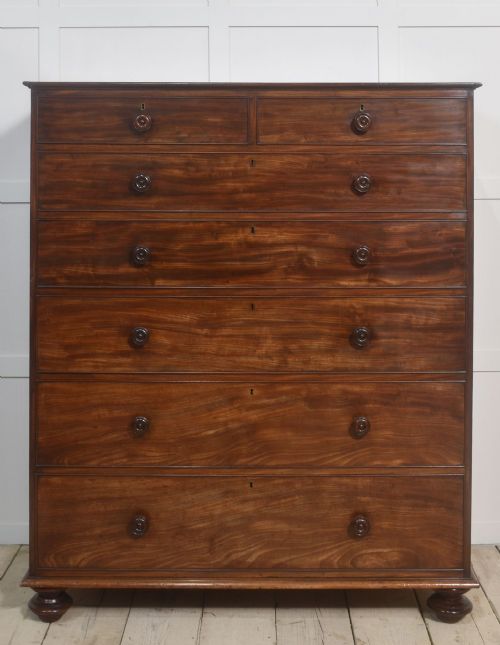
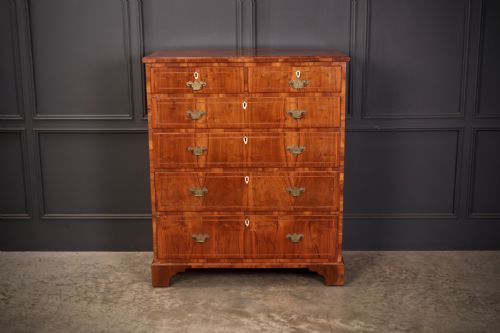
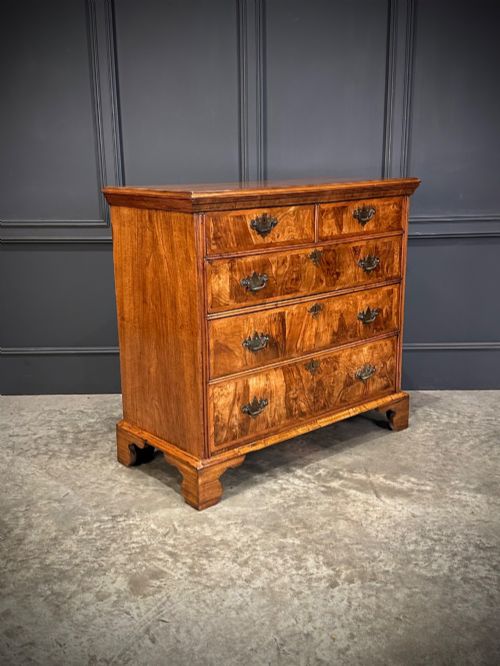


Georgian Bedroom Storage Unit
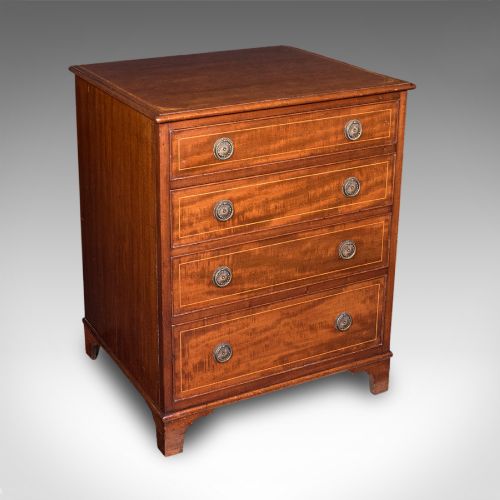
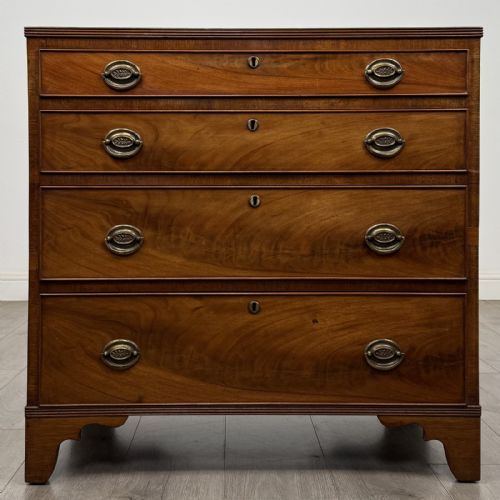
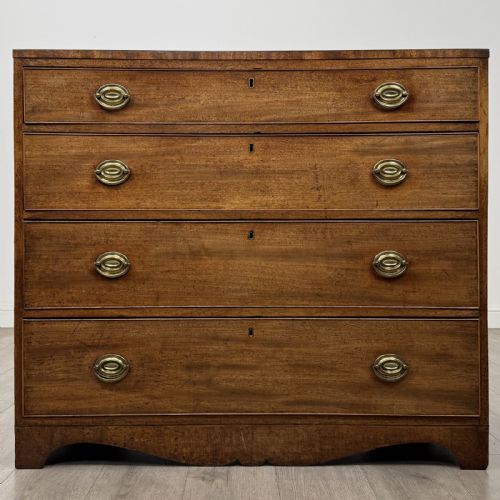
A georgian bedroom storage unit brings robust timber and quiet dignity to a room, offering deep drawers built to last.
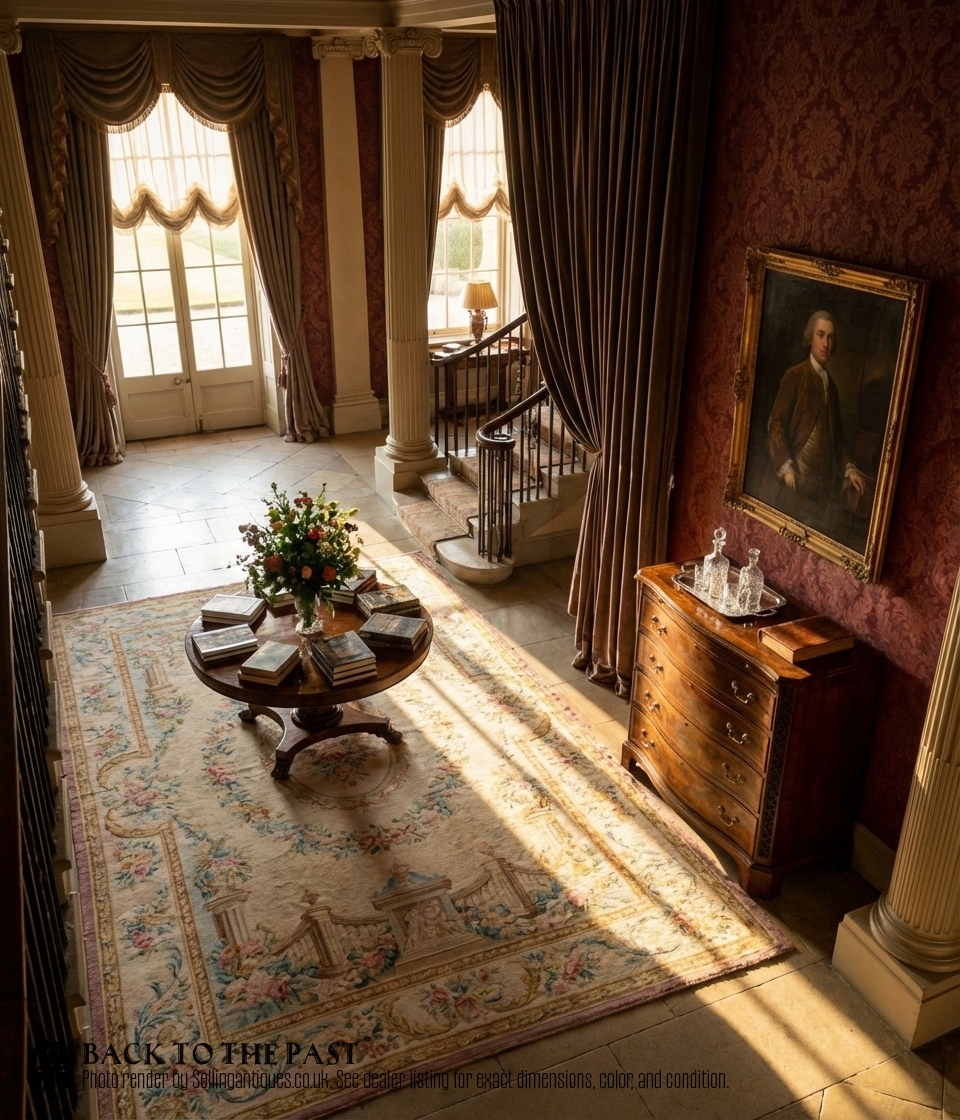
Georgian Bedroom Storage Unit
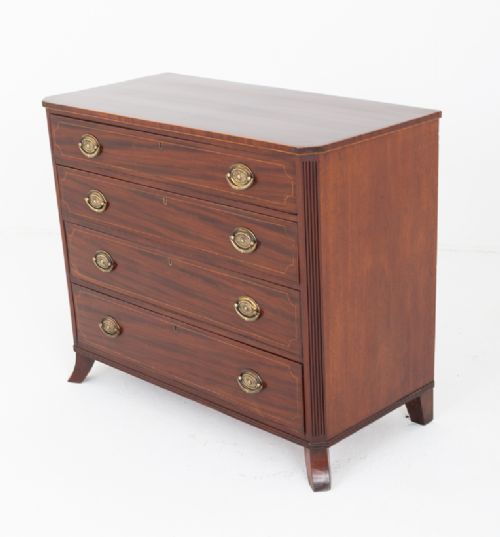
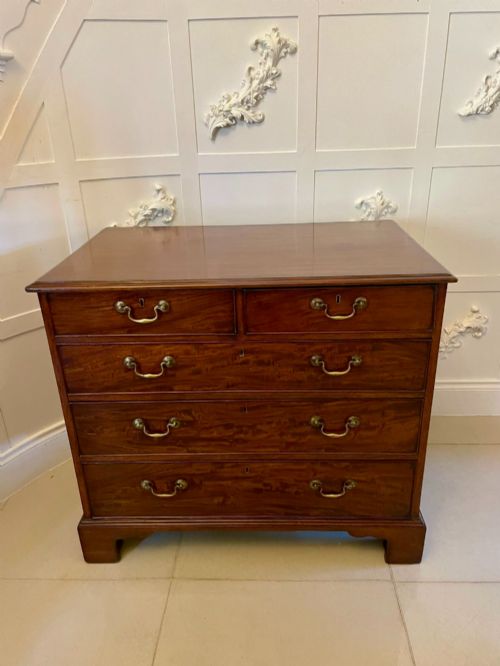
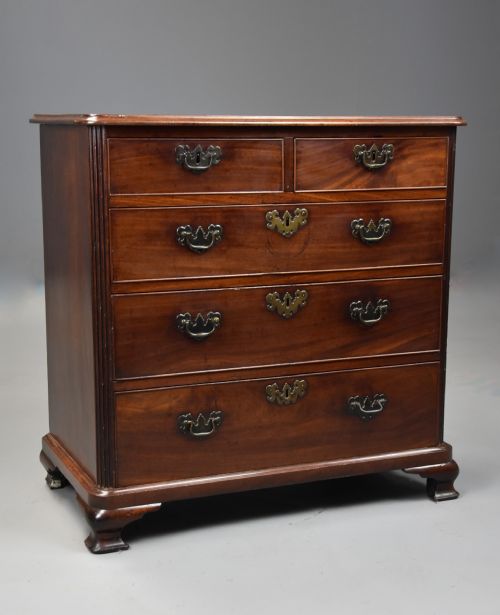
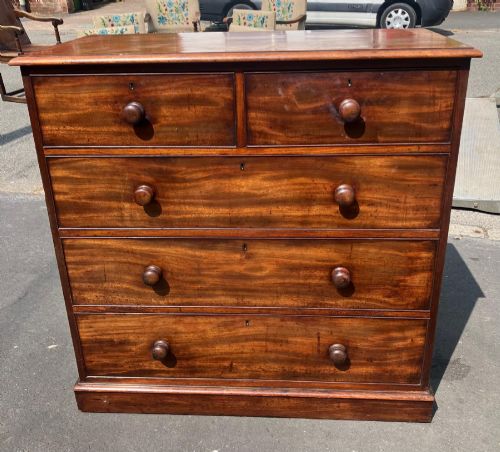
A georgian bedroom storage unit most frequently appears here as a mahogany or oak chest of drawers, spanning several periods from the eighteenth century to the nineteenth century and beyond. These pieces include tallboys, narrow formats, and two-part designs built to hold clothing and household linens.
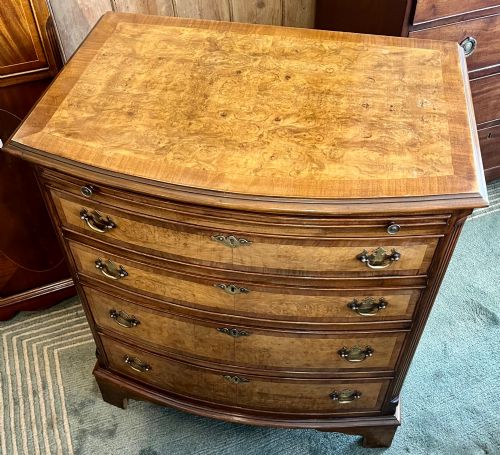
The forms range from straight front chests to serpentine shapes and cabinets with secret drawers. Oak, walnut, and flame mahogany veneers define the main structural bodies found on this page.
Materials and construction
Cabinet makers relied heavily on solid mahogany, oak, and walnut, frequently enhancing surfaces with flame mahogany veneer or satinwood line inlay. Brass hardware provides functional pulls and escutcheons across the eras.
Joinery methods encompass traditional drawer construction, sometimes incorporating bone details or specialised compartments such as slides and secret drawers within the carcase.
Georgian Bedroom Storage Unit Retail Price Guide 2026
Typical asking prices for georgian bedroom storage unit among the pieces listed under this phrase on Sellingantiques today, from the lower quarter to the upper quarter. They describe what is for sale here now, not the wider market.
Some chests hide secret compartments for your most private trinkets, proving that historical cabinet makers loved a good game of hide and seek.
Distinctions in craftsmanship
The standard of a georgian bedroom storage unit rests on the selection of timber grains, such as figured mahogany or burr walnut, and the crispness of any inlay work. Proportion matters greatly, with small proportions and narrow footprints often indicating finer original design.
The Georgian Bedroom Storage Unit Glossary
- Tallboy
- A tall chest of drawers, typically built in two stacked sections to maximise vertical storage. This form provides substantial capacity while occupying a modest floor footprint.
- Flame mahogany veneer
- A thinly sliced wood layer displaying a distinct, fiery grain pattern derived from the branch junctions of the tree. Cabinet makers applied this to drawer fronts for high visual impact.
- Serpentine
- A curved front shape that sweeps inward and outward in a gentle wave. This contour requires advanced woodworking skill to execute properly.
- Slide
- A pull-out wooden shelf integrated into the chest, historically used as a writing surface or for folding garments. It sits neatly between the drawers when pushed in.
- Escutcheon
- A protective plate surrounding a keyhole, usually fashioned from brass. It prevents the wood surrounding the lock from wearing down over repeated use.
Georgian Bedroom Storage Unit: Frequently Asked Questions
What is a two-part chest?
A two-part chest is built as two separate box sections, one stacked securely on top of the other. This construction method helped with moving heavy furniture up narrow stairs in historic homes.
Such designs typically separate near the middle, making transport simpler while maintaining a sturdy single unit when assembled.
How do I use a tallboy?
A tallboy provides vertical storage for folded clothing, linens, and personal items in a bedroom. Its height allows you to store a large volume of goods without taking up extensive floor space.
Keep heavier items in the lower drawers to maintain stability, and use the upper tiers for lighter garments.
What are secret drawers?
Secret drawers are hidden compartments built into the internal framework of a cabinet or chest. They usually require pressing a concealed spring or removing a specific divider to access.
Historically, owners used these spaces to secure valuable documents, currency, or small personal items away from casual view.
How do I distinguish walnut from mahogany?
Walnut typically displays a rich, warm brown colour with darker grain swirls and intricate figuring. Mahogany tends to feature a deeper reddish-brown tone with a straighter, interlocking grain pattern.
Over time, both timbers develop distinct patinas that help differentiate them from newer factory-made woods.