
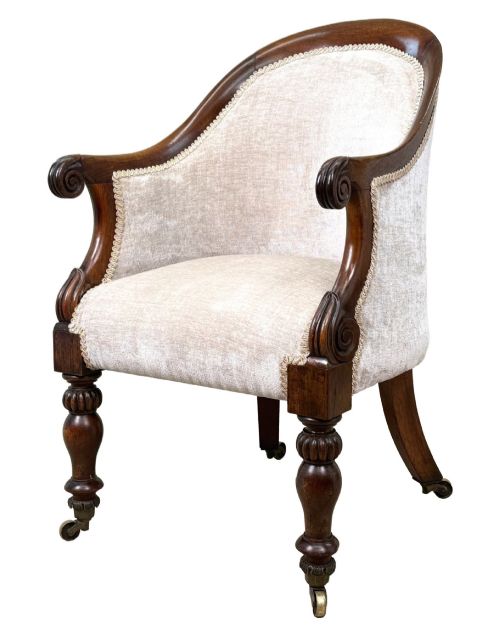
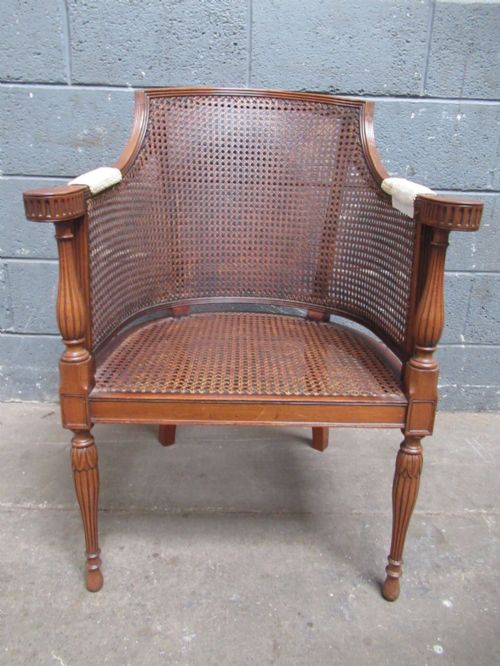
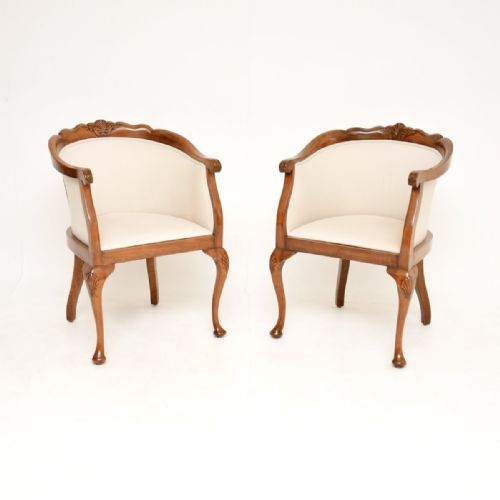
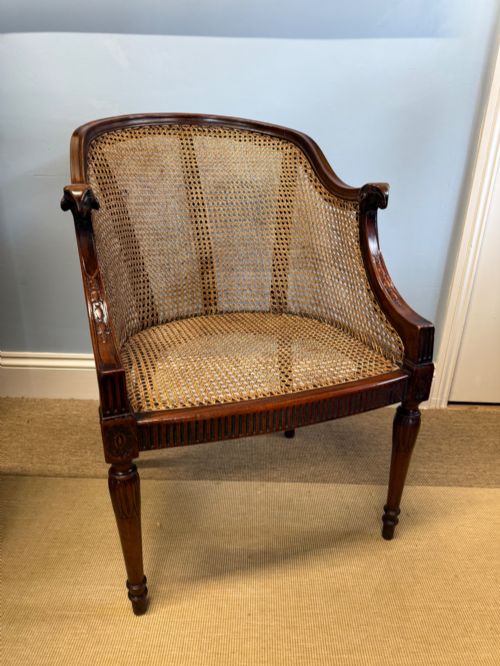
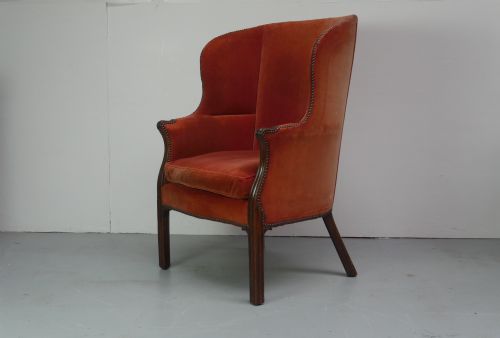


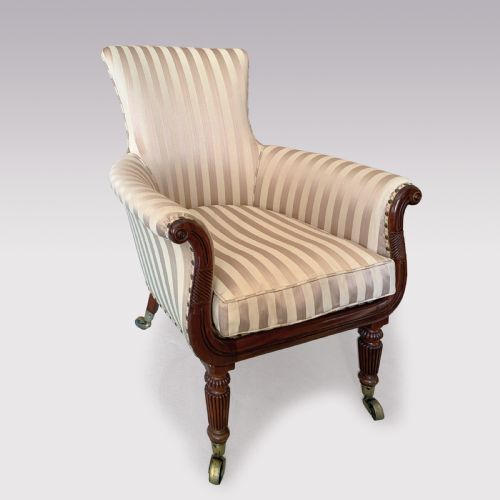
Georgian Barrel Armchair
A georgian barrel armchair wraps you in a high, enclosing wooden and upholstered embrace designed to keep out drafts by the fireside.
Georgian Barrel Armchair
When you search for a georgian barrel armchair, you enter a world of robust seating built for comfort and warmth in eighteenth and nineteenth-century rooms. These pieces feature continuous curved backs that sweep forward into arms, offering a deeply sheltered seat that blocks cold air from every angle.
On this page, you are most likely to meet examples spanning the Georgian, Regency, and nineteenth-century periods, alongside later revival pieces. The forms range from simple wooden frames to grand library chairs covered in leather, fabric, or cane.
How they were made
Cabinet makers constructed the curved framework of a georgian barrel armchair using solid timbers such as mahogany, walnut, and rosewood. These woods provided the structural strength needed to hold the continuous sweeping line of the back and arms without warping.
Upholstery and cane work completed the construction, utilising textiles, leather, and woven cane to create supportive seats and backs. Brass fittings and simulated or faux rosewood finishes occasionally appeared on Regency examples to enhance the visual detail.
Some chairs sport faux rosewood finishes, proving that even historic makers appreciated a clever visual trick.
What varies in quality
The distinction between ordinary and exceptional chairs lies in the fluidity of the timber frame and the proportion of the curved back. Superior makers achieved a seamless transition from the high back down into the arms, maintaining balance and structural integrity.
Materials and secondary details also dictate the standing of a piece, from finely grained mahogany and walnut to the precision of caning and the quality of leather or fabric upholstery. Original period craftsmanship commands higher regard than later twentieth-century interpretations.
Gillows
The Georgian Barrel Armchair Glossary
- Bergère
- An enclosed upholstered armchair with wooden framing, often featuring cane panels on the back and sides. This French-inspired form became popular in English seating during the Regency period.
- Caned
- A seating technique involving woven rattan or cane strips stretched across a wooden frame. It lightens the visual weight of heavy chairs.
- Library chair
- A sturdy armchair designed for reading rooms and studies, frequently upholstered in leather or durable fabric for long periods of sitting.
- Regency
- A British design period spanning the early nineteenth century, known for drawing inspiration from classical antiquity and utilising rosewood, mahogany, and brass mounts.
- Tub chair
- An armchair with a rounded, curved back that resembles the shape of a halved barrel, wrapping closely around the sitter.
Georgian Barrel Armchair: Frequently Asked Questions
What is a georgian barrel armchair used for?
These chairs were originally designed to sit beside the fireplace in drafty period homes, where the high enclosing back kept out cold air. Today, they serve as striking statement seats in studies, living rooms, and bedrooms.
Their enveloping shape offers a cozy, private spot for reading or relaxing while adding historic character to an interior space.
How do I spot an 18th century barrel armchair?
Look closely at the construction of the frame, the timber used, and the style of the legs, which often reflect Georgian or George III design traits. Eighteenth-century versions typically feature solid mahogany or walnut frames with hand-carved details.
Later nineteenth-century pieces and twentieth-century revivals often show different secondary woods, machine-woven cane, or updated upholstery techniques that distinguish them from period originals.
Can I use a leather barrel armchair daily?
Yes, many library and barrel chairs were built with durable leather upholstery specifically to withstand heavy daily use in studies and libraries. The sturdy timber frames provide reliable structural support for regular seating.
Condition varies depending on whether the piece retains its original hide or has been reupholstered in later fabrics like cotton or textile.