
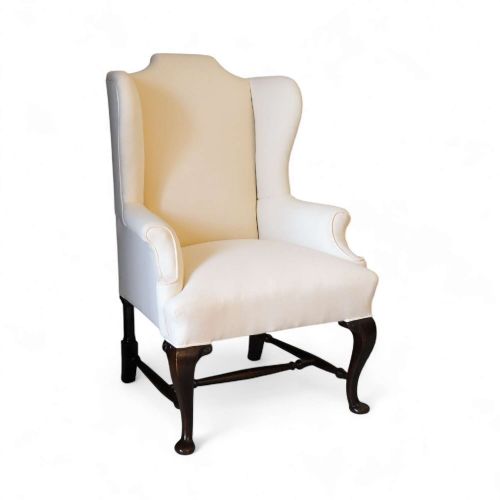


Reupholstered Chair
A reupholstered antique chair brings historical timber frames into modern rooms through fresh fabric.
Reupholstered Chair
A reupholstered antique chair is a period seating form mounted on timber frames, updated with modern textiles to suit contemporary interiors. These pieces span Victorian, Edwardian, and Georgian periods, alongside 19th-century examples.
Buyers meet Victorian bedroom chairs, Dutch carved walnut sculptural armchairs, and Edwardian wing chairs. Each object combines historical woodwork with newly applied fabric, calico, or velvet.
How they were made
Maker construction relies on timber frames carved from mahogany and walnut, occasionally supported by brass and porcelain castors on turned front legs. These structural elements provide the lasting foundation beneath the padding.
Modern textile updates involve recovering the frame in calico, recycled cotton, silk parrot design fabric, coastal stripe fabric, and gold cotton velvet. Upholstery methods join historic wooden joinery with fresh interior padding.
Listings feature mahogany, walnut, and brass materials across Victorian, Edwardian, and Georgian periods.
What varies in quality
Quality rests in the harmony between the historic timber frame and the chosen textile. Carved walnut sculptural details or scrolled mahogany arms separate elaborate salon chairs from simpler utilitarian seating.
The precision of the woodwork and the structural integrity of the frame dictate the value of the piece. Well-turned legs and original brass and porcelain castors elevate the construction above standard variants.
The Reupholstered Chair Glossary
- Calico
- A plain-woven cotton fabric often used as an initial upholstery layer or a clean top cover on period frames.
- Wingback armchair
- A seating form featuring protective side panels designed to shield the sitter from drafts, common in Edwardian and Georgian examples.
- Castor
- A small wheel attached to the base of chair legs, sometimes made of brass and porcelain, allowing smooth movement across floors.
- Salon chair
- An upholstered seat intended for formal reception rooms, frequently exhibiting decorative carved frames and fine fabric designs.
- Turned leg
- A wooden support shaped on a lathe to create cylindrical or decorative profiles, seen on Victorian bedroom chairs.
Reupholstered Chair: Frequently Asked Questions
How do I choose the right fabric?
Select a textile weight that matches the scale of the timber frame and the intended room use. Heavier cotton velvets suit grander armchairs, while lighter stripes fit smaller bedroom seats.
Consider how the pattern interacts with the historic period of the woodwork. Contemporary geometric prints or traditional silk designs alter the visual presence of the antique frame.
Are these chairs comfortable for daily use?
Modern reupholstery updates the internal padding while retaining the original timber support structure. This ensures the seating meets contemporary comfort standards.
Wingbacks and armchairs offer deep support, whereas side chairs and salon chairs provide firmer seating suited to dining or occasional use.
How do I identify a Victorian chair?
Look for turned front legs, often fitted with castors, and robust mahogany or walnut frames. These structural indicators point directly to nineteenth-century manufacturing methods.
Stylistic cues such as geometric upholstery patterns or buttoned backs frequently accompany this period.
Can I place these chairs in a modern room?
Historic timber frames paired with fresh coastal stripes or recycled cotton blend easily into contemporary interiors. The contrast bridges different design eras.
Armchairs and dining chairs function well as statement pieces against neutral modern walls and floors.