





Georgian Bar Back Chairs
Georgian bar back chairs are sturdy wooden dining seats defined by a horizontal splat across the frame, offering traditional elegance and lasting utility for a dining room.
What Georgian Bar Back Chairs Are
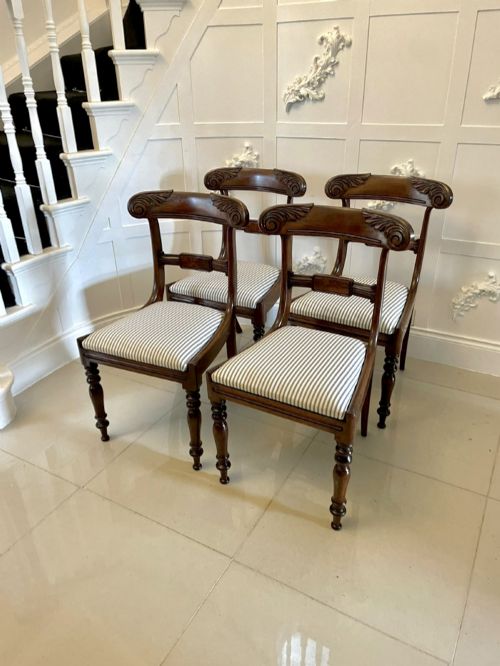
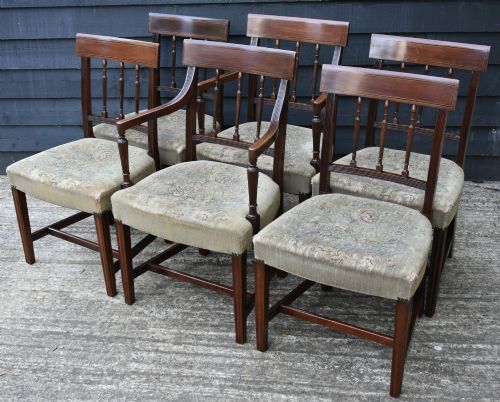
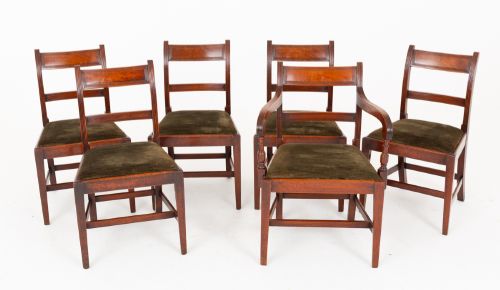
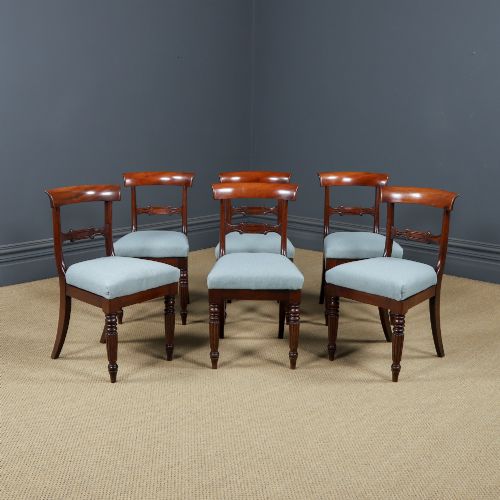
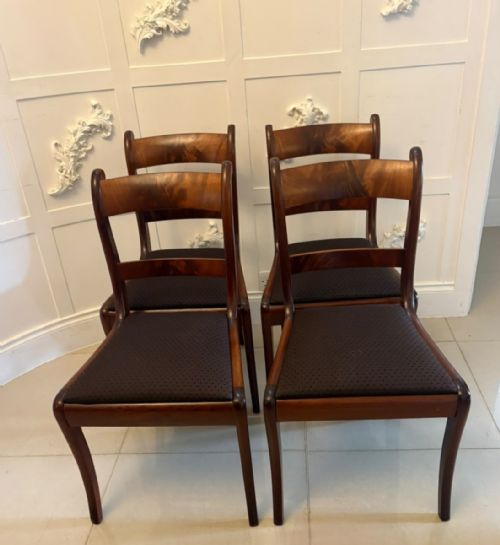
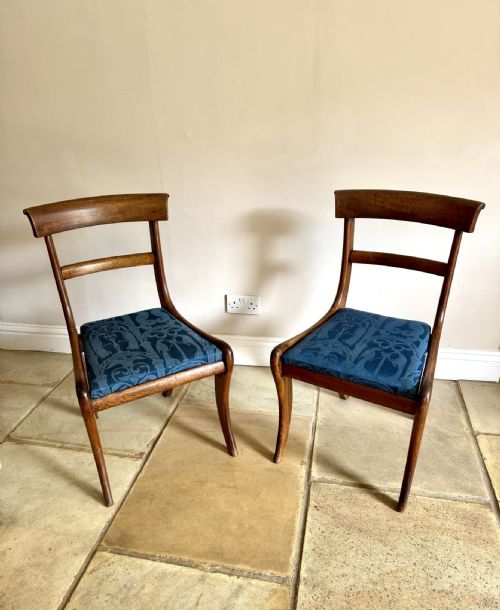
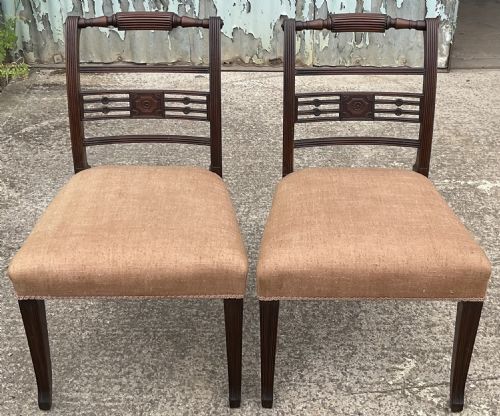
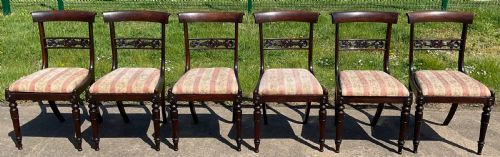
The most common format encountered here is the mahogany dining chair, often found in matched sets ranging from pairs to larger groups of six or eight. Alongside standard side chairs, the evidence includes elbow chairs or carvers with open arms, as well as occasional desk and hall variants. These seats combine practical support with the restrained decorative styles of the period.
Makers working within the Georgian tradition utilised timbers such as mahogany and rosewood to build robust seating frames. While many examples remain understated in polished wood, others incorporate inlaid details, ebony accents, or flame mahogany grain patterns to elevate the visual appeal. Upholstered drop-in seats and fabric coverings also appear frequently across the archived and current pieces.
How They Were Made
Cabinetmakers constructed these frames predominantly from dense hardwoods, utilising mahogany and rosewood for their strength and rich natural colour. Selected pieces make specific use of flame mahogany veneers to highlight the striking grain patterns across the broad wooden bar of the backrest. Additional detailing sometimes includes contrasting wood inlays and dark ebony accents.
Techniques relied on traditional joinery methods to secure the back frames, side rails, and legs together under daily domestic use. Many surviving examples integrate upholstered elements, utilising fabric or damask coverings over padded drop-in seat pads. Wood finishing involved polishing the timber to emphasise the deep natural tones of the grain.
Retail Price Guide 2026
Typical UK retail prices for georgian bar back chairs, calculated from the Sellingantiques database of over a million retail prices indexed since 2003. This retail price guide relies exclusively on Sellingantiques data; no external sources or auction records are used, so the figures do not describe the wider market.
Even sturdy dining chairs occasionally require a supportive carver friend to help them hold court at the head of the table.
What Varies in Quality
The degree of refinement in the timber selection heavily influences the character of each piece, distinguishing simple utility frames from more ambitious workshop production. Selected examples showcase figured flame mahogany or delicate inlay work that requires greater skill in handling materials. Simpler chairs rely on plain mahogany solids with straightforward joinery.
Proportion and the execution of the characteristic horizontal bar shape dictate the visual balance of the backrest. Sets that maintain uniform colour and consistent grain patterning across multiple matching chairs represent a higher level of original commissioning. Individual side chairs and carver armchairs demonstrate varied levels of carving detail and structural robustness.
The Georgian Bar Back Chairs Glossary
- Bar back
- A chair design featuring a solid horizontal wooden rail or slat forming the upper part of the backrest. This form provides robust structural support while offering a clean surface to display figured wood grain.
- Carver
- An open armchair designed to sit at the head of a dining table. These pieces feature integrated armrests matching the style of the accompanying side chairs.
- Flame mahogany
- A decorative timber veneer displaying a distinct flickering, flame-like pattern caused by the way the tree branch met the main trunk. Cabinetmakers utilised this cut on prominent surfaces such as chair backs to create visual movement.
- Damask
- A reversible figured fabric traditionally woven on a loom with patterns formed by contrasting warp and weft threads. Upholstered versions of these chairs occasionally feature this textile on the seat pads.
- Side chair
- An upright dining chair built without armrests. These pieces were designed to be tucked neatly around a dining table when not in use.
Frequently Asked Questions
What is a bar back chair?
A bar back chair is a wooden seat distinguished by a solid horizontal wooden rail across the top of the backrest. This horizontal member often displays decorative wood grain or subtle inlay work.
Such chairs were primarily built as dining room furniture during the Georgian and Regency eras. They combine practical back support with a restrained aesthetic suitable for formal interiors.
How do I use them in a modern home?
These chairs function naturally around a dining table, where their sturdy timber construction supports everyday meals. Sets of matching chairs provide a cohesive look for larger dining spaces.
Smaller pairs can also serve as desk chairs, hall seats, or accent furniture in a living room. Their classic wooden frames blend easily with various interior styles.
How do I tell Georgian from Regency pieces?
Georgian pieces generally reflect the classical proportions and restrained ornament popular during the eighteenth century. Mahogany was the primary timber of choice for these earlier designs.
Regency examples, dating into the early nineteenth century, sometimes incorporate bolder grain patterns like flame mahogany, rosewood, or contrasting ebony inlay. The overall silhouettes can also exhibit heavier scrolling forms.
Are carver chairs different from side chairs?
Carver chairs are open armchairs originally intended for the head of the dining table. They share the same stylistic bar back design as the rest of the set but include supporting arms.
Side chairs are built without arms so they can sit compactly in rows along the sides of the table. Sets frequently combine a pair of carvers with several side chairs.