


Georgian Baluster Goblet
A georgian baluster goblet is a heavy, tactile drinking vessel from the eighteenth century, prized by collectors for its substantial metal and drawn stem forms.
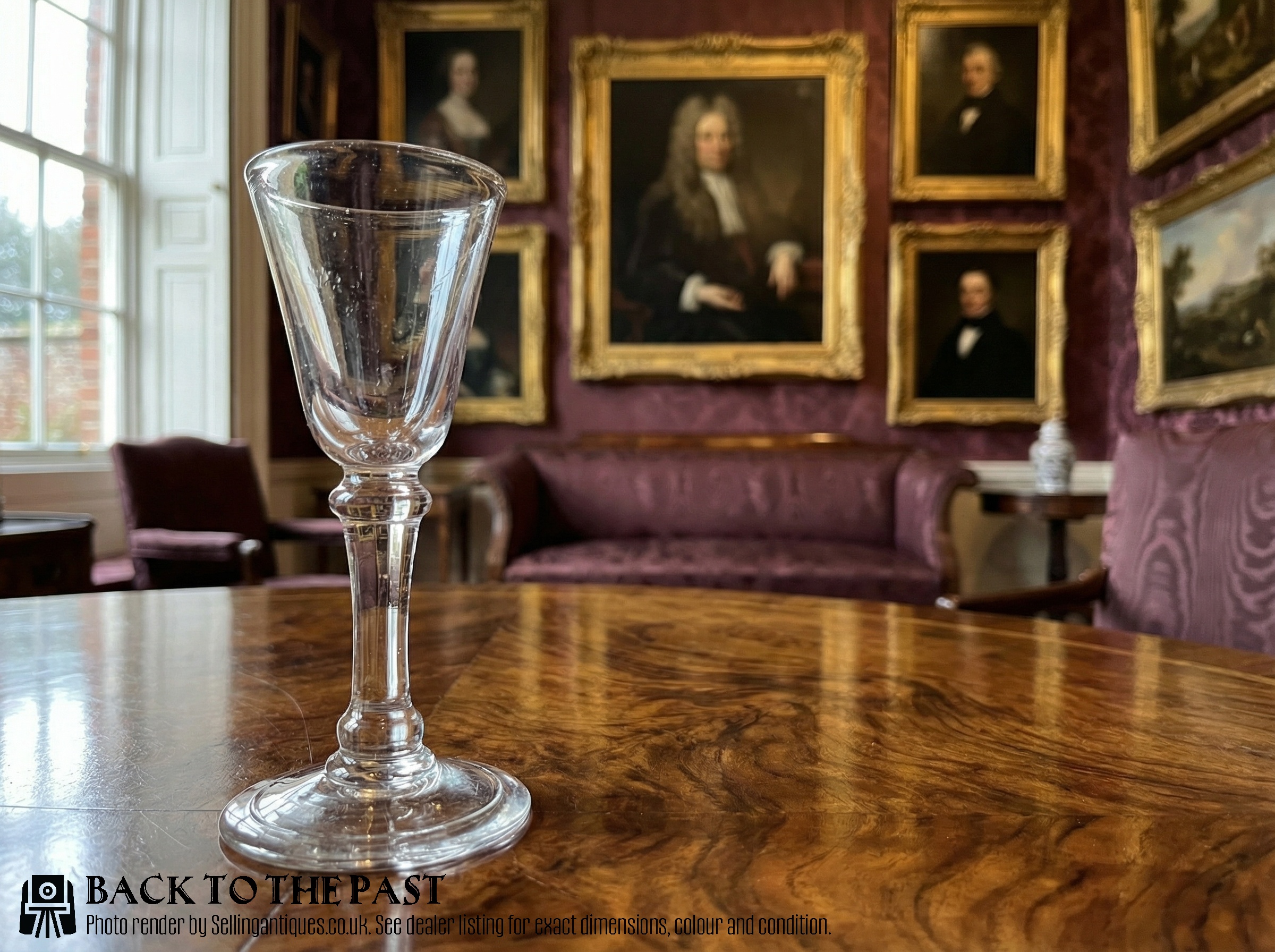
Georgian Baluster Goblet
When you search for a georgian baluster goblet, you are looking at eighteenth-century drinking vessels shaped with thick, knopped stems and substantial bowls. The selection here spans the reigns of Queen Anne and George II, with examples dating from the early decades of the seventeen-hundreds up to mid-century. You will encounter forms ranging from large celebration goblets to smaller dram glasses and wine vessels.
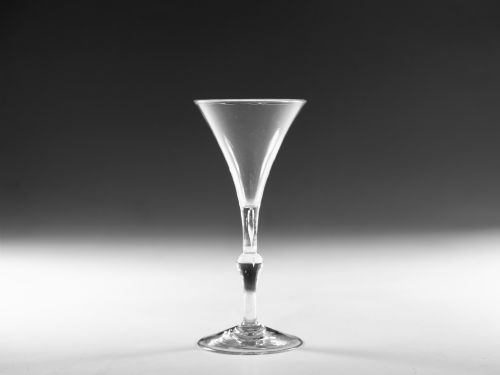
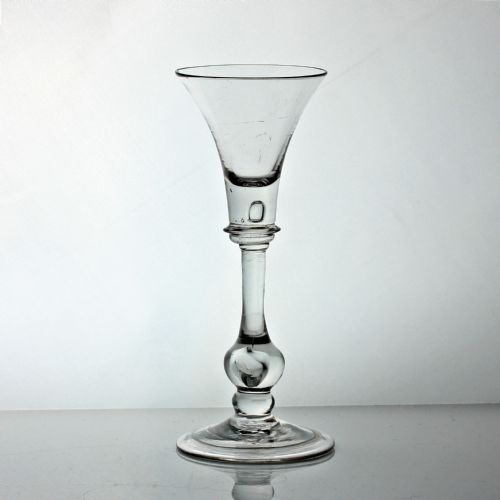
The dominant style on this page is the baluster, characterised by robust stems featuring knots, collars, and teardrop air bubbles trapped within the metal. Alongside true heavy balusters, the listings include lighter baluster variations and balustroid stems from around seventeen-forty. These pieces carry the unmistakable greyish or brilliant tone of early lead glass and lead crystal.
How they were made
The makers of these drinking vessels relied on lead glass and clear lead crystal, a heavier material developed in England that allowed for thicker walls and deeper optical brilliance. Craftsmen shaped the bowls while hot, often incorporating a deceptive bowl or a flared rim before applying the heavy stem. Inside the stems, deliberate trapped air bubbles, known as teardrops, decorate the solid metal.
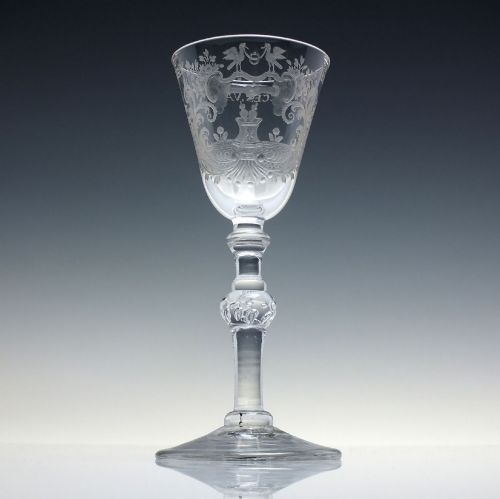
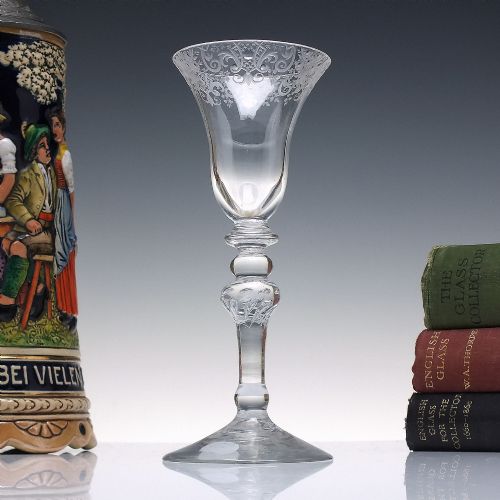
Stems were constructed using knops and annular rings, sometimes featuring triple annular knops or balustroid profiles pulled and shaped by hand. Feet were typically domed or folded at the rim to provide stability to the heavier top-heavy forms. Engraving was occasionally added afterwards, displaying rococo motifs or commemorative marriage and friendship themes.
The listings here include examples recorded from seventeen-ten through to seventeen-fifty, spanning both the Queen Anne and George II periods.
What varies in quality
Quality in a georgian baluster goblet rests upon the proportion and ambition of the stem formation. Examples with complex knopping, triple annular rings, or prominent domed feet stand apart from simpler drawn stems. The crispness of the glass metal and the clever placement of internal teardrops dictate the visual success of the piece.
The sophistication of any engraved decoration also defines the upper tier of the range. Skilled wheel engraving depicting rococo floral motifs or specific friendship and marriage iconography elevates a standard vessel into a notable collector piece. The weight and tactile feel of the lead crystal finally anchor the assessment.
Richard Morton
The Georgian Baluster Goblet Glossary
- Baluster
- A heavy, thick glass stem form derived from architectural pillars, featuring prominent knops and collars typical of early eighteenth-century drinking vessels. It gives these goblets their characteristic substantial weight.
- Balustroid
- A lighter or more slender version of the traditional baluster stem, popular around the seventeen-forties. It retains the tapered profile without the extreme mass of the earlier heavy forms.
- Knop
- A knob or swelling on the stem of a glass, used either singly or in multiples to provide grip and decoration. These nodes define the silhouette of the piece.
- Teardrop
- A deliberate small air bubble trapped inside the solid stem or foot of a glass during manufacture. Craftsmen used this technique to catch the light within the heavy metal.
- Deceptive bowl
- A solid glass bowl made with an unusually thick base that leaves only a shallow cavity at the top. This design made the vessel appear to hold much more liquid than it actually did.
Georgian Baluster Goblet: Frequently Asked Questions
What is a baluster goblet?
A baluster goblet is a drinking vessel from the eighteenth century featuring a heavy, knopped stem inspired by architectural supports. These glasses are defined by their substantial lead crystal weight and tactile, bulbous stem formations.
They were produced during the Georgian era, spanning reigns from Queen Anne to George II. Collectors prize them for the density of the metal and the variety of stem designs.
How were these goblets used?
These vessels were utilised for consuming wine, ale, or strong spirits during formal dining and social gatherings. Larger examples served as celebration goblets for marriages and toasts.
Smaller variants, such as dram glasses, were intended for potent liquors. Their heavy construction made them durable for frequent passing around the table.
How do I date a glass?
Dating relies on the evolution of stem forms, bowl shapes, and the composition of the glass metal itself. Early pieces from the opening decades of the seventeen-hundreds feature heavier baluster stems and folded feet.
By seventeen-forty, slender balustroid and lighter forms became more common. The presence of specific engraved styles also helps narrow the period of manufacture.