



George V Silver Trinket Box
When you search for a George V silver trinket box, you are looking at small personal containers shaped by early twentieth-century dressing table customs.
George V Silver Trinket Box
A george v silver trinket box brings together the tidy habits of the early twentieth century and the domestic silver output of the 1910s and 1920s. Buyers searching this phrase meet compact receptacles designed for dressing tables to hold rings, cufflinks, pins, and small keepsakes.
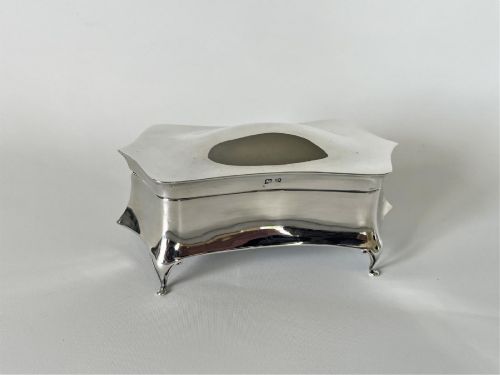
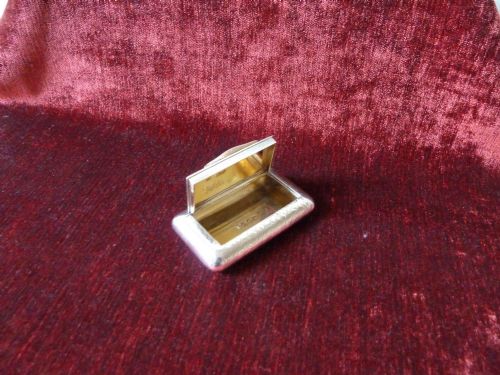
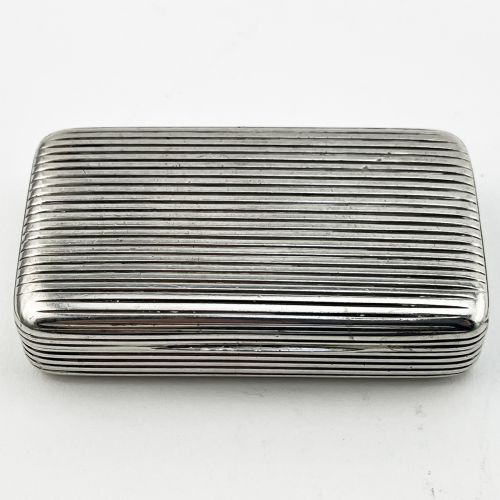
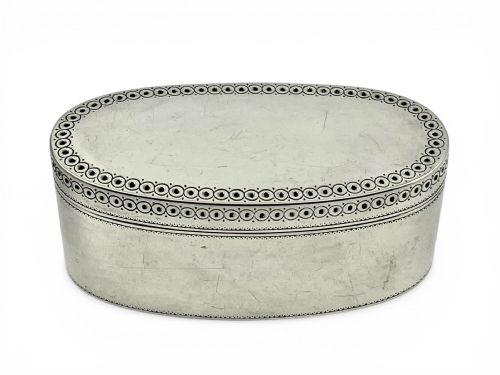
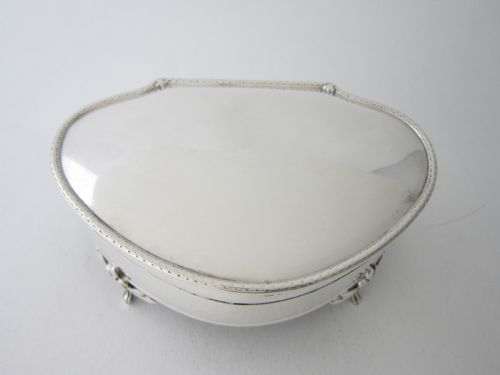
The assortment on this page extends beyond the standard twenty-century pieces to include earlier Georgian examples, alongside Victorian and Edwardian boxes. Forms range from heart-shaped pots and urns to rectangular dressing table boxes raised on small legs.
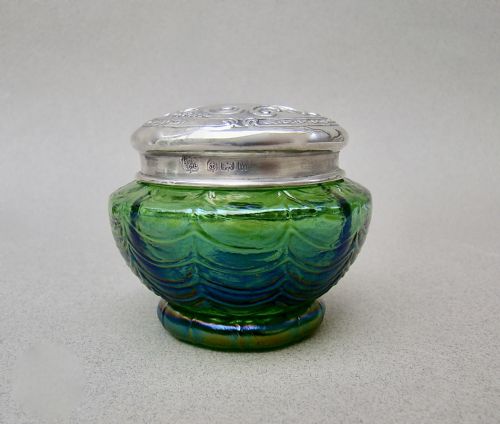
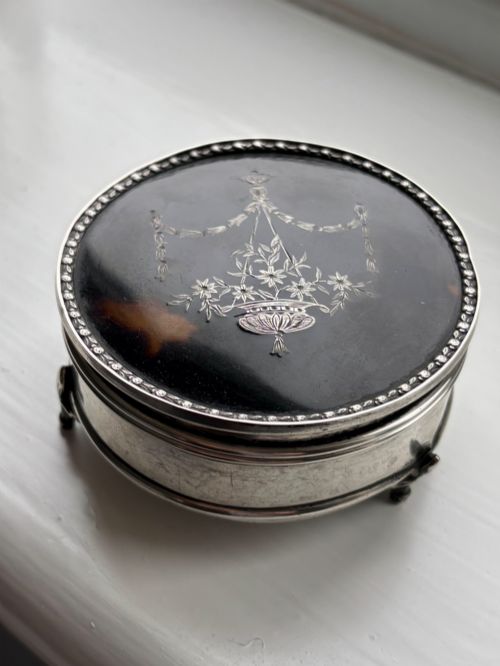
Makers of the period paired sterling silver with contrasting materials like tortoiseshell, faux tortoiseshell, glass, and enamel. Some iterations incorporate hinged lids, pierced bird motifs, or fitted interiors meant for jewellery and pills.
Materials and technique
Silversmiths constructed the bodies of these boxes primarily from sterling silver, occasionally applying silver gilt or silver-gilt finishes to the interior surfaces. Workshops in Birmingham, London, Sheffield, and Chester struck these pieces with hallmarks recording the assay office and year.
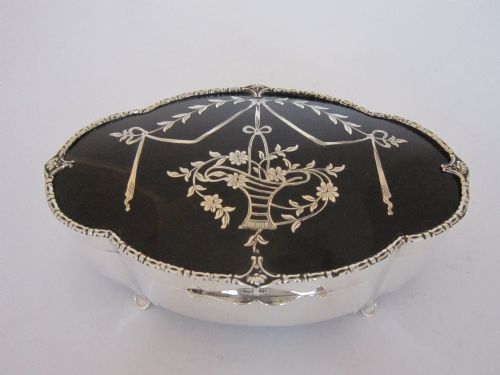
Lids frequently feature inset panels of genuine tortoiseshell, faux tortoiseshell, or vibrant enamel work. Glass bodies with silver rims appear alongside ebonised wooden trays and natural stones such as agate.
Techniques relied on traditional silversmithing methods including pressing, piercing, hammering, and hinge-fitting. Enamelling and fine crest engraving completed the decorative surface work on both snuff boxes and larger dressing table vessels.
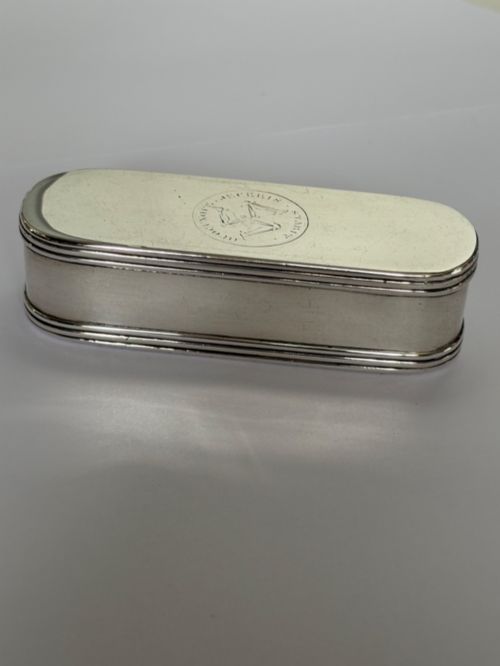
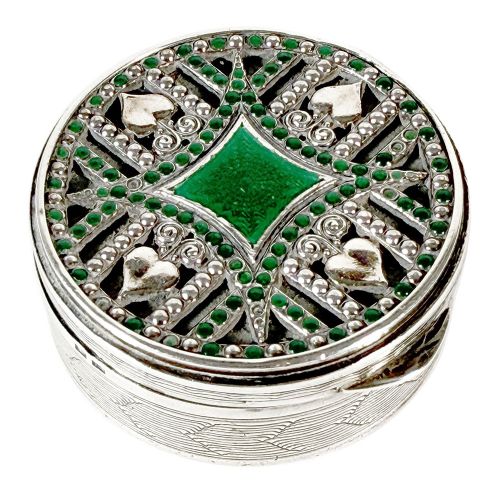
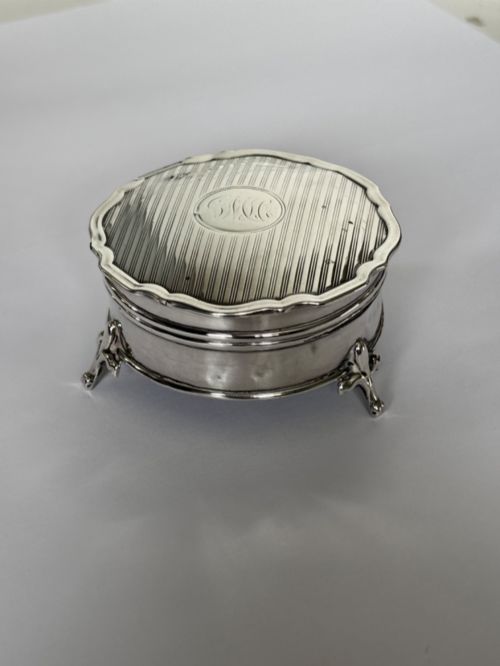
Birds, hearts, and Manx crests all peer out from the silver lids in this gathering of small personal containers.
What separates the grades
Quality rests upon the crispness of the hallmarks, the weight of the sterling silver, and the structural integrity of the hinges. Boxes with tight-fitting lids and unblemished interior gilding show superior initial manufacture.
The inclusion of specialised decorative elements elevates certain pieces above standard production. Hand-painted enamel, intricate pierced metalwork, and inset panels of tortoiseshell or agate distinguish higher-tier examples from plain silver containers.
The reputation of the maker influences distinction, with workshops such as Mappin and Webb or Paul Storr commanding attention for their refined execution. Condition of delicate auxiliary elements, like glass liners and interior silk or velvet pads, further separates well-preserved items from heavily worn specimens.
A. J. Pepper & Co·Ollivant & Botsford·Samuel Pemberton·Cornelius Bland·Paul Storr·George Adam Scheid·Matthew Linwood·Joseph Wilmore·Edward Farrell·E Cornock·Henry Williamson Ltd·Mappin & Webb·William Griffiths·Henry Matthews·Saunders & Shepherd·George Howson
The George V Silver Trinket Box Glossary
- Sterling silver
- An alloy comprising 92.5 percent silver by mass, with the remainder usually copper. This standard composition forms the primary metal for the majority of these boxes.
- Silver-gilt
- Silver that has been plated with a thin layer of gold on its surface. This treatment protects the interior from tarnishing when exposed to cosmetics or snuff.
- Vinaigrette
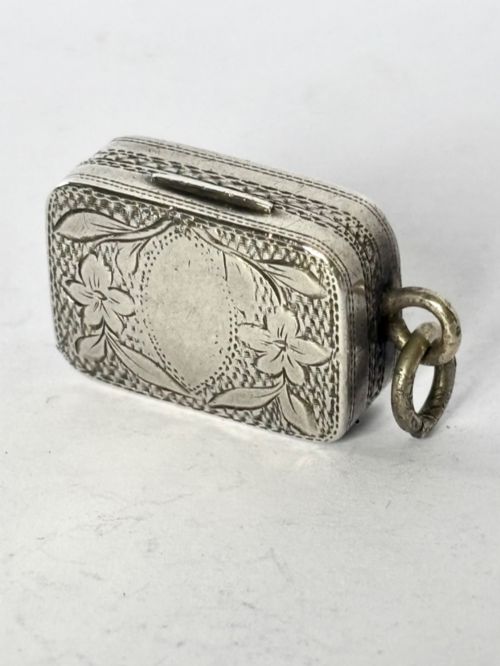
- A small ornamental box featuring an internal pierced grille, designed to hold a sponge soaked in aromatic vinegar. These pieces date predominantly from the Georgian period.
- Hallmark
- An official stamp applied by an assay office to indicate the purity of the metal, the maker, and the year of production. British silver typically displays a leopard head, a lion passant, and a date letter.
- Tortoiseshell
- The shell of certain turtle species used historically for inlay work on boxes and dressing table items. Faux versions replicate this mottled brown pattern using alternative materials.
George V Silver Trinket Box: Frequently Asked Questions
What is a George V silver trinket box?
These are small lidded containers made from sterling silver during the reign of King George V, spanning the early decades of the twentieth century. They were kept on dressing tables to store rings, pins, and personal effects.
Craftsmen often combined the silver with enamel, glass, or tortoiseshell panels. Their designs range from simple geometric shapes to heart-like forms and footed boxes.
How do I date a silver trinket box?
Dating relies primarily on the stamped hallmarks found on the body and lid. These marks identify the assay office, the specific maker, and a designated letter corresponding to the year of manufacture.
Stylistic cues also help narrow down the era, distinguishing Edwardian or Art Deco pieces from earlier Georgian or Victorian items found in the same category.
How were these boxes used originally?
Owners placed them upon dressing tables and sideboards to hold daily necessities like cufflinks, rings, and small brooches. Smaller versions served as pill boxes or containers for dry cosmetics.
Snuff boxes and vinaigrettes fulfilled a similar personal function in earlier Georgian times, holding tobacco or scented sponges for carriage travel.
How do I care for silver and tortoiseshell?
Maintain silver surfaces using a soft polishing cloth specifically formulated for precious metals, avoiding abrasive cleaners that wear down fine details and hallmarks. Keep tortoiseshell away from direct heat sources and strong sunlight to prevent warping.
Store the boxes in stable indoor environments with moderate humidity. Gentle dusting preserves both the metal lustre and the delicate inlaid panels.