
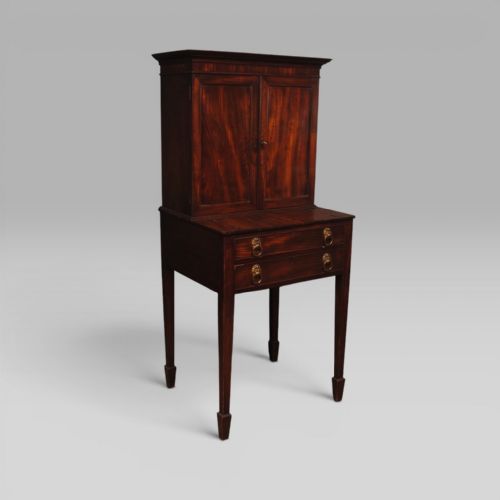

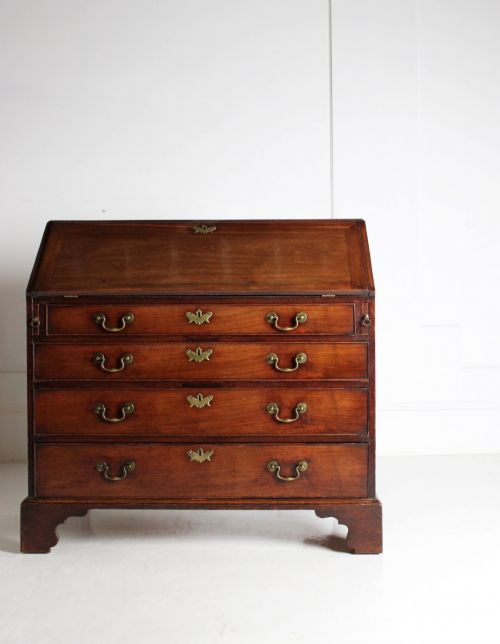

George III Writing Bureau
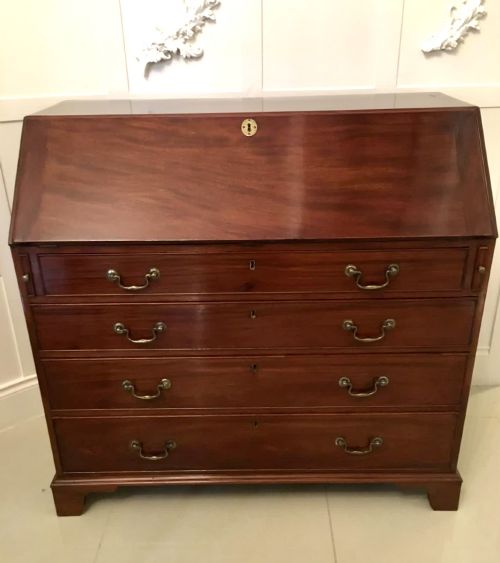
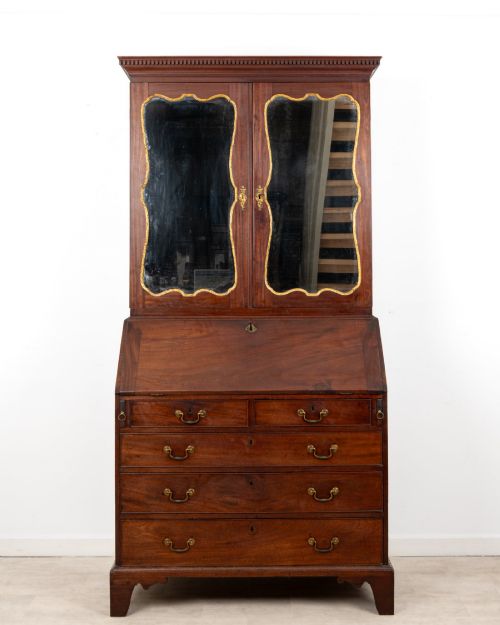
A george iii writing bureau is a practical cabinet with a fitted fall-front writing surface designed to organise papers and store books.
George III Writing Bureau
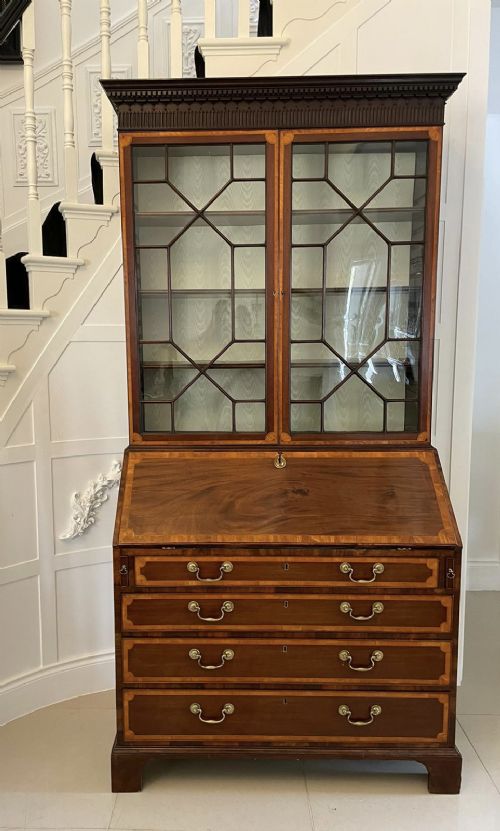
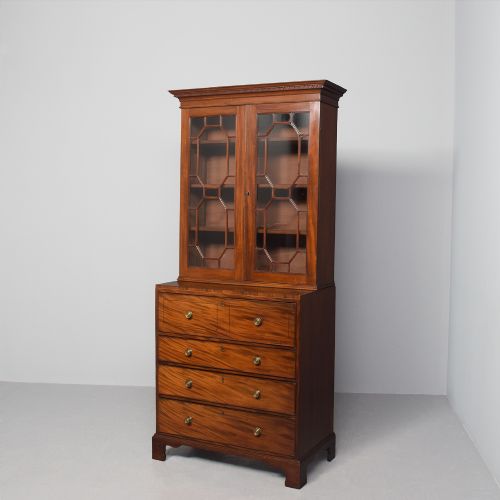
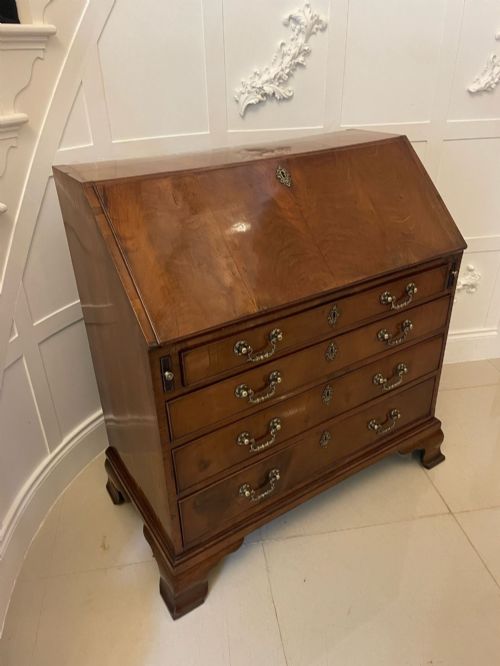
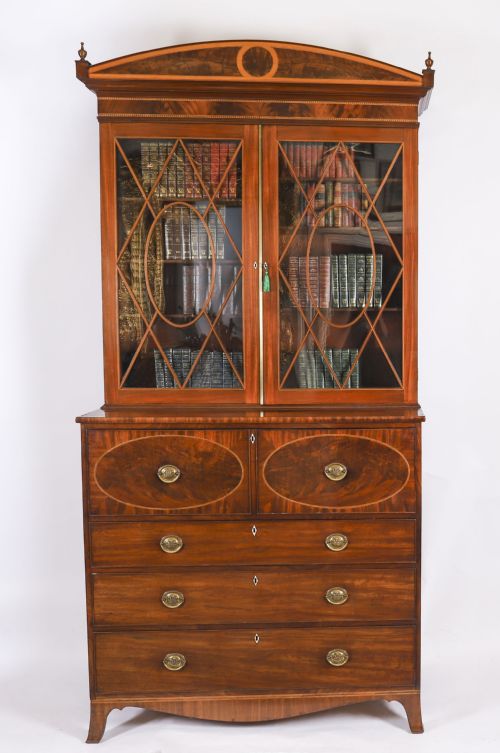
When you search for a george iii writing bureau, you encounter case furniture built during the Georgian era, primarily constructed from mahogany with fitted internal drawers and pigeonholes. The standard form pairs a sloping writing flap with a chest of drawers below, though taller variants incorporate glazed bookcase cabinets above.
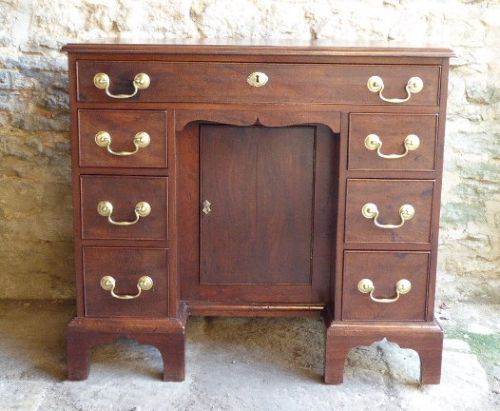
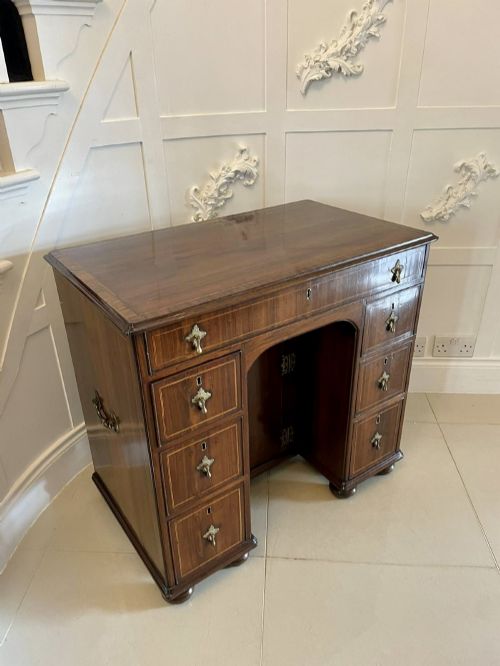
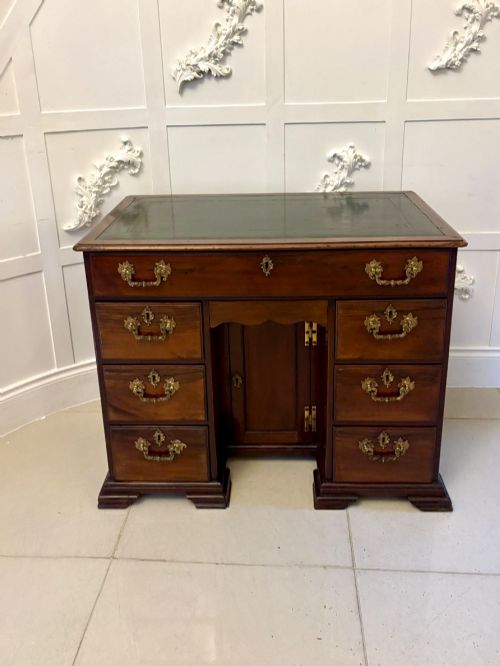
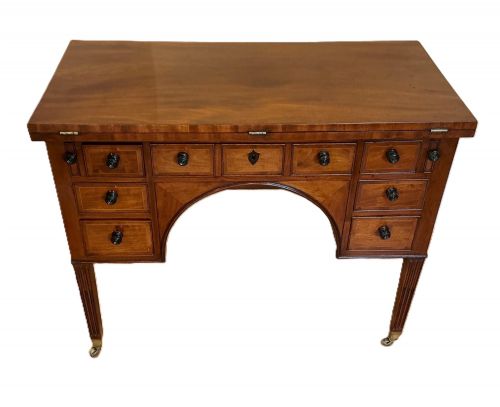
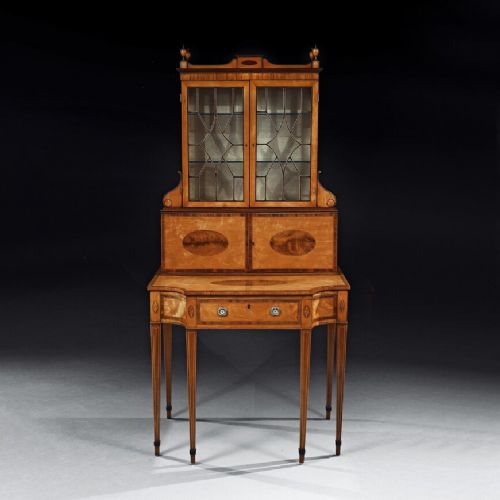
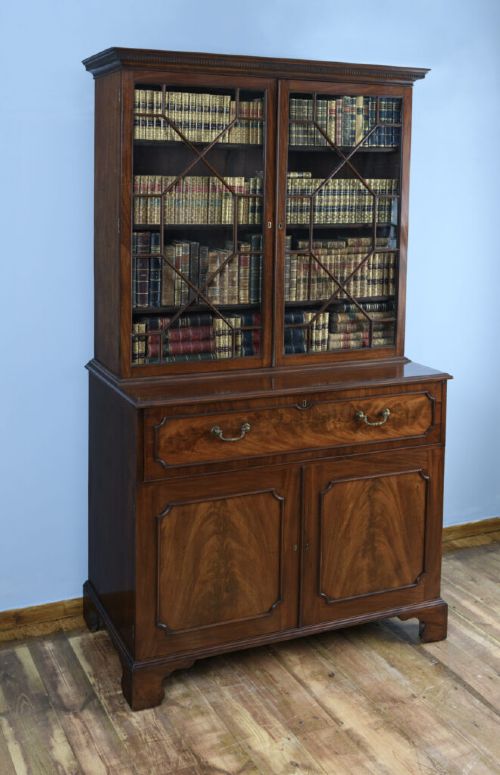
Beyond the classic sloping front, the evidence shows related writing furniture including kneehole desks, library tables, secretaire bookcases, and specialised cabinets with satinwood or pollard oak veneers. These pieces reflect the functional demands of eighteenth-century studies and libraries, ranging from diminutive proportions to large architectural bookcases.
The materials and styles span straightforward oak clerks' desks to finely inlaid satinwood cylinder cabinets and serpentine secretaire bookcases influenced by Sheraton and Chippendale designs. Mahogany remains the dominant wood, appearing plain or as highly figured flame veneer alongside contrasting satinwood stringing and brass hardware.
How they were made
Cabinetmakers constructed these bureaux using solid timbers and carefully selected veneers, applying flame mahogany and satinwood to principal surfaces to create decorative grain patterns. Crossbanding and stringing in contrasting woods framed the drawer fronts and writing flaps, adding linear definition to the case.
Internal compartments relied on fine dovetail joinery for the small pigeonhole drawers, whilst brass handles, escutcheons, and occasional glass panes completed the upper cabinet doors. Secondary woods like oak supported the internal drawer linings and structural framing.
Secret compartments hidden behind sliding pigeonhole panels occasionally pop up to guard past owner secrets.
What varies in quality
Quality rests in the selection of timber figures, where matched flame mahogany veneers and thoughtful integration of satinwood inlay distinguish superior examples from plain construction. The crispness of the dovetails in the internal stationery drawers and the subtlety of the brass hardware further separate standard pieces from important workshop output.
Proportion and architectural harmony dictate the presence of finer pieces, seen in diminutive scales, serpentine fronts, or integrated glazed bookcases with delicate astragal bars. The survival of original surfaces and untouched polish preserves the intended character of the piece.
Gillows
The George III Writing Bureau Glossary
- Fall front
- A hinged writing flap that pulls down to reveal an interior fitted with small drawers and pigeonholes. When closed, it conceals the working surface and stationery.
- Secretaire
- A cabinet or bookcase incorporating a fitted writing drawer or pull-out writing compartment disguised as a standard drawer. This allowed a multi-functional use within a tall case.
- Flame mahogany
- A veneer cut from timber where the branch meets the trunk, producing a distinctive flickering flame-like pattern. It was widely used on high-grade Georgian furniture.
- Satinwood
- A light-coloured, lustrous exotic hardwood used extensively for stringing, crossbanding, and decorative panels during the late eighteenth century.
- Stringing
- Thin inlaid lines of contrasting timber used to outline panels, drawers, and borders on cabinet furniture. It provided a refined linear contrast to darker primary woods.
George III Writing Bureau: Frequently Asked Questions
What is a george iii writing bureau?
A george iii writing bureau is an eighteenth-century cabinet featuring a hinged sloping flap that opens to reveal a fitted interior of small drawers and pigeonholes for correspondence.
Beneath the writing surface sit graduated drawers for storage, and many examples include glazed bookcase cabinets or upper shelving units designed for libraries.
How were they used originally?
These pieces served as private writing desks and storage cabinets for household accounts, letters, and literature in wealthy Georgian homes.
The fitted interior organised stationery, whilst the lockable fall-front protected confidential documents from domestic view.
How do I fit one into a modern room?
A george iii writing bureau works well as a functional workspace in a living room, study, or bedroom where floor space is at a premium.
Keeping the writing flap closed conceals papers and laptops, presenting a tidy antique cabinet when the desk is not in use.
How do I tell periods apart?
Georgian and George III pieces date from the mid-to-late eighteenth century into the early nineteenth century, displaying architectural proportions and quality timber selection.
Later revival pieces from the nineteenth and early twentieth centuries often incorporate softer secondary woods or different construction methods inside the secondary drawers.