
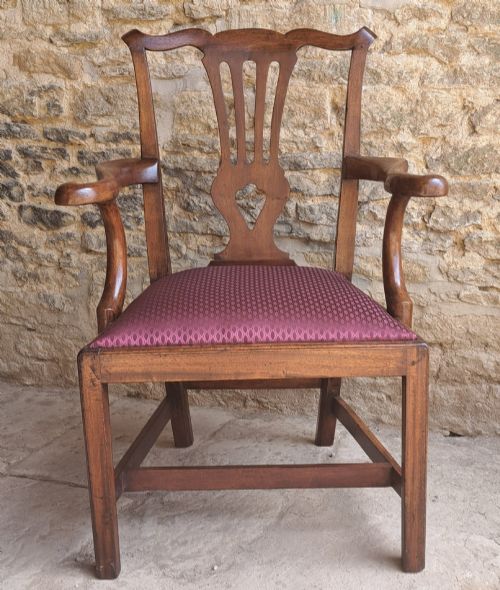
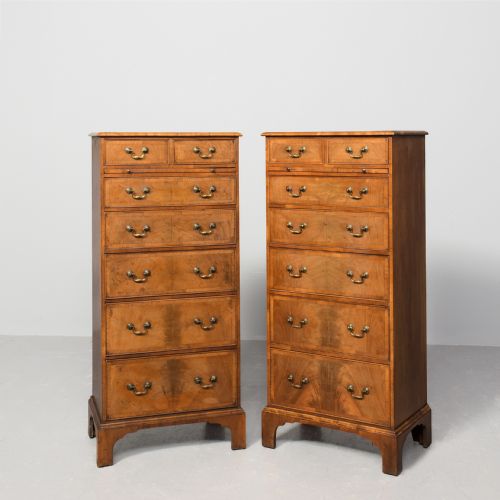
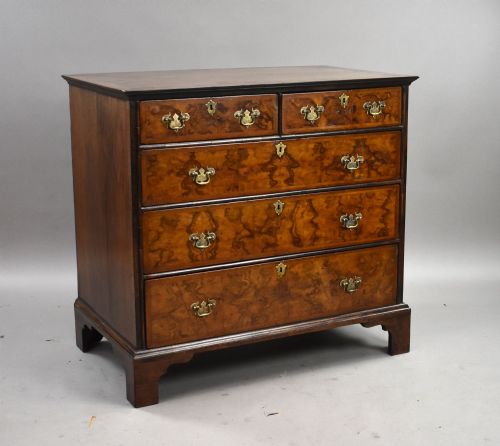
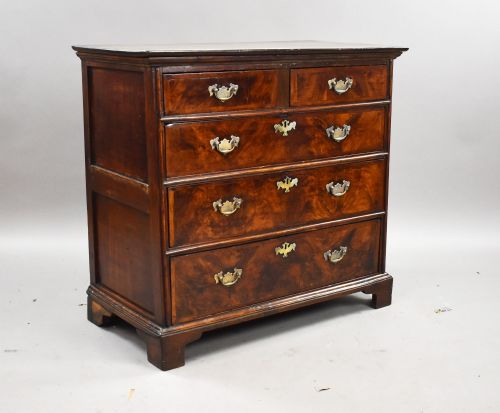
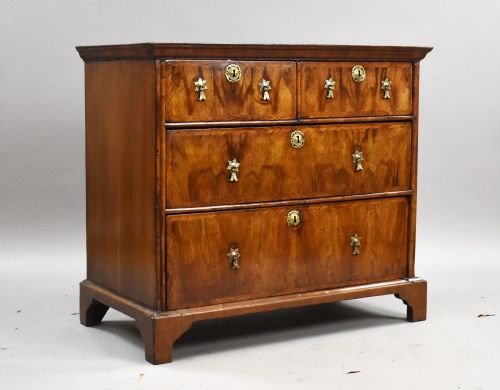


George III Walnut
George iii walnut pieces combine the warm, tactile grain of walnut with the refined proportions of the eighteenth century.

George III Walnut
The selection extends from period originals dated to the 18th century through to later revival pieces created in the George III style. Solid timber construction meets figured veneers, offering both sturdy utility and decorative presence in domestic interiors.
Materials and Construction
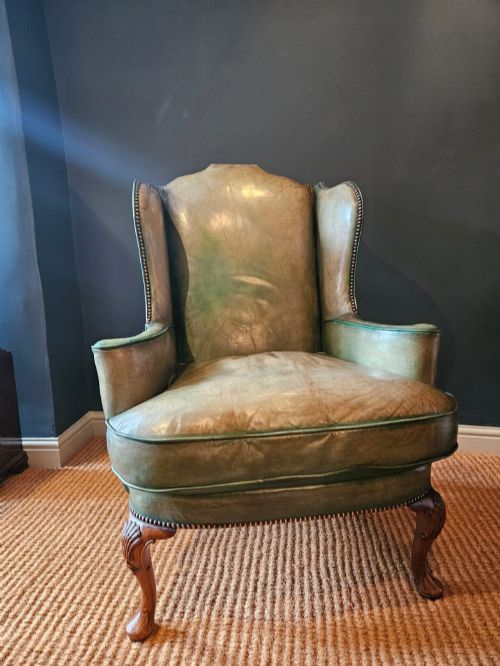
Joinery methods of the period involved dovetailing for drawer construction and mortise and tenon frames for seating. Secondary woods like mahogany and elm also appear alongside walnut, particularly in structural carcases and country workshop pieces.
Listings feature eighteenth-century pieces alongside later nineteenth-century revival items in the George III style.
Judging Quality
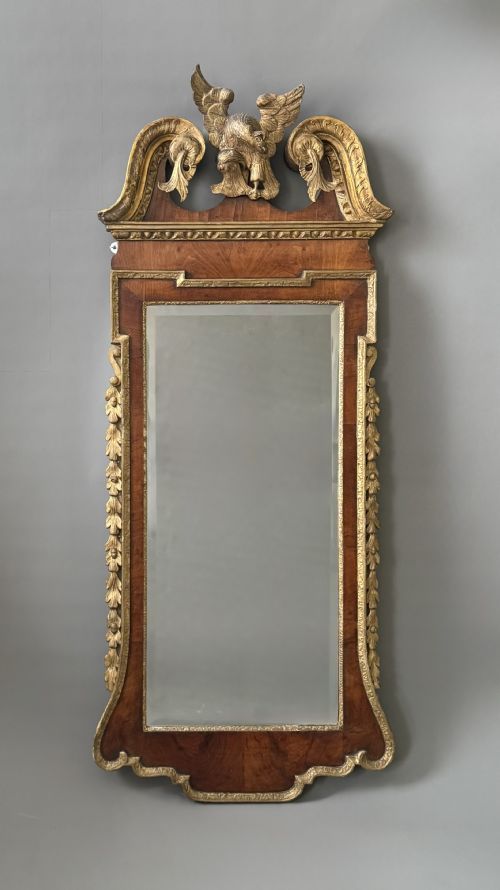
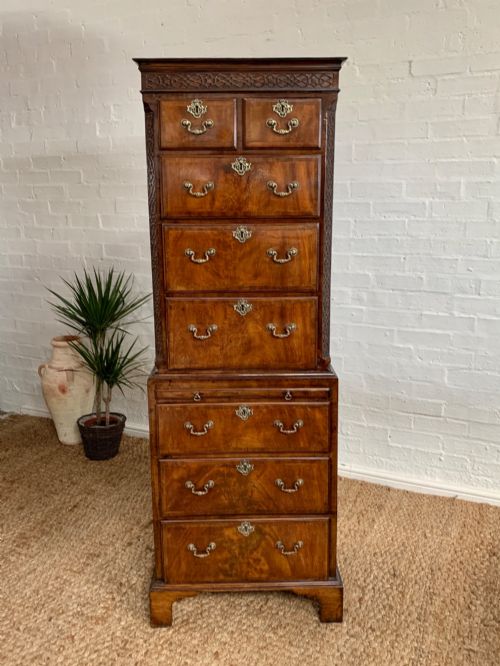
Quality rests in the selection of the timber grain, where symmetrical burr walnut or figured veneers demonstrate superior craftsmanship compared to plain stock. The crispness of carved details, such as parcel gilding on mirrors or cabriole legs on lowboys, elevates a piece further.
Proportion and originality dictate the standing of an item within the range. Pieces retaining their original brass hardware, glass plates, and untreated timber surfaces command greater appreciation among collectors than those heavily altered.
John Bentley·John Taylor·John Bleuler
The George III Walnut Glossary
- Burr walnut
- A prized timber harvested from tree growths that produces intricate, swirling grain patterns. Cabinet makers used these figured veneers on the principal surfaces of high-status furniture.
- Lowboy
- A small side table fitted with one or more rows of drawers, typically raised on slender cabriole legs. These versatile pieces served various domestic functions in eighteenth-century rooms.
- Parcel gilt
- A decorative technique involving the application of thin gold leaf to specific carved highlights on a wooden frame. It frequently accents walnut wall mirrors and architectural mouldings.
- Kneehole desk
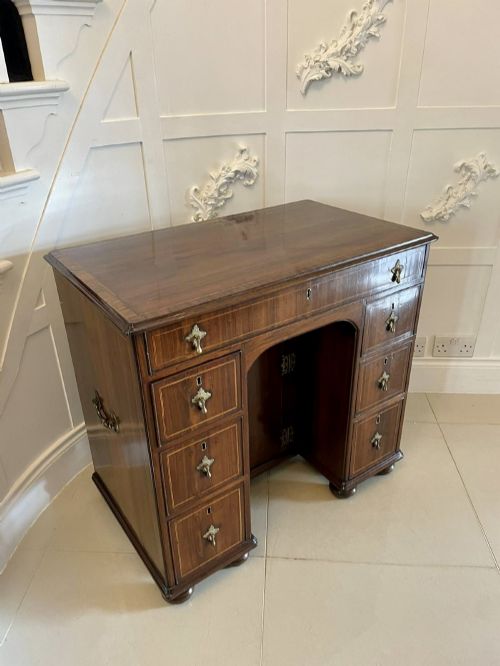
- A compact writing table featuring a central recess flanked by pedestals of small drawers. This form provides an organised workspace with integrated storage.
George III Walnut: Frequently Asked Questions
How do I identify genuine George III walnut?
Examine the construction methods, timber choice, and secondary woods used in the carcase. Eighteenth-century pieces typically employ hand-cut dovetails and native woods alongside walnut veneers.
Compare the patina and wear patterns to known examples from the period. Gradual fading and authentic handling marks help distinguish original items from later revival pieces.
Were these pieces used in bedrooms or living areas?
Chest of drawers, desks, and mirrors served multiple rooms depending on the household layout. Items like lowboys and writing tables moved easily between parlours, bedrooms, and studies.
Seating and small tables adapted to various domestic settings as needs changed. Their portable nature meant furnishings often rotated through different spaces over time.
How should I care for antique walnut furniture?
Keep wooden surfaces away from direct sunlight and steady heat sources to prevent the timber and veneers from drying out. Consistent indoor humidity protects the structural integrity of the joints.
Apply traditional beeswax sparingly to nourish the grain and maintain the natural lustre. Avoid synthetic polishes that build up residue on the surface over the years.
What is the difference between solid walnut and burr walnut?
Solid walnut uses regular planks cut straight from the tree trunk, displaying a straight, uniform grain. It provides robust structural strength for items like chair frames and table legs.
Burr walnut relies on thin decorative veneers sliced from knotty growths, yielding complex, swirling patterns. Makers applied these striking veneers to drawer fronts and tabletops for visual impact.