




George III Toilet Mirror
A george iii toilet mirror is a small adjustable glass designed for the dressing table, offering both period charm and practical reflection.
Forms and Origins
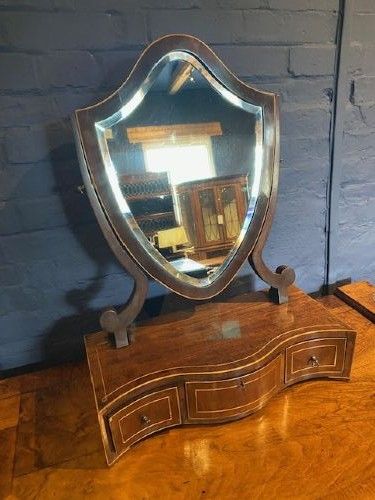
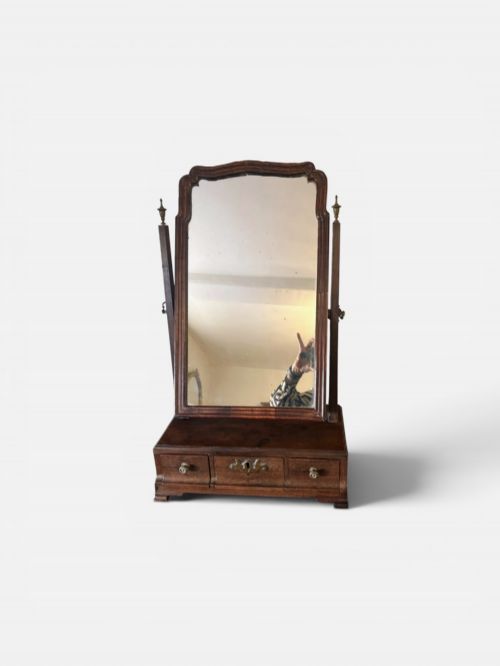
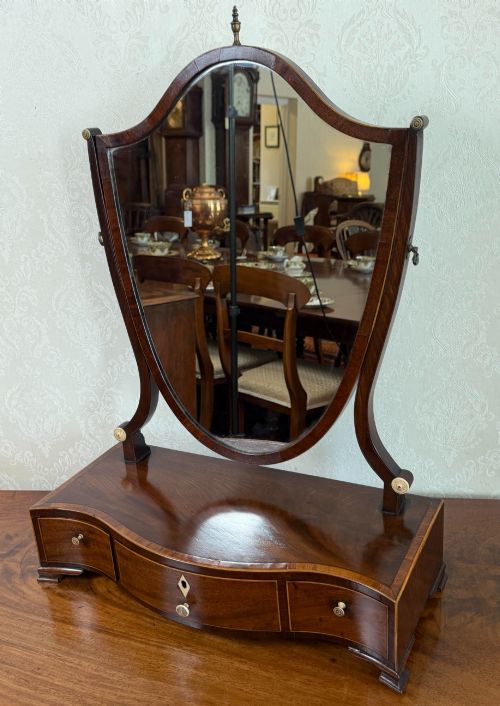
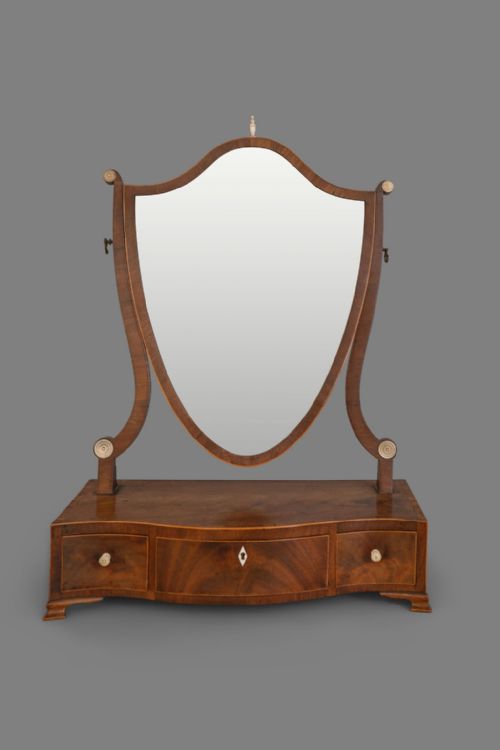
Most pieces date to the Georgian period or around eighteen hundred, with occasional Edwardian interpretations appearing. The forms range from serpentine fronts and bowfronts to simple oval glasses and box base designs.
Materials and Technique
Cabinetmakers utilised solid timbers and veneers, applying boxwood, ebony, and bone for decorative stringing and inlay. Brass fittings secure the pivoting mirror plates between upright arms.
The secondary woods and drawer linings display period construction methods, while the mirror glass itself sits within shaped or rectangular wooden frames.
Retail Price Guide 2026
Typical UK retail prices for george iii toilet mirror, calculated from the Sellingantiques database of over a million retail prices indexed since 2003. This retail price guide relies exclusively on Sellingantiques data; no external sources or auction records are used, so the figures do not describe the wider market.
Mahogany remains the dominant timber across these listings, accompanied by walnut, satinwood, and burr maple.
Judging Quality
The choice of timber figure dictates visual appeal, with richly grained mahogany or burr maple elevating a piece above plain boards. Crisp inlay work in satinwood and boxwood shows the hand of a skilled maker.
Proportions between the mirror frame and the box base determine the overall elegance. Original brasswork and well-figured timber distinguish finer examples from standard workshop production.
The George III Toilet Mirror Glossary
- Toilet mirror
- A small portable looking glass mounted on a stand or dressing box, intended for tabletop use. These pieces were standard bedroom furnishings in the eighteenth and nineteenth centuries.
- Serpentine
- A front contour characterised by a convex centre flanked by concave curves. This fluid shape appears on several finer dressing table mirrors.
- Swing-lock
- The mechanical pivot arrangement allowing the mirror glass to tilt to the desired angle. These fittings are typically made of brass.
- Figure
- The natural pattern and grain visible within timber such as mahogany or maple. Good figure adds depth and visual interest to the polished surface.
Frequently Asked Questions
What is a george iii toilet mirror?
A george iii toilet mirror is a small adjustable glass mounted on a wooden stand or box base, designed for placement on a dressing table.
These pieces date from the Georgian era and were used for personal grooming and shaving before the widespread manufacture of full-length wardrobes.
Where should I place my toilet mirror?
These mirrors suit dressing tables, chest of tops, or sideboards within a bedroom or hallway setting.
Because they are portable, they function well on any stable surface where you need a compact table mirror.
How do I spot a Georgian mirror?
Look for period timber varieties such as mahogany, walnut, and satinwood, alongside traditional box base construction.
Details like brass pivot screws and hand-cut dovetails in the small drawers help identify authentic period pieces.
Did these mirrors change over time?
Earlier eighteenth-century examples often featured serpentine or shaped fronts with walnut or mahogany timbers. Later variations introduced oval glass shapes and elaborate satinwood inlay.