

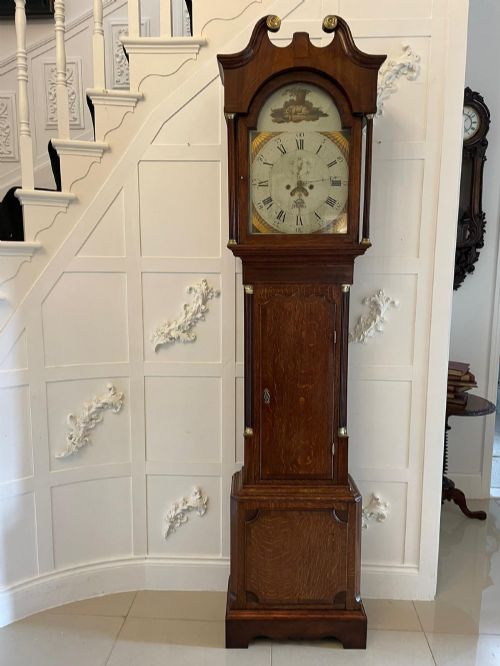
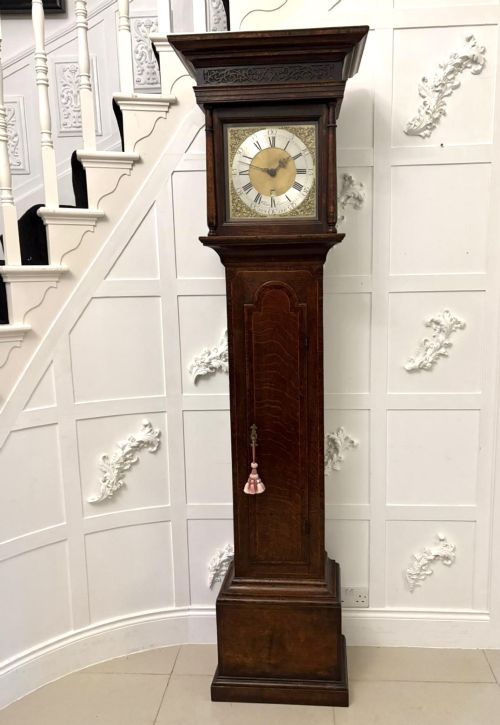
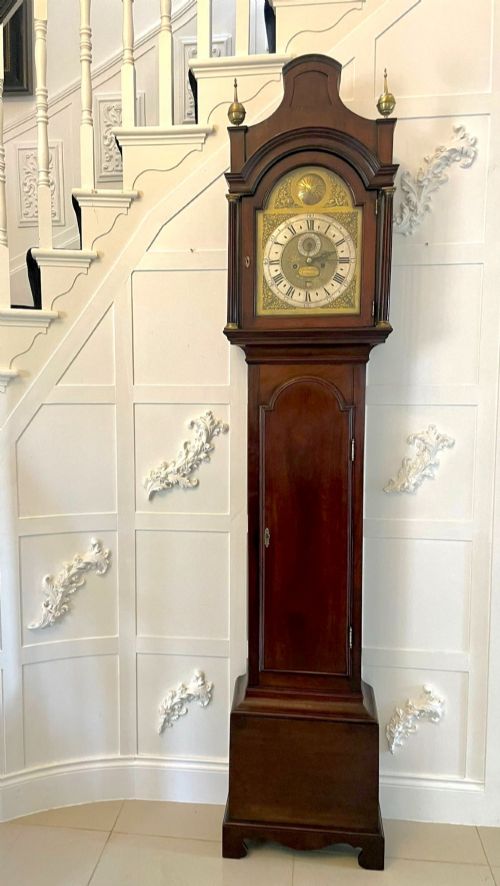
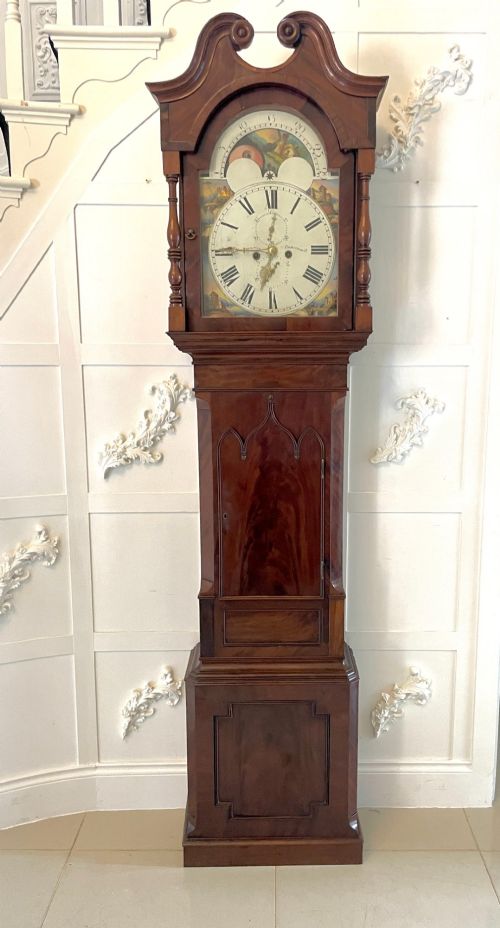
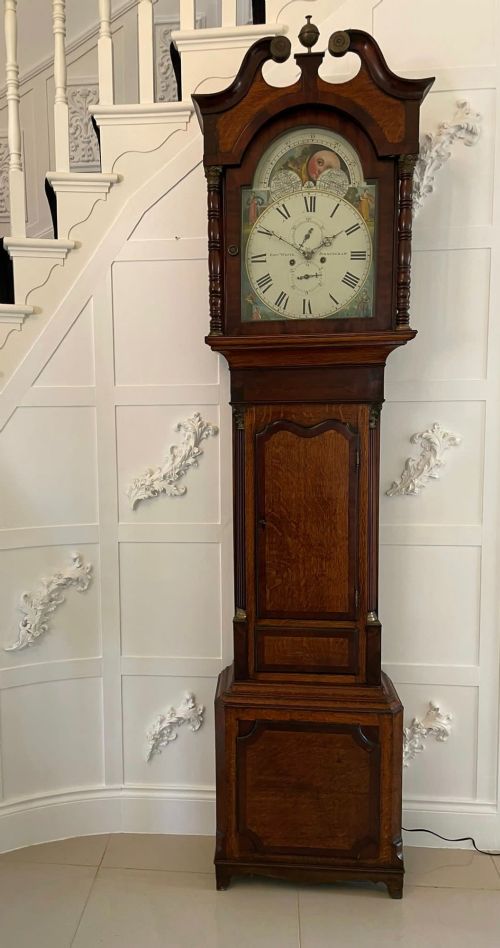
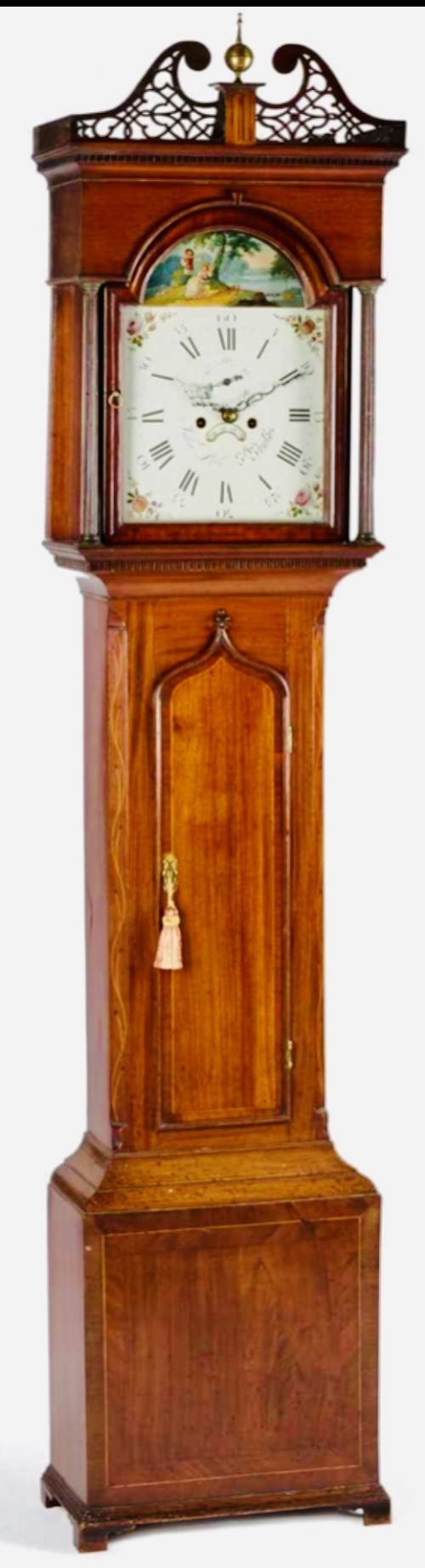
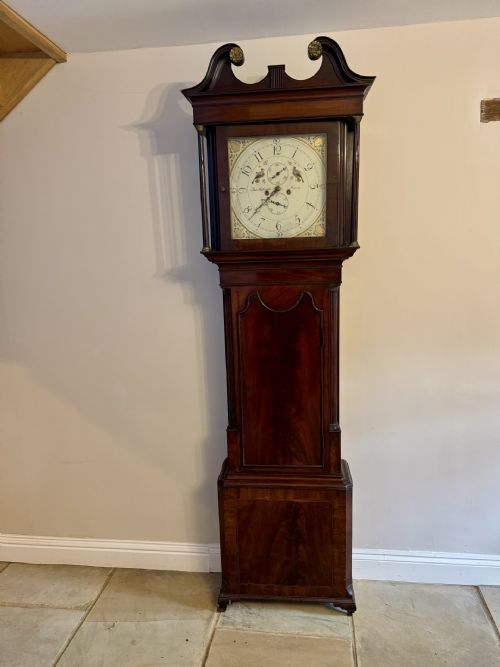


George III Tall Clock
A george iii tall clock anchors a room with its steady tick and tall proportions, bringing period craft and mechanical precision together.

George III Tall Clock
Buyers seeking a george iii tall clock examine tallcase and grandfather clocks originating from the eighteenth and nineteenth centuries, spanning Georgian and Regency periods. The pieces appearing here predominantly date from around eighteen hundred, seventeen fifty, and the broader Georgian era.
Mahogany and oak form the core of these listings, often accompanied by burr oak, walnut, brass, and painted iron dials. Makers from London, Edinburgh, Birmingham, Canterbury, and smaller towns sign movements that reflect regional English and Scottish clockmaking traditions.
Construction and Materials
Cabinetmakers constructed the tall cases using solid mahogany and oak, sometimes incorporating lighter wood bandings, inlay, or burr oak panels. Glass protected the dial face while brass and painted iron served for the chapter rings, hands, and decorative spandrels.
Clockmakers fitted brass eight day and moon phase movements within the wooden housings, linking the gear trains to weighted lines or chains. Painted iron and brass arched dials received hand-lettered signatures and minute tracks from regional makers.
George III Tall Clock Retail Price Guide 2026
Typical asking prices for george iii tall clock among the pieces listed under this phrase on Sellingantiques today, from the lower quarter to the upper quarter. They describe what is for sale here now, not the wider market.
Some provincial clockmakers included local moon phases that occasionally puzzled farmers who relied on the sky rather than the brass disc.
Evaluating Quality
Distinctions in quality rest upon the crispness of cabinet woodwork, the depth of figuring in mahogany or oak veneers, and the sophistication of the dial work. Signed movements by known makers elevate a piece above unmarked regional examples.
Proportion and casework integrity determine the standing of a clock, where secondary wood choice, original brassware, and untouched dial signatures preserve the historical integrity of the piece.
Charles Shuckburgh·William McEwan·Charles Dowsett·John Denbigh·Edward White·James Tregent·Dwerrihouse and Carter·John Pollard·Wm Stanford·Dan Williams·Matthew and Thomas Dutton·Joseph Lum·Thomas Mudge
The George III Tall Clock Glossary
- Longcase clock
- A tall pendulum clock enclosed in a wooden case standing directly on the floor. These instruments are also frequently called grandfather clocks.
- Arch dial
- A clock face featuring a rounded upper section above the main circular chapter ring. This curved area often houses a moon phase mechanism or subsidiary seconds.
- Moon phase
- A mechanical display on the dial showing the lunar cycle through a rotating painted disc. It tracked the phases of the moon for agricultural and tidal purposes.
- Chapter ring
- The circular metal band attached to the clock face bearing the hour numerals. It is typically constructed from brass with engraved or painted markers.
- Spandrel
- An ornamental corner piece fitted between the square dial edge and the circular chapter ring. Cast brass spandrels appeared frequently on mid-Georgian clocks.
George III Tall Clock: Frequently Asked Questions
What is a george iii tall clock?
A george iii tall clock is a tall pendulum timepiece enclosed in a wooden case, produced during the Georgian period.
These pieces combine cabinetmaking with mechanical clockwork movements designed to run for eight hours or eight days between windings.
How do I wind an eight day clock?
An eight day clock requires a key inserted into winding holes on the dial face to draw the internal weights upward.
Careful rotation keeps the weights from dropping too rapidly or straining the gut lines and chains attached to the movement.
Where were these clocks made?
Makers produced these tall clocks in workshops across London, Edinburgh, Birmingham, and various provincial towns and rural parishes.
Regional variations in dial painting and case timber often point directly to the local cabinetmaker and horologist responsible for construction.
How do I care for the timber case?
Mahogany and oak cases benefit from stable indoor environments away from direct heat sources and significant humidity swings.
Occasional application of traditional beeswax helps nourish the grain and protects the polished surface without building up heavy chemical residues.