
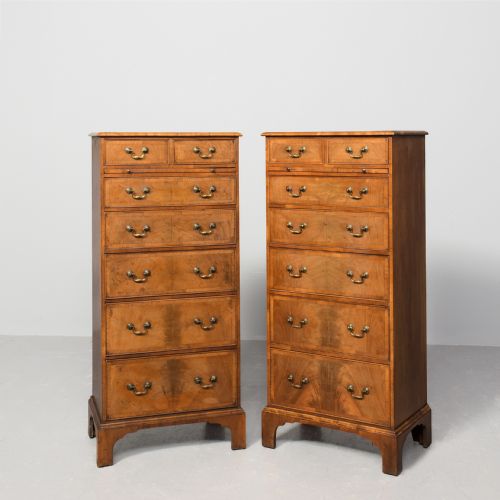
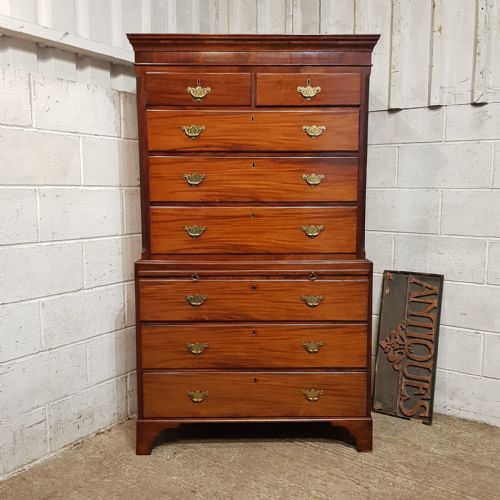


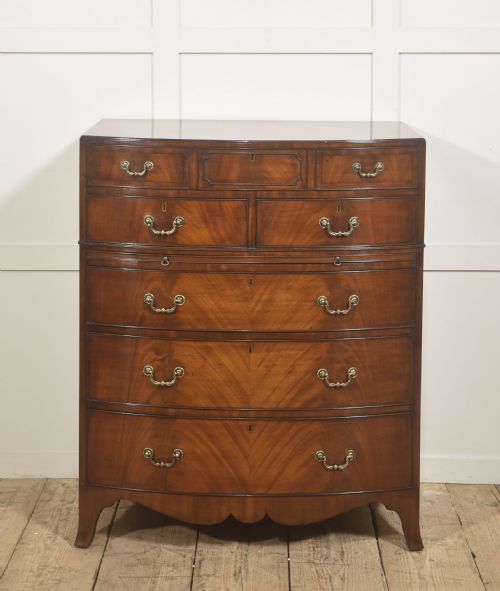


George III Tall Chest
A george iii tall chest offers monumental vertical presence, combining substantial storage capacity with refined proportions.
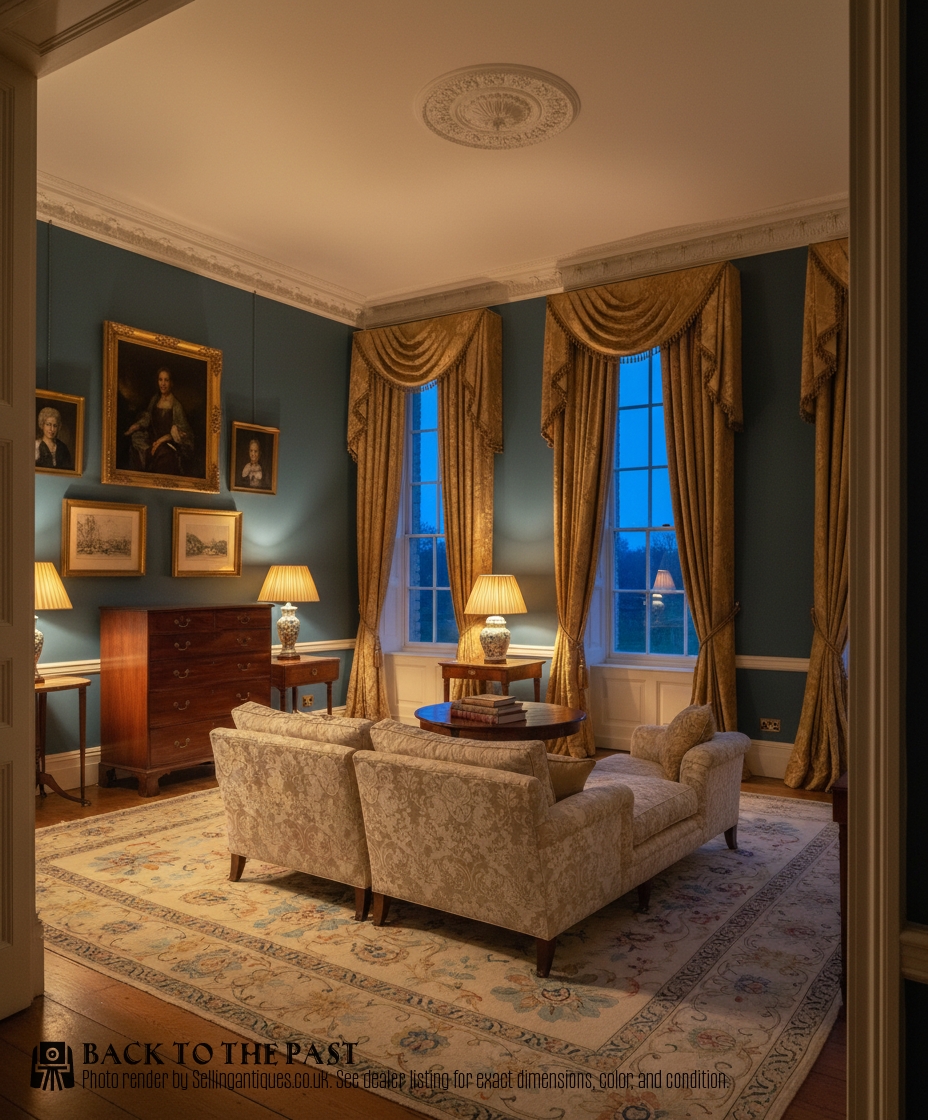
George III Tall Chest
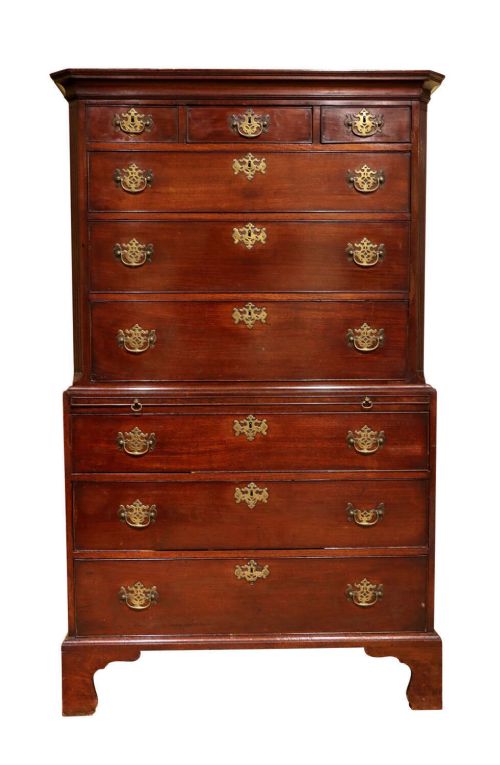
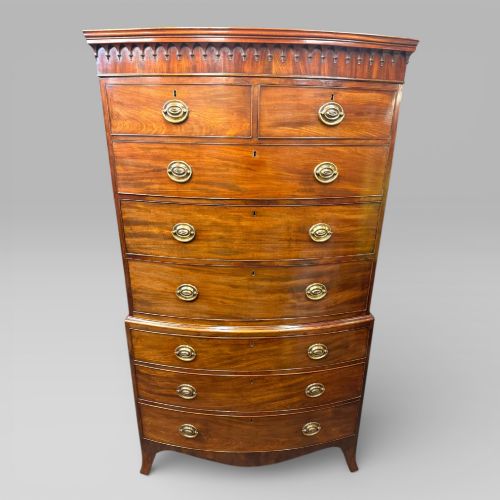
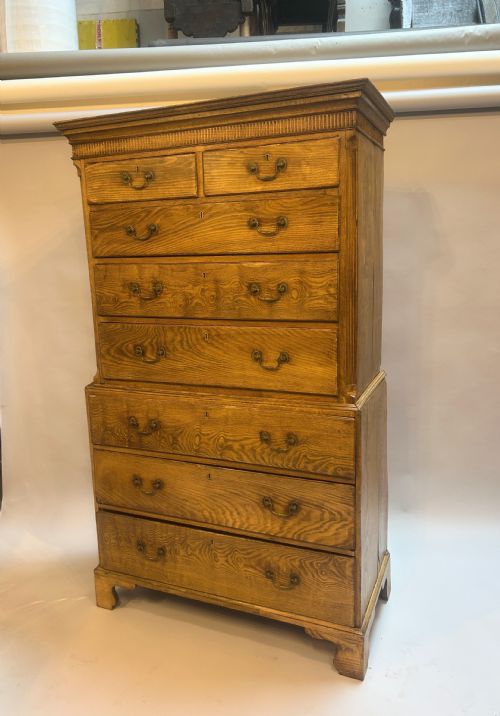
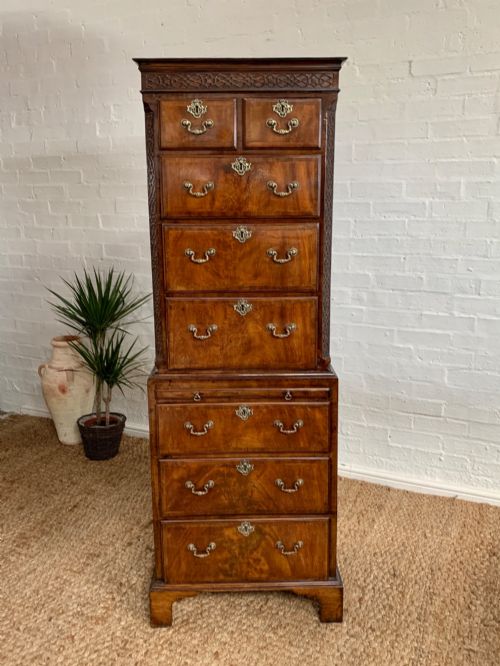
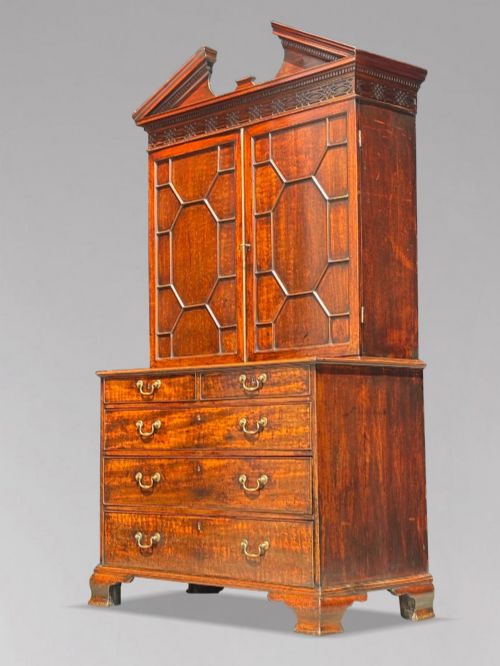
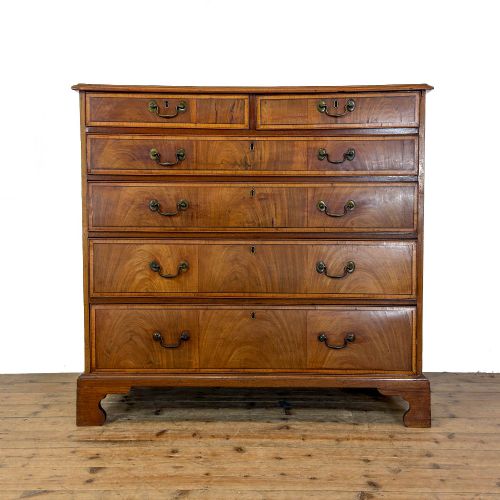
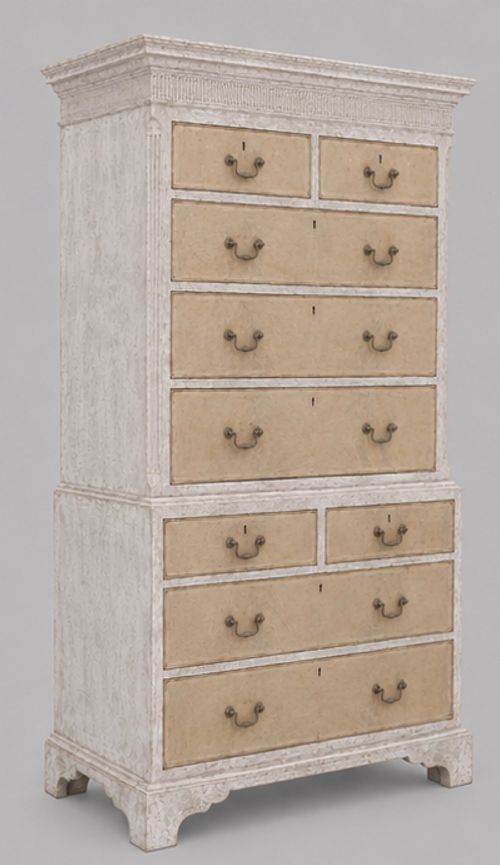
When searching for a george iii tall chest, buyers encounter towering forms designed to maximise storage without consuming excessive floor space. These pieces primarily manifest as chest on chest constructions or tallboys, stacking multiple drawers in two distinct sections.
The versions met most frequently on this page combine period authenticity with practical utility, appearing predominantly in richly grained mahogany alongside occasional examples in oak or walnut. Such pieces serve as commanding focal points in bedrooms and studies alike, offering deep compartmentalisation for linens and garments.
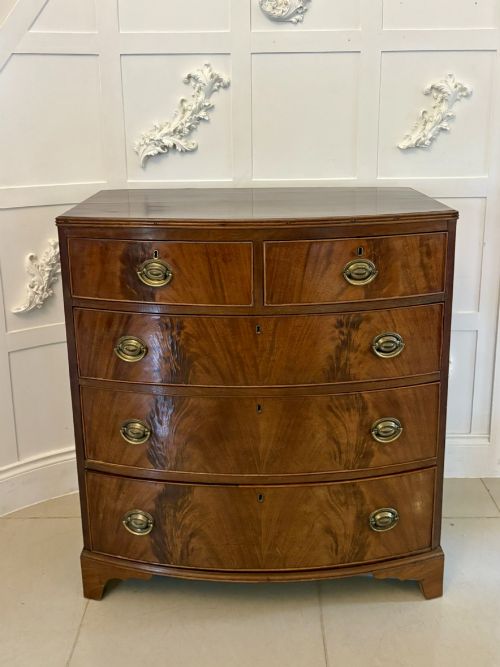
Originating during the eighteenth century, these items reflect the architectural sensibilities of the Georgian era through disciplined cornices and graduated drawer depths. The category also encompasses bow-fronted and serpentine variations, each introducing subtle curvature to the otherwise rigid vertical silhouette.
How they were made
Cabinetmakers constructed these tall storage units primarily using solid mahogany and oak timbers, frequently applying figured mahogany veneers to drawer fronts to create striking grain patterns. Secondary woods such as pine appear internally within drawer linings and carcase backs.
Joinery techniques relied heavily on hand-cut dovetails for drawer construction, ensuring structural endurance across the numerous stacked compartments. Brass hardware, including pierced drop handles and escutcheons, was fitted meticulously to secure the heavy timber doors and drawers.
Listings feature eighteenth-century and nineteenth-century periods, constructed primarily from mahogany, oak, and walnut.
What varies in quality
Distinctions in quality often rest upon the selection of timber veneers and the intricacy of the surrounding woodwork, such as dental mouldings and carved bracket feet. Figured mahogany displays superior depth and chatoyancy, elevating the visual weight of the upper sections.
The integrity of original brasses and the smoothness of drawer operation further separate standard examples from finer commissions. Pieces retaining their matching upper and lower sections demonstrate greater architectural harmony than assembled alternatives.
Thomas Chippendale
The George III Tall Chest Glossary
- Tallboy
- A tall chest of drawers, often constructed as a chest on chest where a smaller upper section sits upon a larger base.
- Chest on Chest
- A form comprising two distinct cabinet sections stacked vertically, typically featuring multiple graduated drawers.
- Brushing Slide
- A pull-out shelf integrated into the waist of a tall chest, historically utilised for folding garments.
- Bow-Front
- A convex curved front facade that softens the linear geometry of a traditional rectangular case piece.
- Bracket Feet
- Small, architectural feet supporting the base of the chest, often taking ogee or shaped bracket forms.
George III Tall Chest: Frequently Asked Questions
How do I use a tall chest in a modern room?
A tall chest provides exceptional vertical storage capacity, making it ideal for bedrooms or hallways where floor space is limited.
Position the piece against a sturdy wall to anchor the room, utilising the top surface for balanced decorative displays.
How do I identify a period piece from later styles?
Period pieces display authentic construction markers such as hand-cut dovetailing, period brass hardware configurations, and naturally aged timber patination.
Later revival styles often utilise machine-cut joints and timber finishes that lack the depth found in eighteenth-century examples.
Are these chests heavy to move?
Most chest on chest designs separate into upper and lower carcases, which significantly reduces the overall weight during transport.
Removing all the individual drawers prior to relocation ensures safe handling of the heavy mahogany frames.