
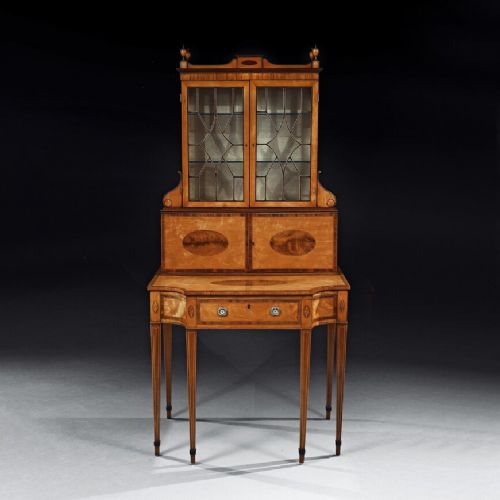
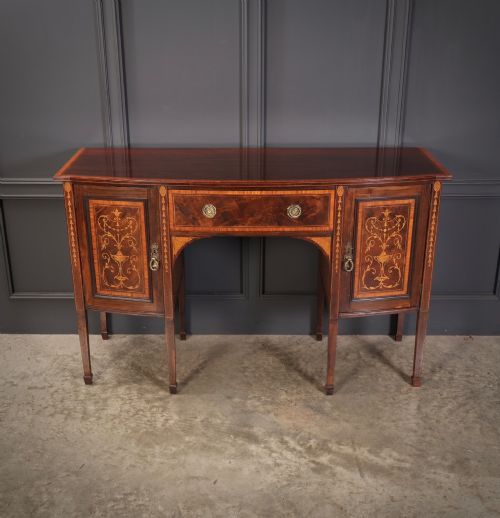


George III Satinwood Cabinet
A george iii satinwood cabinet brings radiant, fine-grained timber and neoclassical elegance into a room.
George III Satinwood Cabinet
A george iii satinwood cabinet encompasses sophisticated writing pieces, commodes, and bookcase forms originating in the eighteenth century alongside later revival interpretations. These pieces deploy pale, luminous timbers to create refined focal points for sophisticated interiors.
The selection here ranges from eighteenth-century originals attributed to leading designers down to later revival pieces from nineteen hundred and nineteen ten. Buyers encounter cylinder desks, bonheur du jour writing tables, and breakfront display vessels.
Forms span practical storage items like linen presses and sideboards alongside decorative items such as demi-lune commodes and wall-hanging corner cupboards. Each variation highlights the distinct golden hue associated with this specific cabinetmaking tradition.
Materials and construction
Cabinetmakers utilised satinwood as a primary timber or veneer, frequently combining it with mahogany, rosewood, harewood, and sabicu. Inlays of boxwood, painted decoration, and brass hardware provide contrast against the pale ground.
Marquetry techniques introduce intricate floral or geometric patterns across curved serpentine fronts and demi-lune surfaces. Carved structural elements employ traditional joinery methods to support heavy book-matching and delicate banded borders.
Some gentlemen's wash stands hide their utilitarian duties beneath immaculate satinwood surfaces, proving eighteenth-century practicality could still look utterly charming.
Factors of quality
The standard of a george iii satinwood cabinet rests upon the crispness of its marquetry and the choice of figured timber. Finely executed painted panels and well-matched veneer grains separate exceptional studio outputs from standard workshop production.
Structural integrity, original brass mounts, and untouched patination define desirability among collectors. Pieces exhibiting precise boxwood stringing and intact cylinder mechanisms command greater appreciation than altered or heavily restored examples.
Gillows·Cowtan and Sons
The George III Satinwood Cabinet Glossary
- Satinwood
- A dense, lustrous hardwood yielding a golden-yellow surface that takes a high polish. It forms the primary visual element in these cabinets.
- Marquetry
- Decorative veneer work forming intricate pictures or patterns using various coloured woods. Craftsmen assemble these motifs meticulously onto the carcase.
- Bonheur du Jour
- A light lady's writing desk featuring a small cabinet or set of drawers on top. This form emerged during the eighteenth century.
- Demi-lune
- A half-moon shape characteristic of commodes and side cabinets designed to sit flush against walls. This profile suits narrow hallways and drawing rooms.
- Banding
- A narrow strip of contrasting timber framing a panel or drawer front. It accentuates the geometric lines of the cabinet.
- Serpentine
- A gently undulating front line curving inward and outward. This shaping demands advanced joinery skill.
George III Satinwood Cabinet: Frequently Asked Questions
What is a george iii satinwood cabinet?
A george iii satinwood cabinet is an eighteenth-century or revival storage piece veneered in pale, luminous timber. These items include writing desks, commodes, and bookcases.
They reflect neoclassical design principles through balanced proportions, fine stringing, and sometimes painted ornamentation. The style prioritises visual lightness and sophisticated surface pattern over heavy carcase construction.
How do I care for satinwood?
Satinwood requires stable indoor humidity and protection from direct sunlight to prevent the pale timber from darkening or splitting. Regular dusting with a dry, soft cloth maintains the polished finish.
Avoid placing these cabinets near heat sources or damp areas. Professional wax application preserves the natural sheen without building up heavy residues.
How can I tell a george iii piece from a revival?
Eighteenth-century pieces display authentic construction methods, hand-cut dovetails, and period secondary timbers inside drawers. Wear patterns align with centuries of domestic use.
Revival pieces, often dating around nineteen hundred or nineteen ten, utilise machine-sawn elements and standardised fixings. Comparing timber ageing and structural joints helps clarify the exact period.
Where were these cabinets used?
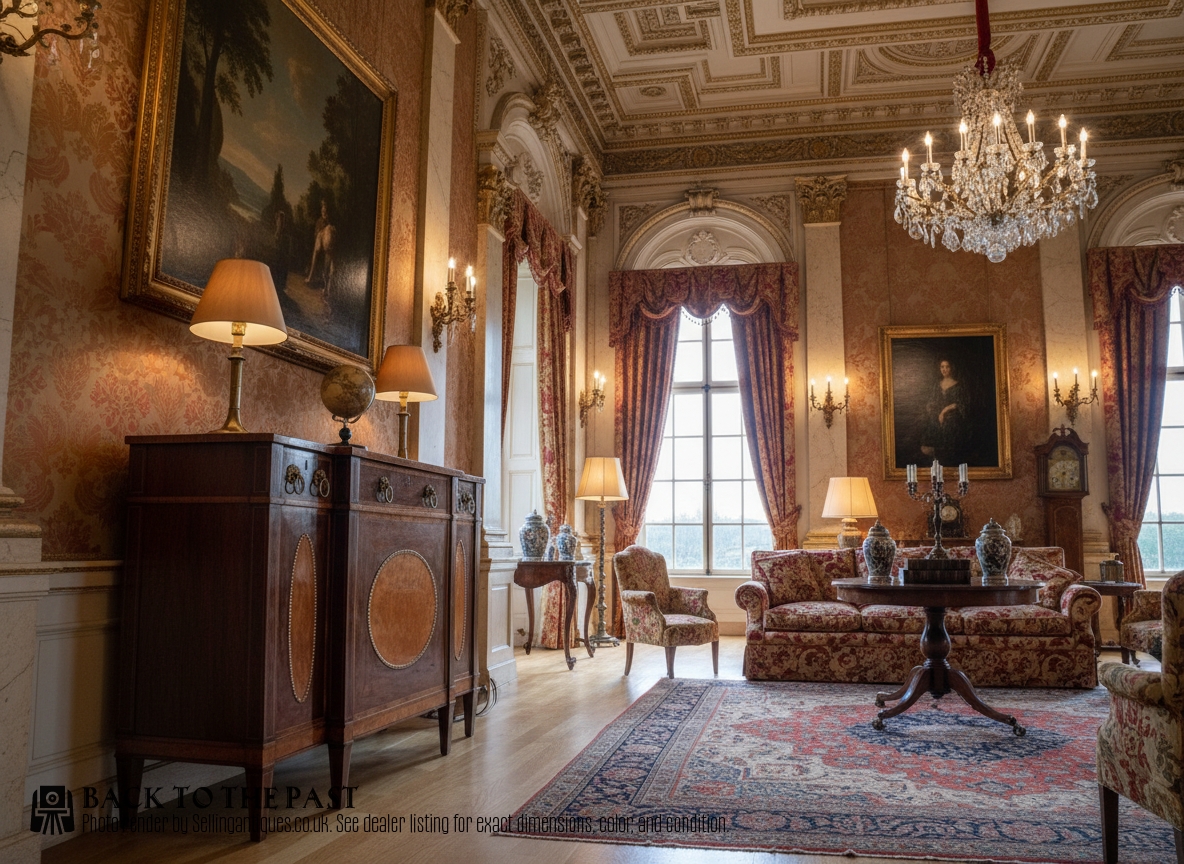
Original owners placed these refined pieces in drawing rooms, private libraries, and ladies' boudoirs. Their decorative qualities suited spaces designed for entertaining and correspondence.
Today, they function effectively in similar residential settings as focal storage units or writing surfaces. Their compact demi-lune and cabinet forms adapt well to modern room layouts.