
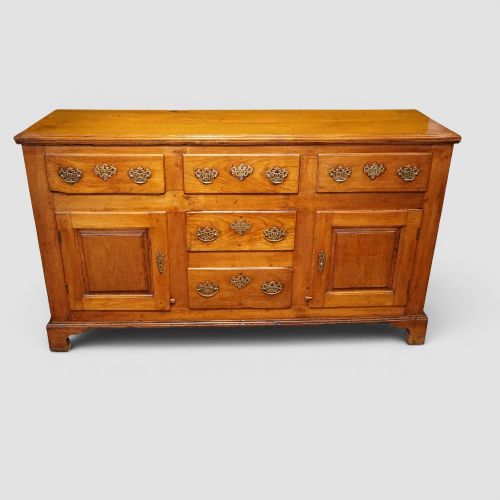


George III Oak Cabinet
A george iii oak cabinet brings sturdy eighteenth-century craftsmanship into a room, offering warm timber tones and practical storage.

George III Oak Cabinet
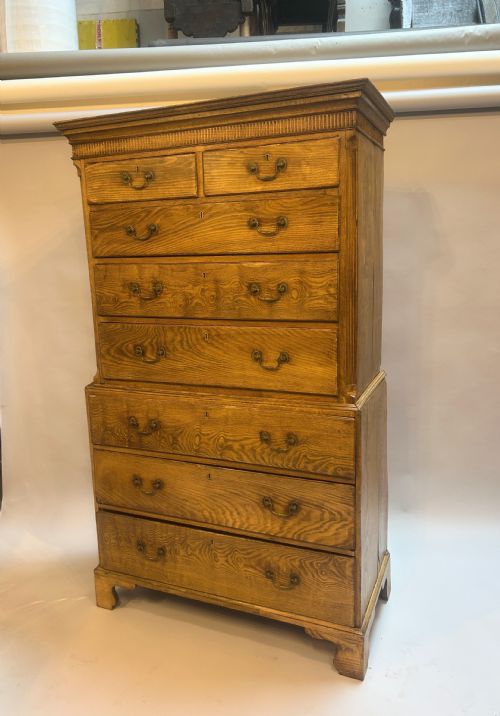
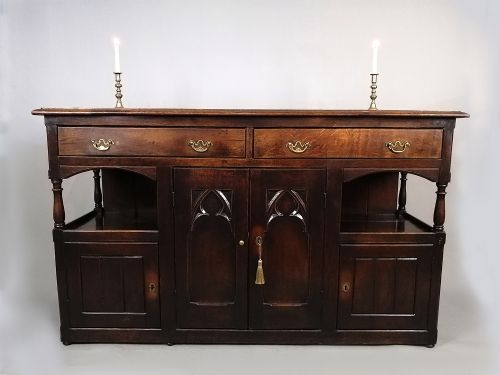
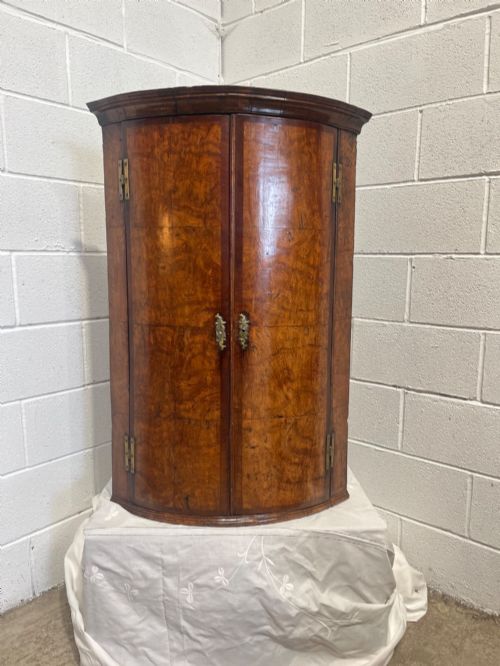
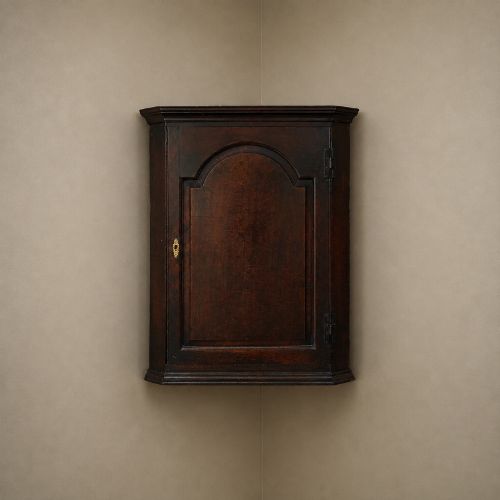
Corner cabinets dominate the available forms, appearing frequently as wall-hanging units or floor-standing pieces designed to utilise awkward spaces in period rooms. Alongside these, buyers encounter substantial oak dressers, tallboys, and multi-part cupboards reflecting the domestic requirements of provincial households. Timber selection leans heavily on native oak, occasionally enriched with mahogany crossbanding, burr oak, or fruitwood inlay.
How they were made
Cabinet makers built these pieces using solid native oak timbers, frequently employing frame-and-panel construction to accommodate the natural movement of the wood over time. Secondary woods such as fruitwood and mahogany appear in crossbanding, stringing, and decorative inlays, adding subtle tonal contrast to the primary dark surfaces. Brass hardware, including butterfly hinges and escutcheons, secures doors and drawers while providing functional contrast.
Glazing in upper bookcase and corner cabinet sections relies on individual wooden bars forming astragal patterns, holding small panes of glass securely. Surface finishes developed through decades of polishing, utilising traditional waxes that enhance the natural grain and figuring of the timber without obscuring its age.
While plain oak dominates the archive, several pieces incorporate mahogany crossbanding, burr oak panels, and decorative fruitwood stringing.
What varies in quality
Quality in a george iii oak cabinet rests largely on the choice of timber and the ambition of its secondary veneers. Pieces featuring figured burr oak, deliberate fruitwood inlay, or mahogany crossbanding generally reflect a higher workshop standard than plain utilitarian examples. The crispness of the mouldings and the delicacy of the astragal glazing bars further separate standard domestic furniture from finer output.
Structural integrity and the survival of original brasses and surface patination heavily influence the standing of any piece. Cabinets retaining their original wall-mounting brackets, backboards, and interior shelving demonstrate better historical continuity than heavily restored equivalents.
The George III Oak Cabinet Glossary
- Astragal glazed
- Fitted with narrow wooden bars that divide glass panes within a cabinet door. This technique lightens the visual weight of large cupboards.
- Crossbanding
- A narrow strip of veneer applied to the edges of a board so the grain runs perpendicular to the main surface. It frames panels on many finer eighteenth-century pieces.
- Cwpwrdd deuddarn
- A traditional Welsh two-section oak cupboard common in rural properties of the period. These regional pieces offer deep lower storage beneath upper display shelving.
- Tallboy
- A tall chest of drawers built in two stacked sections to maximise vertical storage capacity. They frequently combine generous drawer space with compact floor footprints.
- Stringing
- Thin inlaid lines of contrasting timber used to outline drawer fronts and cabinet doors. This decorative detail highlights the geometric lines of Georgian case pieces.
George III Oak Cabinet: Frequently Asked Questions
Where should I place a corner cabinet?
These wall-hanging or floor-standing units fit neatly into unused room angles, turning dead space into functional display areas for ceramics or glassware.
Ensure the wall structure supports the weight of a solid timber cabinet before hanging any eighteenth-century wall-mounted model.
How do I clean an antique oak surface?
Dust the timber regularly with a soft, dry cloth to prevent particulate buildup in the grain and carved mouldings.
Apply a quality beeswax sparingly once or twice a year to nourish the dry wood and maintain the natural lustre.
Can I store books in a bureau bookcase?
The upper shelves easily accommodate volumes, while the fall-front bureau provides a sturdy sloped surface for writing and correspondence.
Keep these pieces away from direct sunlight and heat sources to prevent the solid oak panels and veneers from warping.
What is the difference between a dresser and a sideboard?
A dresser typically includes upper plate racks or shelving mounted above a base cabinet, whereas a sideboard consists solely of the lower storage unit.
Both forms utilise durable oak construction designed to withstand heavy daily use in traditional kitchen and dining spaces.