



George III Night Cabinet
A george iii night cabinet is a compact bedroom piece designed for nighttime convenience, combining concealed storage with refined timber work.
George III Night Cabinet
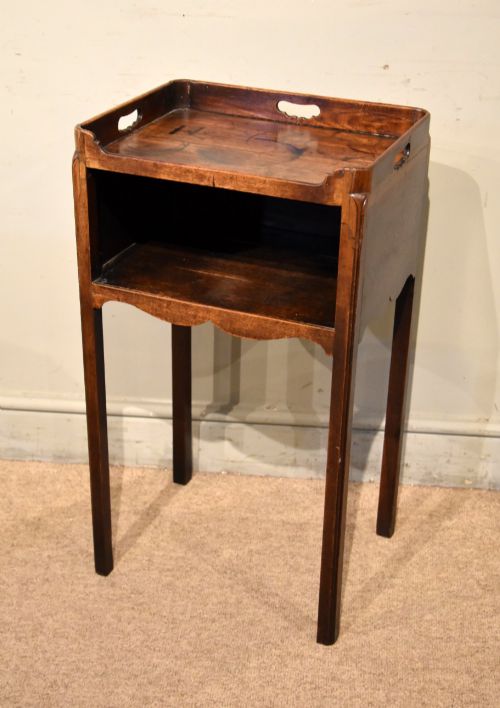
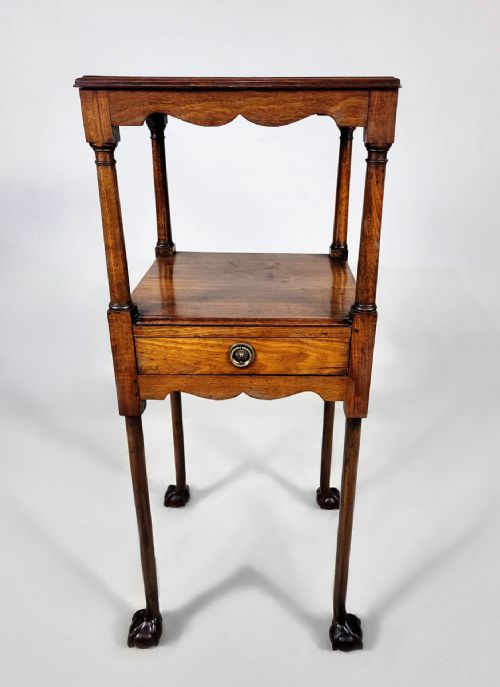
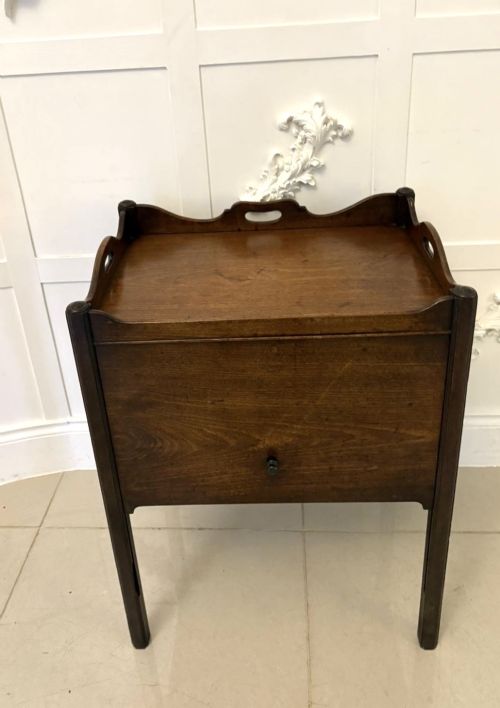
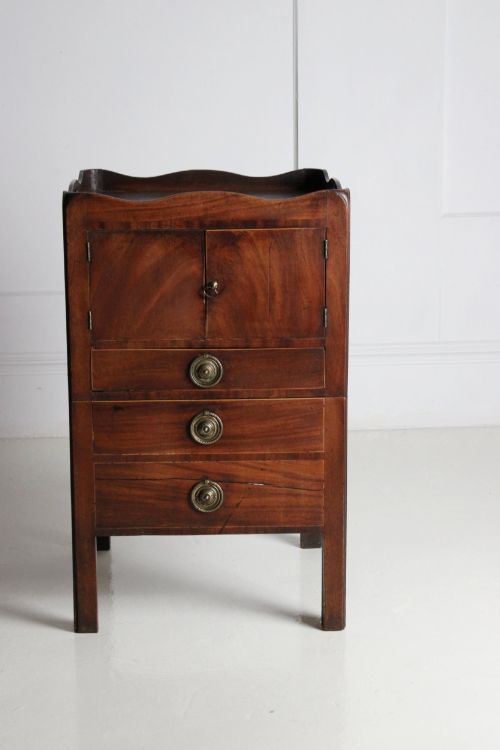
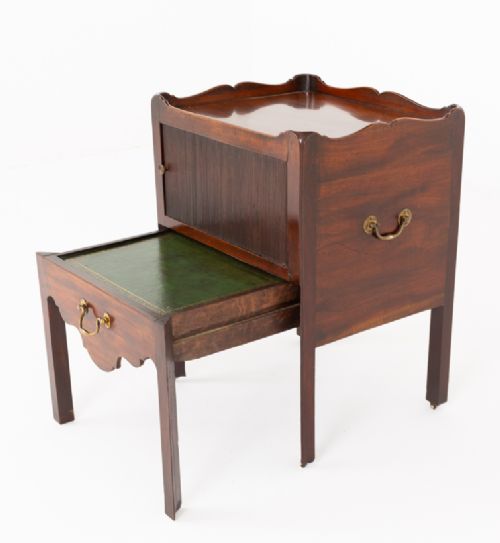
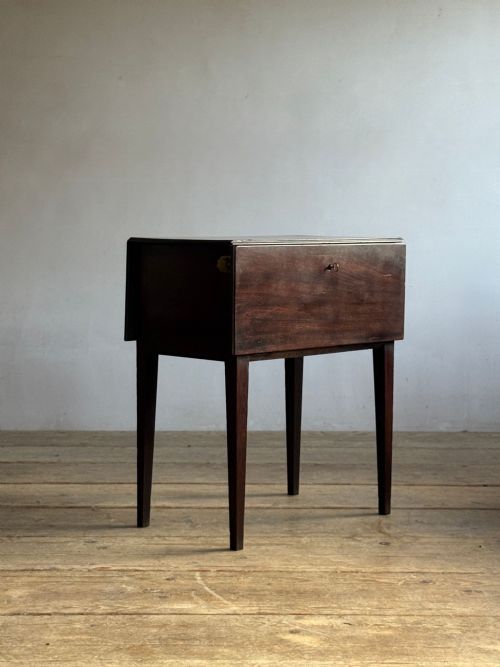
When you search for a george iii night cabinet, you encounter a variety of practical bedroom furniture built during the Georgian era. These pieces often take the form of bedside tables, commodes, pot cupboards, and night stands designed to hold chamber pots or personal items out of sight.
How they were made
Cabinet makers of the period relied heavily on solid mahogany and mahogany veneers applied to secondary timbers. Drawer linings frequently utilised oak or pine, joined with hand-cut dovetails that evidence traditional workshop construction.
Decorative detailing on these cabinets often involved boxwood inlay, satinwood banding, and shaped brass handles. Surfaces were finished to highlight the natural grain of the wood, particularly in flame mahogany panels and serpentine fronts.
George III Night Cabinet Retail Price Guide 2026
Typical asking prices for george iii night cabinet among the pieces listed under this phrase on Sellingantiques today, from the lower quarter to the upper quarter. They describe what is for sale here now, not the wider market.
Some bedside commodes doubled as deception tables, pretending to be innocent side desks while hiding secret chamber pots inside.
What varies in quality
The distinction between ordinary and superior pieces rests on the choice of timber and the crispness of the joinery. Selected flame mahogany and intricate boxwood stringing indicate a higher tier of production commissioned by wealthier households.
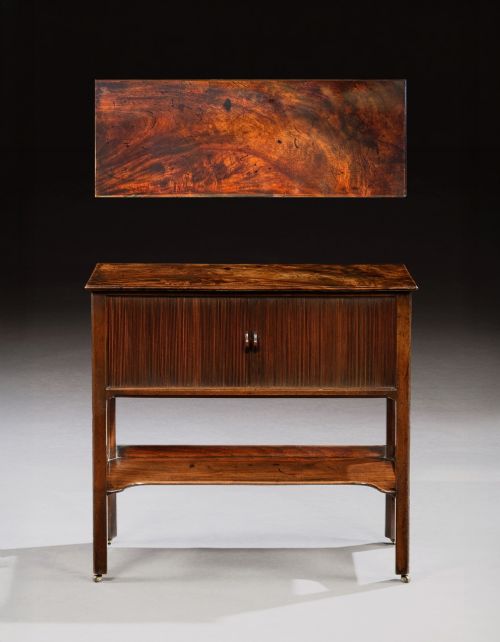
Proportion and functional design also separate workshops. Well-executed serpentine curves, smooth-sliding tambour doors, and integrated tray tops demonstrate the maker's skill and elevate the piece beyond a simple utility cabinet.
The George III Night Cabinet Glossary
- Tray top
- A raised rim around the top surface of the cabinet designed to prevent items from rolling off. This feature is frequently found on eighteenth-century bedside commodes.
- Tambour
- A series of small wooden strips glued to a canvas backing to create a flexible sliding door. It allows access to enclosed cabinet spaces without swinging doors.
- Serpentine front
- A furniture front characterised by a curving line that is convex in the middle and concave at the sides. This shape requires advanced woodworking skill to execute properly.
- Flame mahogany
- A distinct wood veneer figure resembling flickering flames, achieved by cutting through the branch junctions of the tree. It was favoured for high-status cabinet doors and drawer fronts.
George III Night Cabinet: Frequently Asked Questions
What is a george iii night cabinet?
A george iii night cabinet is a small bedside storage piece from the late eighteenth century. They were originally used in bedrooms to house chamber pots and night necessities.
Today, buyers use them as functional bedside tables or small accent chests in period and modern interiors. Their compact proportions make them adaptable for various rooms.
How do I identify a tambour door?
A tambour door consists of vertical wooden slats attached to a flexible backing fabric. This allows the door to slide smoothly around a curved track.
This mechanism was popular in the period for concealing cabinet interiors without needing clearance for swinging doors.
What woods were used for these cabinets?
Mahogany is the primary wood found across these listings, often selected for its durability and rich dark tone. Cabinet makers also employed flame mahogany veneer for decorative fronts.
Secondary woods such as boxwood and satinwood appear as stringing and inlay accents to highlight the edges and panels.
How were tray top commodes used?
Tray top commodes featured a raised wooden gallery around the upper surface to keep washing items or chamber utensils secure. The enclosed lower section hid the pot cupboard from view.
They served a practical daily purpose in Georgian bedrooms before modern plumbing became standard in homes.