




George III Linen Press
A george iii linen press is a substantial period storage piece that combines upper linen slides with lower drawers, prized for both timber quality and domestic presence.
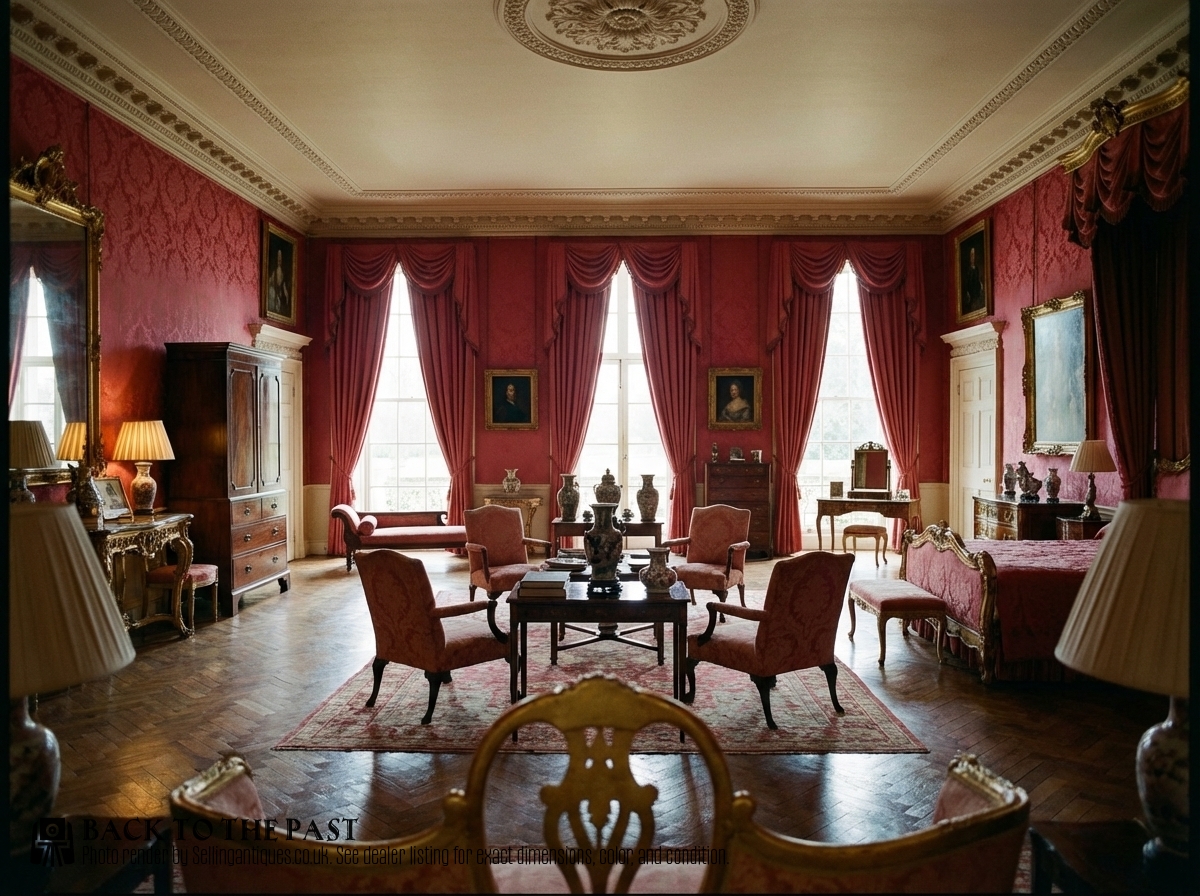
George III Linen Press
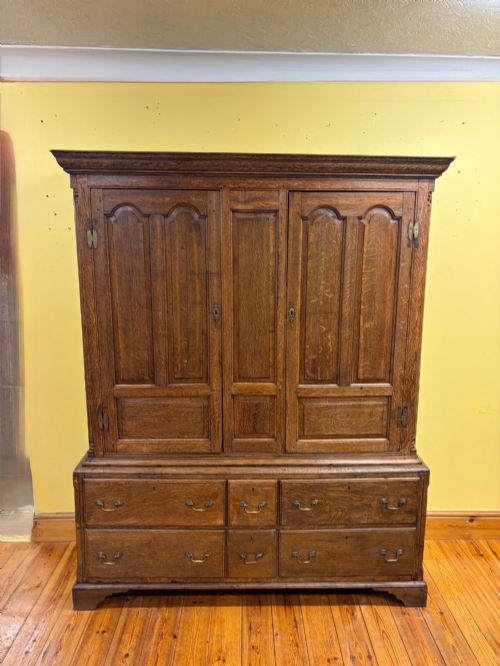
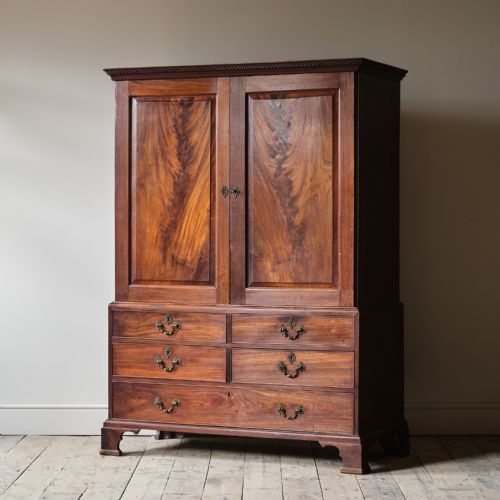
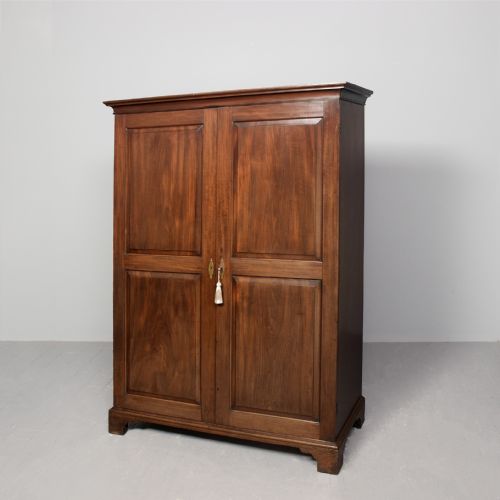
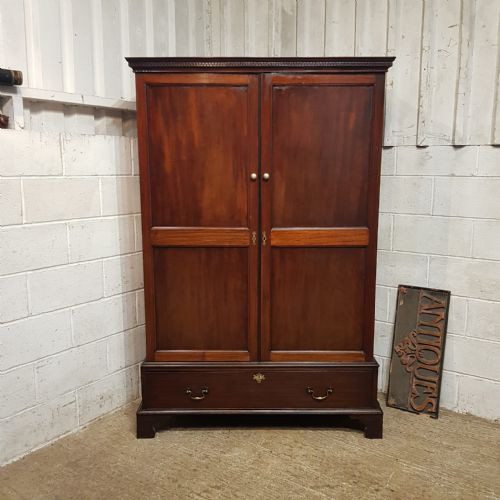
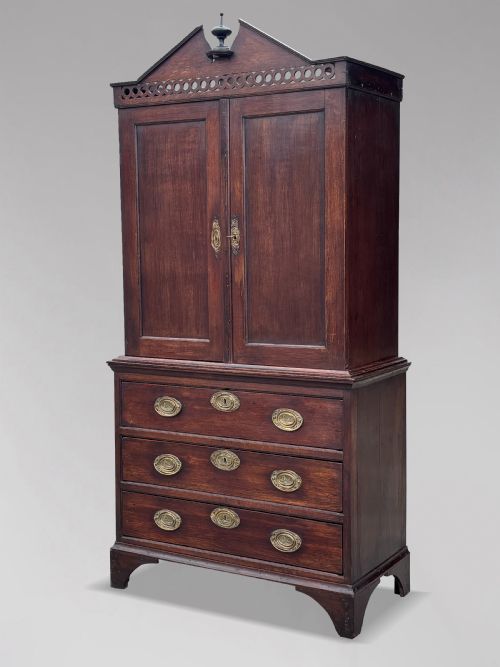
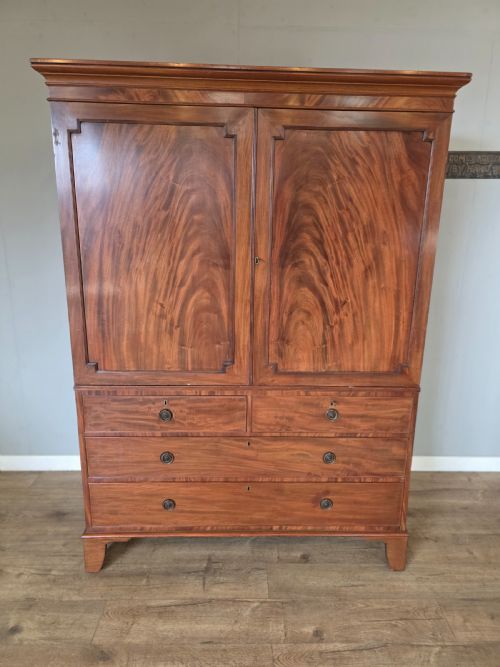
A george iii linen press primarily consists of an upper cabinet section enclosing pull-out trays above a chest of drawers base. Most examples encountered in this selection date from the eighteenth century through to the early nineteenth century, constructed within the Georgian style.
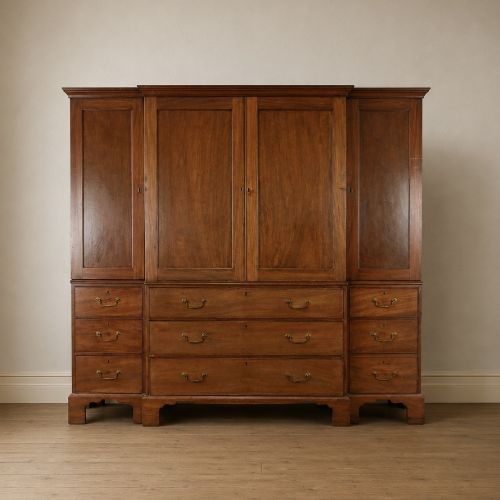
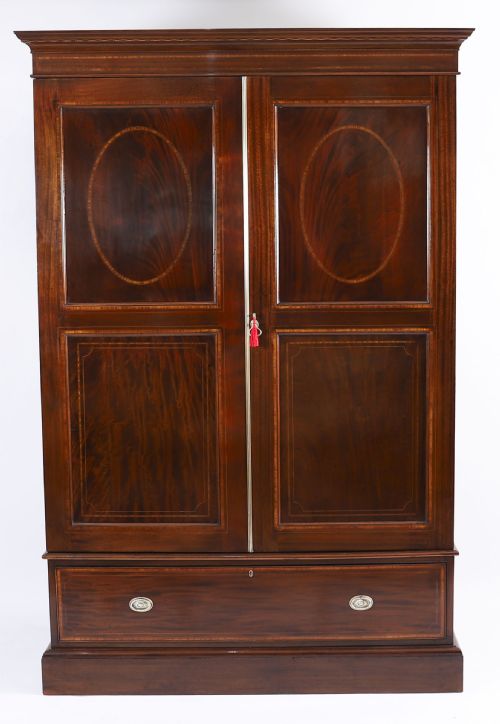
Forms vary from standard double-door presses to low cupboards, dwarf variants, and large breakfront or estate cabinets. Timber choices lean heavily towards mahogany, flame mahogany, and oak, often detailed with satinwood banding and boxwood inlay.
Provincial variations and pieces displaying specific regional traits, such as Channel Islands origins or integrated screw mechanisms, appear alongside more formal London-made versions.
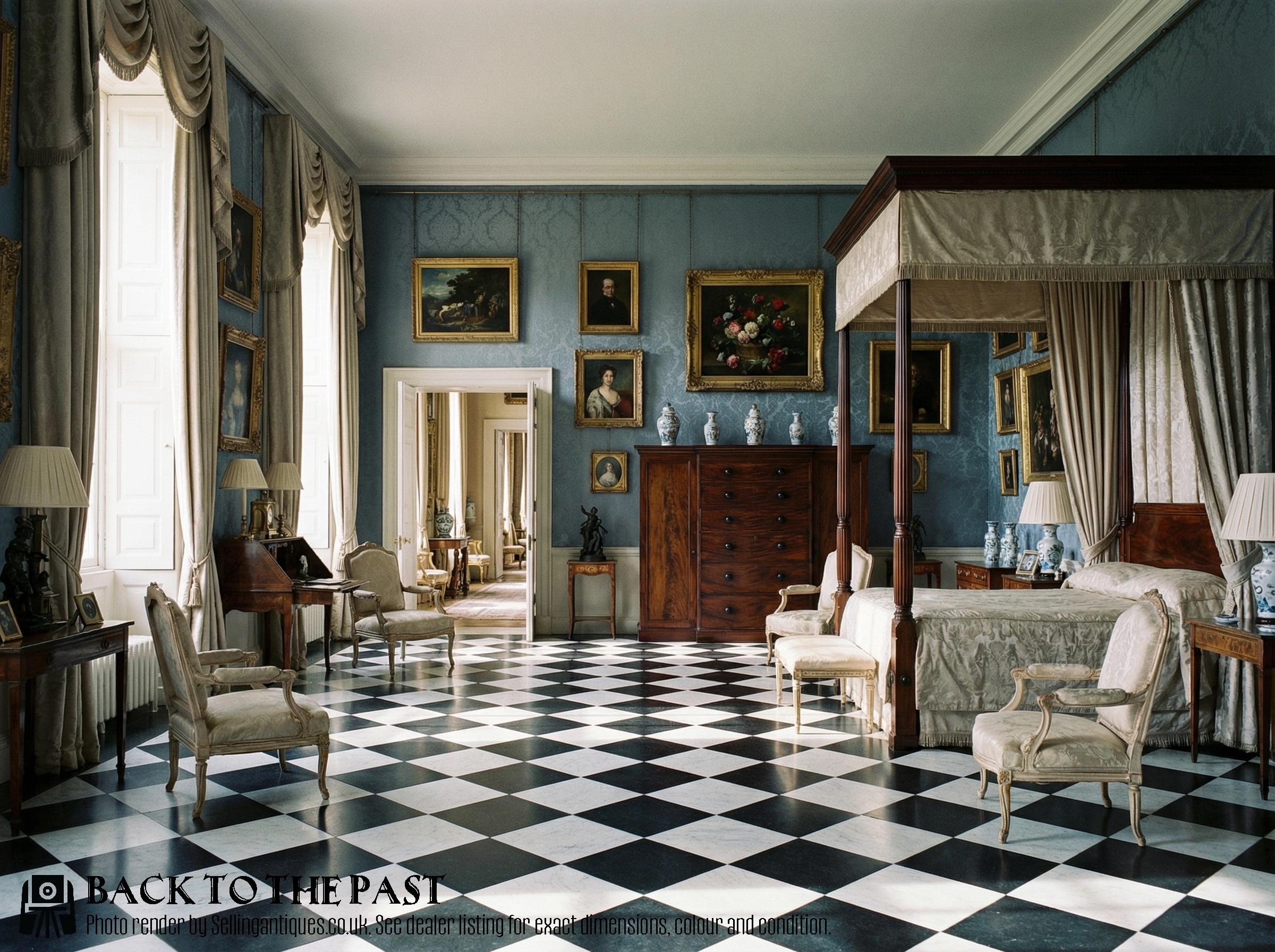
How they were made
Cabinetmakers utilised solid timbers alongside finely figured veneers, applying flame mahogany and curl mahogany across primary display surfaces. Satinwood and boxwood provide contrasting stringing and inlay details.
Internal sliding trays, often referred to as linen slides, were constructed to hold household textiles flat before the widespread adoption of hanging wardrobes. Brass hardware, including drop handles and escutcheons, secures doors and drawer fronts.
George III Linen Press Retail Price Guide 2026
Typical asking prices for george iii linen press among the pieces listed under this phrase on Sellingantiques today, from the lower quarter to the upper quarter. They describe what is for sale here now, not the wider market.
What varies in quality
The choice and figuring of the mahogany timber dictate the visual impact of the exterior, with well-figured grain and matched flame veneers sitting at the upper end of the scale. Subtle proportions, such as narrow widths or dwarf heights, alter the architectural balance of the piece.
Craftsmanship shows in the precision of satinwood and boxwood inlay, the integration of swan-neck pediments, and the internal retention of original sliding trays rather than converted hanging spaces.
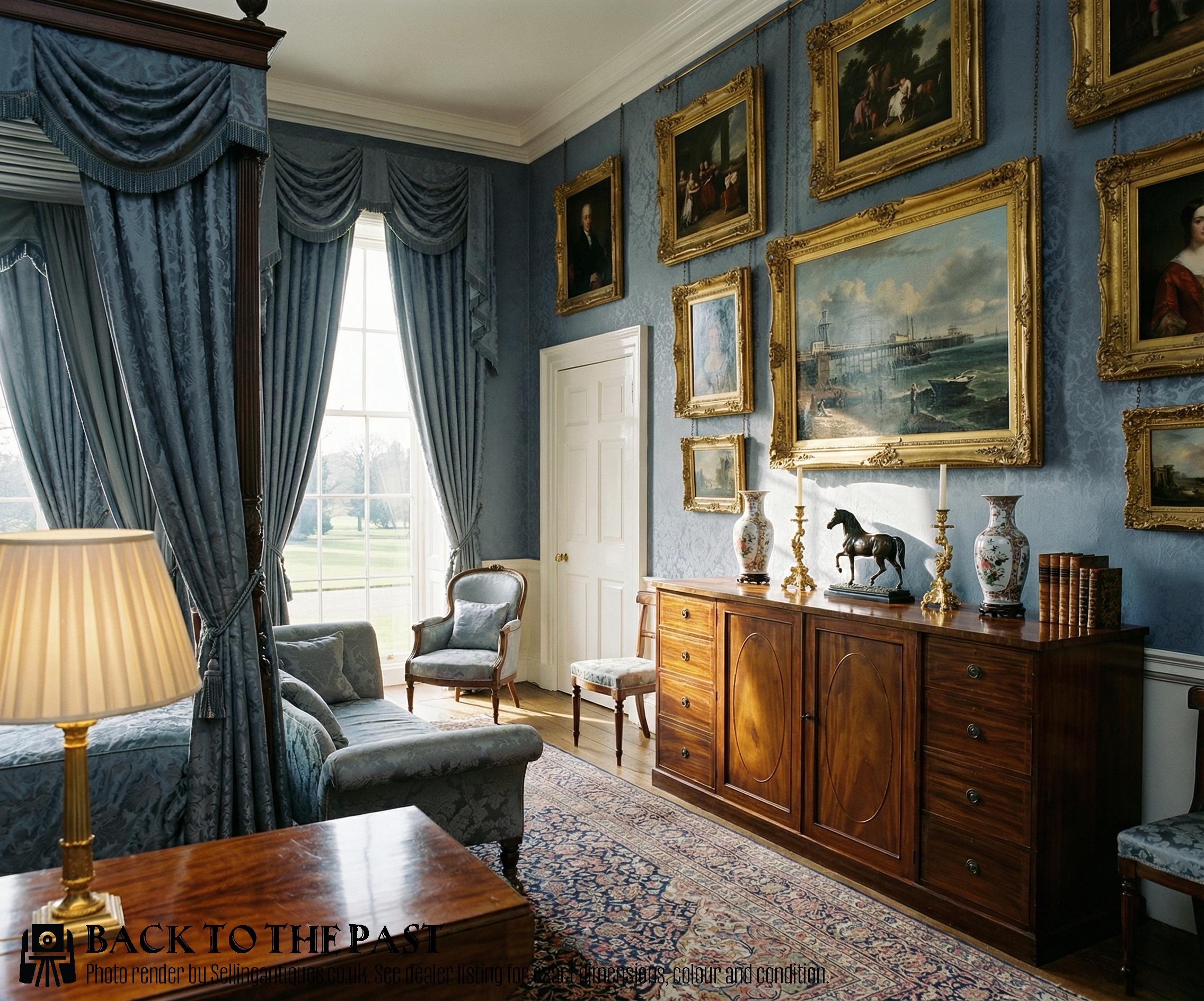
Gillows·Thomas Bradshaw
The George III Linen Press Glossary
- Linen press
- A two-part storage furniture item featuring sliding trays in the upper section enclosed by doors, positioned above a chest of drawers. This design evolved specifically for storing folded garments and household linens before full-length hanging wardrobes became standard.
- Sliding trays
- Internal pull-out shelves housed within the upper cabinet compartment. They allow for organised stacking of textiles.
- Flame mahogany
- A veneer cut from the branch junctions of the mahogany tree, producing a distinctive fire-like ripple pattern. Cabinetmakers selected this specific timber orientation for principal drawer fronts and door panels to create strong visual symmetry.
- Breakfront
- A cabinet design where the central section projects forward from the flanking wings. This configuration breaks up the flat plane of large storage pieces.
- Swan-neck pediment
- A broken architectural cresting above the cornice, curving upward and outward to form opposing scrolls. Often centred on a carved plinth or finial.
George III Linen Press: Frequently Asked Questions
What are sliding trays used for?
Sliding trays provide flat storage compartments inside the upper cabinet doors. They prevent heavy textiles and folded garments from creasing.
Historically, these trays kept household linen organised and accessible before hanging space took over domestic interiors.
How do I tell a dwarf press apart?
Dwarf presses are built with lower overall heights than standard wardrobe-scale examples. They generally sit closer to the floor while retaining the two-part upper and lower structure.
These pieces suit rooms with lower ceilings where a standard tall press would overwhelm the wall space.
Where were these cabinets placed?
These pieces sat in bedrooms, dressing rooms, and large hallways of substantial homes. Their dual storage function made them central to domestic housekeeping.
The upper section held folded sheets and clothing, while the base drawers accommodated smaller garments.