
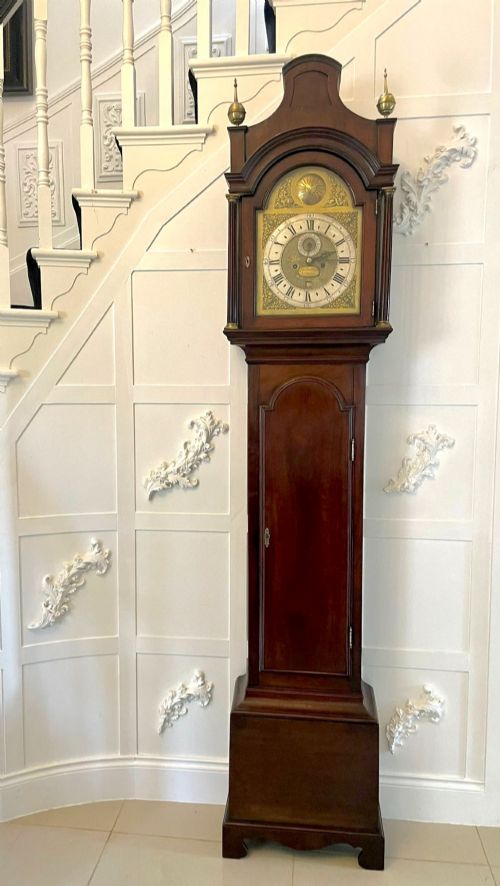
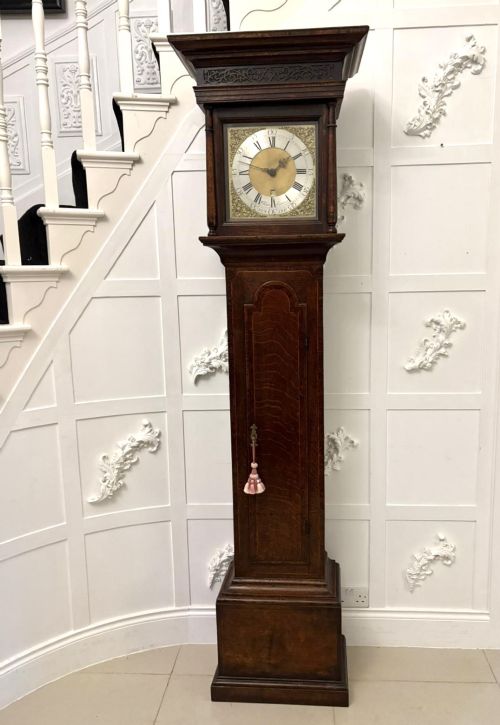
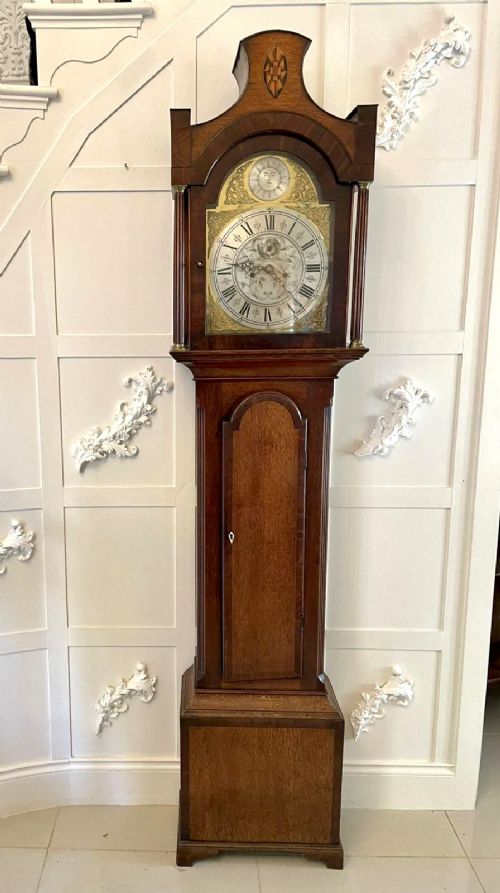
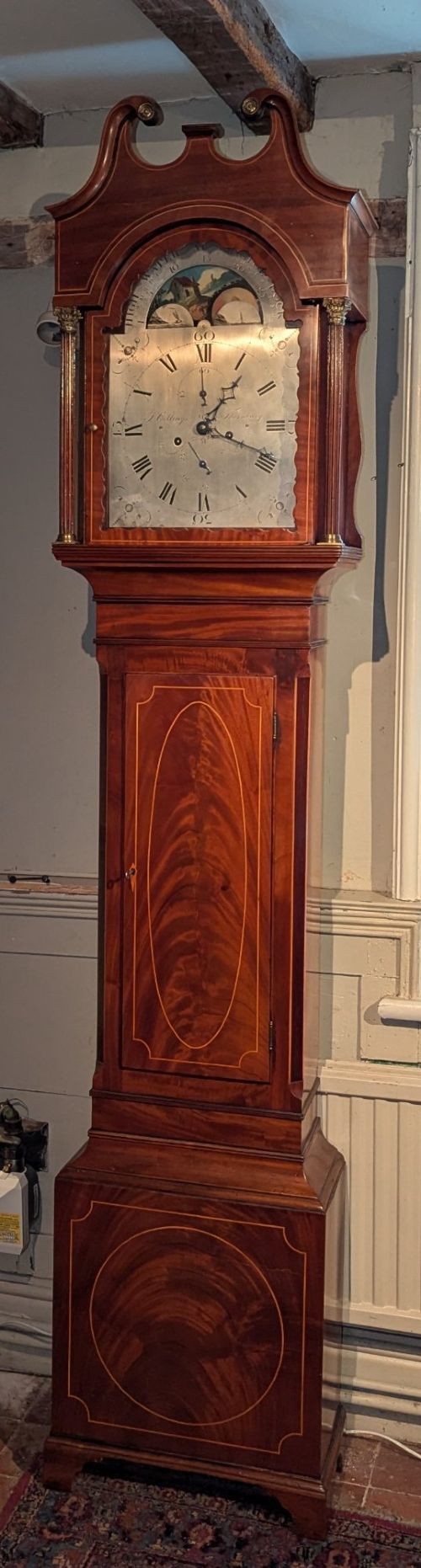
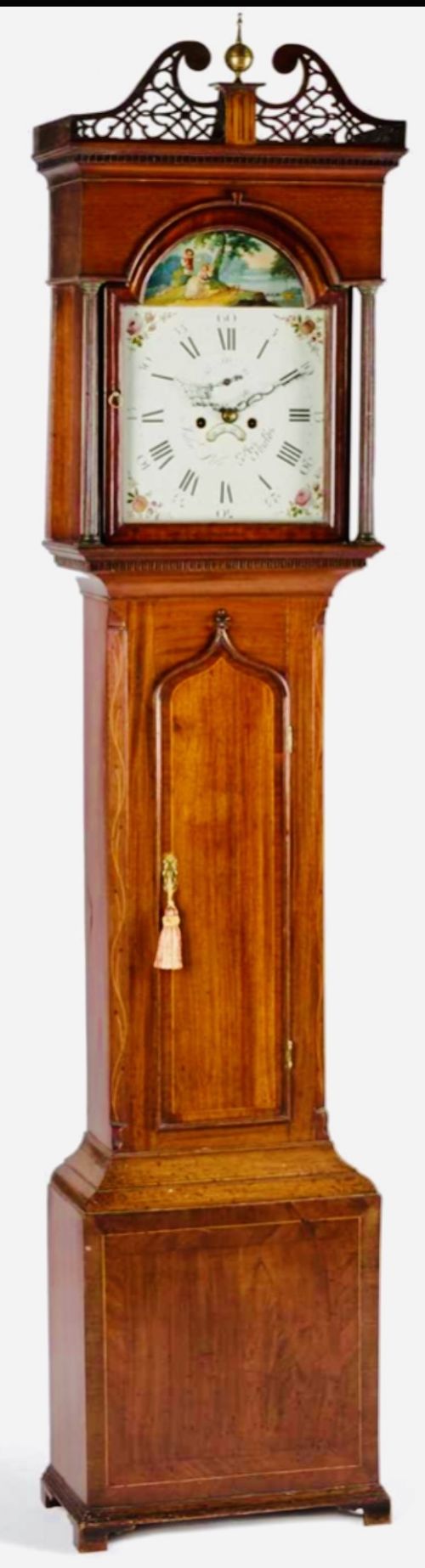
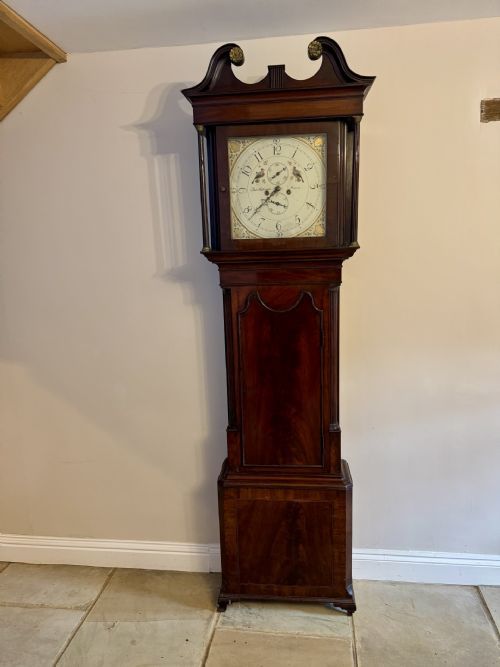
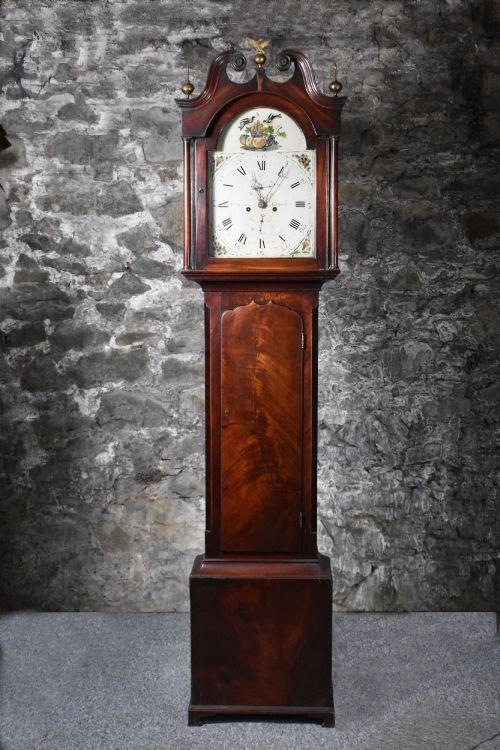


George III Floor Clock
These tall floor clocks, known as a george iii floor clock, bring traditional mechanics and rich timber into a room.
George III Floor Clock
A george iii floor clock represents the tall case timepieces produced during the Georgian era, spanning the late eighteenth and early nineteenth centuries. These pieces typically stand upright against a wall, housing a pendulum and weight-driven movement within a protective wooden housing.
The versions most commonly met on this page include longcase and grandfather clocks constructed from dense timbers such as mahogany and oak. Many examples feature brass or painted iron dials, sometimes incorporating moon phase mechanisms to track lunar cycles alongside the hours.
Originating from both metropolitan London workshops and regional makers across Britain, these items combine practical timekeeping with cabinetmaking skill. The survival of such pieces offers a direct link to the domestic routines and horological trades of the Georgian period.
Materials and construction methods
Cabinetmakers built the tall cases primarily using solid mahogany or oak, occasionally selecting burr oak or applying elaborate inlay and lacquer decoration. These timbers were chosen for structural stability and finished to highlight the natural grain of the wood.
The internal movements combine brass gears, steel arbors, and iron components, driven by hanging weights suspended on lines or chains. Dials were formed from brass or iron, then engraved, silvered, or painted with numerals and maker details.
The listings show clocks dated from the eighteenth and nineteenth centuries, utilising mahogany, oak, brass, and painted iron.
What separates the finest examples
Quality in these timepieces rests upon the precision of the dial work and the depth of the cabinetmaking. Clocks featuring signed brass or detailed moon phase dials by known makers generally reflect higher standards of original craftsmanship.
The condition of the timber case, the integrity of the movement, and the presence of original components dictate the standing of an individual piece. Superior examples maintain balanced proportions and crisp surface carving or inlay without heavy restoration.
Charles Shuckburgh·William McEwan·Charles Dowsett·John Denbigh·Edward White·James Tregent·Dwerrihouse and Carter·Wm Stanford·Dan Williams·Matthew and Thomas Dutton
The George III Floor Clock Glossary
- Longcase clock
- A tall freestanding weight-driven timepiece with a pendulum enclosed in a wooden case. This term is often used interchangeably with grandfather clock.
- Moon dial
- A specialised clock face mechanism that tracks the phases of the lunar cycle. It sits on an arched section above the primary numerical dial.
- Arch dial
- A clock face shape featuring a rounded top section above the square dial base. This layout frequently accommodates subsidiary dials or date indicators.
- Eight day movement
- A clock mechanism designed to run for eight days between windings. This system requires two or three weights rather than the simpler thirty-hour configuration.
George III Floor Clock: Frequently Asked Questions
How do I wind an eight day floor clock?
Winding requires inserting a crank key into the winding holes on the dial face and turning it slowly until the weights rise to the correct height.
Care must be taken not to overwind the mechanism, which can place excessive strain on the internal lines and springs.
Where should I place a longcase clock?
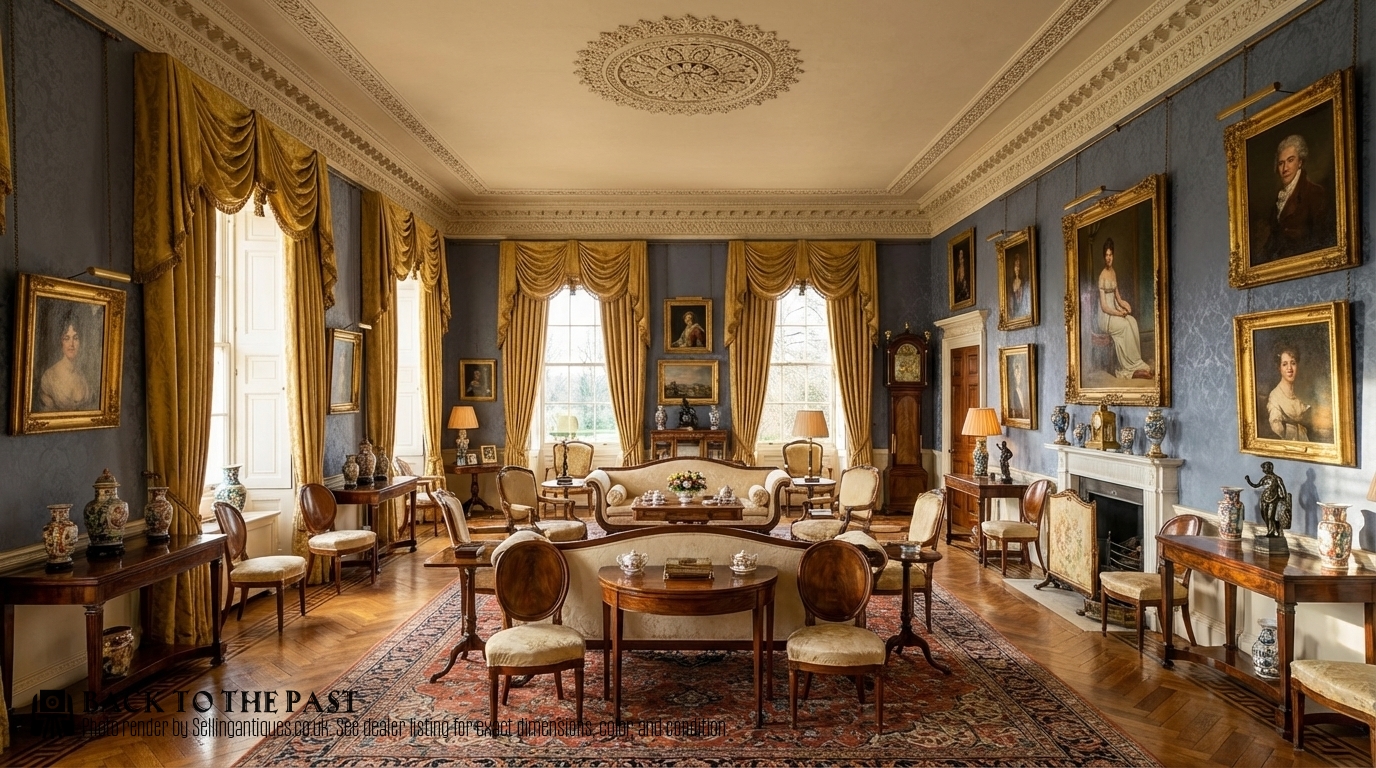
Position the piece against a sturdy interior wall away from direct sunlight, heating vents, and damp areas. Stable environmental conditions help protect the timber case and prevent the wood from warping.
Ensure the floor is level so the pendulum swings evenly and keeps accurate time.
How can I tell a Georgian clock from a later copy?
Examine the construction methods within the case and the materials used for the movement backplate and dial. Georgian examples display hand-cut components, period timber ageing, and maker signatures appropriate to the late eighteenth or early nineteenth century.
Consistency between the age of the movement and the housing indicates an authentic pairing.
Why does the clock stop ticking?
Stoppages often occur if the floor settles and knocks the pendulum out of beat, or if the weights have reached the bottom of the case. Minor adjustments to the crutch or leveling the case usually restore the motion.
Regular cleaning and lubrication by a professional maintain the reliability of the mechanical parts.