


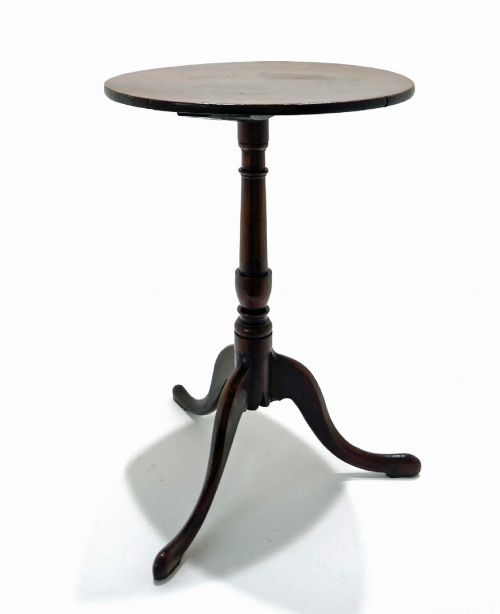
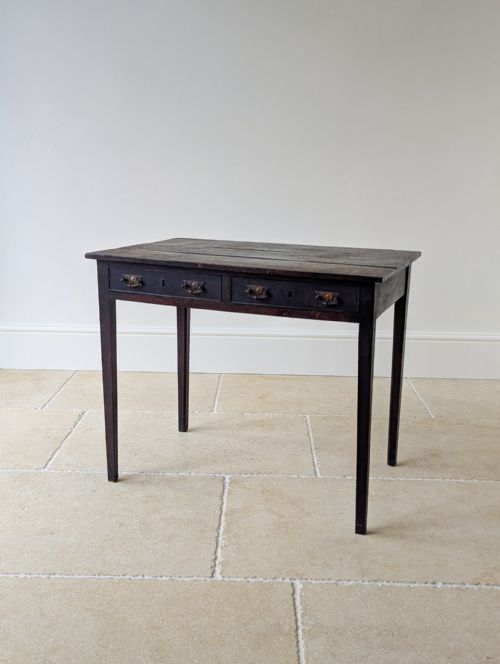


George III Country Table
A george iii country table brings honest timber and utility into a room, spanning sturdy refectory boards and nimble tripod bases.
George III Country Table
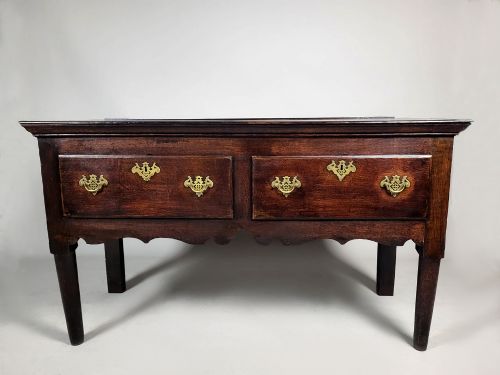
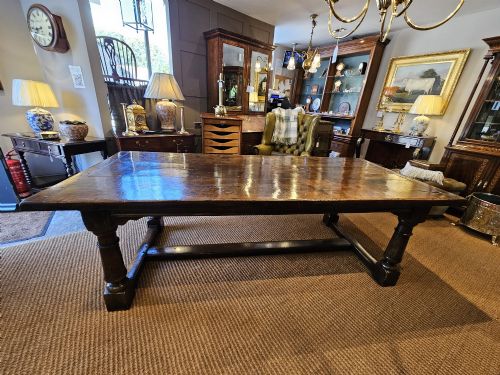
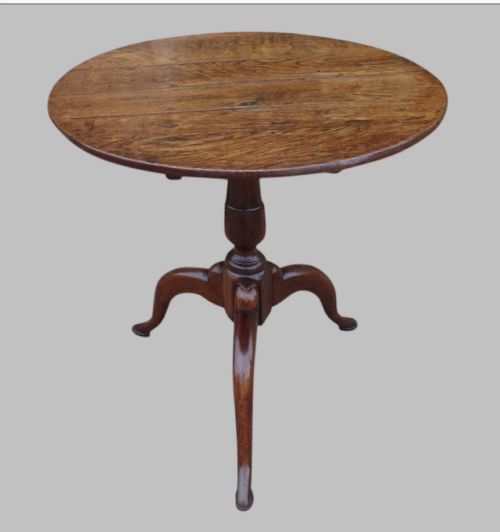
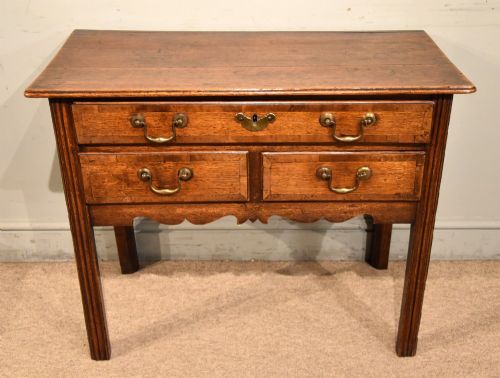
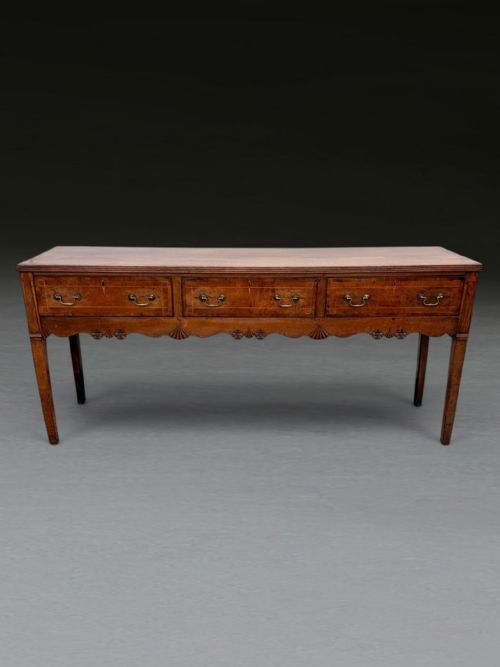
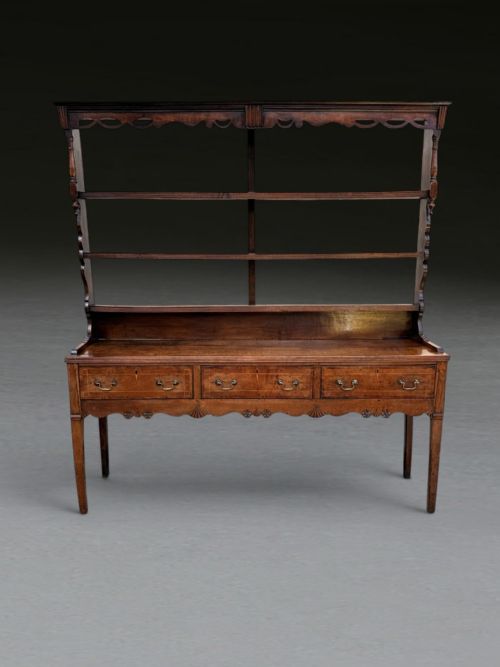
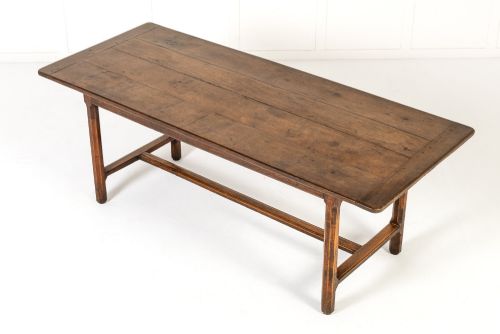
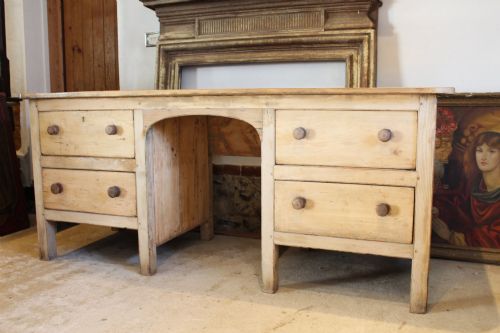
When searching for a george iii country table, buyers encounter functional domestic furniture spanning the eighteenth and early nineteenth centuries. These domestic pieces include substantial refectory dining boards, circular tripod wine tables, and lowboys designed for everyday use.
The most frequent examples found on this page are oak tripod tables and refectory farmhouse tables. They originate from British workshops and country houses, displaying straightforward construction intended for practical utility rather than formal display.
Materials and construction methods
Makers relied principally on native timbers such as oak, elm, pine, and mahogany. These woods were selected for strength and local availability, often showing quarter-sawn grain patterns and simple peg joinery.
Turned pedestals, slender columns, and pad feet demonstrate standard joinery techniques of the period. Surfaces frequently remain unpolished or finished with simple wax, preserving the texture of the grain.
Listings feature structural timbers including oak, elm, pine, and mahogany across Georgian dining and tripod forms.
What distinguishes finer examples
Quality rests in the integrity of the timber selection and the retention of original surface patination. Pieces featuring book-matched grain or well-figured burr elm demonstrate superior material choice by the maker.
Structural honesty and untouched joinery separate better examples from heavily restored ones. Original brasses, unaltered top boards, and stable pedestals command greater appreciation than replaced components.
The George III Country Table Glossary
- Refectory table
- A long dining table traditionally used for communal meals. These examples utilise solid oak boards supported by sturdy trestles or four legs.
- Tripod table
- A small occasional table supported by a central pillar and three legs. Many feature tilt-top mechanisms allowing the surface to fold vertically when not in use.
- Potboard
- A lower shelf fitted beneath a dresser or side table. This open platform provided space for storing heavy ceramics and kitchen utensils.
- Pad foot
- A simple rounded foot terminating the bottom of a cabriole or straight leg. It rests flat on the floor without complicated carving.
- Lowboy
- A small side table featuring one or more drawers beneath the work surface. These were placed against walls for storage and grooming tasks.
George III Country Table: Frequently Asked Questions
What is a george iii country table?
A george iii country table is a domestic wooden table made in Britain during the second half of the eighteenth century or early nineteenth century. These items were built for provincial houses using regional hardwoods rather than urban fashionable veneers.
They encompass dining boards, small wine stands, and side tables meant for daily work and meals. Their design prioritises practical construction over elaborate ornamentation.
How were these tables used originally?
Large refectory boards served families for dining and household tasks in farmhouse kitchens and halls. Smaller tripod and wine tables moved easily around rooms to hold lamps, drinks, or books.
Lowboys provided surface space and drawer storage in bedrooms or parlours. Their portability allowed occupants to rearrange rooms according to daily requirements.
What woods were used for these tables?
Oak is the predominant timber found in these provincial pieces, offering durability and abundant local supply. Elm, pine, ash, and fruitwoods also appear frequently in table tops and structural frames.
Mahogany and walnut emerge in certain regional pieces influenced by metropolitan tastes. Secondary timbers often include softer woods chosen for hidden internal framing.
How do I care for an antique oak table?
Maintain the timber by applying natural beeswax sparingly to nourish the dry surface. Avoid placing wooden furniture near direct heat sources or rapid temperature shifts that cause splitting.
Use coasters and dry cloths for routine cleaning to preserve the historic patina. Gentle care ensures the original finish remains undisturbed over decades.