
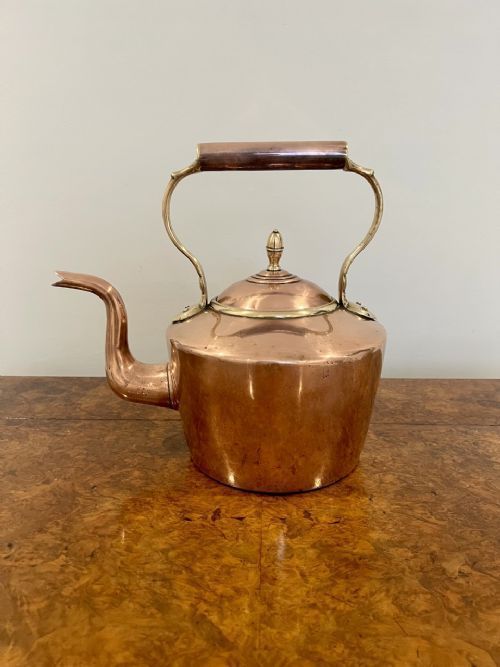
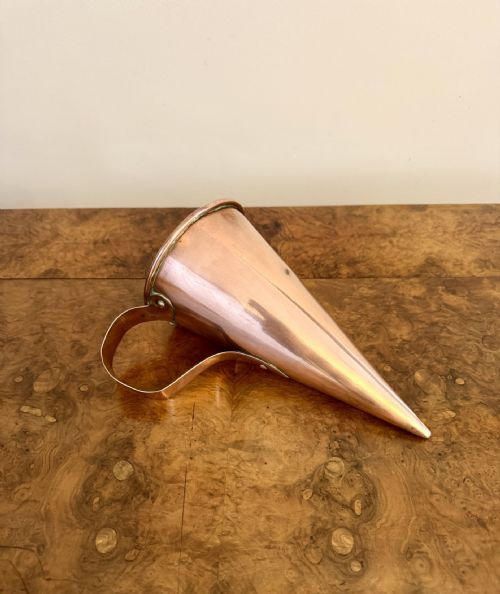
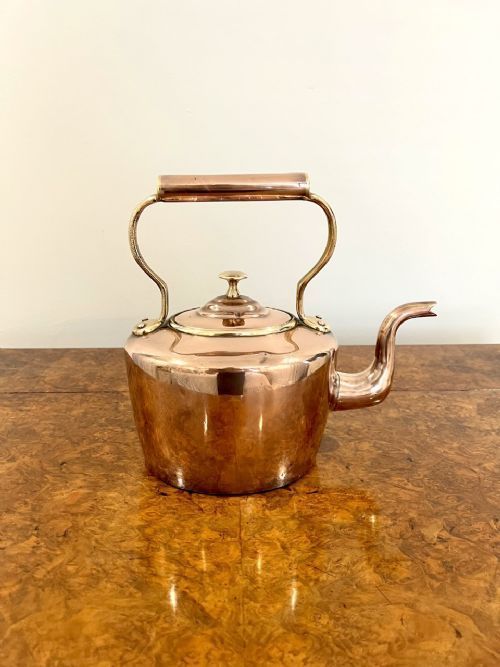


George III Copper Vessel
A george iii copper vessel brings substantial weight and warm tone to a room, formed in utilitarian shapes designed for boiling, carrying, and cooking.
George III Copper Vessel
A george iii copper vessel encompasses heavy domestic metalware from the Georgian period, predominantly around eighteen hundred and the nineteenth century. The selection centres heavily on water and tea kettles, alongside cooking pots, pans, lidded pots, and measures.
Buyers also encounter specialised forms such as water jugs, saucepans, helmet coal scuttles, samovars, and hanging water urns. These items range from compact small pieces to large examples shaped in round or oval formats.
The objects stem from everyday utilitarian use in kitchens and domestic spaces of the period, combining robust construction with practical utility.
How they were made
The construction relies primarily on hand-beaten copper sheets, frequently paired with brass mounts, iron handles, wrought iron elements, and wooden components for insulation and grip. Metal panels were shaped by hand and joined to withstand heavy daily handling over open fires and hearths.
Surface finishes include polished copper alongside traditional patination accrued through age and use. Handles and fixtures incorporate mixed metals like brass and iron to secure structural strength.
One exceptional listing includes a helmet coal scuttle, proving that Georgian domestic utility also extended to storing fireplace fuel in polished style.
What varies in quality
The standard of a george iii copper vessel depends upon the weight of the metal sheet, the integrity of the original joints, and the crispness of the hand-beaten form. Larger pieces and oval shapes demand greater skill from the metalsmith.
The survival of original brass and iron fittings, wooden handles, and lids alters the desirability of the piece. Polished surfaces versus untouched period patination also change how the object reads visually.
Loftus of Oxford Street London
The George III Copper Vessel Glossary
- George III
- The period spanning the reign of King George the Third, associated with robust domestic metalwork and classical Georgian proportions. This era produced durable utility wares built for heavy hearth use.
- Patina
- The surface sheen and coloration developed naturally over decades of handling, exposure, and polishing. It serves as a visual indicator of age.
- Samovar
- A heated metal vessel traditionally used to boil water for tea, combining copper and brass elements. These often feature complex spigots and internal heating tubes.
- Coal scuttle
- A container designed to hold coal for a fireplace, formed here in a helmet shape using heavy copper sheets. These items combined functional hearth storage with display quality.
- Wrought iron
- Iron beaten and worked by hand into structural elements like handles and brackets. It provides sturdy reinforcement for heavy copper vessels.
George III Copper Vessel: Frequently Asked Questions
How do I clean a copper vessel?
Maintenance depends on whether you prefer a bright polished finish or a dark historical patina. Gentle washing with warm soapy water removes dust without disturbing the surface.
Avoid harsh abrasive compounds unless you specifically wish to expose the bright pink metal underneath. Many collectors prefer to leave the accumulated age untouched.
Are these kettles safe to use?
Most antique kettles and cooking pots are acquired for decorative display rather than daily culinary service. Historical lining materials may not meet modern standards.
If you intend to boil water in a period kettle, inspect the interior condition thoroughly first. Professional tinning is usually required to make them food safe again.
How do I identify a Georgian piece?
Look for hand-beaten construction marks, dovetail seams, and heavy gauge copper sheets typical of eighteenth and early nineteenth-century workshops. Formats tend to be heavier and more utilitarian than later Victorian equivalents.
Handles and fixings frequently utilise wrought iron or cast brass secured with hand-cut rivets rather than modern machine screws.
What is the difference between a pot and a kettle?
A kettle is specifically designed for boiling water, featuring a closed top, a pouring spout, and a swinging handle over the top. Cookware and pots feature open tops with lids and side handles for cooking food over a hearth.
Both forms utilise the same heavy copper sheet construction methods of the period.