





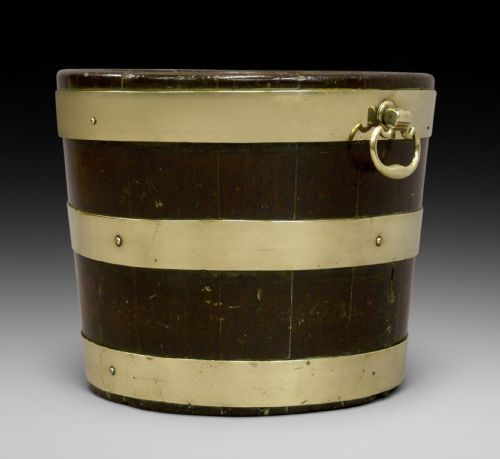


George III Brass Bucket
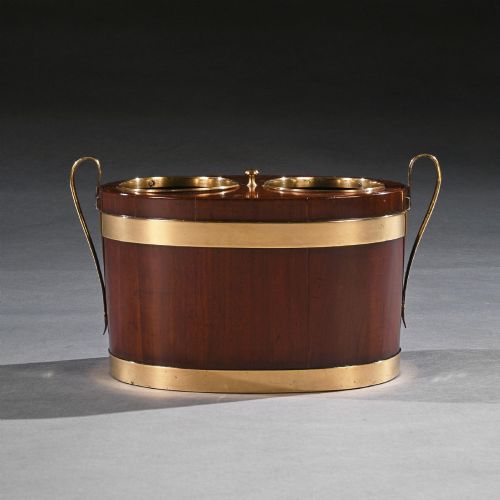
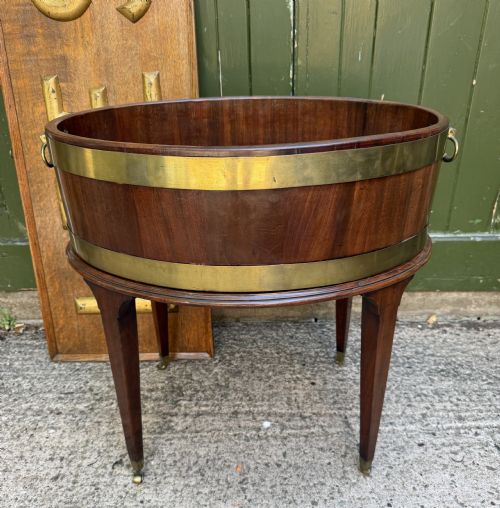
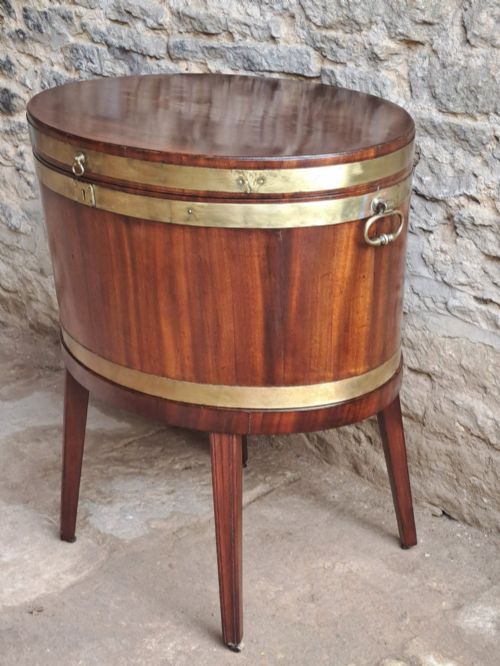
A george iii brass bucket brings practical Georgian utility into a room, serving as a wine cooler, coal scuttle or peat container bound in gleaming metal.
George III Brass Bucket
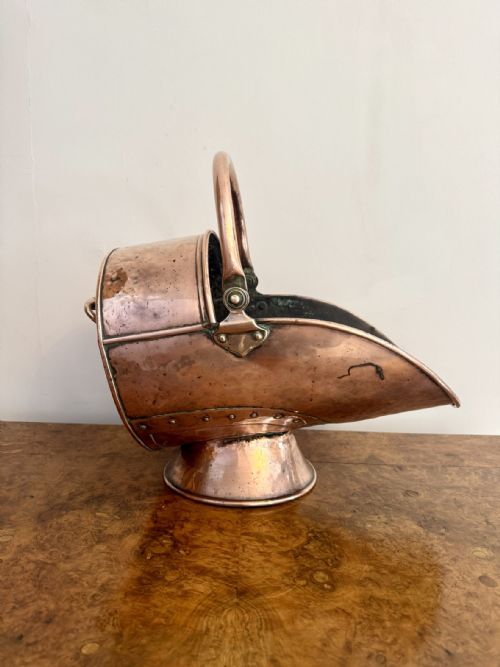
Beyond wine coolers, the evidence shows domestic utility in plate buckets designed for dining service and sturdy coal scuttles or helmet coal scuttles formed from copper and brass. Peat buckets in mahogany also appear frequently across the period listings.
Later revival pieces from the Victorian era and the twentieth century join the Georgian originals, alongside related cookware such as copper pans. Most encounters on this page centre on the classic brass-bound mahogany oval vessel.
Materials and construction
Makers built these vessels predominantly using timber staves of solid mahogany, walnut, or boxwood, tightly joined to hold contents safely. Brass bands, hoops, and bindings were then fitted around the wood to provide structural reinforcement and visual contrast.
For fuel and hearth use, smiths utilised sheet copper and iron to shape helmet coal scuttles and pans, often incorporating swing handles and matching shovels. Inlays and occasional boxwood details added refinement to the finer mahogany wine coolers.
George III Brass Bucket Retail Price Guide 2026
Typical asking prices for george iii brass bucket among the pieces listed under this phrase on Sellingantiques today, from the lower quarter to the upper quarter. They describe what is for sale here now, not the wider market.
A surprising number of heavy metal coal scuttles arrive with their original matching shovels still tucked neatly at the side.
Distinguishing quality
Quality rests upon the crispness of the cooperage, the weight and gauge of the brass bands, and the depth of the timber's patina. Pieces retaining their original stands or matching shovels command distinct appreciation.
Finer examples display careful mahogany grain selection, tight stave joints, and clean dovetailing where applicable. Lesser quality often shows in heavy later restorations, replacement metalwork, or generic revival execution lacking period proportion.
Samual Norman
The George III Brass Bucket Glossary
- Cellarette
- A lockable container used for storing wine bottles near the dining table. They frequently share the brass-bound mahogany construction seen on standard wine coolers.
- Jardinière
- An ornamental pot or stand designed to hold growing plants or flowers. In these listings, open wine coolers often double in this capacity.
- Plate Bucket
- A deep cylindrical or tapering container utilised for holding dining plates safely. These items typically feature vertical staves and a sturdy carrying handle.
- Peat Bucket
- A deep vessel traditionally used to store turf or peat for hearth fires. They mirror the coopered mahogany and brass-banded construction of wine coolers.
- Patina
- The surface sheen and mellow colour developed by aged wood and metal through handling and time. Fine examples exhibit a deep, unblemished glow.
George III Brass Bucket: Frequently Asked Questions
How were these buckets used originally?
These vessels served demanding domestic roles in the Georgian dining room and hearth. Wine coolers held bottles packed in ice or water, while plate buckets kept tableware organised during large meals.
By the fireplace, copper and brass scuttles transported coal and peat to feed the flames. Their sturdy construction allowed heavy daily service across wealthy households.
How do I tell an original from a revival piece?
Examining the timber shrinkage, hand-cut joinery, and the method of brass binding reveals the age of the piece. Georgian originals display natural wear patterns and distinct patina on both the wood and the metal.
Revival pieces from later eras often present more uniform machine milling and cleaner, less aged surfaces. Comparing the construction details against documented eighteenth-century examples clarifies the distinction.
Can I use a wine cooler today?
These pieces adapt readily to modern interiors as umbrella stands, magazine holders, or plant containers. Placing a modern liner inside protects the historic wood from moisture and soil.
Their robust construction ensures they remain functional furnishings rather than static display items. Proper care keeps the antique timber and metal stable in modern heated rooms.
What maintenance do brass and mahogany require?
Maintaining the wood involves occasional polishing with traditional wax to nourish the dry grain and preserve the patina. Harsh chemical cleaners must be avoided on both timber and metal surfaces.
Brass bindings benefit from gentle cleaning to remove tarnish without stripping the underlying historic age. Keeping the pieces away from direct heat sources prevents the staves from shrinking or cracking.