

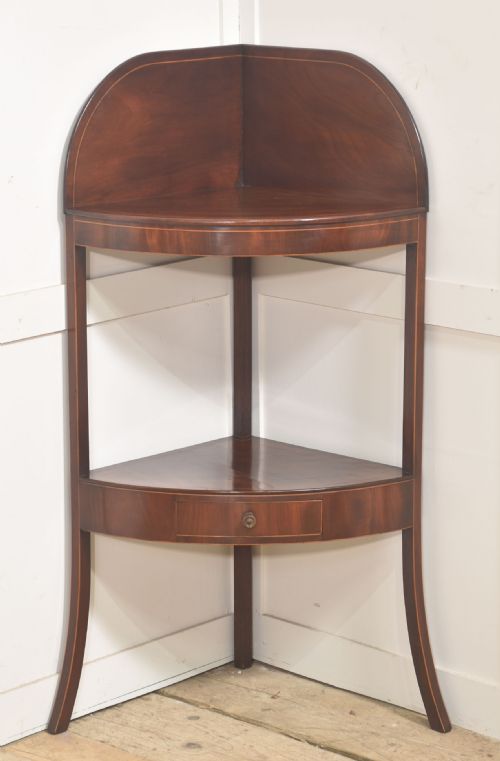


George III Basin Stand
A george iii basin stand is a practical piece of Georgian furniture built for personal ablutions, offering sturdy timber frames and fitted tops to hold washbowls.

George III Basin Stand
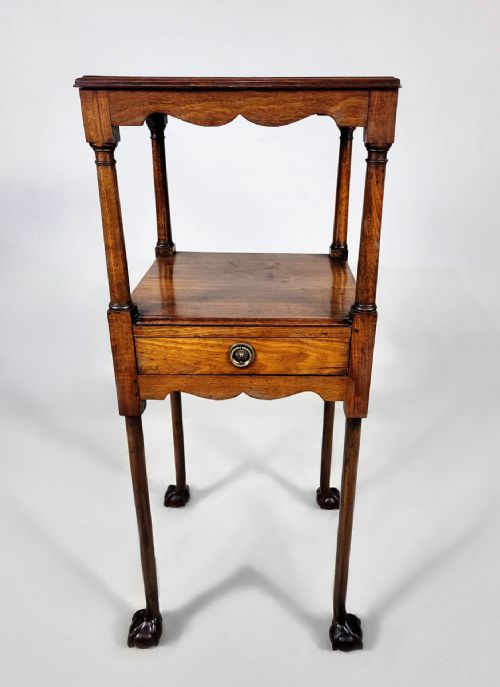
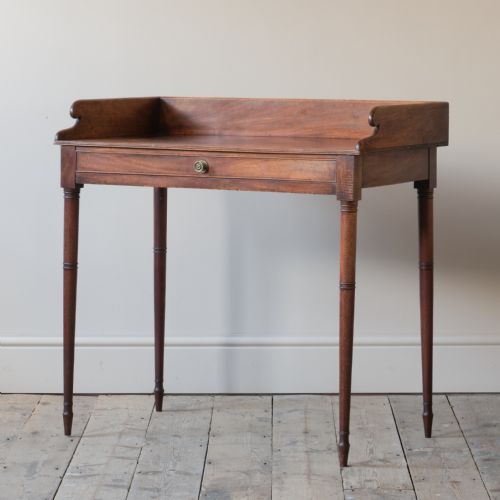
When buyers search for a george iii basin stand, they encounter practical timber furniture designed for personal washing and grooming in domestic chambers. These pieces belong to the Georgian and later nineteenth-century periods, capturing an era of refined domestic utility.
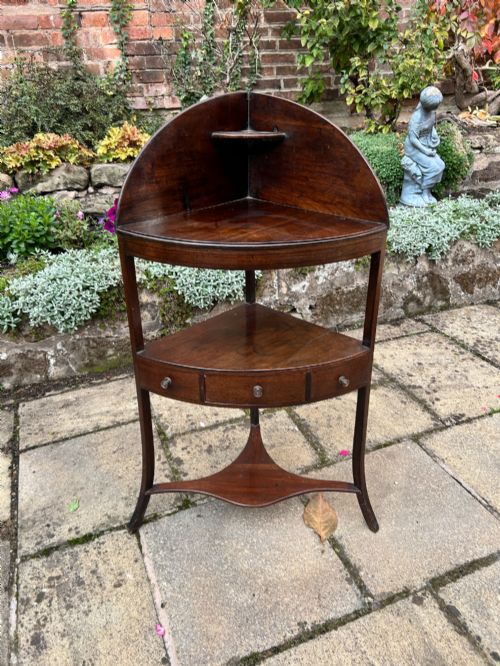
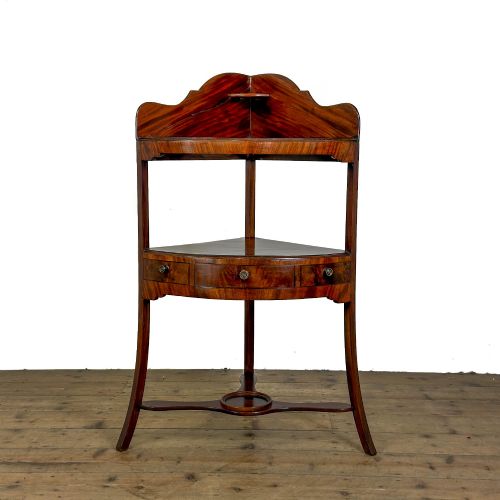
The form most commonly met on this page is the corner washstand, shaped to fit neatly into domestic room angles. Alongside these stands, related items such as shaving stands and wine coolers appear within the recorded listings.
Origins trace back to eighteenth-century craftsmanship, with later nineteenth-century examples continuing traditional forms. Buyers find pieces spanning Georgian, Victorian, and early twentieth-century eras.
How they were made
Mahogany forms the primary structural timber across these pieces, providing a robust and durable framework for daily use. Cabinetmakers utilised this rich hardwood for its strength and fine grain.
Details such as boxwood inlay add subtle decorative contrast to the mahogany surfaces, while brass and leather components appear in functional elements. These materials combine to create sturdy utilitarian furniture.
George III Basin Stand Retail Price Guide 2026
Typical asking prices for george iii basin stand among the pieces listed under this phrase on Sellingantiques today, from the lower quarter to the upper quarter. They describe what is for sale here now, not the wider market.
Some stands hide tiny drawer compartments designed specifically for storing gentleman's soap bars and shaving powder.
What varies in quality
The standard of execution separates standard examples from exceptional pieces, particularly in the precision of the boxwood inlay and the crispness of the timber mouldings. Maker attribution, such as stamps from established workshops like Gillows Lancaster, distinguishes superior output.
The choice of dense mahogany and the integrity of the fitted basin recesses dictate the overall refinement of the construction. Simpler vernacular pieces contrast with finely detailed examples made for wealthier households.
Gillows Lancaster
The George III Basin Stand Glossary
- Boxwood inlay
- A contrasting light wood inserted into recesses within the darker mahogany surface. This technique creates geometric lines and decorative borders.
- Shaving stand
- A specialised variant of the washstand equipped with adjustable mirrors and small compartments for razors. These items served gentlemen during morning grooming routines.
- Wine cooler
- A timber vessel designed for chilling bottles, appearing alongside washstands in the recorded inventory. They share the same mahogany construction traditions.
- Stamp
- A maker's mark impressed directly into the timber. This mark identifies the workshop or cabinetmaker responsible for the piece.
George III Basin Stand: Frequently Asked Questions
What is a george iii basin stand used for?
These stands provided a dedicated space for washing and grooming in bedrooms before plumbed bathrooms became common. Their fitted top tiers held a basin of water, soap, and jugs.
Lower shelves often accommodated pitchers and chamber pots, keeping washing equipment organised and accessible within domestic chambers.
How do I identify a george iii basin stand?
Look for characteristic Georgian proportions, mahogany timber construction, and triangular formats designed for room corners. Tiered designs with circular basin apertures are typical.
Check for period details such as boxwood stringing and occasional maker stamps on the underside or structural framework.
Where were these stands placed in a house?
Corner washstands were specifically engineered to slot into unused room angles, saving valuable floor space in bedrooms and dressing rooms. Their footprint made them practical for domestic layouts of the period.
Freestanding basin and shaving stands occupied similar private quarters where morning ablutions took place.
Are all these stands from the eighteenth century?
While many pieces originate from the Georgian era, the recorded inventory also includes nineteenth-century and early twentieth-century examples. Later makers continued producing traditional forms.
Materials and construction methods help distinguish eighteenth-century pieces from subsequent nineteenth-century interpretations.