



George II Walnut Bureau
A george ii walnut bureau offers sloping fall-front writing surfaces and fitted interior compartments that defined mid-eighteenth-century domestic administration.
George II Walnut Bureau
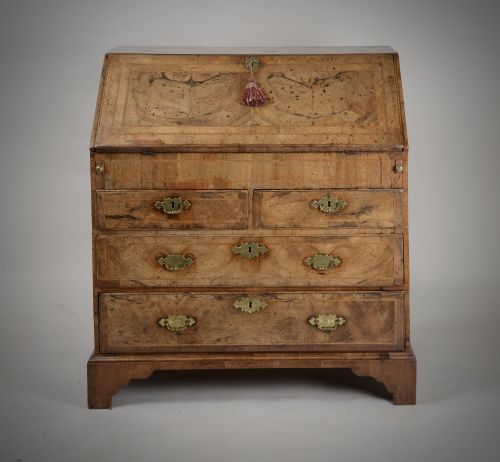
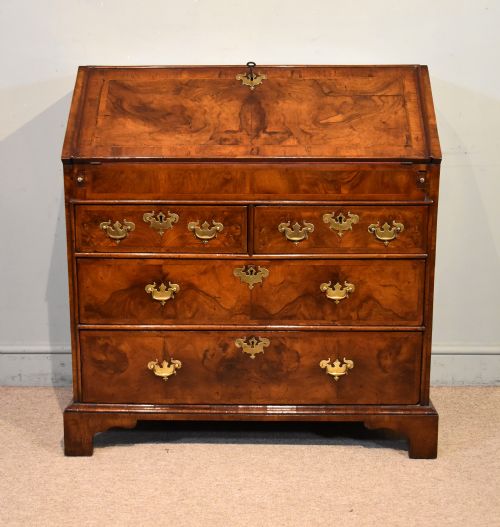
A george ii walnut bureau takes the form of a sloped writing cabinet that opens to reveal internal compartments, pigeonholes and small drawers. These pieces emerge predominantly from the eighteenth century within the Georgian era, constructed to manage correspondence and household accounts.
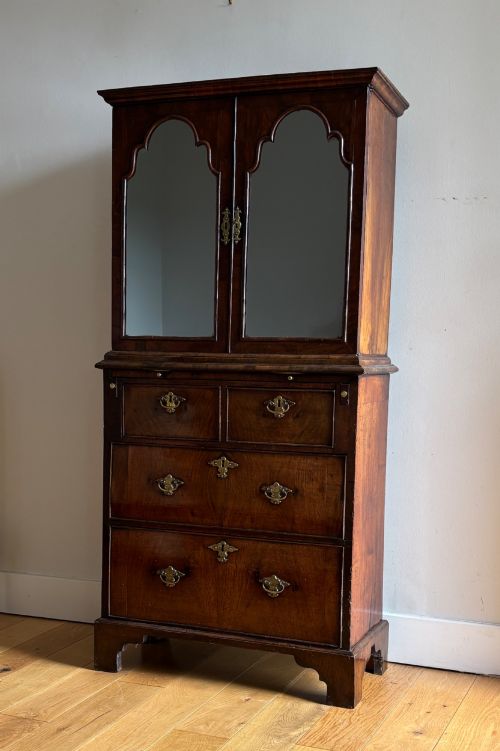
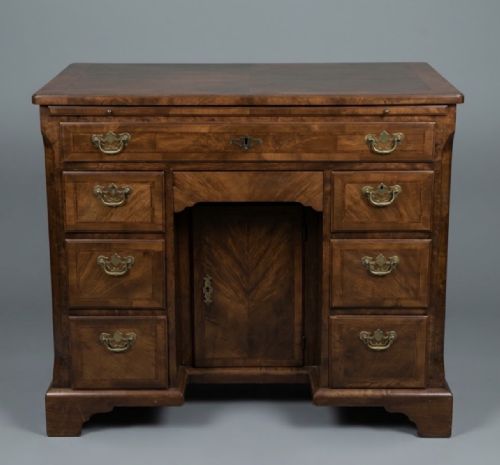
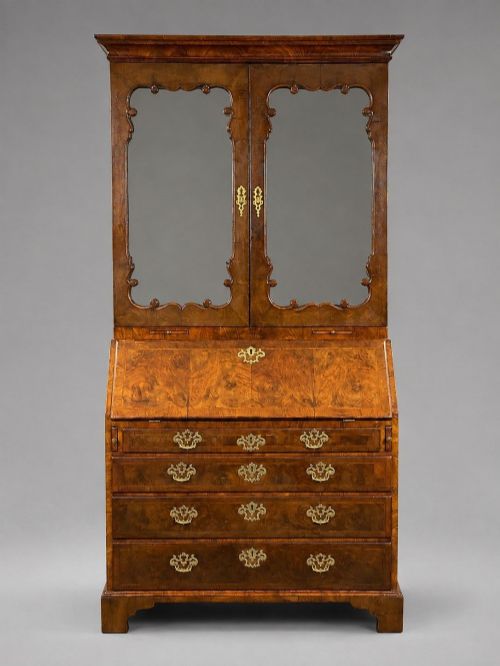
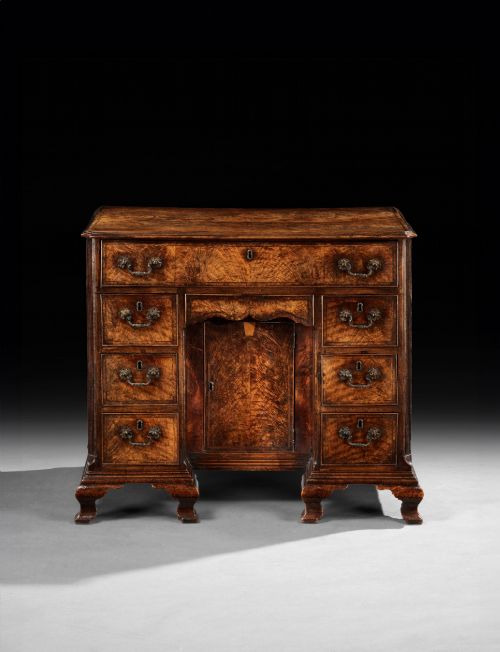
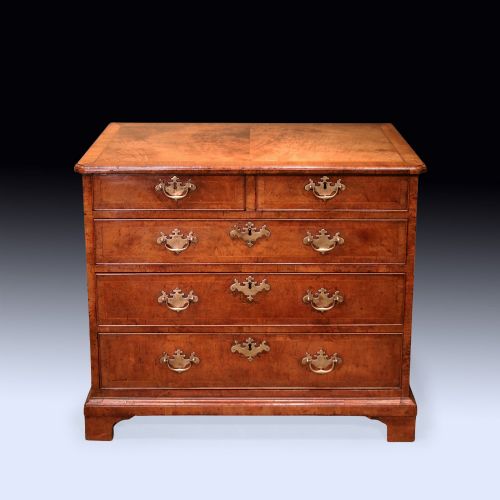
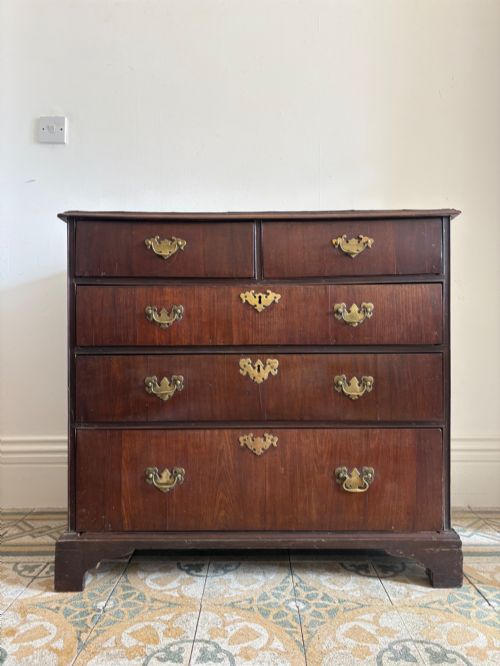
The versions met most frequently on this page include standard writing bureaux alongside taller bureau bookcases featuring glazed upper cabinets. Surviving examples also encompass related kneehole desks, dressing chests and chests of drawers sharing the same walnut vocabulary.
Makers designed these items for principal rooms, employing timber selected for decorative figure. The resulting furniture combines utilitarian writing compartments with formal facades suited to period interiors.
How they were made
Cabinet-makers constructed these pieces using walnut, burr walnut, fiddleback walnut, solid red walnut and oak for internal carcases and drawer linings. Timber selection prioritised figured grains, enhanced through veneer work applied to primary visible surfaces.
Joinery incorporated brass hardware including handles and escutcheons to secure doors and drawers. Glass and mirror glass appeared in the upper doors of taller bookcase variants to display books or collections.
George II Walnut Bureau Retail Price Guide 2026
Typical asking prices for george ii walnut bureau among the pieces listed under this phrase on Sellingantiques today, from the lower quarter to the upper quarter. They describe what is for sale here now, not the wider market.
Several diminutive specimens survive as petite writing companions designed for eighteenth-century letter writing.
What varies in quality
The standard of a george ii walnut bureau depends upon the selection of timber veneers and the handling of figured grain patterns across the fall front and drawer fronts. Superior examples display carefully matched burr or fiddleback walnut arranged symmetrically.
Proportion and scale distinguish finer pieces, particularly smaller formats that maintain balanced dimensions between the writing section and the base. The integrity of the interior configuration and the retention of original brass handles further separate exceptional pieces from standard production.
The George II Walnut Bureau Glossary
- Bureau
- A writing cabinet featuring a sloping fall-front lid that opens to disclose a fitted interior of small drawers and pigeonholes.
- Burr walnut
- Timber taken from walnut tree growths that produces intricate, swirling grain patterns highly prized for decorative veneer work.
- Bureau bookcase
- A tall dual-component furniture form combining a lower writing bureau with an upper shelved cabinet enclosed by doors.
- Kneehole desk
- A compact desk form featuring a central recess for the sitter's legs flanked by banks of small drawers.
- Escritoire
- An alternative term for a writing cabinet or desk, originating from French terminology used in period inventories.
George II Walnut Bureau: Frequently Asked Questions
What is a george ii walnut bureau?
A george ii walnut bureau is an eighteenth-century writing desk featuring a sloping fall-front that drops down to reveal internal compartments for letters and documents. These pieces typically rest upon a base containing graduated drawers.
Craftsmen built them using walnut timbers, often applying figured veneers across the exterior to showcase the natural grain patterns.
How were bureau bookcases used?
Bureau bookcases served as combined writing desks and storage cabinets for private libraries or drawing rooms during the Georgian period. The upper section held books or valuables behind glazed doors while the lower desk provided a surface for correspondence.
The integration of these two functions allowed owners to manage household affairs and display prized volumes within a single piece of furniture.
How do I live with a walnut bureau?
Living with a walnut bureau involves placing the piece away from direct sunlight and radiators to protect the delicate wood veneers from drying and cracking. Maintaining stable room humidity preserves the finish and structural stability of the antique timber.
The fall-front surface provides a practical writing ledge when opened, whilst the internal drawers organise modern stationery or small items discreetly.