
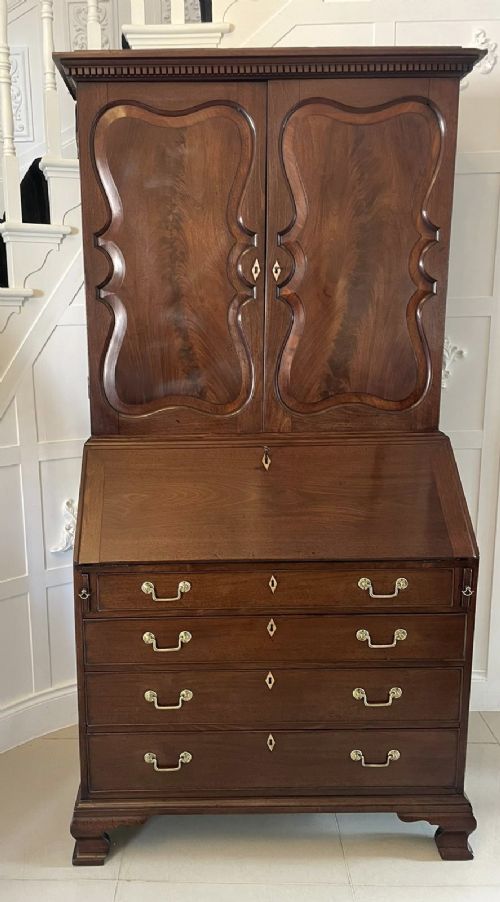
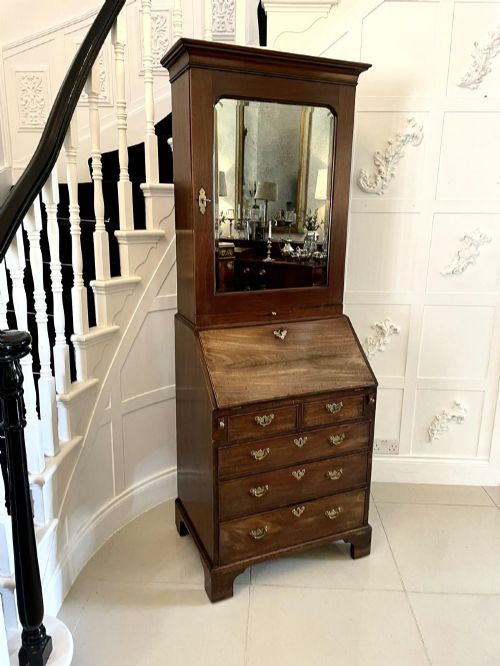
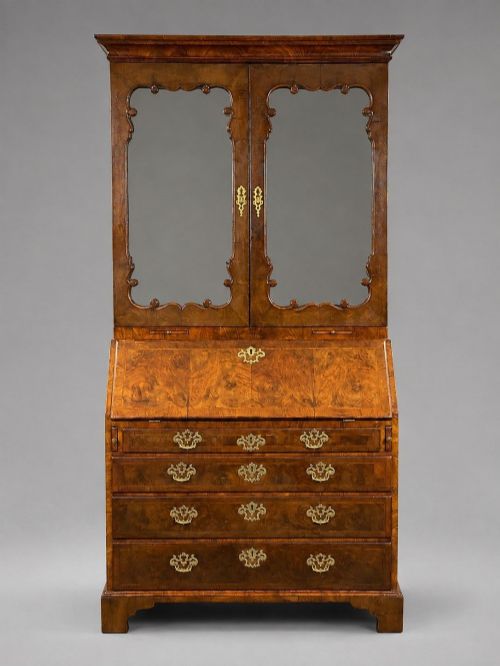
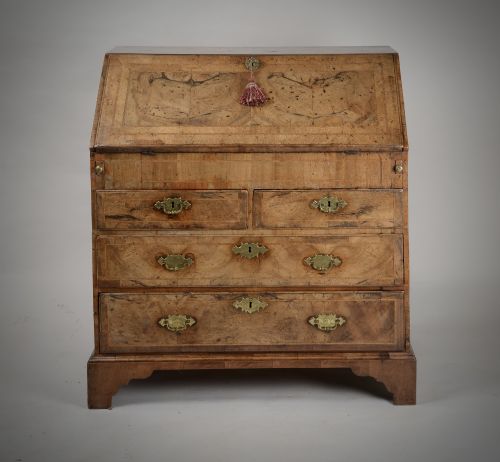


George II Secretary Cabinet
A george ii secretary cabinet is a substantial mid-eighteenth-century piece combining a slant-front desk with a shelved upper bookcase.
George II Secretary Cabinet
When you search for a george ii secretary cabinet, you encounter tall dual-purpose case furniture designed for domestic administration and book storage during the Georgian era. These items typically pair a lower bureau section, featuring a fitted writing flap and internal drawers, with an upper bookcase enclosed by panelled or glazed doors.
The pieces listed on this page span the eighteenth century, dominated by bureau bookcases and simpler desks from the 1700s to 1750. Walnut and mahogany form the core of what is available, reflecting the dominant cabinet woods of the period.
Regional variations appear alongside standard English examples, including documented Irish pieces and items utilising native timbers like oak and elm. The primary form remains consistent: a heavy, architectural workspace built to dominate a panelled room.
Materials and Construction
Cabinet makers of the period constructed these carcasses primarily in oak, applying figured veneers of walnut, burr walnut, or mahogany to the visible exterior surfaces. This technique allowed workshops to display intricate grain patterns across large fall-front flaps and upper door panels while maintaining structural stability.
Secondary timbers such as oak lined internal drawer boxes, joined with hand-cut dovetails that evidence period hand-tool methods. Brass hardware, including keyhole escutcheons and drop handles, was cast and chased to complement the dark tones of the polished wood.
Listings for this phrase feature pieces spanning from 1700 through the mid-eighteenth century, constructed primarily in walnut, mahogany, and oak.
Evaluating Quality and Execution
The distinction between standard and superior pieces rests on the choice of timber and the complexity of internal arrangement. Finer examples utilise heavily figured burr walnut or select red walnut, paired with fitted interiors containing secret compartments and pigeonholes shaped with carved ogee arches.
Proportion and architectural detailing also dictate grade, where top-tier specimens feature carved cornice mouldings, panelled doors with figured matches, and original mirror glass plates. Simpler oak or elm versions lack this decorative elaboration, prioritising utilitarian strength over elite veneer work.
Giles Grendey
The George II Secretary Cabinet Glossary
- Bureau bookcase
- A piece of furniture combining a slant-front desk below with a shelved bookcase above. This dual-purpose form defined mid-eighteenth-century study spaces.
- Secretaire
- A writing cabinet or desk featuring a pull-down flap or drawer revealing a fitted interior. It serves the same administrative function as a bureau.
- Burr walnut
- Timber taken from walnut tree growths that produce complex, swirling grain patterns. Cabinet makers prized it for high-status veneer work.
- Escritoire
- An alternative term for a writing cabinet or desk used during the seventeenth and eighteenth centuries. The spelling often varies in period inventory records.
- Red walnut
- A descriptor used by dealers for specific American or colonial walnut timbers imported during the eighteenth century. It exhibits a distinct warm reddish tone.
George II Secretary Cabinet: Frequently Asked Questions
What is a george ii secretary cabinet?
A george ii secretary cabinet is a tall eighteenth-century furniture form that combines a sloping writing desk with an enclosed upper bookcase.
These pieces served as functional administrative centres and display units for wealthy households during the Georgian period.
How do I tell walnut from mahogany?
Walnut typically exhibits lighter brown tones with darker figuring, dark growth rings, and intricate grain patterns like burr clusters. Mahogany tends towards a deeper reddish-brown hue with straight, interlocking grain that darkens with age.
Walnut pieces dominate the earlier part of the eighteenth century, while mahogany gains prominence towards the middle decades.
Where should I place this cabinet?
These cabinets require a stable wall with adequate ceiling height, as they are substantial case pieces built to command a room. Keep them away from direct sunlight and heat sources to protect fragile wood veneers and historic finishes.
Ensure the floor is level so the heavy upper and lower sections align properly without straining the joints.
How do I clean the wood surface?
Dust the exterior regularly with a soft, dry cloth to prevent abrasive particle buildup on the polished timber. Avoid modern silicone sprays or harsh chemical cleaners that can penetrate historic wax finishes and damage the veneer.
Apply a traditional beeswax polish sparingly when the wood appears dry, buffing it gently to maintain the natural lustre.