
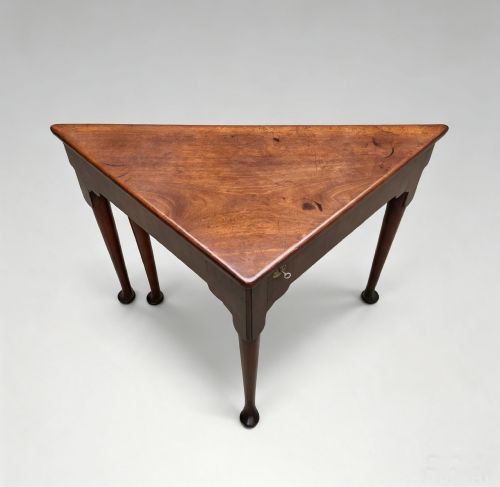


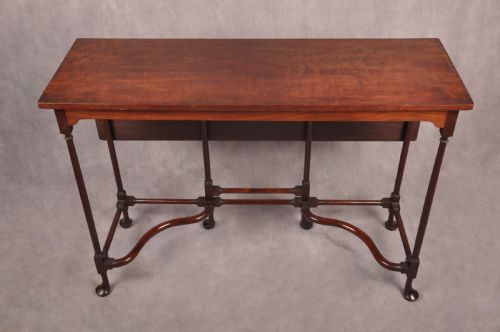

George II Gateleg Table
A george ii gateleg table offers sturdy drop-leaf functionality in rich mahogany or oak, providing timeless dining versatility for modern homes.
George II Gateleg Table
A george ii gateleg table is a form of drop-leaf dining or occasional table originating in the eighteenth century. These pieces feature hinged flaps supported by swing-out legs, allowing the surface area to expand or contract according to domestic needs.
Originating during the reign of George II and around the mid-eighteenth century, these tables range from compact occasional furniture to large dining formats. The proportions are typically generous, designed to seat diners comfortably when fully opened.
Materials and Construction
Makers of the george ii gateleg table utilised dense hardwoods such as mahogany, Cuban mahogany, oak, and walnut, selecting them for structural integrity and grain figure. These timbers were joined using traditional cabinet-making techniques to support the pivoting leaf mechanism.
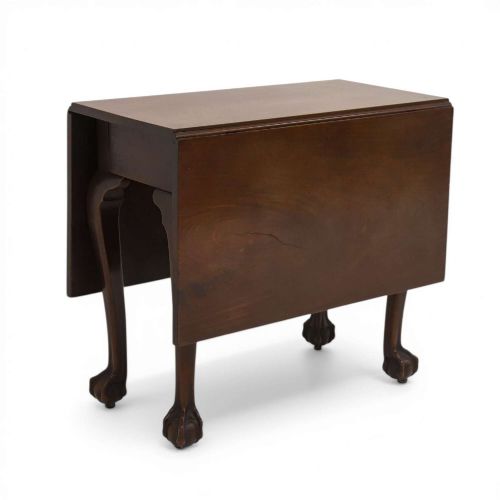
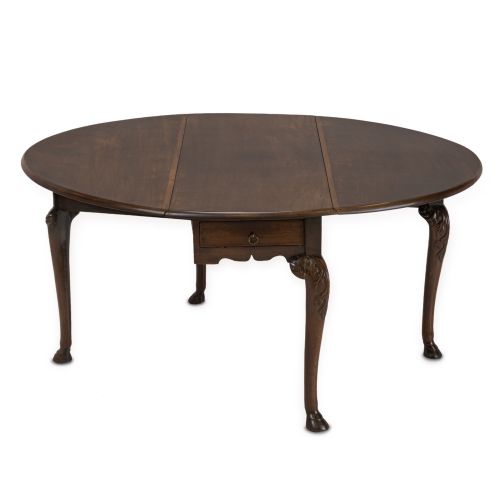
The underframes frequently incorporate cabriole legs terminating in pad feet, hoof feet, or claw-and-ball feet, fashioned from the solid primary timber. Brass and iron components appear selectively in the underlying hardware and hinges that permit the leaves to drop and rise.
The table formats on this site span large oval dining designs and smaller occasional drop-leaf configurations.
Distinguishing Quality
Quality in a george ii gateleg table rests upon the choice of timber and the execution of carved details on the legs. Dense Cuban mahogany and well-figured walnut sit at the upper end, displaying superior grain depth compared to standard utility timbers.
The precision of the gateleg pivot mechanism and the stability of the frame when fully extended dictate structural merit. Finer examples display crisply carved cabriole legs with well-defined pad, hoof, or claw-and-ball feet, whereas simpler versions rely on plain turned supports.
The George II Gateleg Table Glossary
- Gateleg table
- A drop-leaf table featuring hinged flaps supported by one or more legs that swing out like a gate. This design provides robust support for folding leaves.
- Cabriole leg
- A furniture leg that curves out in a convex arc and tapers inward in a concave arc, mimicking animal limbs. It typically terminates in a pad, hoof, or claw-and-ball foot.
- Cuban mahogany
- A dense, highly figured hardwood sourced from the Caribbean and utilised extensively in eighteenth-century cabinet-making. It is prized for its rich colour and substantial weight.
- Pad foot
- A simple, smooth foot shape common on eighteenth-century cabriole legs where the base sits flat on the floor in an oval or round pad.
- Drop-leaf table
- A table with a fixed central section and hinged leaves that fold down at the sides. This allows the overall footprint to be reduced when not in use.
George II Gateleg Table: Frequently Asked Questions
How do I seat guests around a george ii gateleg table?
Raise both drop leaves and swing the supporting gatelegs outward until they click firmly into place beneath the edges. This transforms the compact surface into a full dining table.
Ensure the swing legs are positioned directly beneath the load-bearing corners to distribute weight evenly before placing heavy dishes on the timber.
Where should I place an occasional george ii gateleg table?
Position the table against a wall with both leaves dropped to utilise it as a console or side surface in a hallway or living space. Drop one leaf if floor space is restricted.
Keep the piece away from direct heat sources and strong sunlight to protect the aged mahogany, walnut, or oak surfaces from drying out.
How do I identify a mid-eighteenth-century gateleg table?
Look for structural markers such as eighteenth-century joinery, hand-turned hinges, and cabinet timbers like Cuban mahogany or red walnut. The presence of pad feet or cabriole legs points toward this specific era.
Examine the underside of the leaves for tool marks and timber shrinkage that align with age-related wear rather than modern reproduction methods.
What is the difference between oak and mahogany versions?
Oak examples generally date earlier or reflect a more utilitarian domestic tradition, displaying a prominent, coarse grain pattern and heavy frame construction. They suit rustic or traditional interiors.
Mahogany and Cuban mahogany versions offer a smoother, darker surface finish with finer grain movement, frequently paired with decorative leg carvings like claw-and-ball feet for formal dining.