
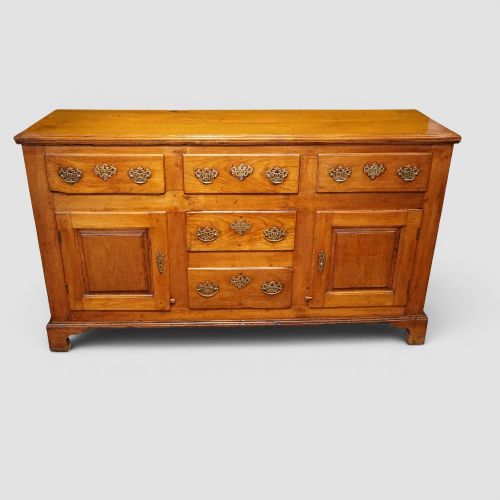


George I Oak Cabinet
A george i oak cabinet brings solidity and grain to a room, offering functional storage formed from early eighteenth-century stock.
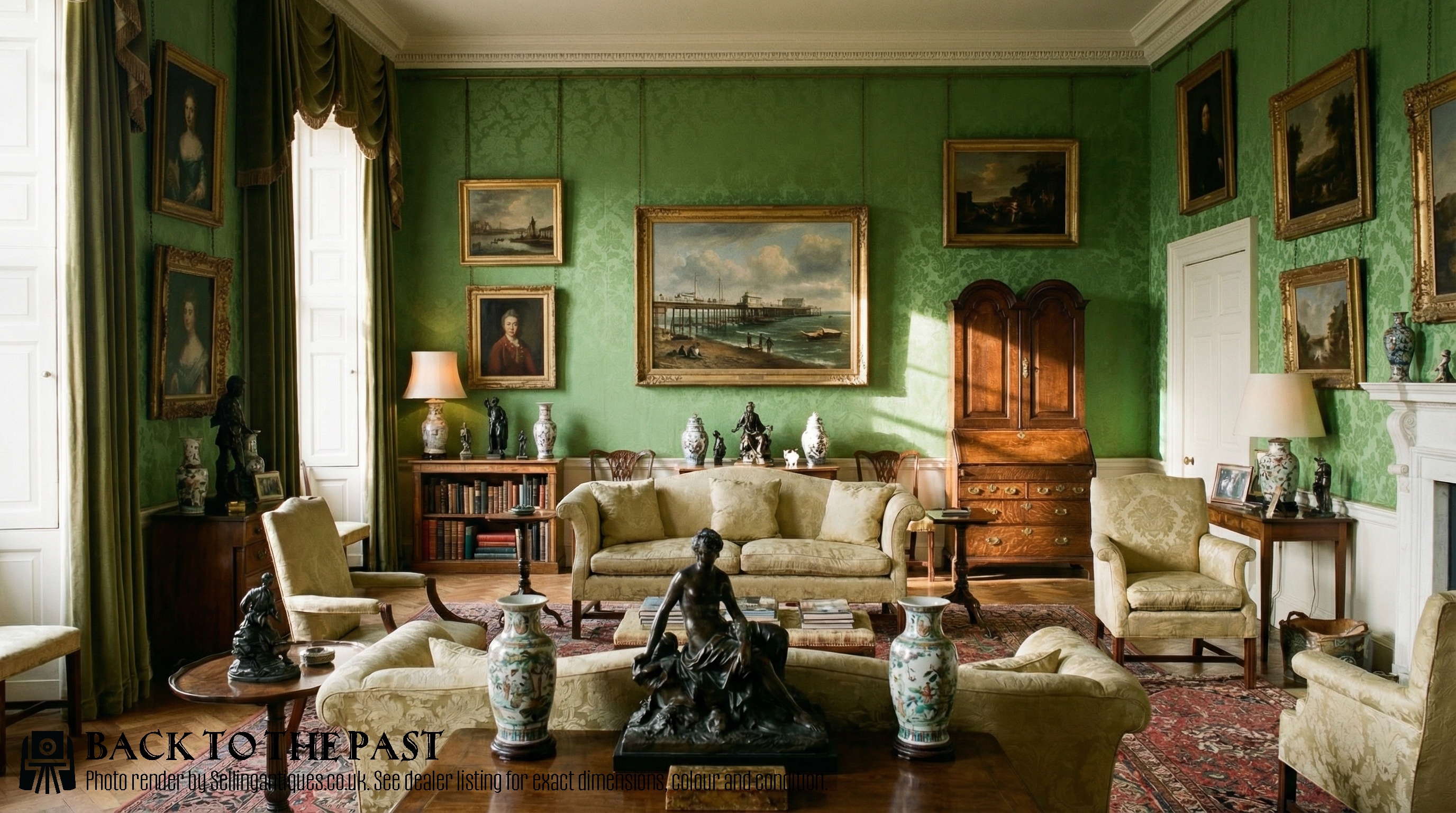
George I Oak Cabinet
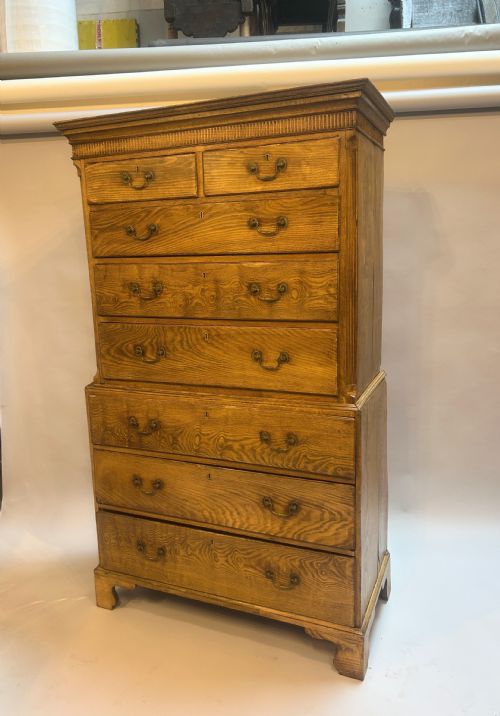
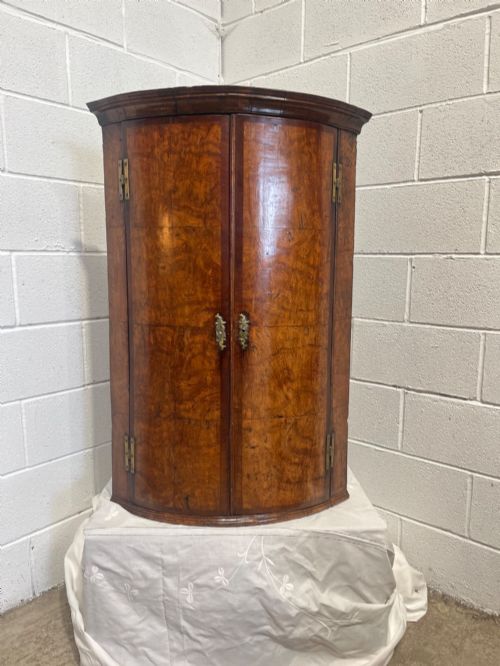
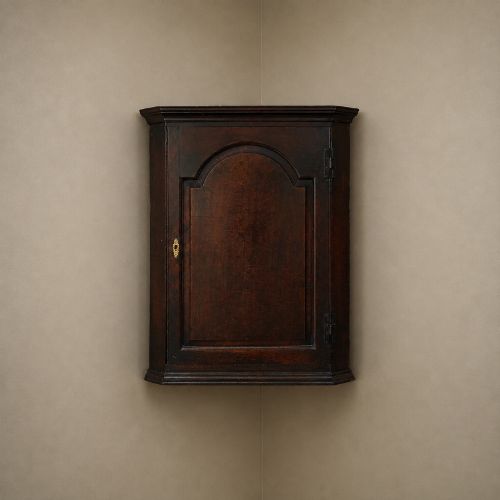
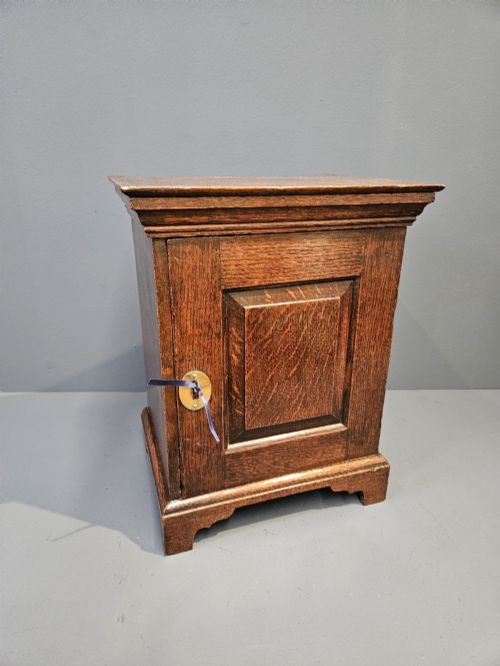
A george i oak cabinet typically takes the form of a wall-hanging corner cupboard, a bureau bookcase, or a bedside cupboard dating to the early decades of the eighteenth century. These pieces provide enclosed shelving and compartmentalised storage intended for domestic utility.
The version most commonly encountered on this page combines structural oak timbers with period hardware such as brass H-hinges and escutcheons. They span formats from small spice cupboards to tall bureau cabinets built with panelled doors and fitted interiors.
How they were made
Cabinet makers utilised solid oak boards joined with pegged mortise and tenon construction, often pairing the dense primary timber with walnut or mahogany crossbanding and fruitwood inlays. Drawer construction relied on hand-cut dovetails, while backboards were secured with handmade nails or set into rebated frames.
Surfaces received natural wax finishes to protect the timber while preserving the figuring of the grain. Brass fittings including keyhole escutcheons and hinges were cast and hand-finished for each individual carcass.
Listings feature oak alongside walnut, mahogany, and fruitwood across forms including corner cupboards, bureau bookcases, and tallboys.
What varies in quality
The standard of a george i oak cabinet rests upon the selection of timber and the precision of its joinery. Superior examples display carefully matched grain patterns across primary doors and drawer fronts, maintaining original brasswork and structural integrity without excessive timber replacement.
Proportion and decorative detailing further distinguish finer pieces, where crisp mouldings, crossbanded borders, and intact interior configurations elevate the work beyond standard utilitarian storage.
Morris & Co·George W Jack
The George I Oak Cabinet Glossary
- Crossbanding
- A decorative border technique where thin strips of veneer are laid across the grain of the primary wood to frame a panel or drawer front.
- Escutcheon
- A protective plate surrounding a keyhole, frequently cast from brass and shaped in period styles to complement the surrounding woodwork.
- Bureau bookcase
- A dual-purpose form combining a sloping fall-front desk over drawers with an upper shelved cabinet enclosed by panelled or glazed doors.
- Dovetail
- A traditional interlocking joint utilised in drawer construction, prized for its tensile strength and resistance to being pulled apart.
- Spice cupboard
- A diminutive hanging cabinet featuring a small central door opening to reveal a cluster of tiny internal drawers for domestic provisions.
George I Oak Cabinet: Frequently Asked Questions
What is a george i oak cabinet used for?
These cabinets were built to store valuables, documents, tableware, or household spices securely within domestic interiors. Their compact wall-hanging or floor-standing formats allowed them to utilise corner spaces or studies efficiently.
Today, owners employ them to display glassware, organise stationery, or bring period character to dining rooms and hallways without taking up excessive floor space.
How do I identify a george i piece?
Early eighteenth-century pieces display specific construction methods, such as hand-cut dovetails, pegged joints, and heavy oak timbers often combined with walnut veneers. The proportions tend to be robust and functional, reflecting the cabinet-making standards of the 1700s.
Details like brass H-hinges, fielded panels, and original locks further help differentiate these early examples from later nineteenth-century revivals.
Are these cabinets made entirely of solid oak?
While solid oak forms the primary structural carcass and exterior panels of most listings, makers frequently incorporated secondary timbers. Walnut, mahogany crossbanding, fruitwood, and pine appear in mouldings, drawer linings, and secondary framing.
Examining the interior drawer sides and backboards reveals these mixed timber selections, which are entirely characteristic of period construction.
How should I care for an antique oak cabinet?
Maintain a stable indoor environment away from direct heat sources and strong sunlight to prevent the timber from drying out or splitting. Natural beeswax applied sparingly helps nourish the wood surface and preserve its finish.
Avoid using modern silicone-based polishes, which can build up on the grain and alter the historic patina developed over centuries of handling.