
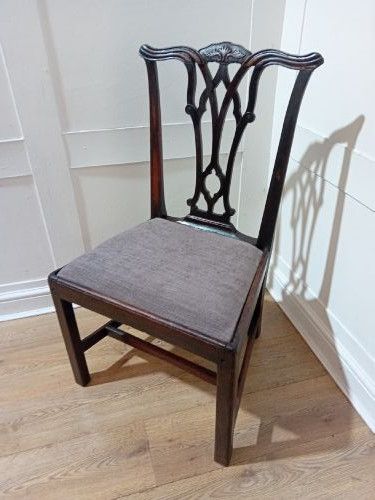
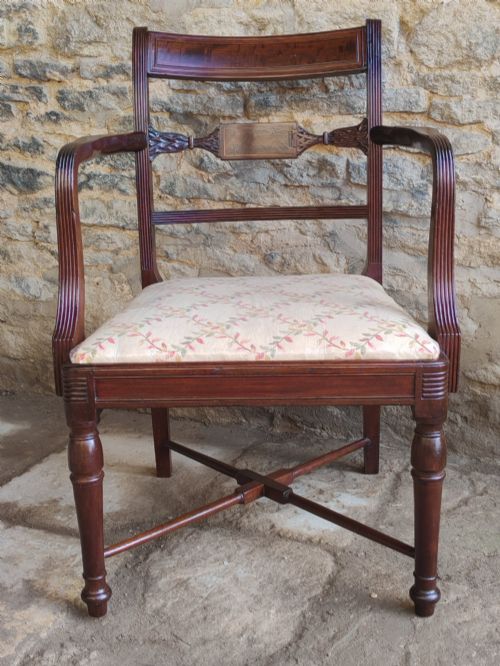
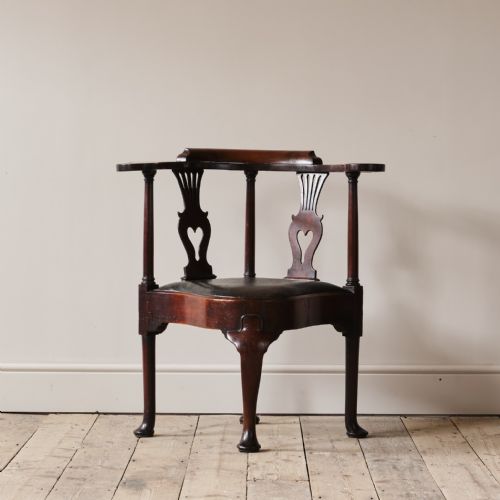
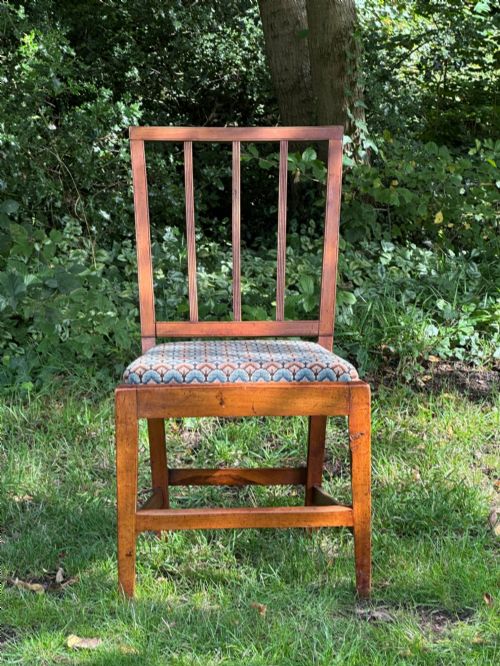
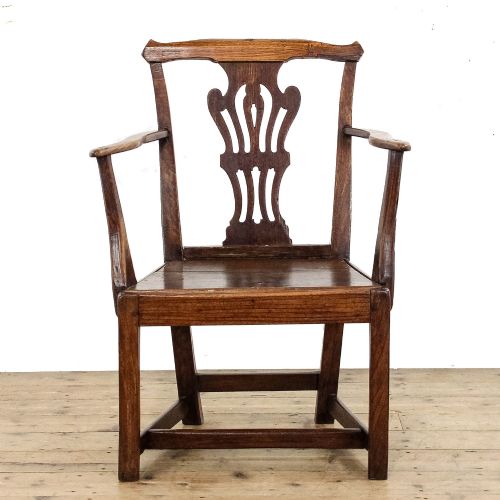
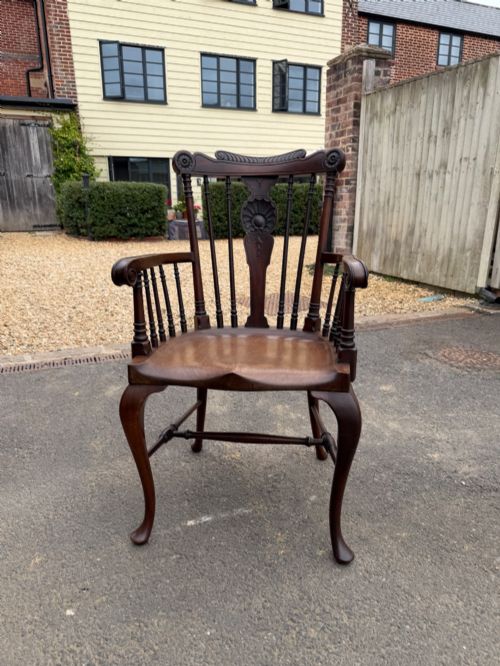
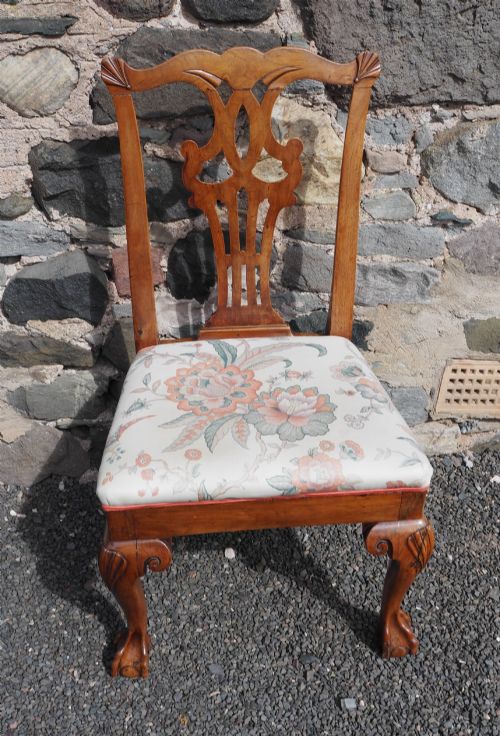
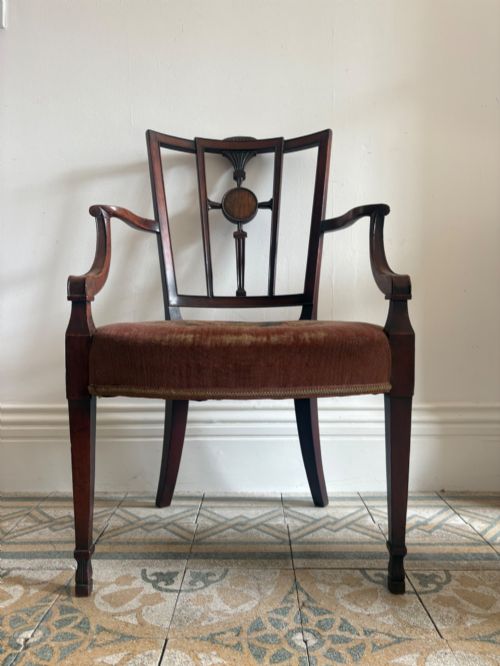
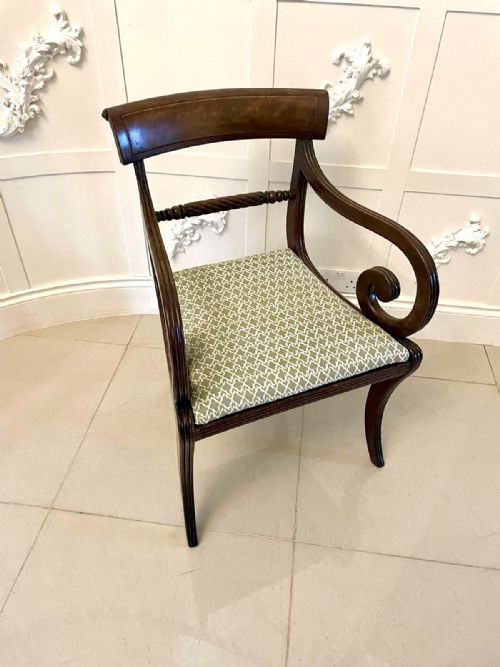
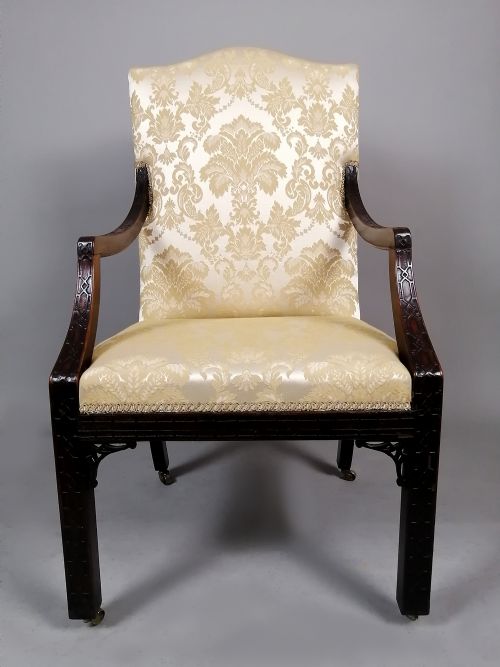
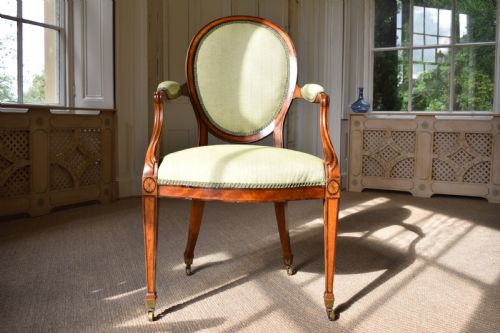
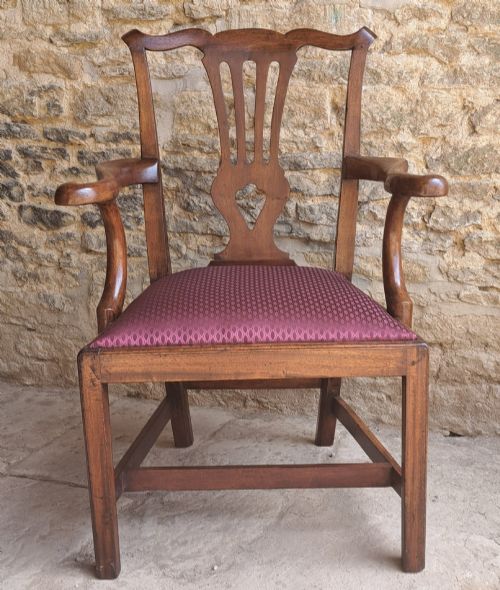
George I Desk Chair
A george i desk chair brings substantial eighteenth-century joinery and rich timber grain directly into a modern study.
George I Desk Chair
A george i desk chair sits firmly within the early Georgian period, defined by robust proportions and substantial timber construction.
While true early-eighteenth-century examples appear alongside later interpretations, walnut and mahogany forms dominate the surviving selection.
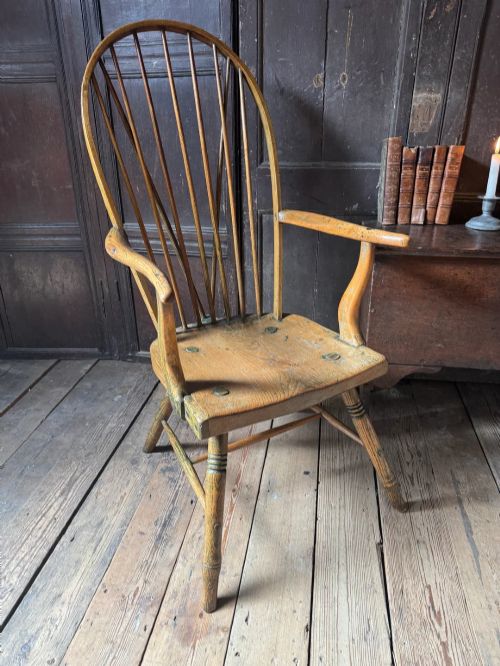
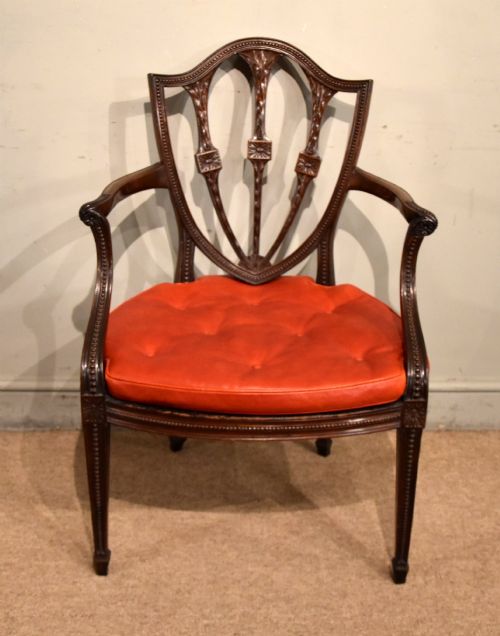
Buyers encounter open armchairs, solid wood side chairs, and later revolving office variations built to serve as practical work seating.
Materials and Construction
Cabinetmakers utilised dense hardwoods such as mahogany, walnut, and oak to build frames capable of enduring daily use.
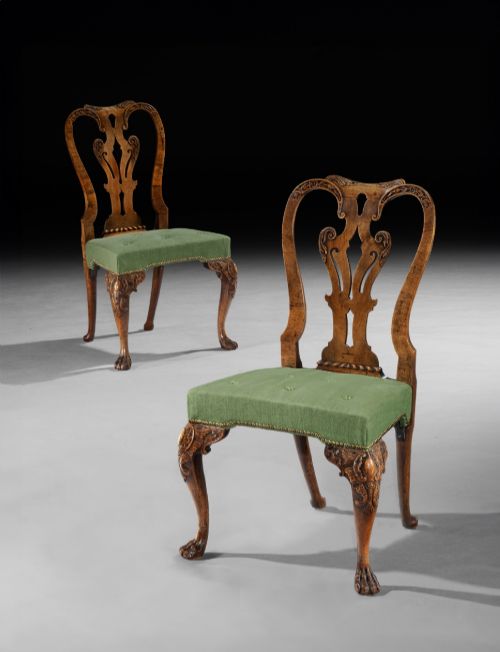
Joinery relied on traditional mortise and tenon methods, often reinforced with shaped splats, cabriole legs, and drop-in upholstered seats.
Leather, fabric, and brass upholstery tacks completed the seating surfaces on library and desk variants.
Several heavy oak and beech models feature revolving office mechanisms disguised beneath traditional gentleman's club leather.
Assessing Quality and Craftsmanship
Superior examples display crisp carving along the cabriole legs and ear pieces, whereas lesser pieces show softer, worn detailing.
The choice of timber grain, particularly figured walnut or dense mahogany, dictates the visual weight and elegance of the frame.
Original structural integrity and minimal timber replacement separate museum-grade survivals from heavily restored workshop iterations.
George Bartholomew and Co.·Bell Barn Furniture·Gillows
The George I Desk Chair Glossary
- Cabriole leg
- A furniture leg that curves outward at the knee and tapers inward toward the foot, often ending in a pad or claw.
- Gainsborough chair
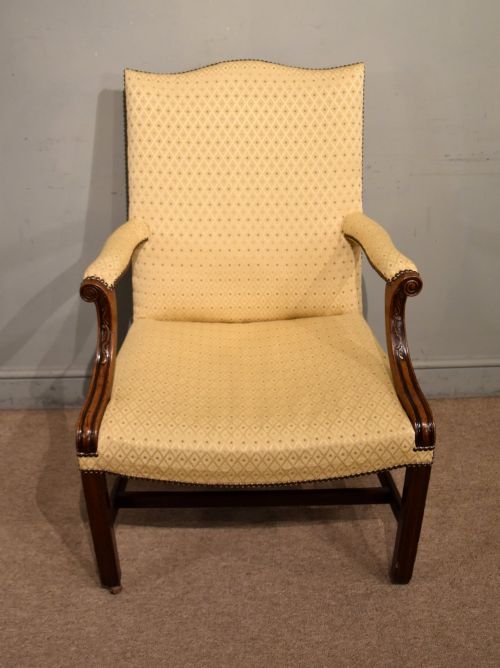
- A wide, open-armed armchair with a padded seat and back, designed primarily for writing desks or libraries.
- Carver chair
- A term used by dealers to describe an armchair that matches a set of simpler dining or desk side chairs.
- Splats
- The central vertical slat of wood down the middle of a chair back, frequently shaped or pierced for decoration.
- Drop-in seat
- A removable wooden frame upholstered in fabric or leather that fits directly into the seat rails of the chair.
George I Desk Chair: Frequently Asked Questions
How do I identify a genuine early piece?
Examine the timber species, hand-cut joinery marks, and the natural wear patterns accumulated over centuries of use.
Early pieces often feature dense walnut or primary mahogany construction with pegged joints rather than modern steel fixings.
Were these chairs originally meant for offices?
Eighteenth-century examples were built for grand libraries, private studies, and writing rooms rather than commercial offices.
Revolving desk chairs with leather upholstery typically date from later periods, particularly the early twentieth century.
Can I use an antique chair at a modern desk?
Many examples function well at standard writing desks, provided the seat height aligns comfortably with the knee space.
Fixed-height wooden or leather-topped variants offer sturdy support for daily reading and correspondence.
How should I care for the leather and wood?
Maintain the timber by applying appropriate microcrystalline wax sparingly to nourish the dry grain over time.
Condition historical leather surfaces gently to prevent cracking while preserving the original surface patina.