

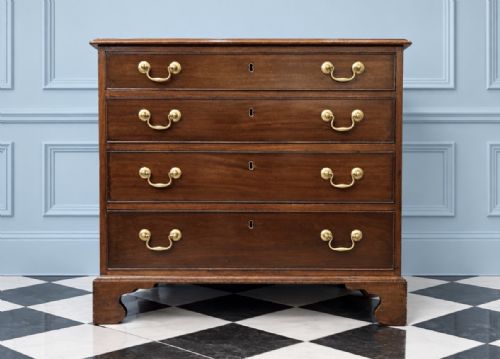
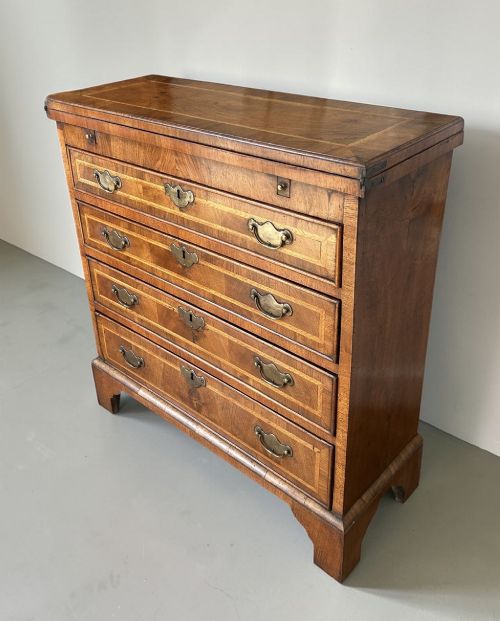
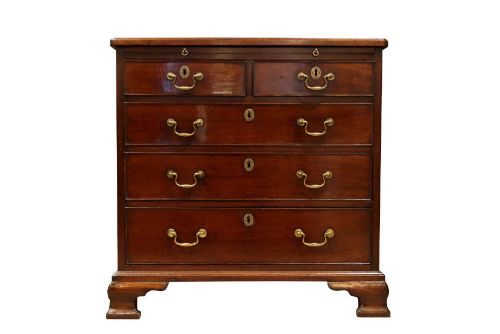

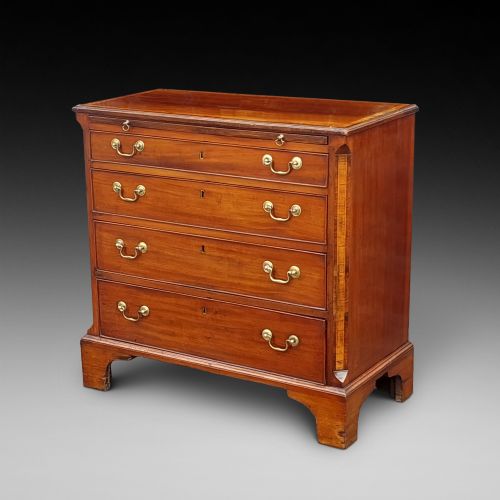



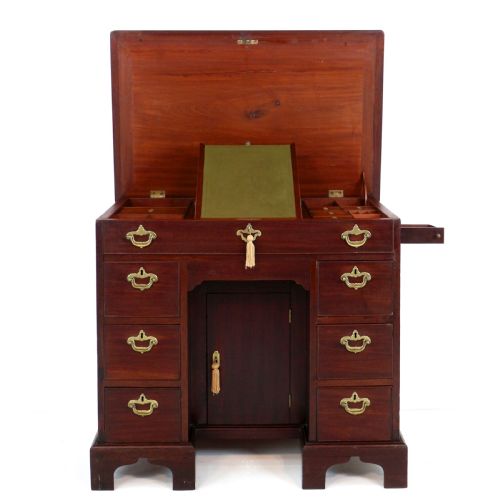



George I Bachelors Chest
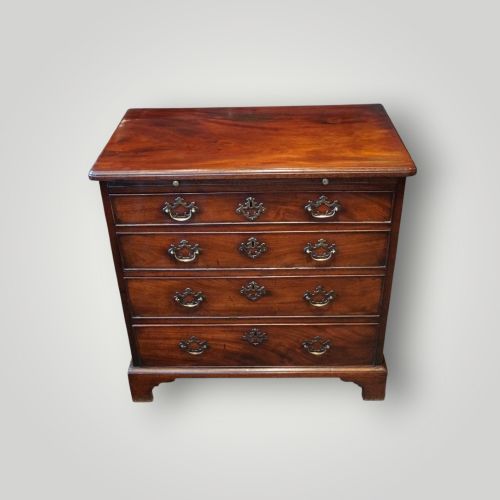
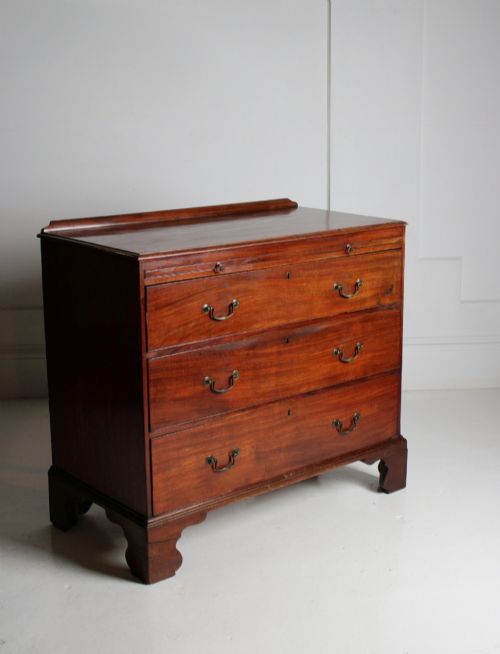
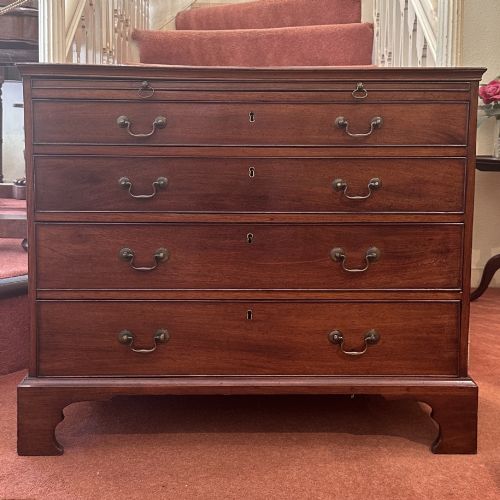
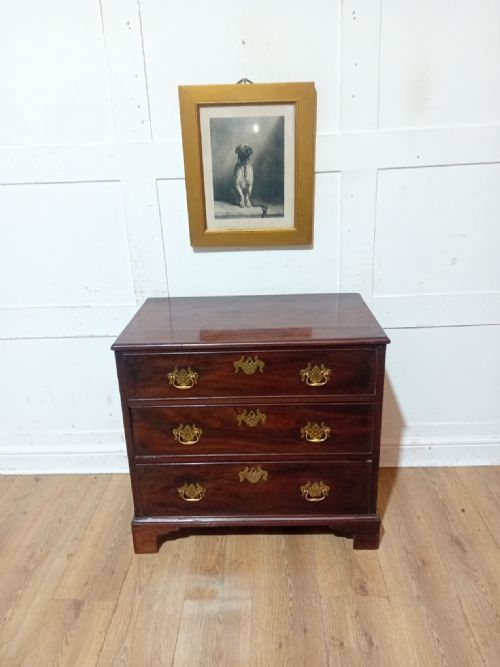
A george i bachelors chest is a compact, multi-purpose case piece housing a pull-out writing surface, most frequently encountered here in walnut or mahogany.
George I Bachelors Chest
A george i bachelors chest combines the storage of a standard drawer unit with a dedicated writing surface, often referred to as a brushing slide. These pieces emerge primarily across the Georgian periods, spanning from the early 18th century through the late 1700s, with various examples appearing in oak, elm, fruitwood, and walnut.
The proportions are typically smaller than standard chests, designed for private chambers rather than grand reception rooms. Buyers encounter compact forms featuring fitted interiors, writing drawers, and leather-lined slopes intended for correspondence and personal administration.
Materials and Construction
Cabinetmakers utilised dense timbers such as walnut, mahogany, and flame mahogany for primary visible surfaces, frequently incorporating oak for internal drawer linings and secondary supports. Figured grain patterns and book-matched veneers characterise the finer examples.
Joinery techniques relied on dovetailed drawer construction and solid timber carcases, occasionally incorporating brass carrying handles, escutcheons, and sliding mechanisms to support the integrated writing desks.
George I Bachelors Chest Retail Price Guide 2026
Typical asking prices for george i bachelors chest among the pieces listed under this phrase on Sellingantiques today, from the lower quarter to the upper quarter. They describe what is for sale here now, not the wider market.
Listings feature mahogany, walnut, oak, fruitwood, and brass across Georgian chest forms.
Gradations in Quality
The distinction between tiers rests upon timber selection, figure, and the preservation of original surfaces. Pieces displaying highly figured walnut or flame mahogany veneers command attention for their visual depth.
Internal integrity, such as original oak linings, undisturbed brass hardware, and cleanly sliding brushing desks, separates standard production from exceptional cabinet work.
ROBERT GILLOWS II
The George I Bachelors Chest Glossary
- Brushing slide
- A pull-out shelf positioned above the top drawers, originally utilised for dusting garments or writing letters. It retracts flush into the carcase when not in use.
- Kneehole desk
- A compact desk or dressing table featuring a central recess for the user's knees, flanked by banks of small drawers. This form frequently incorporates fitted writing compartments.
- Caddy top
- A raised, moulded tabletop profile resembling the lid of a tea caddy, popular on cabinet furniture during the Georgian era.
- Serpentine
- A curved front outline presenting a convex centre flanked by concave wings, requiring specialised woodworking skill to construct.
- Escutcheon
- A protective plate surrounding a keyhole, typically cast in brass to prevent the timber from wearing around the lock.
George I Bachelors Chest: Frequently Asked Questions
What is a bachelors chest?
A bachelors chest is a small set of drawers equipped with a pull-out sliding shelf or folding flap that serves as a writing desk.
These pieces were designed for compact private living spaces, providing both wardrobe storage and a writing surface within a single footprint.
How do I use one today?
They function effectively as bedside tables, hallway storage units, or small desks in modern living spaces.
The pull-out slide provides a convenient temporary surface for placing items or resting a notebook.
How do I identify walnut pieces?
Walnut surfaces display deep brown tones with intricate, swirling grain patterns that differ noticeably from straight-grained oak or reddish mahogany.
Cabinetmakers during the early Georgian period frequently utilised solid walnut or burl walnut veneers on these compact chests.
Why does the slide matter?
The sliding shelf defines the bachelors form, offering an extendable board just above the upper drawers.
In period pieces, this mechanism operates smoothly on wooden runners housed within the upper frame of the carcase.