



Geometric Wool Wall Hanging
A geometric wool wall hanging brings the bold tribal patterns and rich textile traditions of nineteenth-century weavers directly onto a modern interior wall.
Geometric Wool Wall Hanging
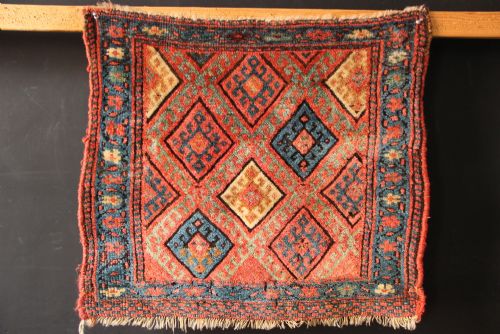
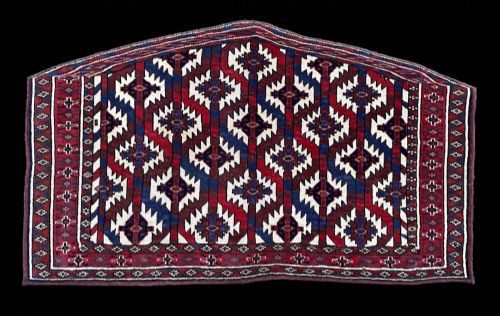
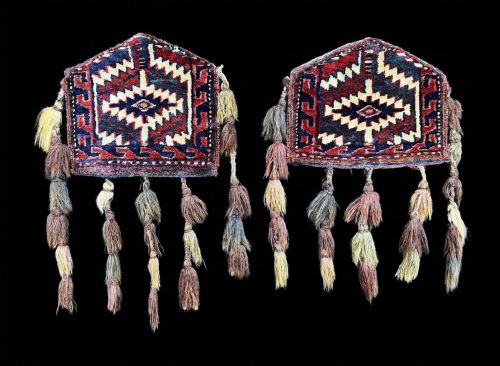
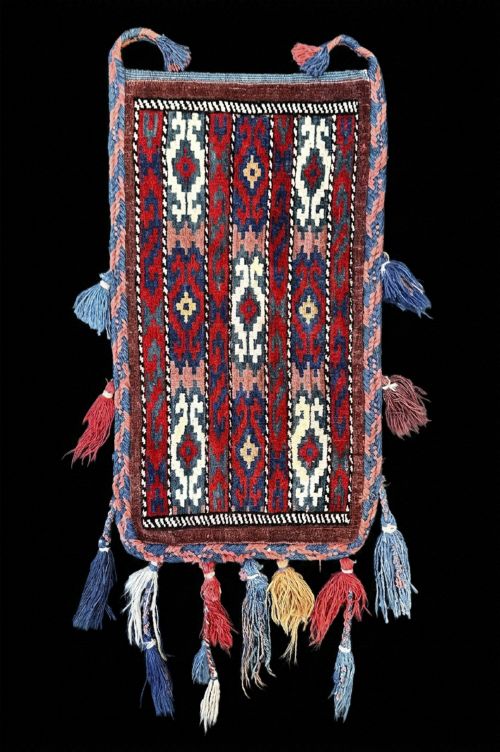
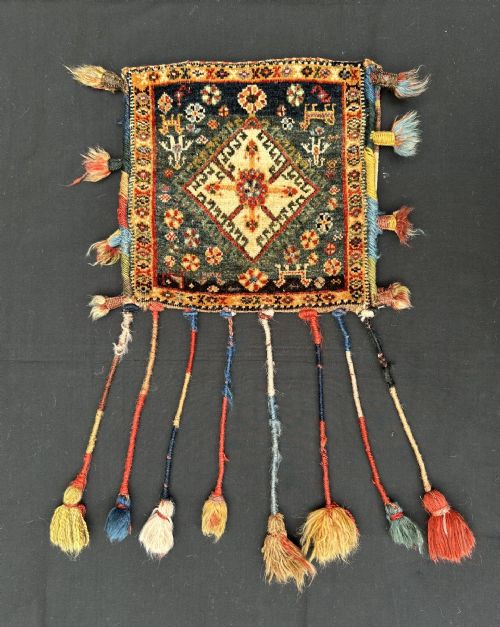
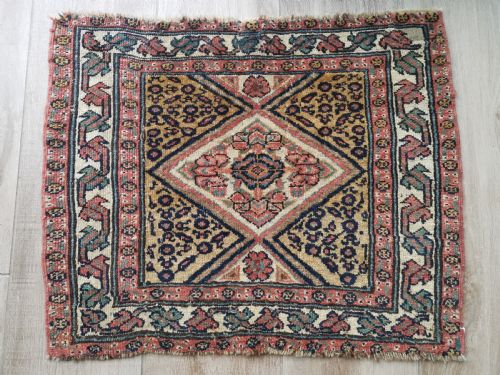
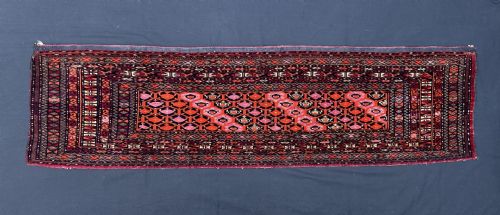
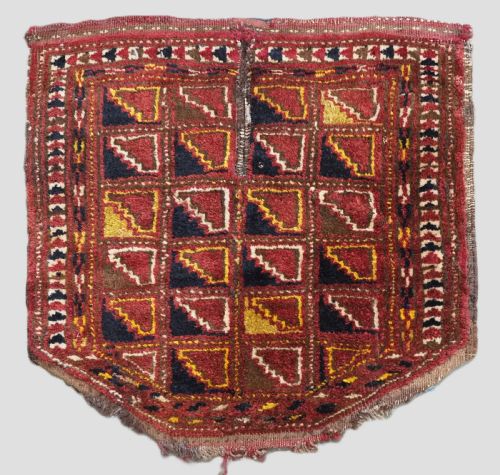
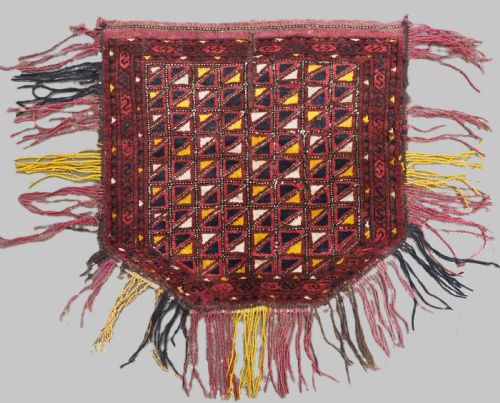
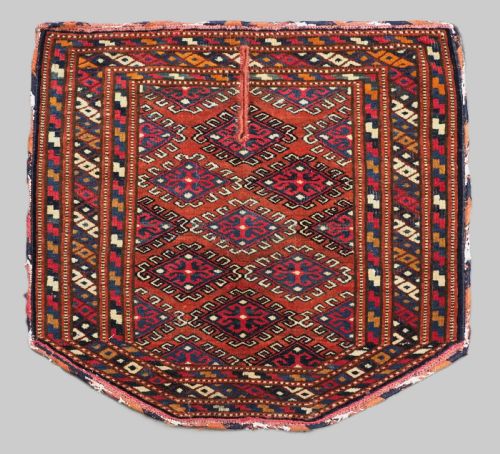
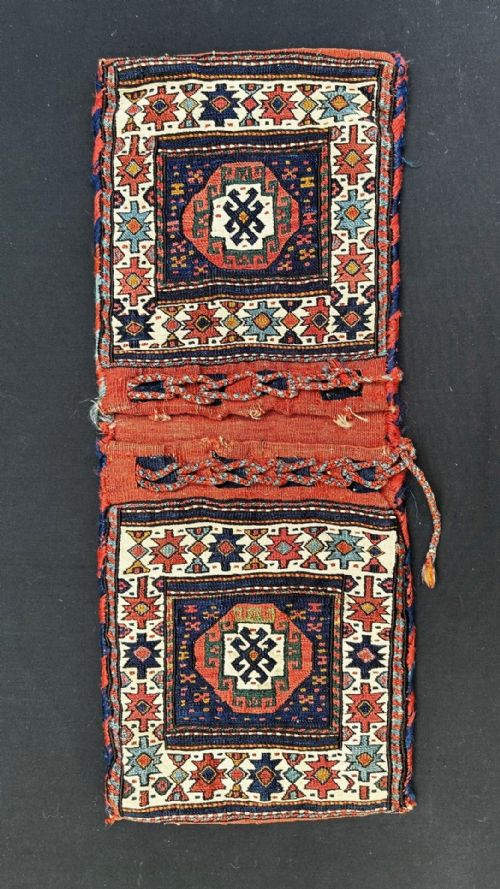
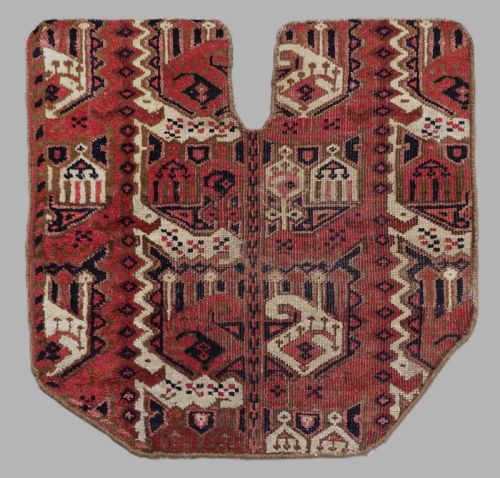
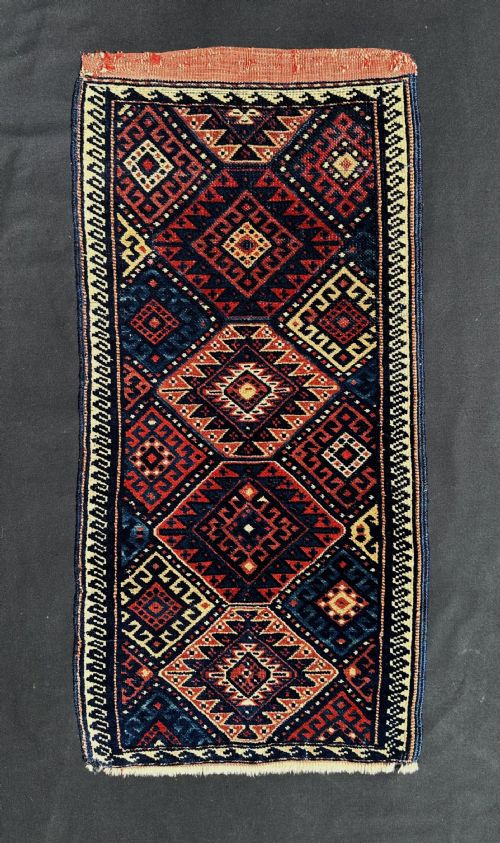
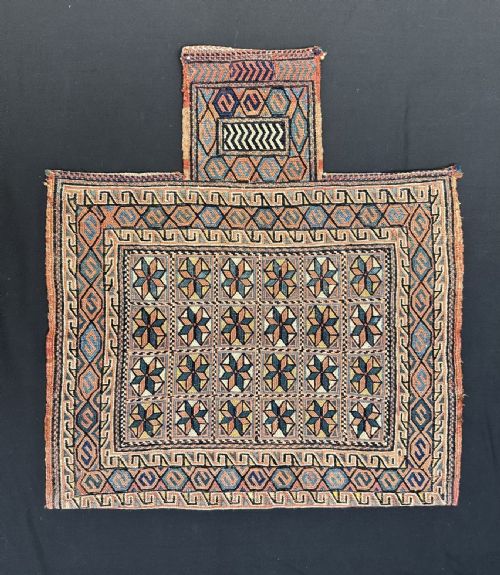
A geometric wool wall hanging draws upon a diverse array of nomadic and tribal textile forms from Central Asia, Persia, and the Caucasus. These pieces originate as functional items such as saddle bags, storage sacks, tent bands, and floor coverings before being repurposed for display.
The selection encountered here spans the nineteenth and early twentieth centuries, encompassing specific regional groups like the Yomut, Ersari, Shahsevan, and Afshar tribes. Each object carries the distinct visual vocabulary and tribal motifs of its makers.
Buyers will find that flatweaves, pile bags, and embroidered felts form the core of this category. Their structured patterns and rich textures translate naturally into vertical wall displays.
How they were made
These textiles rely primarily on hand-spun wool and cotton, worked into dense flatweaves, pile weaves, and felted structures. Artisans utilised natural dyes to achieve deep hues of madder red, indigo, and ivory ground.
Weaving techniques vary from sumac and kilim flatweaving to detailed pile knots and Uzbek embroidery on felt. The structural integrity depends heavily on tight spinning and careful preparation of animal fibres.
Geometric Wool Wall Hanging Retail Price Guide 2026
Typical asking prices for geometric wool wall hanging among the pieces listed under this phrase on Sellingantiques today, from the lower quarter to the upper quarter. They describe what is for sale here now, not the wider market.
The listings span from the early nineteenth century through to the 1920s, featuring wool, cotton, and felt.
What varies in quality
Quality rests upon the fineness of the spin, the clarity and saturation of the natural dyes, and the precision of the geometric design. Superior pieces demonstrate an assured handling of symmetry and proportion within the tribal vocabulary.
The condition of the wool, the integrity of the selvedges, and the survival of original tassels or plain weave backs differentiate finer textile survivals from standard examples.
The Geometric Wool Wall Hanging Glossary
- Flatweave
- A textile constructed without a pile by interweaving warp and weft threads. This creates a smooth, tapestry-like fabric suited to wall display.
- Torba
- A small storage bag produced by Turkmen tribes, frequently featuring characteristic gul motifs and geometric borders. These are often displayed flat as decorative panels.
- Asmalyk
- A pentagonal trapping made by Turkmen groups, historically used to decorate camel flanks during wedding processions. Their balanced geometry makes them striking wall hangings.
- Sumac
- A supplementary warp-wrap weaving technique that produces a textured, ribbed surface on the face of the textile. It adds durability and structural weight.
- Sofreh
- A flatwoven spread or cloth used for sharing meals or handling bread among nomadic groups. They frequently display minimalist geometric grids.
Geometric Wool Wall Hanging: Frequently Asked Questions
How do I hang a textile safely?
Mounting requires distributing the weight evenly across the top edge using a fabric sleeve or a padded wooden batten. Avoid using direct pins or nails that pierce the wool fibres.
Conservation-grade Velcro stitched to a cotton backing band provides a secure hold for heavier flatweaves and tribal bags.
Are these antique textiles fragile?
Nineteenth-century nomadic woolwork is robustly constructed from durable animal fibres and sturdy vegetable dyes. Normal handling poses no risk to tightly spun pieces.
Protection from direct sunlight prevents the natural dyes from fading over time.
What is a tribal bagface?
Nomadic groups wove utilitarian storage containers, such as Khorjin or torbas, to hold household possessions during seasonal migrations. The front panel typically received the most intricate geometric design.
Separated from their original rear panels over time, these decorative faces now function primarily as wall art.
How do I identify tribal origins?
Distinctive colour palettes, specific knotting structures, and recurring geometric motifs point directly to regional groups such as the Yomut, Shahsevan, or Afshar. Border patterns often reveal the specific sub-tribe or oasis.
Comparing structural details helps separate Caucasian weaving traditions from Central Asian or Persian examples.