




Turkmen Camel Trapping
These turkmen camel trapping pieces are tribal weavings and wall hangings from Central Asia, prized for their rich woolen designs.
Turkmen Camel Trapping
When you search for turkmen camel trapping, you are looking at tribal textiles and wall hangings originating from the Trans-Caspian steppes and the Middle Amu Darya region. The pieces listed here span the nineteenth century, including examples dated around 1850, 1870, 1880, and 1900.
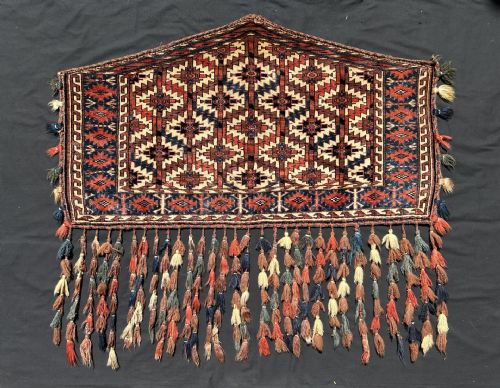
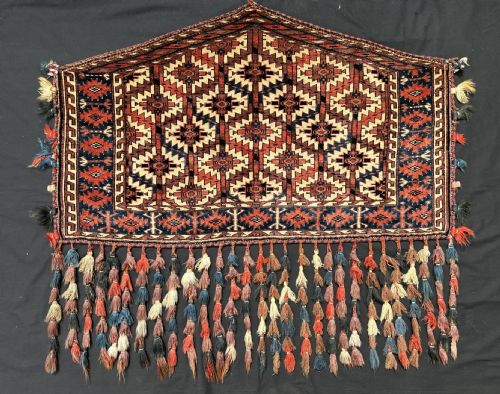
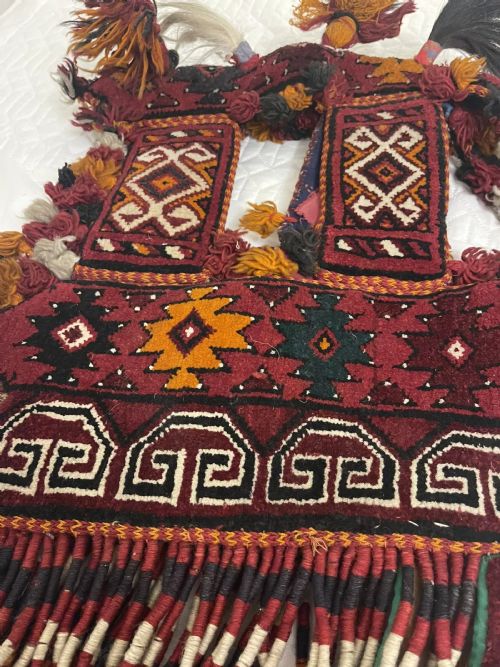
The selections primarily consist of asmalyks, torbas, and dizlyks created by specific tribal groups such as the Yomut, Ersari, Karadashli, and Saryk. Buyers will frequently encounter wedding camel and horse neck dress garments alongside full pile wall hangings finished with tassels.
These items function as traditional Central Asian tribal weavings, often featuring specific patterns like the aishk gul and the Salor shemle design. They represent the textile heritage of Afghan and Turkmen tribes used during significant cultural ceremonies.
What Varies in Quality
Quality in these tribal textiles rests on the intricacy of the tribal design, such as the execution of specific gul patterns and the presence of silk highlights. Pieces retaining a full pile and original tassels demonstrate superior preservation compared to heavily worn examples.
The clarity and saturation of the natural dyes significantly influence the visual impact of each weaving, distinguishing standard utility items from finer ceremonial pieces. Tribal origin also plays a role, with specific group attributions holding distinct technical characteristics.
Turkmen Camel Trapping Retail Price Guide 2026
Typical asking prices for turkmen camel trapping among the pieces listed under this phrase on Sellingantiques today, from the lower quarter to the upper quarter. They describe what is for sale here now, not the wider market.
Camels dressed for Central Asian weddings wore finer neck ornaments than most human guests.
The Turkmen Camel Trapping Glossary
- Asmalyk
- A pentagonal or triangular trapping produced by Turkmen tribes, frequently used as a wedding camel decoration. These pieces were hung on the flanks of the bride's camel during the wedding procession.
- Torba
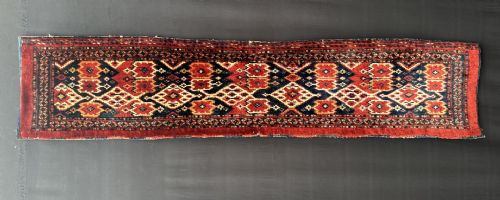
- A small utilitarian bag or trapping woven by Central Asian tribes for storage inside the yurt. They often feature prominent guls and refined border patterns.
- Gul
- A primary medallion or repeating motif used in Turkmen carpet and textile design. Each tribal group typically employed its own distinct gul variation.
- Dizlyk
- A specific type of knee trapping used on camels, forming part of the elaborate animal regalia during tribal ceremonies. These works share the technical wool construction of larger wall hangings.
- Pile
- The cut loop surface of a carpet or textile formed by knotting yarn onto the foundation warp and weft. Full pile examples preserve the intended texture and depth of the original design.
Turkmen Camel Trapping: Frequently Asked Questions
What is a turkmen camel trapping?
A turkmen camel trapping is a woven textile piece created by tribes in Central Asia to decorate animals during wedding processions and ceremonies.
These items include asmalyks, torbas, and dizlyks produced from wool and cotton using natural dyes.
How were these trappings used?
Tribal groups utilised these textiles as decorative garments for camels and horses during wedding rituals and festive community events.
Many pieces also functioned as storage bags or wall hangings within traditional dwellings across the steppes.
Which tribes made these pieces?
The textiles originate from various Central Asian groups, including the Yomut, Ersari, Karadashli, and Saryk tribes.
Each group incorporated distinct design motifs, such as specific gul patterns, into their weaving traditions.
How do I date an antique trapping?
Dating relies on stylistic evidence, material analysis, and structural indicators pointing to the nineteenth century, including specific decades like 1870 and 1900.
Natural dye usage and traditional tribal weaving techniques also help establish the historical period of manufacture.