


Geometric Wooden Floor Lamp
A geometric wooden floor lamp brings period presence to a corner, most often seen in oak or walnut from the Art Deco era.
Geometric Wooden Floor Lamp
A geometric wooden floor lamp combines structural uprights with the stepped lines typical of Art Deco design. These pieces serve to anchor a room with architectural height and warm timber tones.
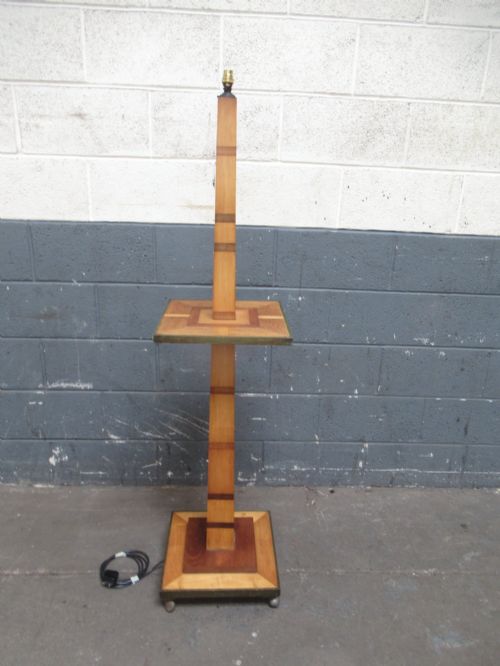
Most examples found here date from the 1920s and 1930s, taking the form of standard lamps or tall floor lamps. Oak and walnut dominate the selection, often enriched with contrasting details like ebony or brass.
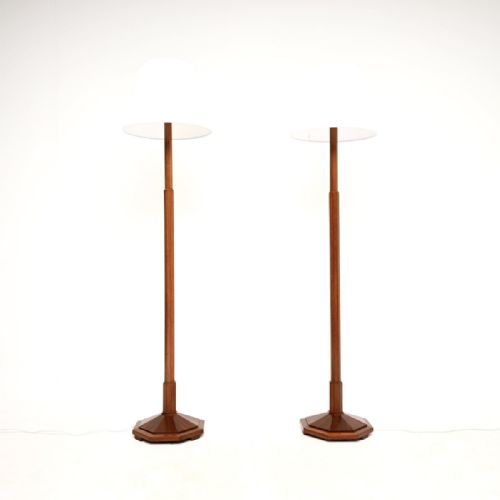
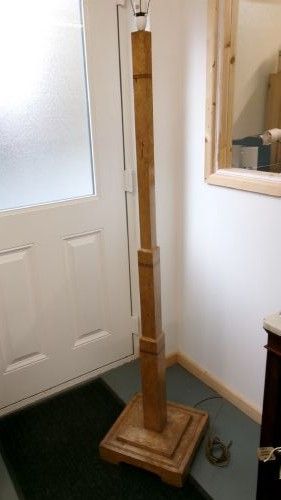
Buyers encounter variations ranging from golden oak columns to blond walnut shafts with stepped bases. The overarching aesthetic relies on clean geometric forms rather than ornate carving.
How they were made
Joiners constructed these lamps from solid hardwoods such as oak, walnut, and satinwood, frequently employing inlay and contrasting wood types like ebony to emphasise the geometric lines. Artisans shaped the timber into columnar or stepped shafts that housed internal wiring while maintaining structural integrity.
Metal components in brass appeared alongside glass elements to accent the woodwork and complement the lighting function. The combination of dense timber and precise veneering defines the physical construction of these period standards.
Listings feature pieces entirely from the 1920s and 1930s, constructed in oak, walnut, satinwood, and ebony.
What varies in quality
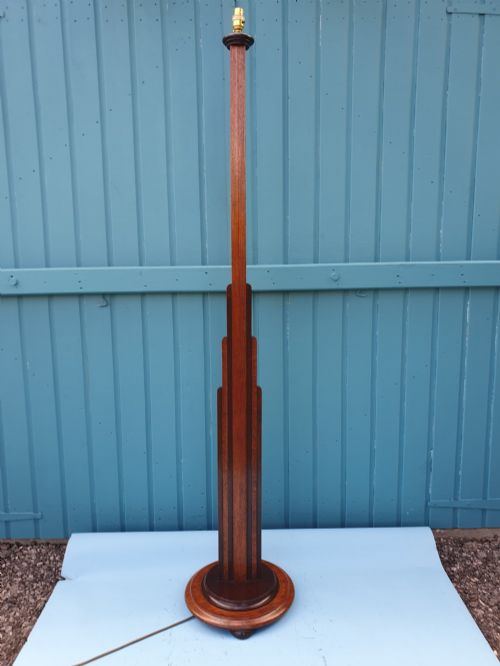
The distinction between standard examples and finer pieces lies in the choice of timber and the ambition of the geometry. Elaborate multi-tiered skyscraper designs or the integration of contrasting timbers like ebony and satinwood elevate a piece above simpler oak shafts.
Execution of the grain and the crispness of the stepped angles determine visual success. Finer proportioning in the base and column creates a balanced silhouette that distinguishes superior examples.
The Geometric Wooden Floor Lamp Glossary
- Art Deco
- A design style characterised by streamlined geometric forms, stepped outlines, and sleek ornamentation. It flourished internationally during the 1920s and 1930s.
- Standard lamp
- A traditional British term for a freestanding floor lamp designed to hold a shade and illuminate a room from a corner or beside seating. These fixtures provide both ambient and task lighting.
- Inlay
- A decorative technique where contrasting materials are inserted into recesses within the wood surface to create patterns. This method highlights the geometric motifs common in the period.
- Satinwood
- A hard, durable timber known for its golden colour and satiny lustre, used for fine furniture and decorative accents. It provides a bright contrast against darker woods like walnut.
Geometric Wooden Floor Lamp: Frequently Asked Questions
How do I date a geometric wooden floor lamp?
Dating relies on stylistic markers such as stepped skyscraper profiles and material choices like oak and walnut that point to the 1920s and 1930s.
Examining the construction methods and the integration of contrasting inlays helps confirm the period of manufacture.
Where should I place a standard lamp?
These tall fixtures suit corners or positions beside low seating where their height can balance room proportions.
They provide vertical emphasis and focused light without crowding the floor space.
Are these lamps stable?
The substantial weight of dense hardwoods like oak and walnut provides a naturally steady base for the upright shaft.
Well-designed stepped bases distribute the weight effectively to prevent tipping.
What woods were used?
Cabinet makers utilised oak, walnut, and satinwood as primary materials for these structural standards.
Darker woods like ebony frequently appeared as contrasting inlay details to accentuate the geometric design.