
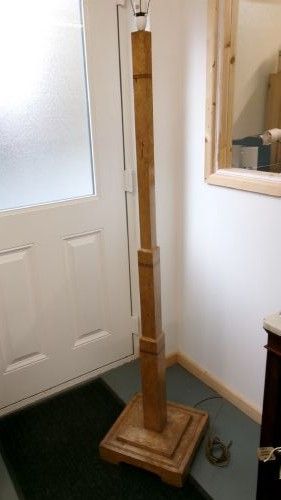


Walnut Standing Light
These walnut standing light pieces bring warmth and height to a room, offering functional illumination through substantial timber forms.
Walnut Standing Light
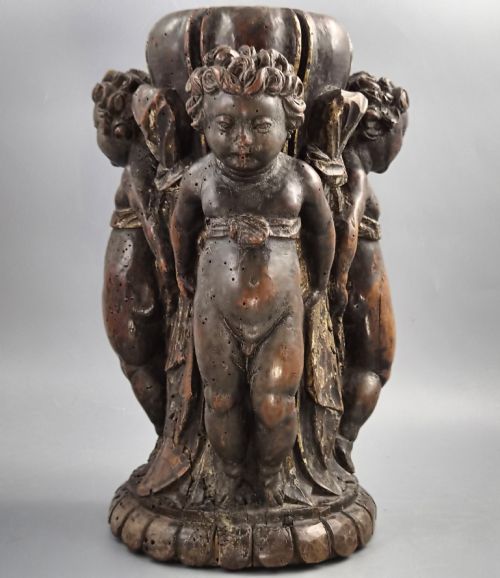
When you search for walnut standing light, you encounter tall floor lamps, standard lamps, and carved torchieres designed to illuminate a room from an elevated position. These pieces span several centuries, running from seventeenth-century Italian Baroque torchiere bases up through twentieth-century Art Deco standard lamps.
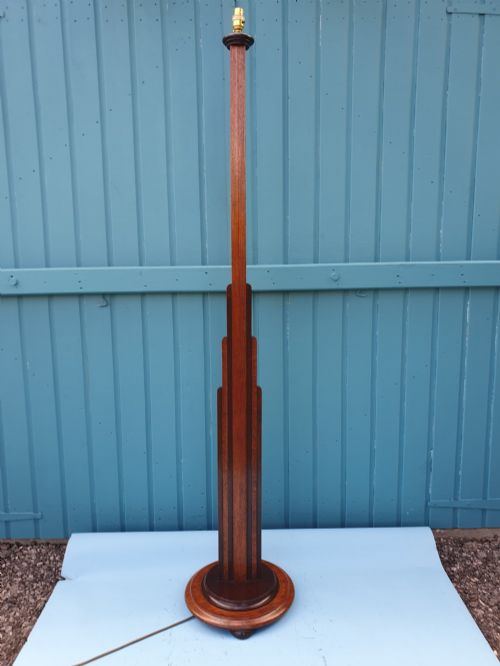
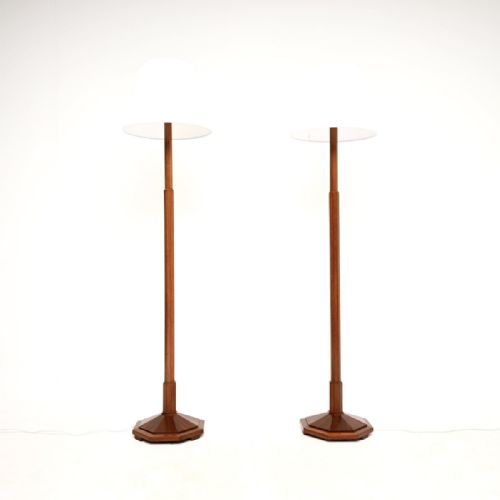
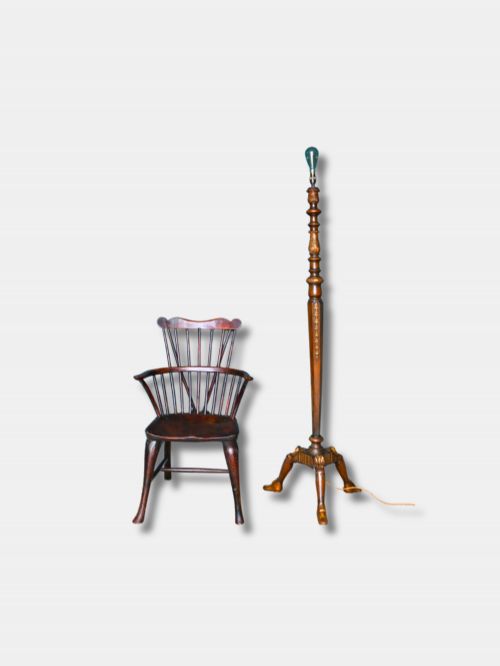
You are most likely to meet twentieth-century Art Deco standard lamps in blond or golden walnut, often standing on tripod bases. Alongside these, the selection includes older carved wooden forms and standard lamps paired with gilt or brass details.
The objects range from heavily carved Venetian figures and Black Forest bear lamps to clean-lined modernist floor lamps from English workshops. Their common thread is the use of walnut timber combined with a tall vertical profile built for interior lighting or display.
How they were made
The primary material across these pieces is walnut, frequently shaped through turning, spiral carving, or elaborate hand-chiselling to create figurative and architectural bases. Woodworkers combined the dense timber with brass, gilt highlights, and occasional metal fittings to secure electrical components or structural stability.
Older seventeenth-century examples rely on deeply carved wooden figures such as putti and angels, executed with hand tools and finished with gold leaf or pigment. Later twentieth-century standard lamps utilise simpler turned shafts and tiered modernist structures that highlight the natural grain of the blond and golden walnut.
Listings span five distinct centuries of production, ranging from seventeenth-century Italian Baroque carvings to 1930s modernist English floor lamps.
What varies in quality
The standard of carving sets the earlier sculptural pieces apart, where the depth and anatomical precision of figures like putti or bears dictate the value of the work. Maker attribution also plays a role, with documented pieces from notable English firms carrying greater distinction than anonymous production.
Material selection creates another tier of difference, particularly in twentieth-century examples where finely figured blond or golden walnut veneer and solid timber selection elevate the finish above standard utility pieces.
Harry and Lou Epstein·Hille
The Walnut Standing Light Glossary
- Torchiere
- A tall standing ornamental candlestick or lamp designed to throw light upwards. These typically feature an elaborate carved base and date from earlier decorative periods.
- Standard lamp
- A British term for a floor lamp, consisting of an upright wooden shaft supported on a heavy base. They often incorporate turned or spiral-carved details.
- Art Deco
- A design style popular during the 1920s and 1930s characterised by sleek lines, geometric shapes, and modern materials. Pieces from this era often showcase the warm grain of walnut.
- Black Forest
- A regional style of wood carving originating from Switzerland and Germany, known for realistic animal and nature motifs. Bears are a common subject in this tradition.
- Baroque
- An ornate artistic style from the seventeenth and eighteenth centuries featuring dramatic curves, rich ornamentation, and dynamic figurative carving.
Walnut Standing Light: Frequently Asked Questions
How do I date a walnut floor lamp?
Dating relies on the stylistic markers of the base and the treatment of the walnut timber. Twentieth-century pieces often display Art Deco geometry, while older items show Baroque carving or nineteenth-century spiral turning.
Examining the construction methods and any remaining wiring or fixings also helps establish the period of manufacture.
What is the difference between a torchiere and a standard lamp?
A torchiere traditionally refers to a tall, highly ornamental stand meant to hold a single light or candle pointing upward, often heavily carved with figures. A standard lamp is generally a later term applied to floor lamps designed to carry a fabric shade for general room illumination.
Both serve to raise a light source above furniture level.
How do I care for walnut wood?
Walnut benefits from being kept away from direct sunlight and extreme temperature fluctuations, which can dry out or fade the timber. Regular dusting with a soft, dry cloth preserves the finish without building up residue.
Occasional light conditioning with appropriate furniture wax maintains the moisture and sheen of the wood grain.
Are these lamps wired for modern use?
Many older standards and floor lamps have been rewired at various points in their history to meet modern electrical safety standards. Buyers should inspect the flex and lamp holder to determine if professional rewiring by a qualified electrician is necessary for daily use.
Original wiring from early twentieth-century pieces is rarely suitable for plugging in today.