





Geometric Star Medallion Rug
These geometric star medallion rug examples bring tribal wool craftsmanship directly to your floor, offering bold symmetrical motifs that anchor a room.
Geometric Star Medallion Rug
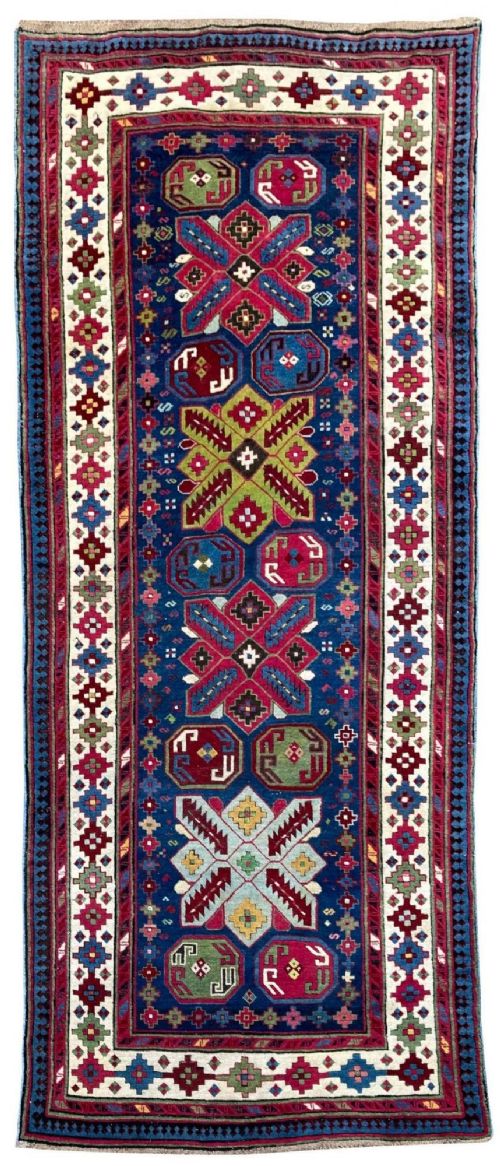
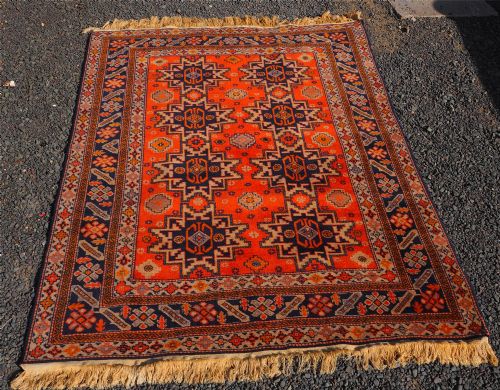
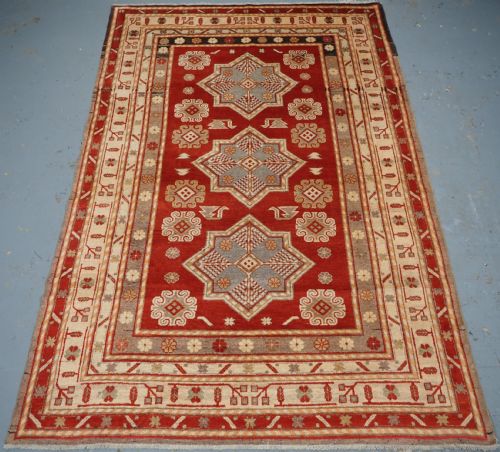
A geometric star medallion rug represents a traditional woven textile featuring distinct star motifs set centrally within the field. These pieces emerge from regions such as the Caucasus, Persia, Anatolia, and East Turkestan, spanning the late nineteenth and early twentieth centuries.
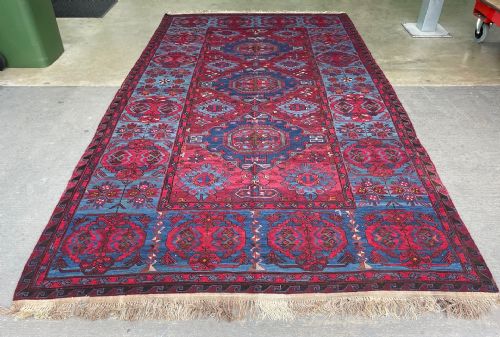
Buyers encounter various formats including small area rugs, larger carpets, and long runners. The aesthetic leans heavily into Caucasian tribal designs alongside Persian Heriz and East Turkestan Khotan traditions.
Dating ranges primarily from the eighteen eighties through to nineteen thirty, showing how weavers utilised traditional symbols across different decades. Each piece reflects the specific regional weaving heritage of its origin, whether Daghestan, Erivan, or Akstafa.
How They Were Made
These textiles rely on natural wool for the pile and structure, often paired with cotton foundations depending on the specific regional workshop or tribal tradition. Weavers knotted the wool by hand onto stretched warp threads, building up dense and durable floor coverings designed for daily use.
Dyes derived from natural sources created the mellow colours and ivory grounds seen across Caucasian and Turkish examples. Flatweave techniques also appear in specific types like Soumak carpets, demonstrating varied structural methods within the same category.
Geometric Star Medallion Rug Retail Price Guide 2026
Typical asking prices for geometric star medallion rug among the pieces listed under this phrase on Sellingantiques today, from the lower quarter to the upper quarter. They describe what is for sale here now, not the wider market.
Certain antique runners squeeze large decorative peacocks directly alongside their geometric star medallions, proving that tribal weavers loved a dramatic avian neighbour.
What Varies in Quality
Quality depends upon the precision of the geometric layout and the clarity of the star medallion against the field. Finer examples display balanced proportions between the central motifs and the surrounding borders, whether featuring peacocks or repeating tribal elements.
The choice of palette and the depth of the wool pile influence the visual impact of each rug. Pieces with unusual sizing or distinct regional attributions, such as specific Lesghi or Erivan weaves, often show greater individual character in their execution.
The Geometric Star Medallion Rug Glossary
- Medallion
- A central ornamental design element placed in the middle of the rug field. In these pieces, that element takes the form of a geometric star.
- Soumak
- A flatweave carpet technique utilising a wrapping stitch that leaves floats of yarn on the reverse side. This method creates a sturdier structure without a traditional cut pile.
- Warp
- The vertical threads stretched across the loom that form the foundational skeleton of the rug. Weavers tie the wool knots directly onto these parallel strings.
- Pile
- The vertical or slanted upper surface of the rug formed by the cut ends of knotted wool. The density of this wool layer affects the texture underfoot.
Geometric Star Medallion Rug: Frequently Asked Questions
Where were these rugs made?
These pieces originate from traditional weaving centres across the Caucasus, Turkey, Persia, and East Turkestan. Specific regions include Daghestan, Akstafa, and Khotan.
Each area developed distinct regional variations in colour palettes, wool preparation, and geometric star arrangements.
How do I clean a wool rug?
Wool naturally resists dirt and staining due to its inherent lanolin content. Regular gentle vacuuming without a beater bar keeps the surface free of debris.
Professional specialist cleaning is recommended for deep maintenance to preserve the antique dyes and hand-knotted wool structure.
What is a runner format?
A runner is a long, narrow carpet format specifically proportioned for hallways, corridors, or bedside placements. These pieces often accommodate multiple medallions arranged in a linear sequence down the length.
Examples from Akstafa frequently utilise this elongated format to showcase several star motifs alongside figurative elements like peacocks.
How do I date an antique rug?
Dating relies on assessing the structural materials, natural dye oxidation, and regional design characteristics typical of specific decades. Pieces span from the late nineteenth century through to the early twentieth century.
Wear patterns, wool quality, and traditional motifs provide further clues to the era in which the textile was knotted.