





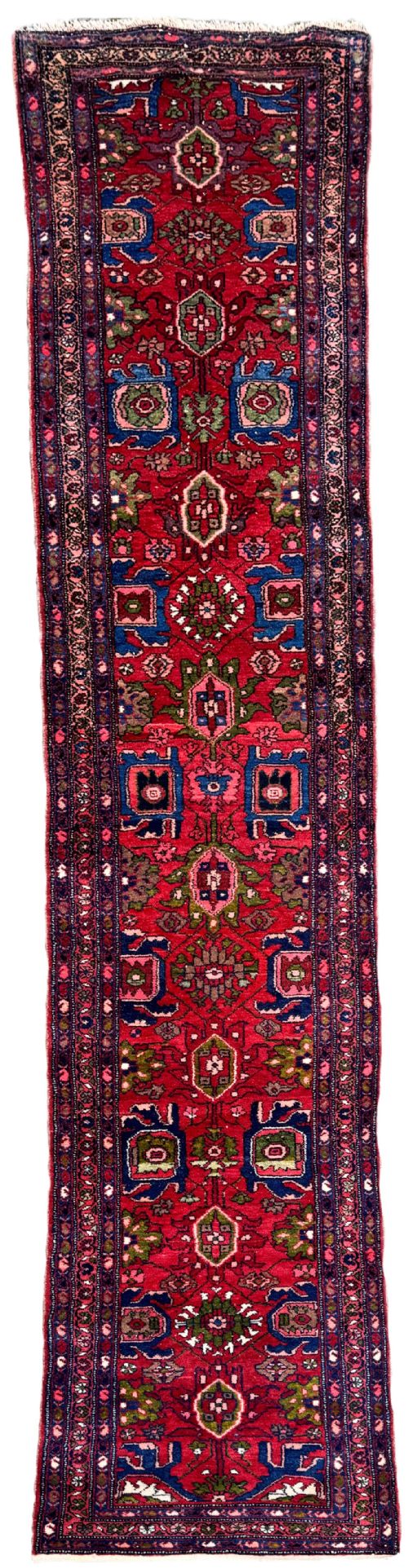
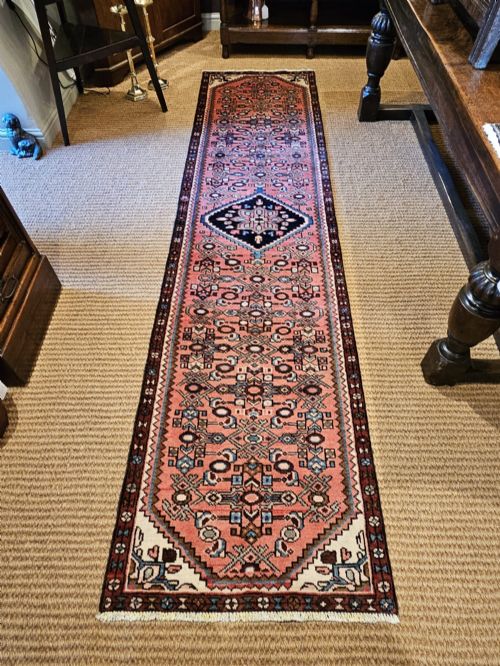
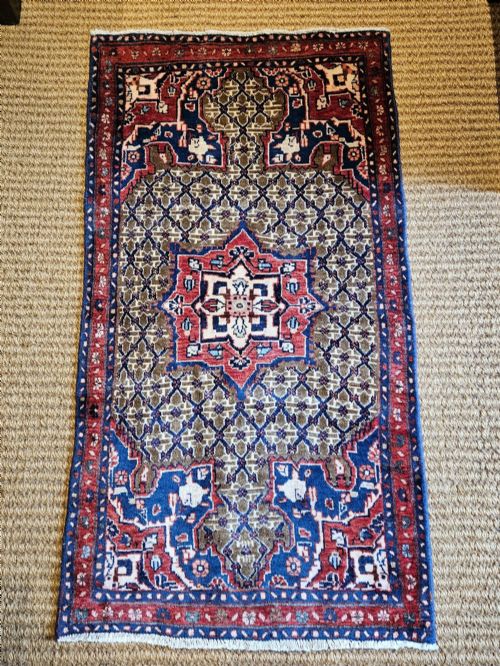
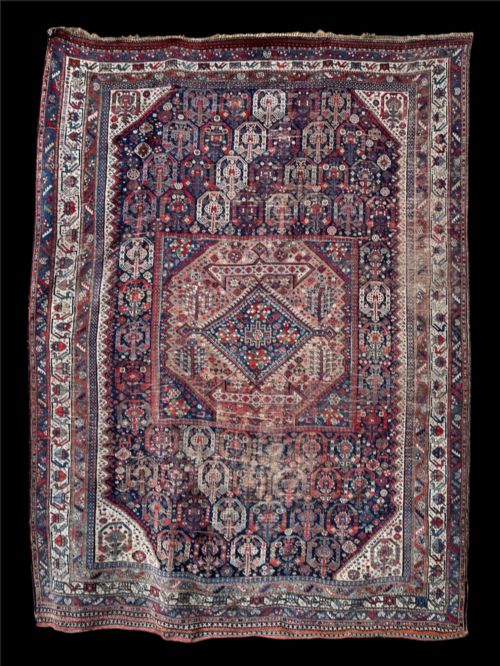
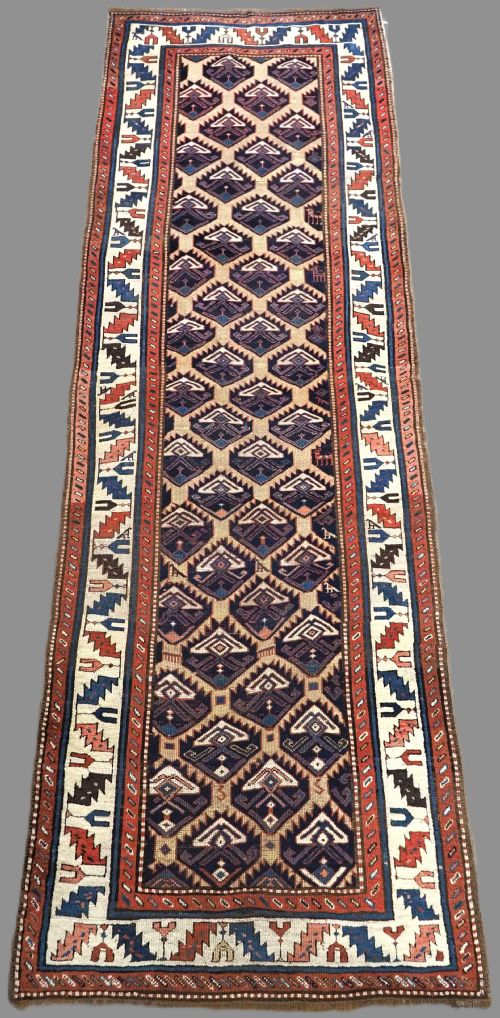
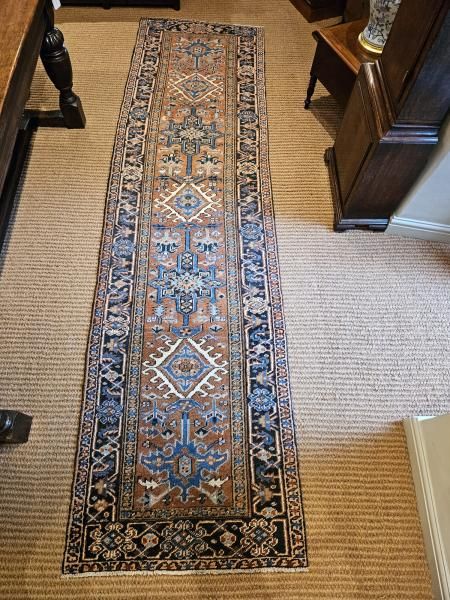
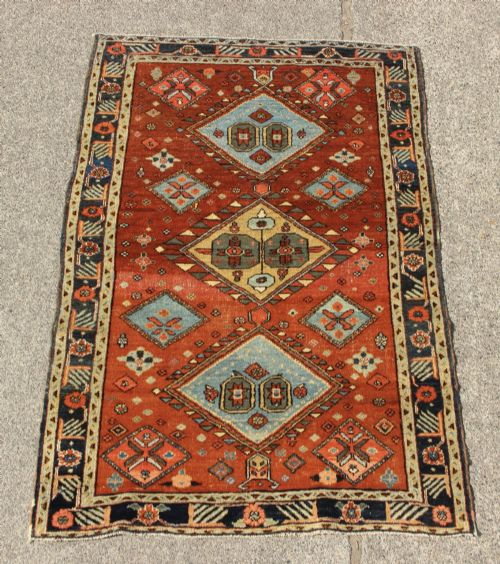
Geometric Persian Runner Rug
A geometric persian runner rug brings linear tribal structure and enduring wool construction to long spaces.
Geometric Persian Runner Rug
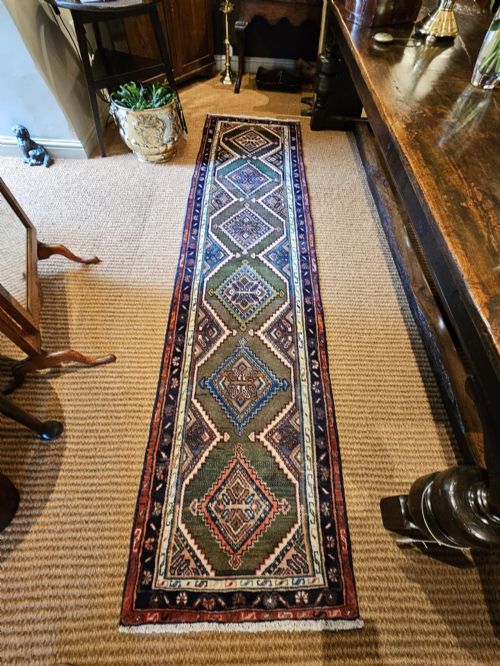
A geometric persian runner rug provides an elongated format suited for hallways and narrow rooms. These pieces originate from various tribal and regional traditions across Persia and the surrounding Caucasus, dating from the nineteenth century into the 1930s.
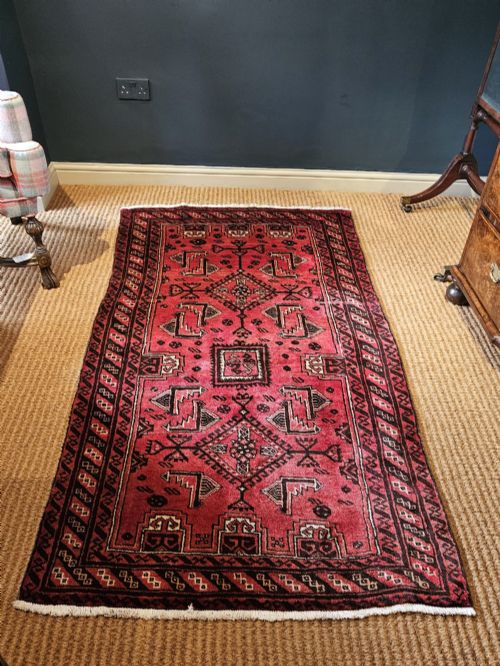
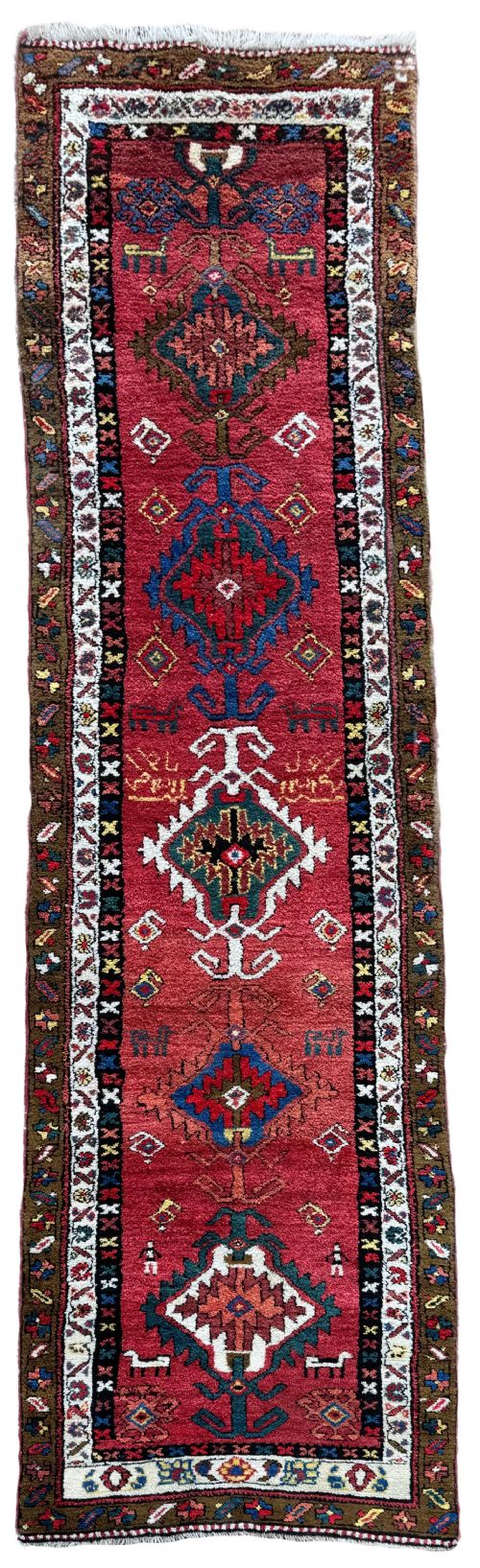
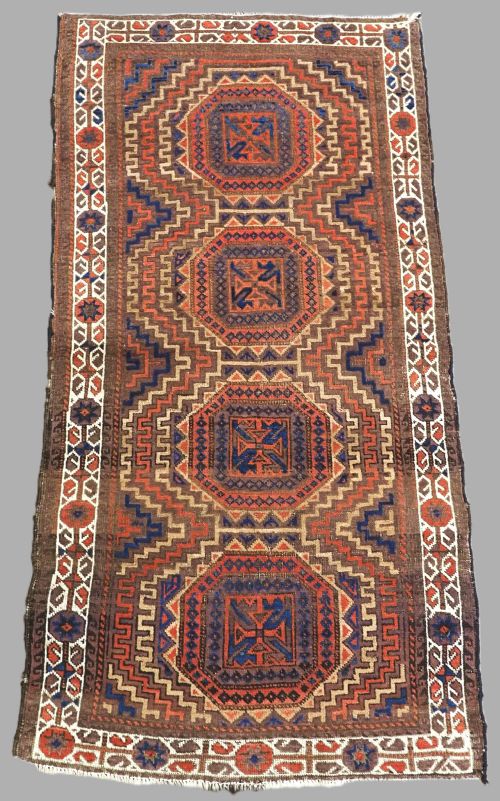
The aesthetic relies on repeated motifs, lattice patterns, and structured medallions rather than flowing florals. Pieces span forms such as runner rugs, hallway runners, and long carpets produced by Kurdish, Baluch, Heriz, and Hamadan makers.
Surviving examples display an interplay of rectilinear designs adapted for practical floor covering. Buyers encounter formats scaled specifically for corridors alongside related tribal formats.
Materials and methods
Weavers constructed these long formats using wool, pure wool, hand-spun wool, and camel hair on cotton foundations. Natural dyes provide the underlying palette, yielding tones of olive green, navy blue, and deeper reds that age with character.
The technique involves hand-weaving dense pile structures designed to withstand heavy foot traffic in domestic spaces. Artisans employed traditional knotting methods passed down through tribal confederacies and regional workshops.
Geometric Persian Runner Rug Retail Price Guide 2026
Typical asking prices for geometric persian runner rug among the pieces listed under this phrase on Sellingantiques today, from the lower quarter to the upper quarter. They describe what is for sale here now, not the wider market.
Several pieces preserve camel hair in the weave, giving resilient texture to the corridor.
Judging quality in runner rugs
Quality rests in the precision of the rectilinear weave and the depth of the natural dyes. Tightly packed knots and resilient wool pile indicate longevity, while looser structures alter the handling of the geometric motifs.
The complexity of the lattice work and the consistency of the hand-spun wool distinguish finer outputs. Condition plays a role, with intact borders and sound structural integrity marking the upper tier of surviving examples.
The Geometric Persian Runner Rug Glossary
- Runner
- An elongated rug format designed specifically for corridors, hallways, and narrow spaces.
- Medallion
- A central decorative motif placed symmetrically within the field of the rug.
- Natural Dyes
- Colourants derived from plant, insect, and mineral sources rather than synthetic chemicals.
- Pile
- The upright yarn loops that form the usable surface texture of a woven carpet.
Geometric Persian Runner Rug: Frequently Asked Questions
Where do geometric persian runner rugs work best?
These elongated formats fit naturally along hallways, corridors, and narrow passageways where standard rectangular rugs do not reach. They introduce structure and texture to transitional floor areas.
Positioning a runner in a hall protects flooring while framing the walkway with traditional tribal patterns.
How do I care for a wool runner?
Regular gentle vacuuming without a rotating brush roll helps remove grit from the wool pile. Professional cleaning suited for antique textiles preserves the natural dyes and fibres.
Keeping the piece out of direct sunlight prevents uneven fading across the length of the rug.
What distinguishes tribal designs from traditional styles?
Tribal designs feature bold, angular geometry, rectilinear medallions, and motifs passed down through specific regional groups. Traditional workshop styles often incorporate more controlled, symmetrical compositions.
Both categories utilise hand-spun wool and natural colour palettes across nineteenth and early twentieth-century production.
How are different regional types told apart?
Distinctions rely on specific combinations of knotting structures, border arrangements, and characteristic colour combinations unique to areas like Heriz, Hamadan, or Kurdish districts. Structural quirks in the foundation yarns also signal specific origins.
Examining the back of the piece reveals the weave density and material preparation typical of particular weaving groups.