

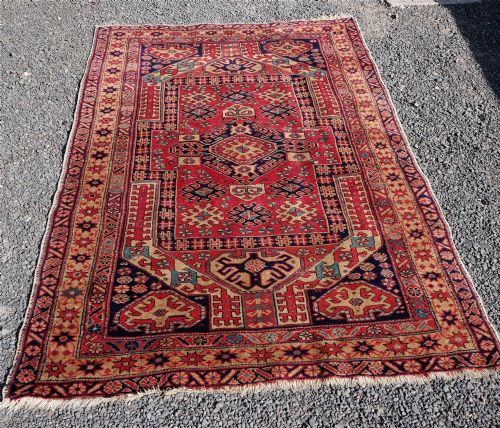
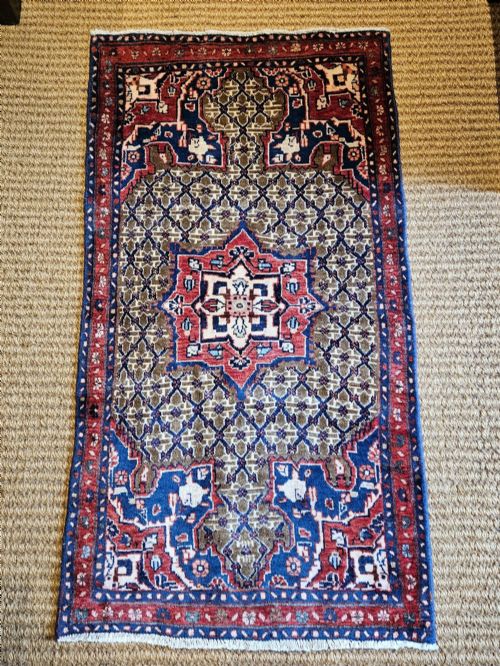
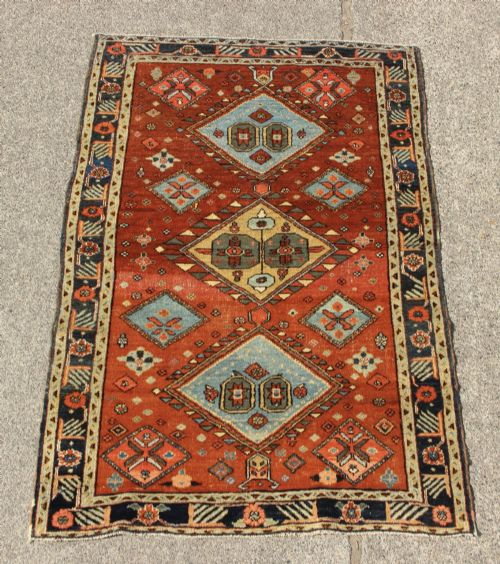
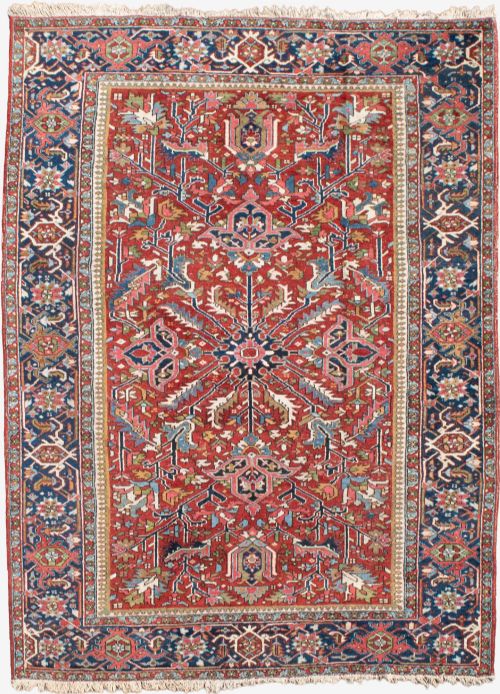
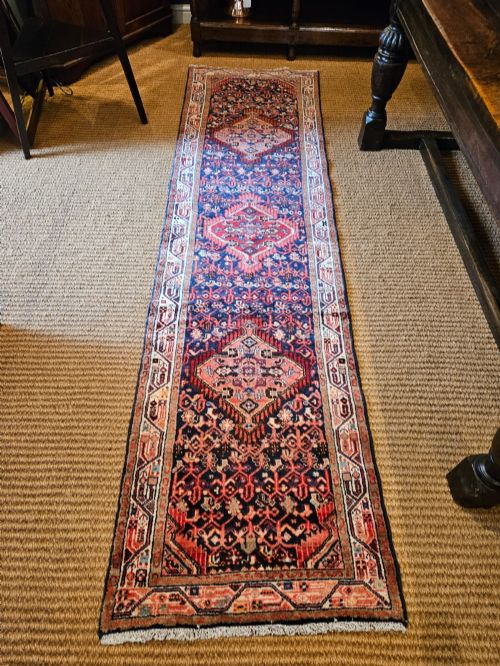

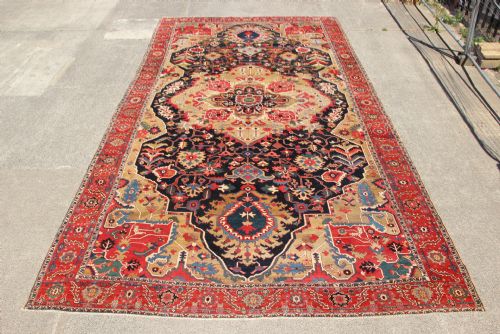
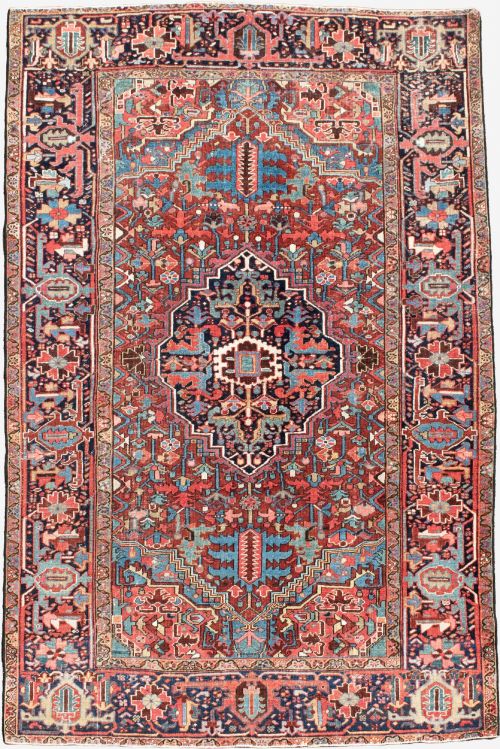
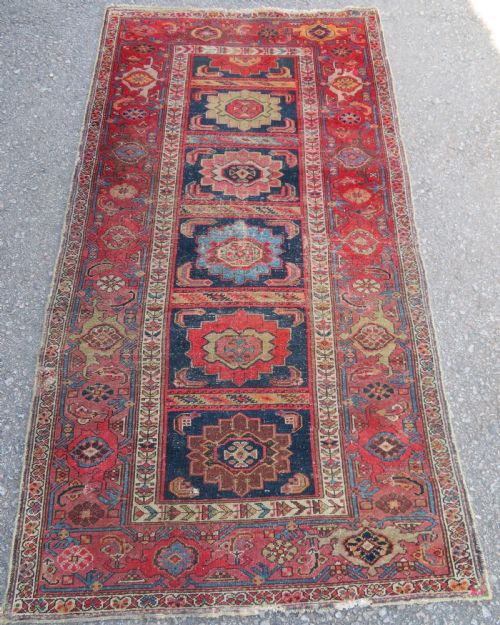
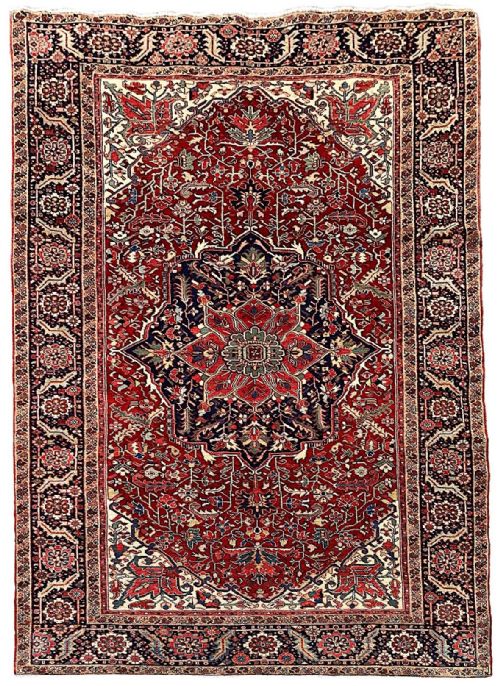
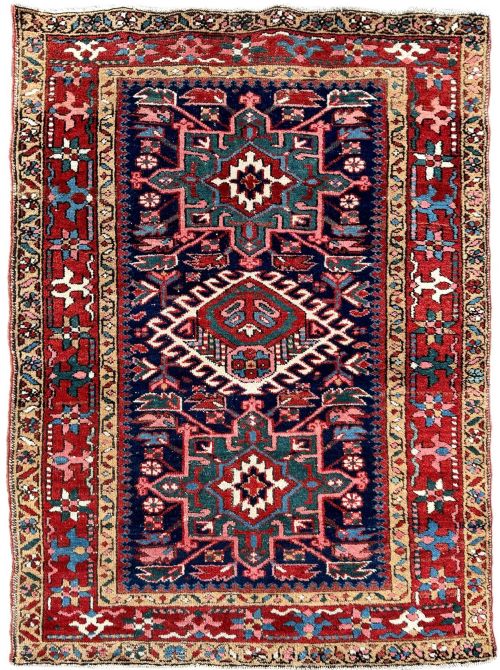
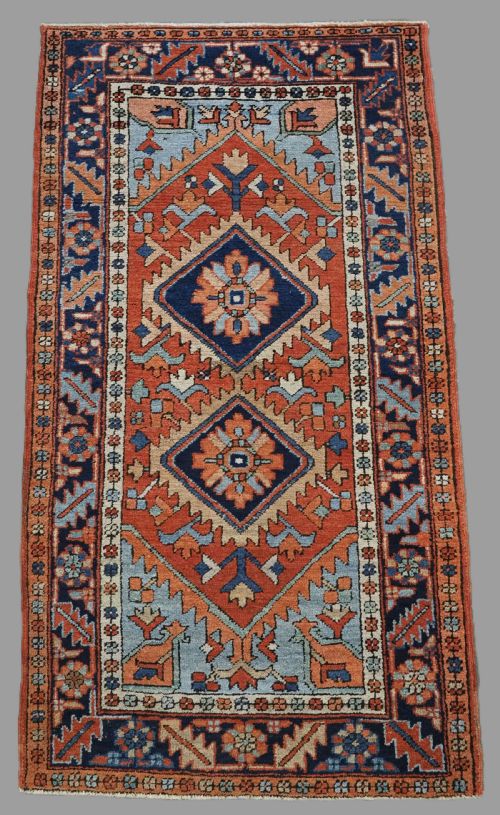
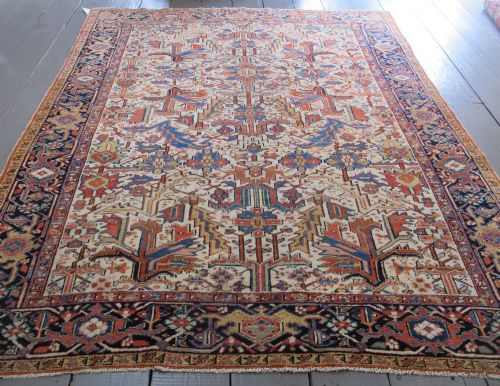
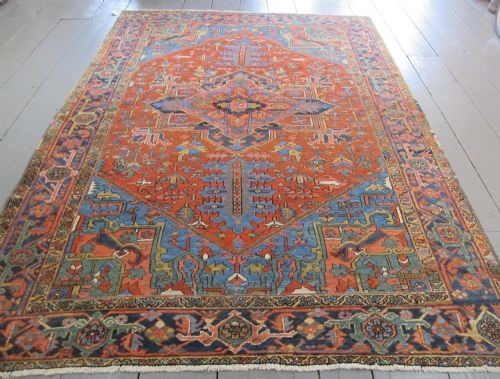
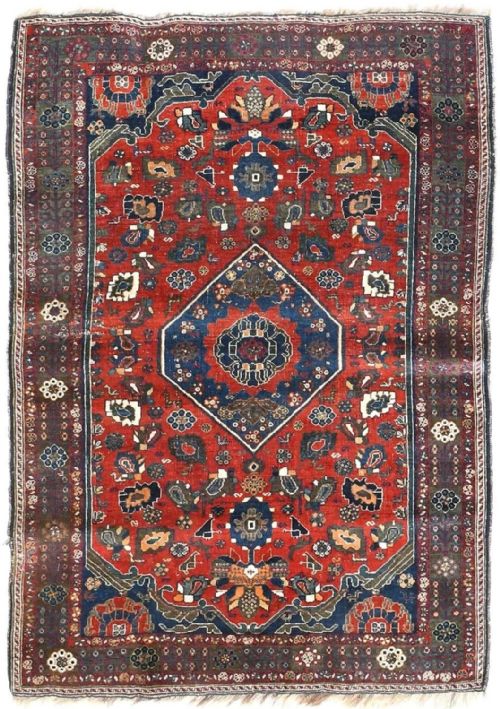
Geometric Heriz Medallion Rug
These large-scale Persian woven works bring substantial geometric structure to a room.
Geometric Heriz Medallion Rug
When searching for a geometric heriz medallion rug, buyers encounter floor coverings originating from the Heriz region and surrounding villages in north-west Persia. The selections span from small scatter sizes to large carpets exceeding six metres in length, alongside runner formats.
Most pieces date from the late nineteenth century through to the early decades of the twentieth century, encompassing related styles such as Serapi, Karaja, and Bakshaish alongside traditional Heriz village weaving.
Materials and construction methods
These floor coverings are constructed with wool piles knotted onto cotton foundations, with certain examples utilising hand-spun wool for added textural depth. The materials provide the structural durability necessary for heavy domestic use over generations.
Weavers employed sturdy vegetable and natural dye sources to achieve the characteristic rich colour palettes seen across the region's production.
Listings feature pieces dated across the nineteenth and twentieth centuries, using wool pile and cotton warp construction.
Assessing quality in regional carpets
Quality varies significantly in the crispness of the central medallion design and the precision of the surrounding geometric motifs. Finer examples display greater knot density and more deliberate handling of scale within the primary fields.
The vibrancy and depth of the dye work differentiate standard village production from exceptionally fine workshop pieces. The handling of secondary borders and corner spandrels further indicates the skill of the original weavers.
The Geometric Heriz Medallion Rug Glossary
- Medallion
- The central ornamental motif dominating the field of the rug. In Heriz pieces, this feature is typically bold and geometric in construction.
- Spandrels
- The triangular designs placed in the corners of the field, framing the central medallion. They often contain contrasting geometric fill patterns.
- Warp
- The vertical foundation threads running the length of the rug, made of cotton in these Persian examples. The pile knots are tied around these stationary cords.
- Runner
- A long, narrow carpet format designed specifically for hallways and corridors. These examples maintain the same geometric medallion vocabulary on a reduced scale.
- Serapi
- A sub-style associated with older Heriz carpets, recognised for a more open field design and softer, highly balanced colour palettes.
Geometric Heriz Medallion Rug: Frequently Asked Questions
Where were these rugs made?
These pieces originate from Heriz and surrounding weaving villages located in north-west Persia. Production centres around the mountainous region where traditional regional designs developed.
Local workshops and village weavers utilised accessible materials like highland wool and cotton to create durable floor coverings suited for export.
How do I care for an old wool carpet?
Regular gentle vacuuming without a rotating brush roll prevents dust accumulation within the wool pile. Professional cleaning suited for antique textiles maintains the integrity of the natural dyes.
Placing a breathable underlay beneath the carpet prevents slippage and reduces friction against hard flooring during daily use.
What is the difference between Heriz and Serapi carpets?
Serapi carpets typically represent an earlier period of production with slightly more spacious field compositions and muted colour combinations. They share the same structural foundation as standard Heriz pieces but often feature a more relaxed geometric flow.
Standard Heriz weaving tends towards denser ornamentation and bolder, more rigid medallion outlines across the central field.
How can I date a geometric Persian rug?
Dating relies on stylistic markers, structural analysis, and the character of the wool and dye materials used. Pieces from the nineteenth century often display more open drawing and softer vegetable dye palettes compared to later twentieth-century output.
Examining the weave tension, edge finishes, and cotton warp characteristics helps place the carpet within the 1850 to 1930 timeframe.