
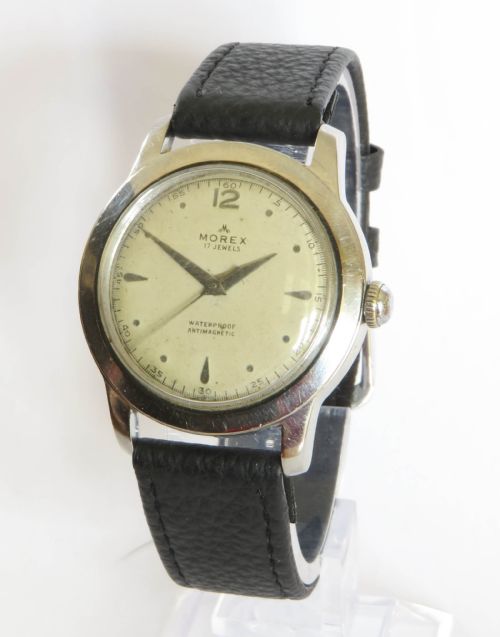
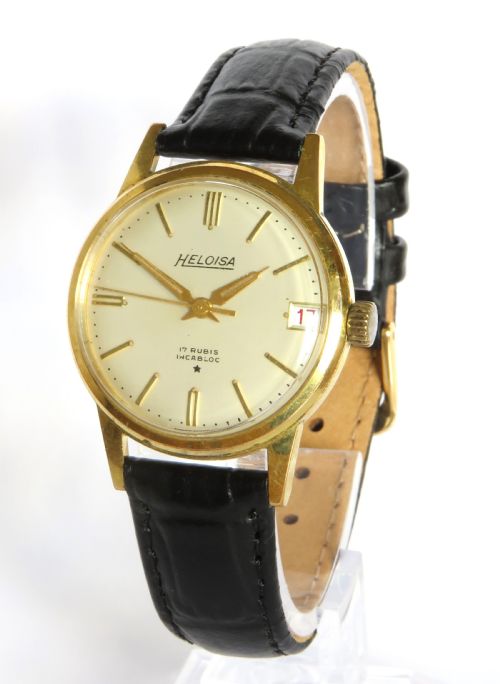
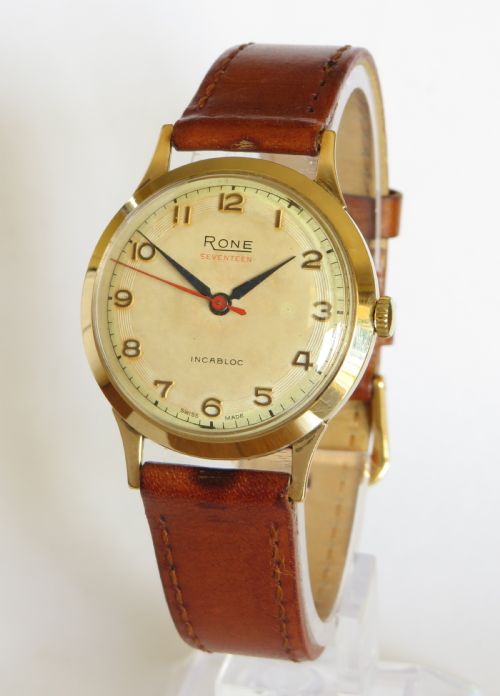
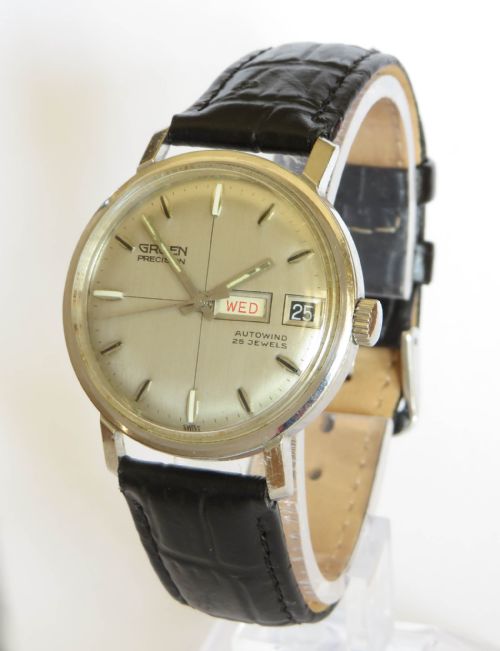
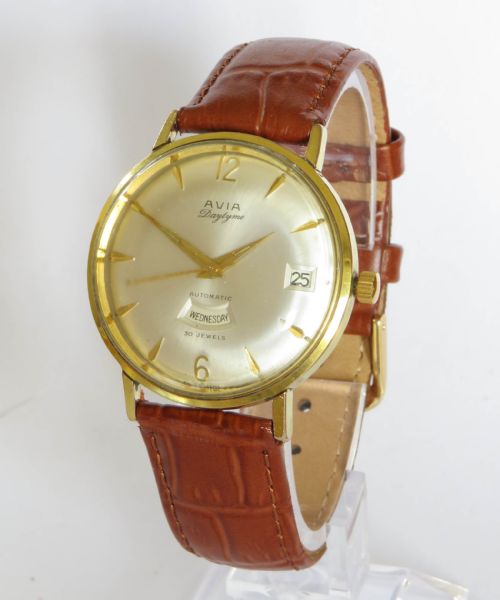
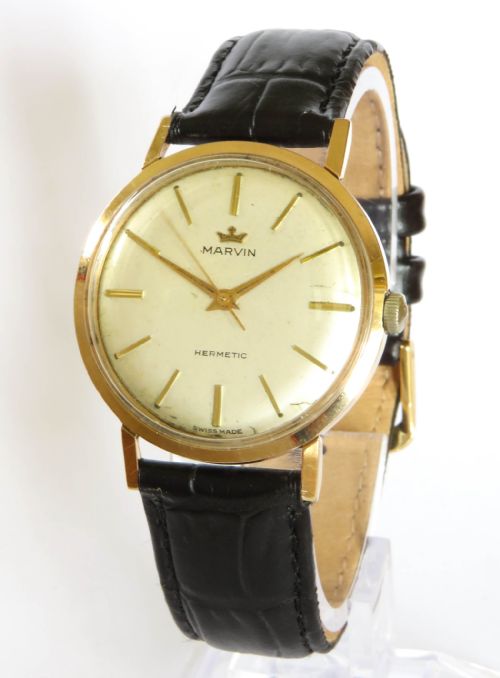
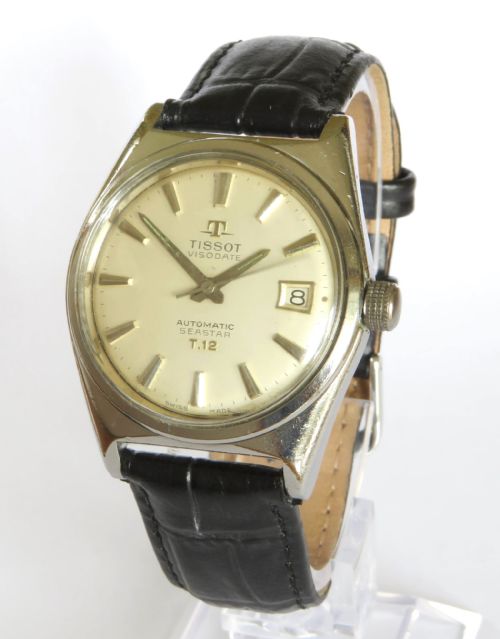
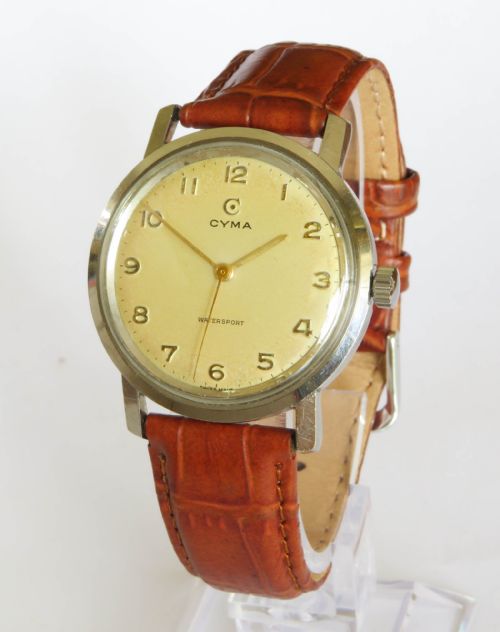
Gents Leather Strap Watch
A gents leather strap watch brings decades of horological history to the wrist, spanning utilitarian military designs to elegant mid-century dress pieces.
Gents Leather Strap Watch
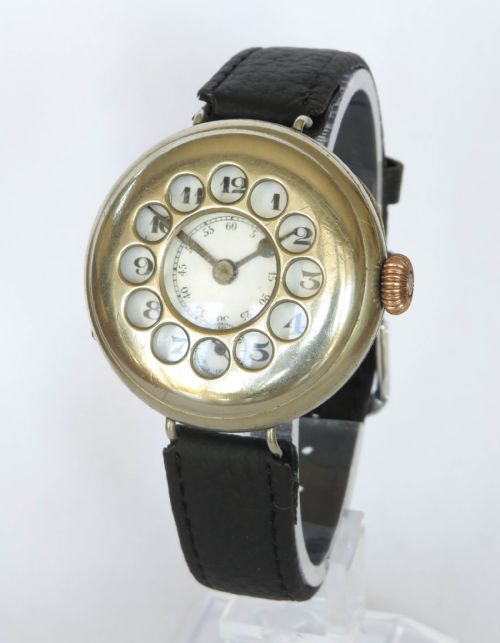
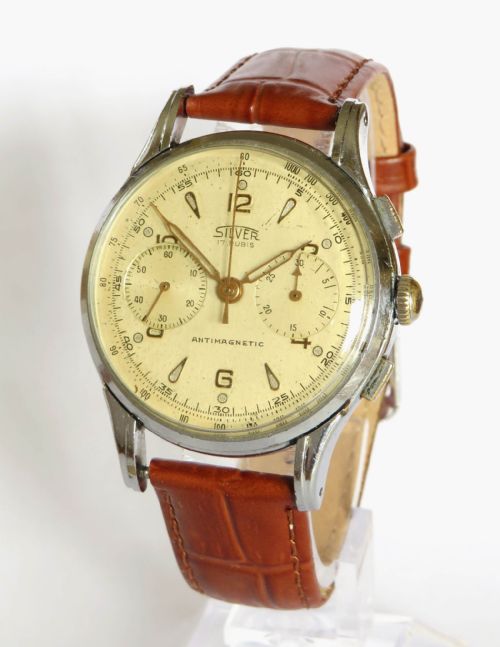
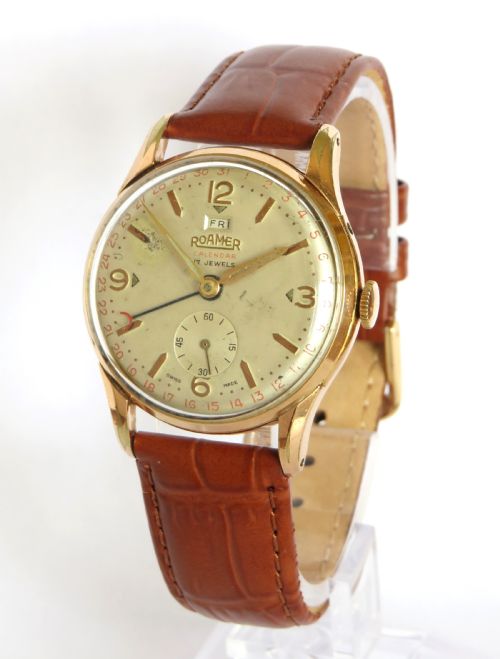
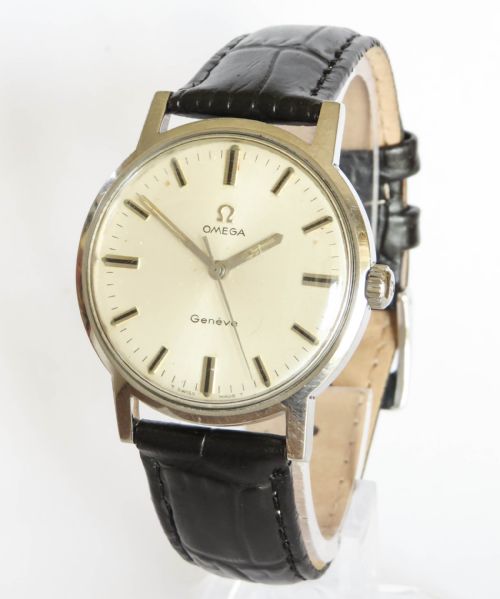
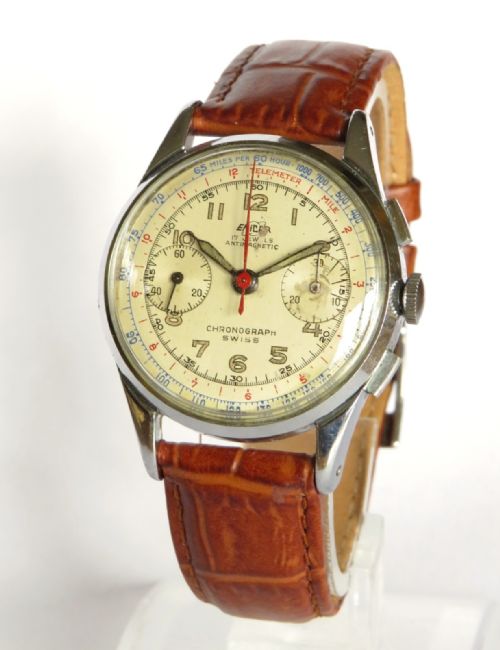
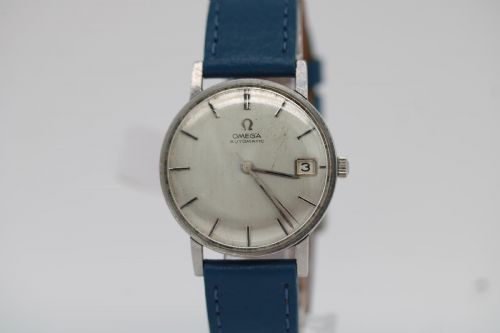
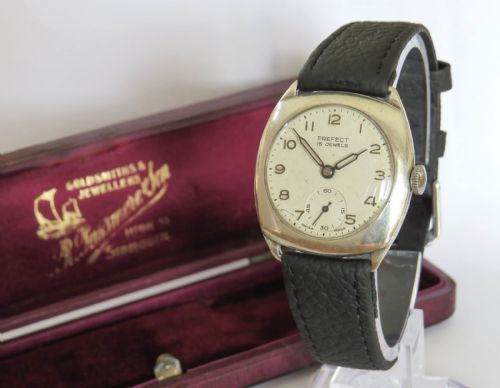
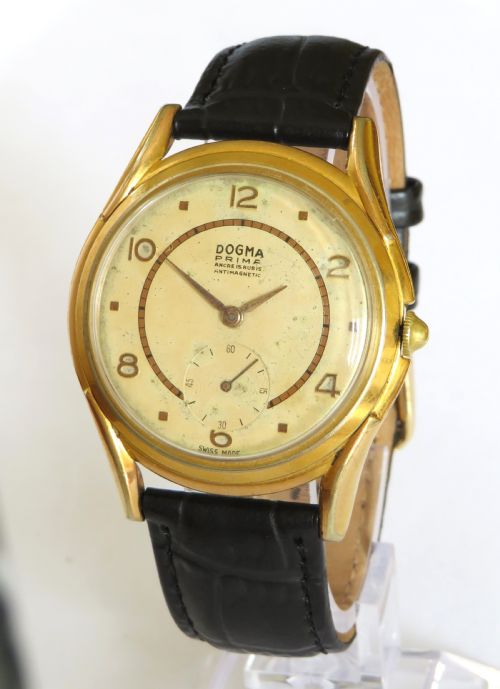
Buyers will encounter various stylistic interpretations, ranging from robust First World War trench watches with shrapnel guards to Art Deco geometric shapes and Mid-Century Swiss chronographs. Forms span simple three-hand displays to calendar functions and complex chronograph mechanisms housed in round or square configurations.
Materials and construction methods
Casings utilise stainless steel, silver, chrome, and solid or plated gold, paired with protective glass or acrylic crystals over printed and enamelled dials. These metallic housings protect the mechanical movements within, which rely on manual wind or auto-wind systems.
Straps are fashioned from leather to secure the watch comfortably to the wrist. Historical military variants often integrated specialised additions like metal shrapnel guards directly onto the case exterior.
Materials represented across the selection include stainless steel, gold plate, silver, enamel, and glass.
Distinguishing quality in vintage timepieces
Quality rests upon the pedigree of the movement and the integrity of the casing materials, with solid gold or stainless steel housings generally commanding greater respect than gold plate or base metal. Signed dials and renowned watchmaking houses elevate the standing of an individual piece.
The preservation of original dial components and the overall crispness of case lines separate standard production examples from superior specimens. Mechanical complexity, such as chronograph capabilities or specialised military commissioning, further delineates the hierarchy.
Montilier·Heloisa·Rone·Gruen·Antoremi·Roamer·Omega·Avia·Marvin·Tissot·Cyma·Enicar·Dogma Prima·Longines·Rotary·Baume Bimatic·Ensign·Lanco Sport·Smiths Deluxe·Zenith·West End Watch Co·Mappin·Technos·Aster·Larex
The Gents Leather Strap Watch Glossary
- Chronograph
- A watch equipped with a stopwatch function alongside its primary timekeeping display. It typically includes independent sub-dials to measure elapsed seconds and minutes.
- Automatic
- A mechanical movement that winds itself using the natural motion of the wearer's wrist via an internal rotor. This eliminates the need for daily manual winding.
- Shrapnel guard
- A protective metallic grille fitted over the watch crystal. This design was utilised primarily on military trench watches during the First World War to prevent glass breakage during combat.
- Calibre
- The specific internal movement design manufactured by a watchmaker. Collectors reference calibre numbers to identify the exact mechanical lineage of a timepiece.
- Enamel
- A glassy substance applied to watch dials and fused under high heat to create a durable, glossy surface. Enamelled dials maintain their colour and legibility over many decades.
Gents Leather Strap Watch: Frequently Asked Questions
How do I wind a mechanical watch?
Manual mechanical watches require turning the crown clockwise between your thumb and forefinger until gentle resistance is felt. Care should be taken not to overwind the mainspring.
Automatic models wind themselves through wrist movement while worn, though they can also be gently primed with a few turns of the crown if stationary for long periods.
Can I wear a vintage watch daily?
Many vintage timepieces handle regular daily wear perfectly well, provided they have been recently serviced by a qualified horologist. Proper servicing ensures lubricants remain fresh and internal components mesh accurately.
Water resistance is generally minimal or absent in older watches, meaning exposure to rain, swimming, or handwashing should be avoided to protect the movement.
How do I determine the period of a watch?
Dating relies on examining stylistic markers such as dial typography, case geometry, and lug shapes, which shifted noticeably between the Art Deco era of the 1930s and the Mid-Century period.
Serial numbers stamped onto the inside case back or movement allow collectors to cross-reference production ledgers from specific makers for precise chronology.
What is a trench watch?
Trench watches emerged during the First World War as officers transitioned from pocket watches to wrist-worn timekeepers for battlefield coordination. They frequently feature wire lugs soldered to the case to accommodate leather straps.
Some variants include protective grilles or luminous dial paint designed for reading time in low-light conditions during combat operations.