
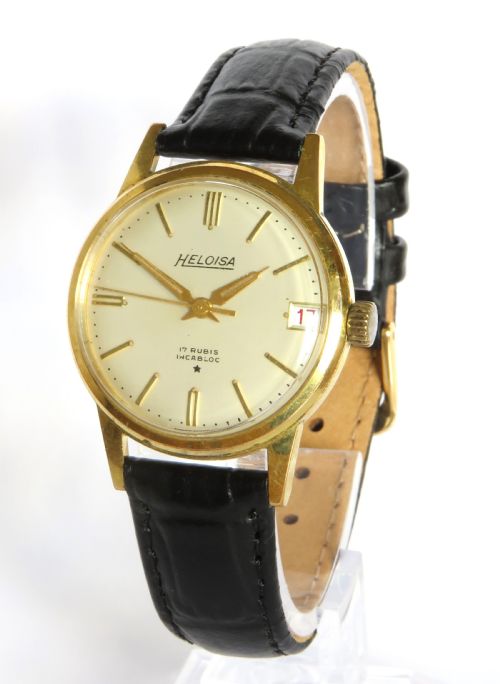
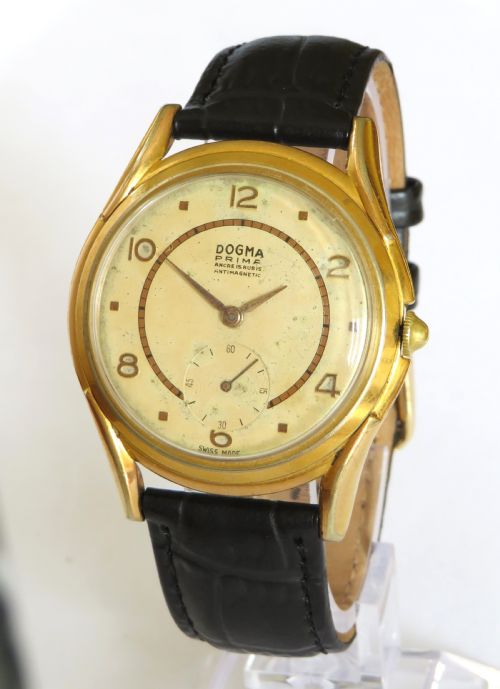


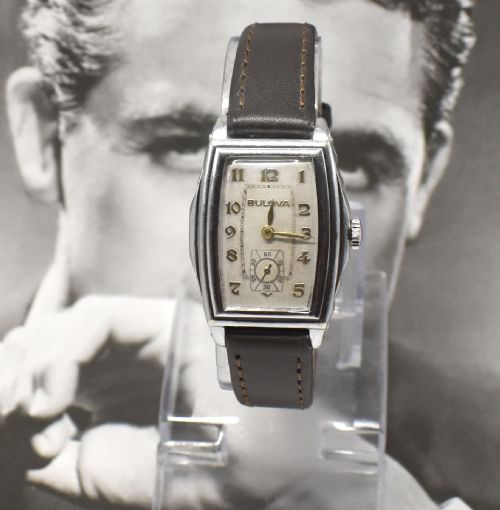

Gold Tone Dress Watch
These gold tone dress watch examples span decades of classic horology, offering timeless elegance and reliable mechanical movement for the discerning collector.
Gold Tone Dress Watch
A gold tone dress watch represents a refined category of timepiece designed primarily for formal wear rather than robust daily utility. When exploring a gold tone dress watch, you encounter wristwatches and pocket watches spanning from the 1930s through to the 1960s.
The selections on this page lean heavily into mid-century aesthetics alongside earlier Art Deco styling. You will frequently find gents and ladies wristwatches featuring metallic finishes alongside precious metals like platinum and white gold.
Makers and origins vary across the inventory, incorporating British and international workshops from eras such as the 1950s and 1960s. Each gold tone dress watch brings a distinct historical character derived from its specific decade of production.
How they were made
Construction relies heavily on traditional watchmaking materials including stainless steel, chrome, and gold plate, often paired with glass crystals and leather straps. More exclusive examples utilise solid metals such as 18ct white gold and platinum, sometimes set with diamonds.
Movements incorporate jewelled mechanisms for reduced friction and improved timekeeping accuracy, housed within cases shaped by mid-century and Art Deco design principles. Dials frequently display contrasting metallic finishes and applied numerals characteristic of their period.
Listings feature items spanning the 1930s to the 1960s, incorporating materials from leather and glass to platinum and 18ct white gold.
What varies in quality
Quality differences stem from the internal movement complexity and the purity of the exterior casing materials. Pieces utilising solid precious metals or higher jewel counts in the mechanism sit at the upper end of the spectrum compared to plated brass or base metal alternatives.
The preservation of original dial details, case finishes, and crystal clarity dictates the overall integrity of the object. Finer examples retain crisp geometric lines on Art Deco cases and unblemished dial printing from decades past.
Heloisa·Dogma Prima·Smiths·Ebana·Le Coultre·Bulova·Tudor
The Gold Tone Dress Watch Glossary
- Art Deco
- A design style prevalent in the 1930s characterised by sleek geometric shapes and stylised motifs. It heavily influences the case geometry of watches from that era.
- Rubis
- The French term for jewels used as bearing surfaces in watch movements to reduce friction. Higher numbers typically indicate a more refined mechanical calibre.
- Gold Plate
- A thin layer of gold applied to a base metal core such as steel or chrome. This technique provided the appearance of solid gold at a more accessible production cost.
- Pocket Watch
- A timepiece designed to be carried in a pocket rather than worn on the wrist. They feature a protective hinged cover or open face with a loop for a chain.
Gold Tone Dress Watch: Frequently Asked Questions
How do I date a vintage watch?
Dating relies on stylistic clues such as dial typography, case geometry, and movement serial numbers where available. Mid-century pieces often display distinct lugs and minimalist markers.
Comparing the overarching design to documented production eras helps narrow down the decade of manufacture with reasonable accuracy.
What is the difference between gold plate and solid gold?
Gold plate involves bonding a thin layer of gold to a stronger base metal underneath, such as brass or steel. Solid gold pieces consist entirely of precious metal throughout the case construction.
Plated items offer the visual warmth of gold while remaining lighter and more affordable than their solid counterparts.
How were dress watches worn in the past?
Dress watches were traditionally reserved for formal occasions, evening wear, or professional business settings. Gentlemen paired them with tailored suits or waistcoats.
Ladies often wore smaller decorative pieces that functioned as much as jewellery as instruments for telling time.
Are these watches suitable for daily wear?
Vintage mechanical timepieces require a degree of care and are generally not waterproof by modern standards. Daily wear is entirely possible if the piece has been recently serviced by a professional horologist.
Owners should protect them from moisture, strong impacts, and magnetic fields to preserve the delicate internal mechanics.