
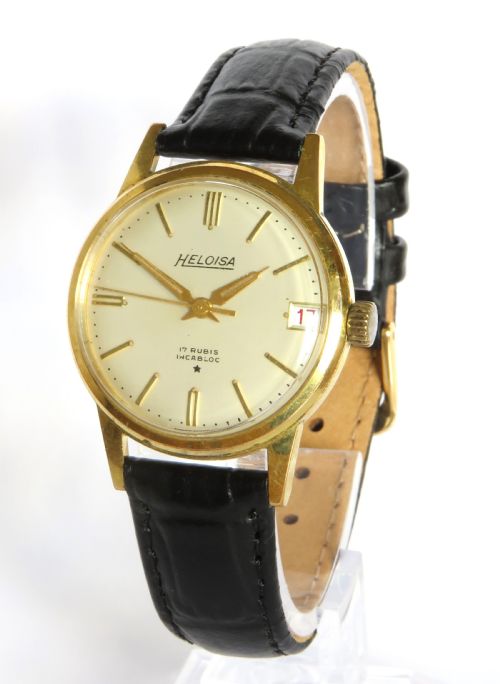
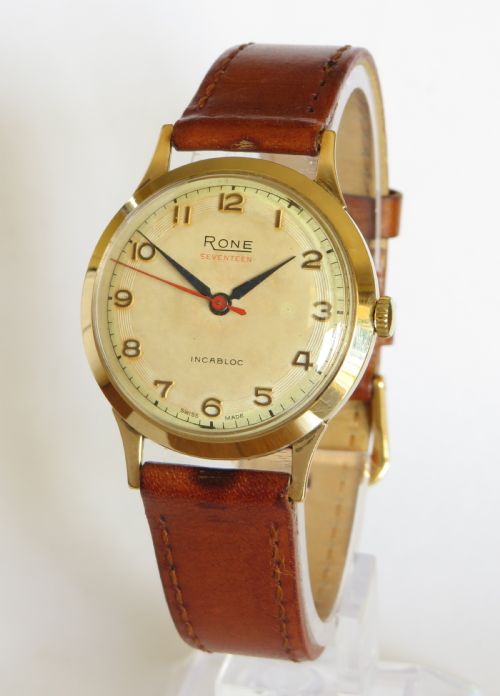
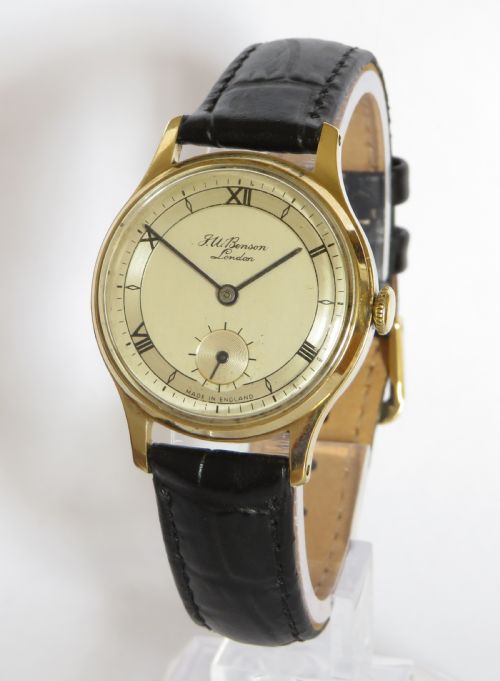
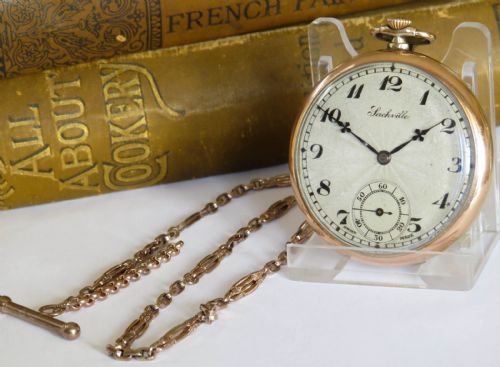

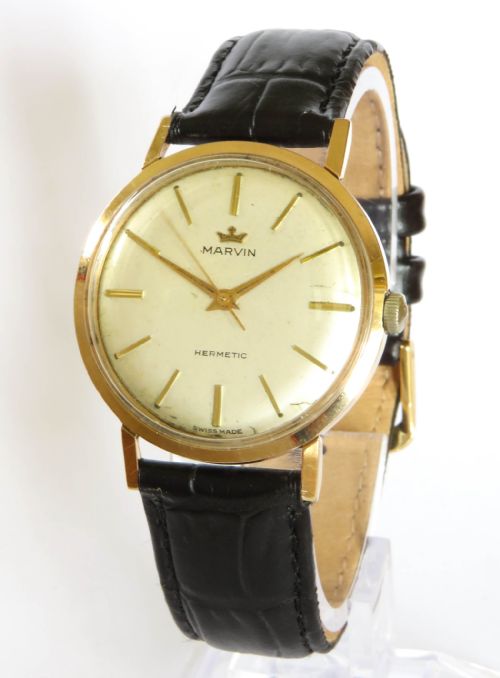
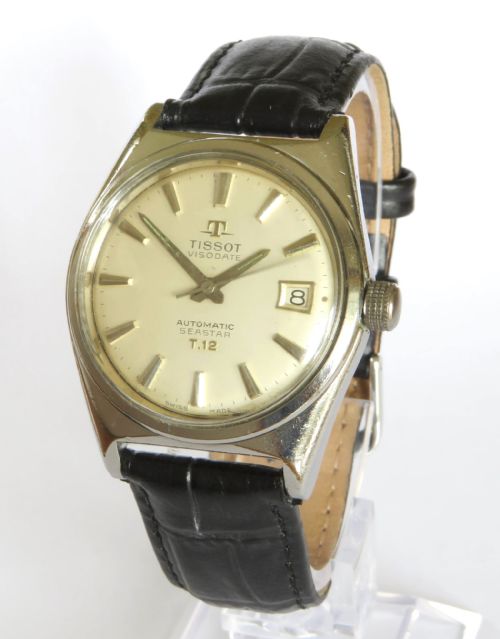
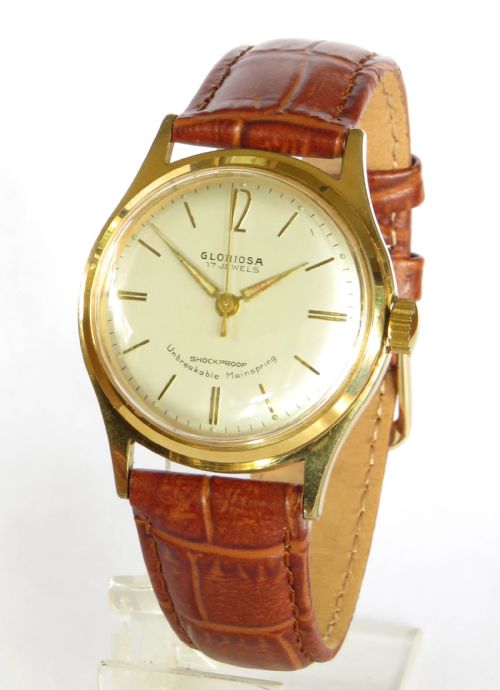
Gents Gold Watch
A gents gold watch carries the quiet weight of twentieth-century design, offering dependable mechanical timekeeping wrapped in precious metal.
Gents Gold Watch
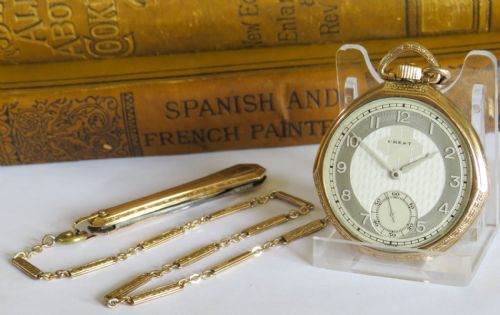
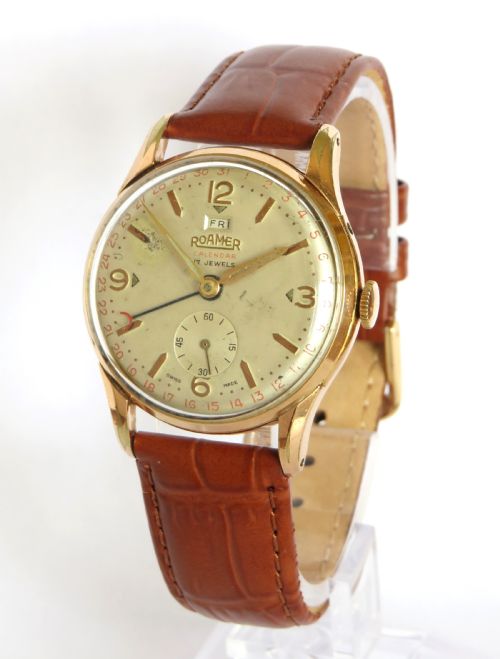
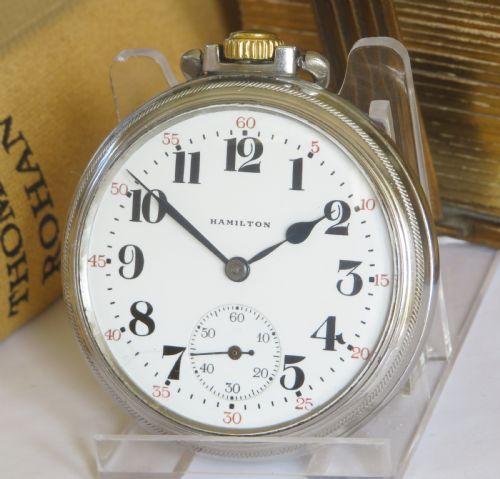
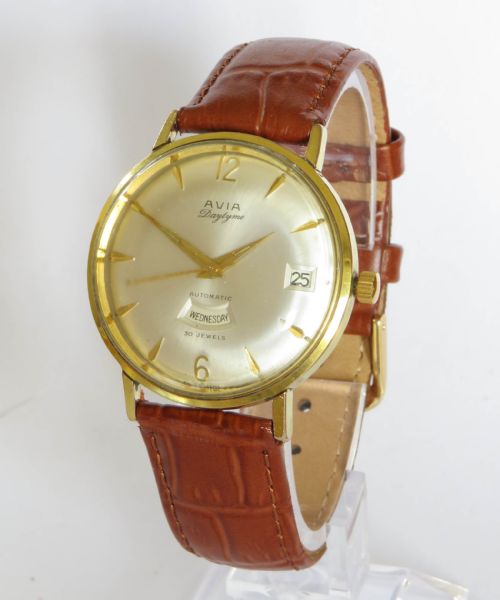
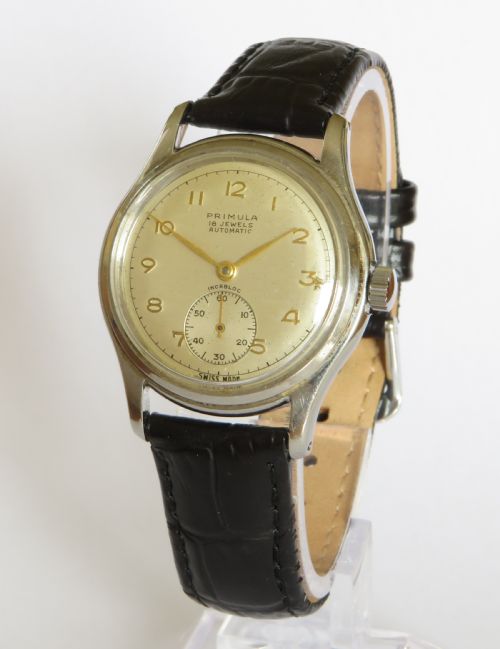
A gents gold watch encompasses both wristwatches and pocket watches spanning from the late nineteenth century through the mid-twentieth century. Buyers exploring this selection encounter pieces defined by distinct eras, ranging from early Edwardian pocket designs to Mid-Century Modern wristwatches.
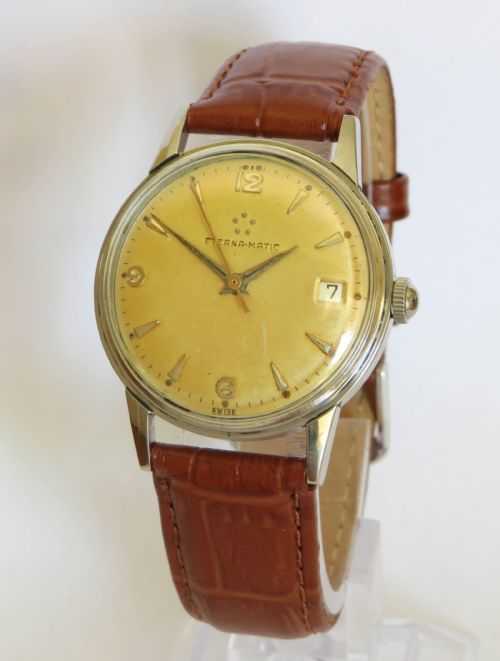
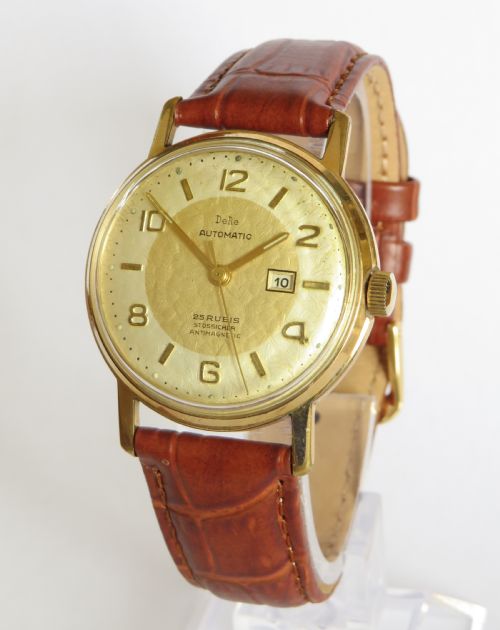
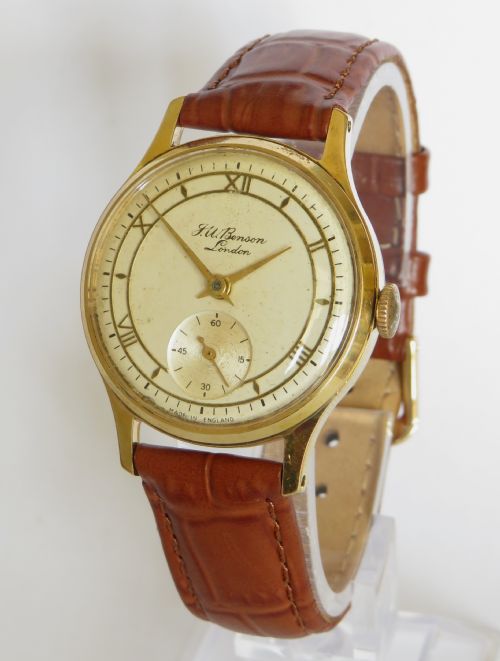
The wristwatches on this page heavily favour the 1950s and 1960s, a period that produced slender profiles, clean dials, and automatic movements. Pocket watches appear less frequently but offer traditional stem-winding mechanisms housed in robust metal cases.
Manufacturers from Britain, Switzerland, and America dominate the selections, with brands like Smiths, Omega, and Longines appearing across various decades. These timepieces served as daily accessories or presentation items, often commemorating professional milestones.
Materials and Construction Techniques
Cases utilise solid gold, typically found in nine-carat or eighteen-carat variations, alongside gold filled and gold plate alternatives over base metals. Dials are protected by glass or acrylic crystals, while straps are frequently fashioned from leather.
Movements rely on intricate mechanical engineering, requiring manual winding or automatic self-winding technology. Enamel often provides a durable finish for dial markings and maker signatures on select vintage faces.
Some nineteenth-century pocket watches required a tiny key inserted into the back dust cover just to set the hands.
Distinguishing Factors of Horological Quality
The grade of a timepiece rests heavily on the purity and weight of its precious metal case, with solid gold outputs commanding greater substance than gold-plated equivalents. Movement complexity also dictates standing, where jewelled lever escapements and automatic calibres represent higher manufacturing effort.
Preservation of original dial typography, case geometry, and matching components separates standard items from exceptional specimens. Factory signatures, unpolished edges, and documented provenance elevate specific examples within the broader market.
Omega·Longines·Smiths·Zenith·Tissot·Waltham·IWC·Cyma·J W Benson·Garrard
The Gents Gold Watch Glossary
- Automatic
- A self-winding mechanical movement that uses the natural motion of the wearer's wrist to power the mainspring. This technology became prevalent during the mid-twentieth century.
- Gold Filled
- A construction method involving a layer of solid gold mechanically bonded to a base metal core. It offers greater durability than standard gold plating.
- Half Hunter
- A pocket watch featuring a case with a glass or open centre in the front cover, allowing the user to read the time without opening the watch.
- Escapement
- The internal mechanism that translates rotational energy from the gear train into controlled impulses. It gives a mechanical watch its characteristic ticking sound.
- Calibre
- A specific manufacturer's designation for a particular watch movement design. Collectors use this term to identify internal mechanical variations.
Gents Gold Watch: Frequently Asked Questions
How do I wind a vintage watch?
Gently rotate the crown clockwise between your thumb and forefinger until you feel gentle resistance. Stop immediately upon meeting this tension to avoid overwinding and damaging the internal mainspring.
For automatic models, manual winding is only necessary if the watch has stopped entirely. A few gentle turns will kickstart the movement before normal wrist motion takes over.
Can I wear my gold watch daily?
These timepieces were built for everyday utility, but their vintage status demands mindful care. Avoid exposing older watches to heavy moisture, magnetic fields, or rigorous physical activities.
Regular servicing by a professional horologist ensures the mechanical parts remain lubricated and accurate for routine wear.
What is the difference between gold filled and solid gold?
Solid gold cases consist entirely of precious metal throughout their thickness, graded by carats such as nine or eighteen. Gold filled cases feature a thick exterior layer of solid gold fused to an inner base metal.
Both materials present a rich exterior appearance, but solid gold retains intrinsic metal value and greater resistance to wear through the decades.
How do I determine the decade of a watch?
Stylistic cues such as dial typography, handset shapes, and case profiles offer the first clues to a watch's era. Art Deco designs point to the 1930s, while clean, minimalist dials often signify the 1950s or 1960s.
Serial numbers engraved on the inner case back or movement allow for precise dating against manufacturer production records.