
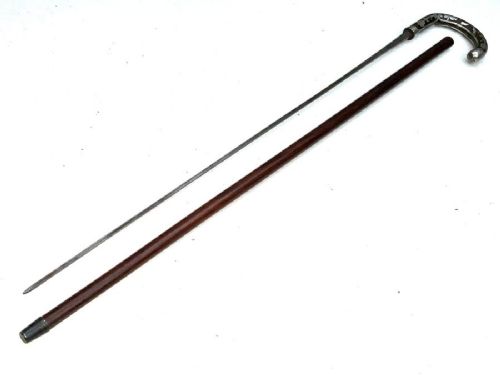
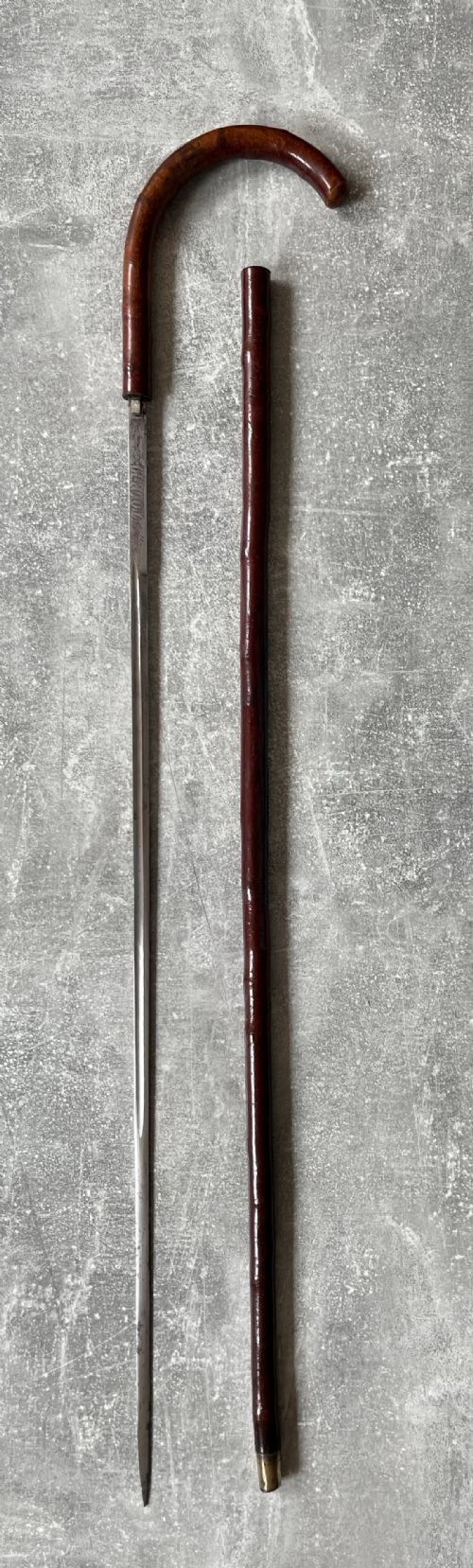
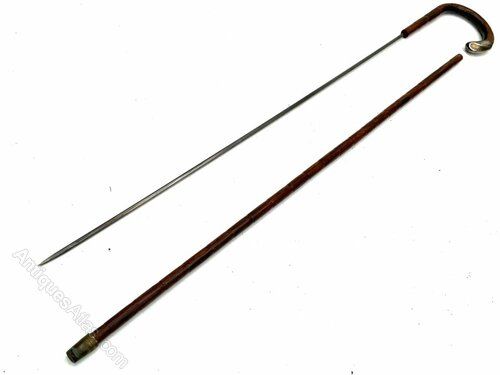
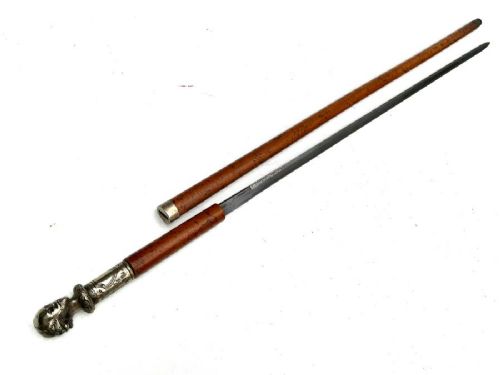


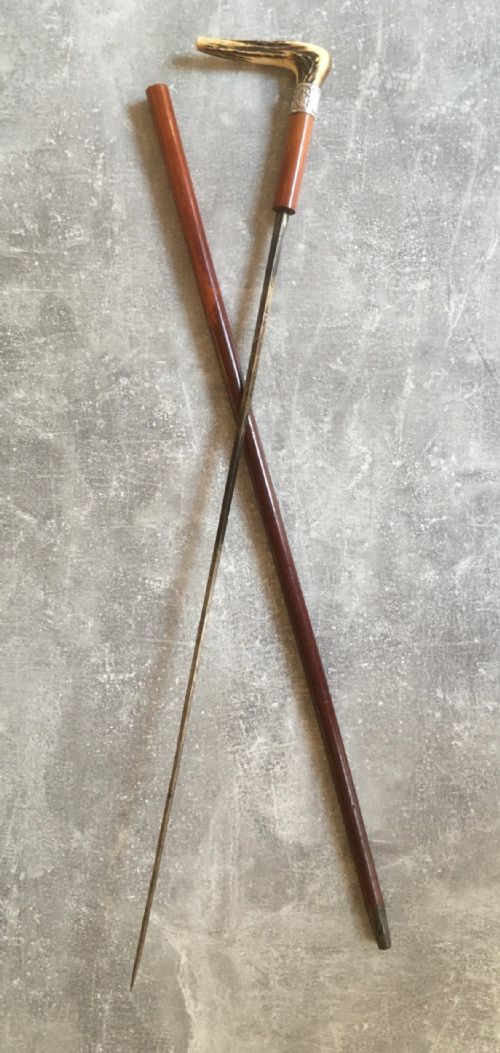
Gentlemen Defence Cane
These gentlemen defence cane pieces are discreet personal protection weapons disguised as walking sticks, combining everyday gentlemanly attire with hidden steel blades for self-defence.
Gentlemen Defence Cane
A gentlemen defence cane is a traditional walking stick concealing a hidden steel blade within its shaft, designed for discreet personal protection during the Victorian, Edwardian, and early twentieth-century periods. These walking sticks range from simple wooden shafts to elaborate examples featuring silver collars and carved handles.
The most common examples on this page date from the late nineteenth and early twentieth centuries, including Victorian and Edwardian pieces. Makers utilised sturdy timbers and robust handles to house the internal blades securely while maintaining the appearance of a standard gentleman's accessory.
Object types on this market span walking sticks and specialised walking sticks and canes. Originating from diverse workshops, these pieces incorporate various handle materials such as horn, antler, and silver alongside traditional timber shafts.
Materials and construction
Craftsmen built these defensive sticks using dense natural timbers such as partridge wood, cherrywood, rosewood, and malacca for the exterior shafts. These woods provided the necessary rigidity and weight for a dependable walking aid while concealing the inner compartment.
The concealed blades commonly featured high-grade steel, including specialised Toledo blades known for their flexibility and strength. Metal collars, often fashioned from silver or brass, secured the handle junctions and reinforced the structural integrity of the cane.
Handles were shaped from horn, antler, or carved metal such as silver horse heads to offer a comfortable grip and aesthetic distinction. Each component was carefully fitted to ensure the blade remained securely housed within the wooden body until needed.
Listings feature pieces constructed from cherrywood, partridge wood, rosewood, and malacca.
Distinctions in quality
Quality in a gentlemen defence cane rests on the precision of the joinery between the shaft and the handle, ensuring the hidden blade locks securely and releases smoothly. Superior examples display seamless alignment when closed, concealing the division entirely.
The choice of materials significantly elevates a piece, with fine silver collars, carved horn or antler handles, and branded steel blades like those from Toledo representing higher tiers of craftsmanship. Plain wooden shafts with basic metal fittings occupy the utilitarian end of the spectrum.
Maker attribution and regional origin also influence standing, as specific workshops and makers produce more refined finishes and balanced weights. The overall condition of the timber and the polish of the internal blade reflect the care taken during production.
BRIGG
The Gentlemen Defence Cane Glossary
- Sword stick
- A walking stick containing a concealed blade housed securely within its wooden shaft. This dual-purpose accessory served as both a mobility aid and a self-defence weapon.
- Toledo blade
- A steel blade produced in Toledo, Spain, renowned historically for its exceptional temper, flexibility, and strength. Such blades were frequently fitted into high-quality defensive canes.
- Partridge wood
- A dense, heavily mottled tropical timber utilised for walking stick shafts due to its durability and distinctive speckled grain pattern. It provides both weight and visual appeal.
- Collar
- A decorative and structural metal band, often made of silver or brass, fitted around the top of the shaft to prevent splitting and secure the handle. It frequently bears hallmarks or maker marks.
- Malacca
- A smooth, slender rattan cane imported from Southeast Asia, prized for its strength and light weight in the manufacture of walking sticks.
Gentlemen Defence Cane: Frequently Asked Questions
What is a gentlemen defence cane?
A gentlemen defence cane is a traditional walking stick designed to conceal a steel blade within the wooden shaft. It served Victorian and Edwardian gentlemen as a discreet tool for personal security during daily travel.
These pieces combine the outward appearance of standard gentlemanly attire with functional defensive capabilities. The hidden blade remains locked inside until manually released.
How were sword sticks used historically?
Owners carried these sticks during the nineteenth and early twentieth centuries as standard walking aids that offered readiness against sudden threats. They provided peace of mind when walking through unfamiliar or dimly lit urban streets.
The dual nature of the object allowed the bearer to lean on the stick while keeping a defensive option immediately accessible. The handle acted as a secure grip for both walking and drawing the blade.
How do I identify the period of a cane?
Dating relies upon examining the materials, handle styles, blade characteristics, and any metal hallmarks present on the collars. Victorian and Edwardian pieces often feature specific handle shapes and timber selections typical of those decades.
Comparing the construction methods and blade markings against documented examples helps narrow down the manufacturing era. Silver collars frequently bear hallmarked dates that confirm the year of production.
How should I care for a sword stick?
Maintenance involves keeping the wooden shaft clean and occasionally conditioning the timber and horn elements with appropriate natural waxes. The internal steel blade should be kept dry and lightly oiled to prevent oxidation.
Store the cane in a stable environment away from extreme humidity or temperature fluctuations to protect the wood and internal fit. Avoid forcing the mechanism if the timber expands seasonally.