



Gentlemans Dressing Stand
A gentlemans dressing stand is a dedicated piece for morning grooming, combining mirrors, timber and brass to hold the essentials.
Gentlemans Dressing Stand
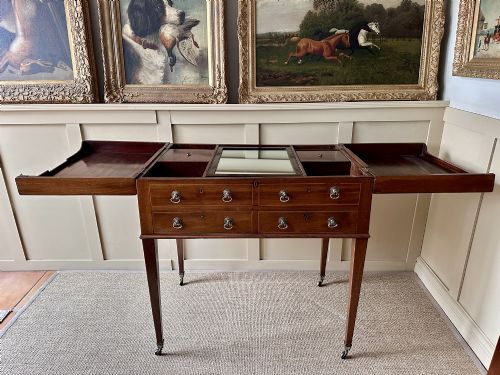
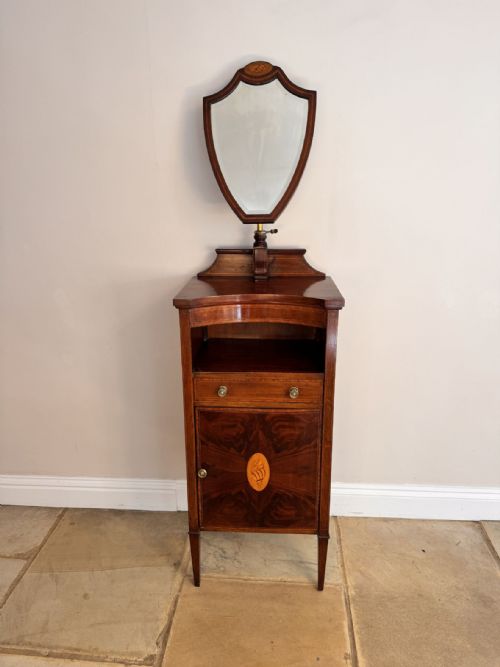
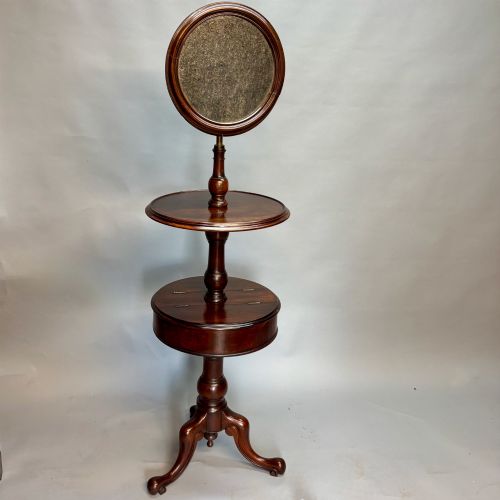
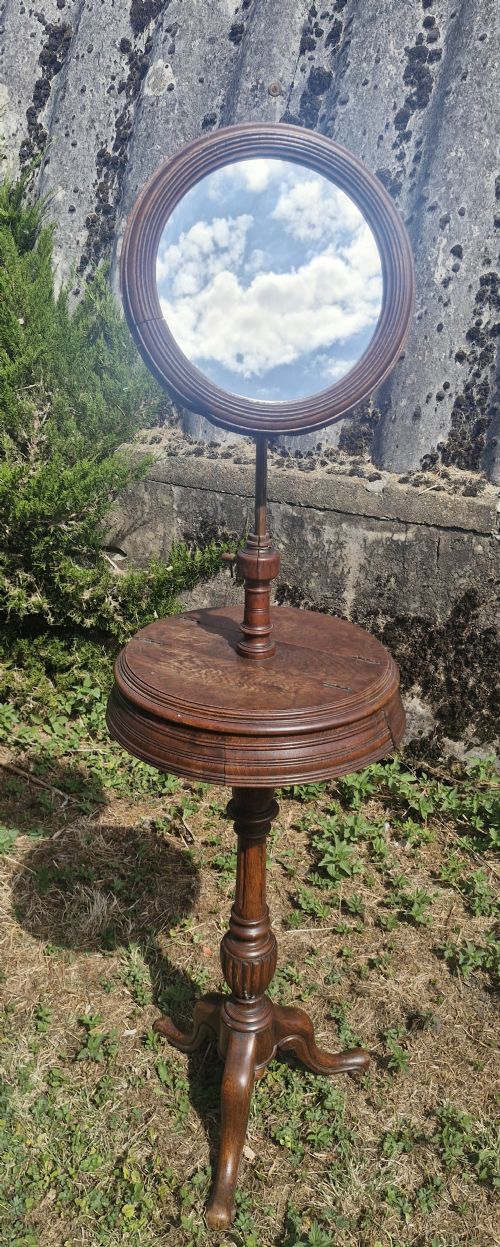
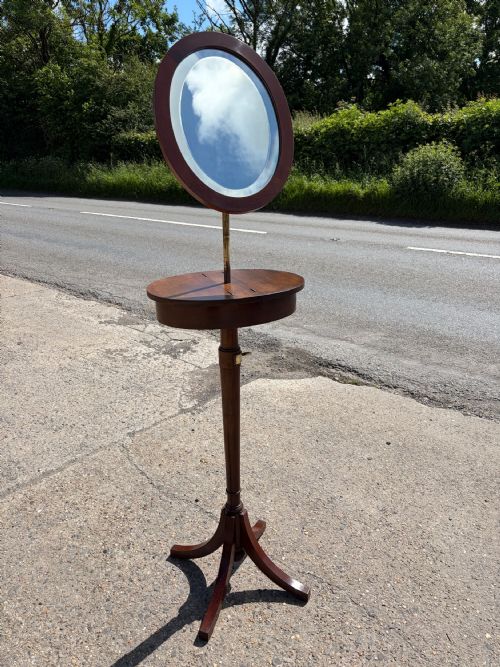
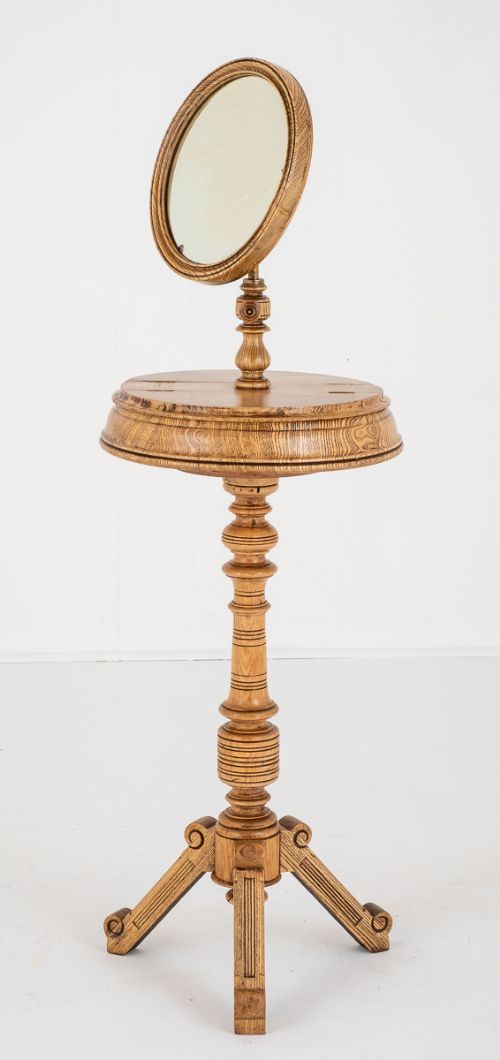
A gentlemans dressing stand brings together mirrors, trays and compartments designed specifically for the daily grooming routine. You encounter forms ranging from compact tripod tables to substantial floor-standing pieces with adjustable glass.
The pieces listed span Georgian, Victorian and Edwardian periods, utilising timbers such as mahogany, walnut and oak. Many incorporate telescopic movements or swivel mechanisms to adjust the mirror angle for use.
Object types include shaving stands, standing mirrors, dressing tables and vanity tables. These pieces served domestic bedchambers and dressing rooms across the nineteenth and early twentieth centuries.
Materials and construction
Cabinetmakers built these stands predominantly in solid mahogany, walnut and oak, occasionally employing satinwood for contrast and inlay. Timber selection dictated both the visual weight and the durability of the piece under daily use.
Brass fittings, hinges and telescopic stems provide the adjustable mechanics required for mirrors and extending arms. Glass mirrors, sometimes bevelled or supported by brass frames, sit atop tripod bases or cabinet bodies.
Gentlemans Dressing Stand Retail Price Guide 2026
Typical asking prices for gentlemans dressing stand among the pieces listed under this phrase on Sellingantiques today, from the lower quarter to the upper quarter. They describe what is for sale here now, not the wider market.
Listings span the Georgian, Victorian and Edwardian eras, featuring mahogany, walnut, oak and satinwood alongside brass fittings and mirror glass.
Quality and execution
The distinction between standard utility items and superior examples lies in the finesse of the joinery and the choice of timber figure. Finer pieces display careful turning on tripod stems, precise inlay and robust brass mechanisms that hold their position securely.
Workmanship extends to the secondary woods used inside drawers and compartments, where neat dovetailing indicates a higher grade of manufacture. Simpler pieces rely on straightforward turned columns and minimal hardware.
James Shoolbred
The Gentlemans Dressing Stand Glossary
- Telescopic
- A construction method allowing parts, particularly mirror stems, to raise and lower smoothly. This adjustment accommodated different heights and seating arrangements.
- Tripod base
- A three-legged support structure commonly found beneath shaving mirrors and small stands. It provided stability on uneven domestic floorboards.
- Wash stand
- A companion piece designed to hold basins, jugs and washing equipment. Unlike dressing stands, they focused on ablutions rather than shaving and mirrors.
- Cheval mirror
- A full-length floor mirror suspended on a frame that tilts freely between upright posts. They appeared in larger dressing rooms and bedchambers.
Gentlemans Dressing Stand: Frequently Asked Questions
What is a gentlemans dressing stand used for?
These stands provided a dedicated space for morning routines, holding shaving gear, razors and adjustable mirrors. Gentlemen used them in bedchambers before fitted bathrooms became common.
Today, they function as practical dressing table accessories or decorative accent pieces in bedrooms and hallways.
How do I adjust the mirror height?
Many period examples utilise a brass thumb screw or a sliding telescopic rod to raise and lower the glass. You loosen the mechanism gently, set the desired height, and retighten.
Take care with older brass threads and dried lubricants when adjusting nineteenth-century movements.
How do I date a dressing stand?
Dating relies on timber choices, leg styles and mechanical fittings, moving from Georgian satinwood to Victorian mahogany and Edwardian inlay. Cabinet construction details, such as drawer dovetails and screw types, offer further clues.
Comparing the piece to documented examples helps narrow down the decade of manufacture.
Where should I place it at home?
They suit bedroom corners or dressing areas where natural light helps with grooming tasks. Their compact footprints allow them to fit well beside wardrobes or chests of drawers.
Keep them away from direct heat sources to protect the polished timber and mirror silvering.