






Early 20th Century Vanity
An early 20th century vanity brings refined dressing tables, mirrors and writing desks into modern rooms with timeless utility and period character.
Early 20th Century Vanity
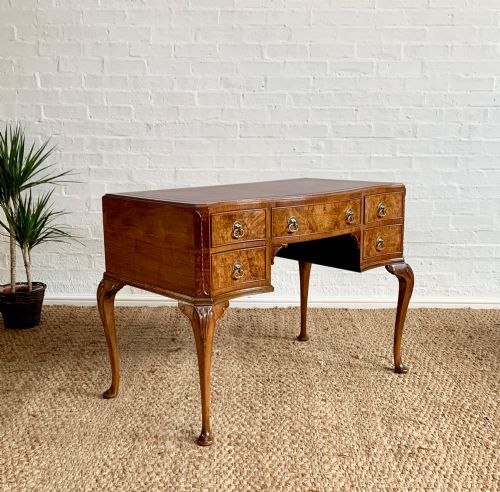
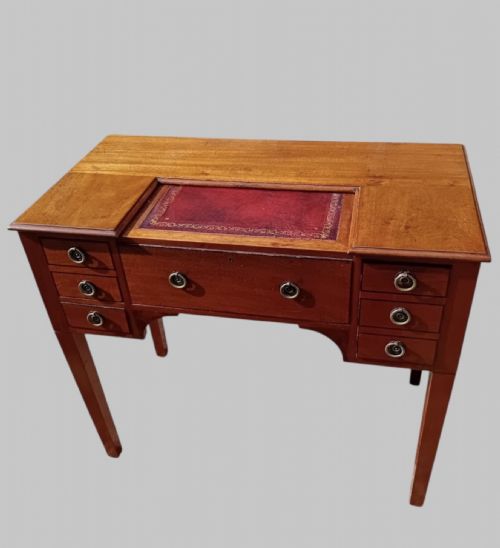
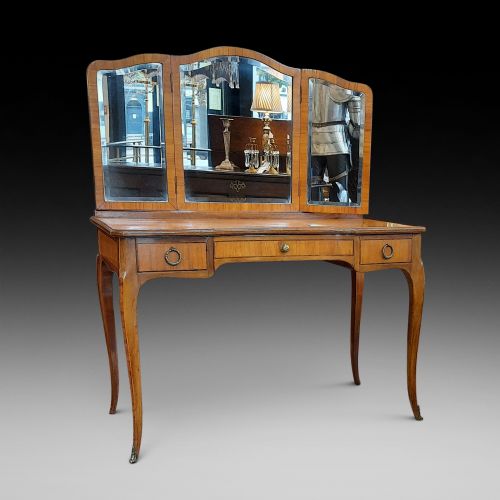
Buyers seeking an early 20th century vanity encounter a varied selection of dressing tables, writing desks, and specialised mirrors spanning the Edwardian era through the art deco period. These pieces originate from diverse workshops and incorporate historical revival styles alongside cleaner modernist designs.
The most frequent examples on this page are dressing mirrors and writing tables fashioned in mahogany, walnut, or brass. Alongside these staple forms appear specialised items such as perfume bottles, footstools, and inlaid gentleman's vanity tables.
Makers from Britain, France, Austria, and China contributed distinct aesthetic traditions to this category, ranging from French neoclassical flourishes to Austrian secessionist austerity. Each surviving piece records the changing domestic habits and interior tastes of the opening decades of the twentieth century.
Judging quality and execution
Quality in these pieces rests upon the precision of the cabinetwork, the selection of timber veneers, and the integrity of applied brass or gilt ornamentation. Superior examples display seamless veneer matching and finely detailed carving rather than mechanical shortcuts.
The sophistication of the design sets finer pieces apart, whether in the restrained proportions of an Austrian secessionist canister or the ambitious curves of a French rococo revival mirror frame. Maker attribution, such as documented Glasgow or Viennese production, further distinguishes exceptional survivors from standard commercial output.
Early 20th Century Vanity Retail Price Guide 2026
Typical asking prices for early 20th century vanity among the pieces listed under this phrase on Sellingantiques today, from the lower quarter to the upper quarter. They describe what is for sale here now, not the wider market.
Even vanity mirrors required heavy artillery: one surviving brass example weighs in ready to test any Edwardian dressing chest.
Wylie & Lochhead Glasgow·Josef Margold
The Early 20th Century Vanity Glossary
- Crossbanding
- A border technique where thin strips of veneer are laid perpendicular to the grain of the main surface. This adds a decorative framing effect to drawer fronts and table tops.
- Gesso
- A plaster-like mixture applied to wood surfaces as a base for gilding or painting. It allows craftsmen to carve crisp decorative relief before applying gold leaf.
- Secessionist
- An early twentieth century modernist movement originating in Austria that rejected historicism in favour of geometric clarity. Pieces from this school emphasise functional line over excessive ornament.
- Kingwood
- A dense, heavy exotic timber prized for its rich dark violet-brown colouring and distinctive lighter figuring. Cabinetmakers employed it selectively for high-status crossbanding.
- Rococo Revival
- A nineteenth and early twentieth century style mimicking the asymmetrical curves, C-scrolls, and naturalistic motifs of the French eighteenth century. It appears frequently in mirror frames and seating.
Early 20th Century Vanity: Frequently Asked Questions
What is an early 20th century vanity?
An early 20th century vanity encompasses dressing tables, mirrors, desks, and accessories produced between 1900 and 1930. These objects served personal grooming and correspondence functions in period homes.
The category spans diverse styles from French revivalism to early modernism, reflecting international design shifts during those decades.
How do I date an early piece?
Dating relies on stylistic markers, construction methods, and materials characteristic of specific decades within the early twentieth century. Edwardian and neoclassical revivals generally occupied the earlier years, while chrome and streamlined forms emerged by the interwar period.
Maker signatures or stamps, when present, provide the most secure chronological anchor for attribution.
Where were these pieces made?
Surviving examples originate from British, French, Austrian, and Asian workshops, reflecting active international trade and design exchange. British cabinetmakers often produced substantial mahogany and walnut furniture, whilst continental workshops favoured gilded frames or secessionist austerity.
Imported items like Chinese lacquered cabinets also entered Western domestic interiors during this era.
How do I care for wood surfaces?
Maintaining antique wood and veneer requires stable indoor humidity away from direct sunlight and heat sources. Gentle dusting with a dry microfibre cloth prevents particulate accumulation without harming delicate French polish or wax finishes.
Avoid commercial silicone sprays, which can penetrate porous historic finishes and degrade timber over time.