

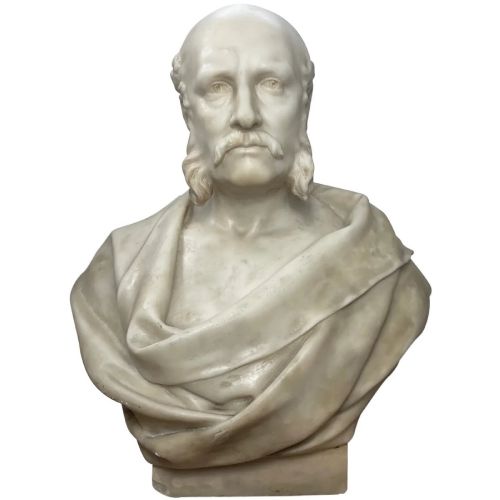
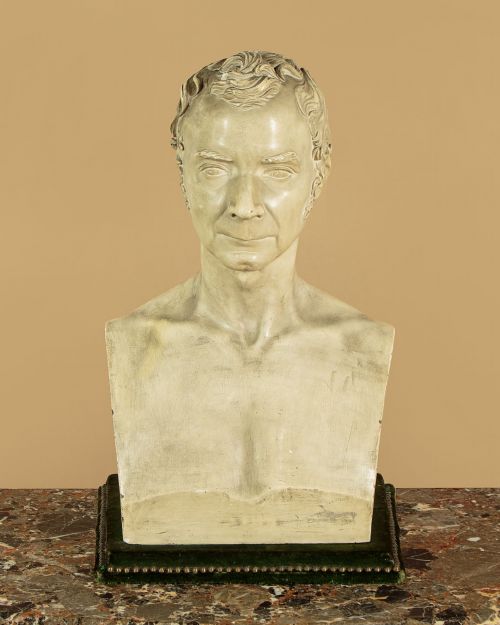
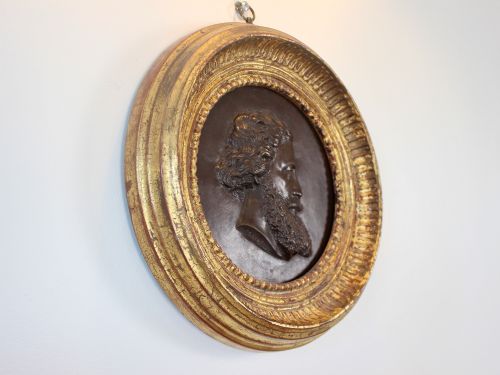


Gentleman Bust Sculpture
These gentleman bust sculpture pieces capture notable figures in bronze, marble, and plaster across Victorian and later periods.
Gentleman Bust Sculpture
A gentleman bust sculpture represents individual male subjects through portraiture, capturing historical and civic figures from the nineteenth century onward. You encounter carved marble, cast bronze, and painted plaster forms reflecting classical and academic traditions.
The pieces on this page span portrait plaques, wall items, and freestanding desk sculptures. Victorian and Edwardian examples dominate the selection, showing subjects ranging from naval officers to bearded gentlemen.
Materials and construction
Sculptors carved white marble, veined marble, and simulated stone directly from blocks to achieve smooth facial contours and classical drapery. Plaster provided an accessible medium for detailed casting, often finished with paint or giltwood highlights.
Bronze works utilised traditional foundry casting techniques, allowing artists to capture fine details in beards and clothing before applying patination. Wall plaques and freestanding busts alike relied on skilled hand-finishing after the primary cast or carve.
Gentleman Bust Sculpture Retail Price Guide 2026
Typical asking prices for gentleman bust sculpture among the pieces listed under this phrase on Sellingantiques today, from the lower quarter to the upper quarter. They describe what is for sale here now, not the wider market.
Listings feature 19th Century, Victorian, and Edwardian periods using plaster, bronze, and white marble.
Judging quality and execution
Anatomical precision and expression dictate the strength of a carved marble or bronze piece, separating routine studio work from accomplished portraiture. The rendering of hair, eyes, and fabric folds shows the sculptor's mastery over the material.
Provenance and documented authorship elevate certain portrait sculptures, particularly when signed by known practitioners. The choice of medium also influences character, with fine white marble and heavy cast bronze offering greater depth than simple plaster.
MAINFROY·Giuseppe Moretti·John Wenlock Rollins·Sir Thomas BROCK R A
The Gentleman Bust Sculpture Glossary
- Patina
- The surface sheen or colour that develops on bronze over time or through intentional chemical treatment. It adds depth to the metal surface.
- Plaster
- A workable composition material used for casting sculptural forms before finishing with paint. It provides a lighter alternative to stone.
- Portrait plaque
- A relief sculpture designed for wall hanging rather than freestanding display. It focuses the subject's likeness onto a flat backing panel.
- Terracotta
- Fired clay used for sculptural modelling, offering a warm reddish tone. It records the immediate touch of the maker's hand.
- White marble
- A fine-grained metamorphic rock favoured for classical sculpture. Its translucency mimics the softness of human skin.
Gentleman Bust Sculpture: Frequently Asked Questions
How are these busts displayed?
Freestanding stone and bronze portrait pieces suit heavy mantelpieces, pedestals, or dedicated display tables where their weight provides stability.
Plaster items require safer placement away from moisture and heavy traffic due to their fragile nature.
What periods do these sculptures cover?
The available selection primarily spans the nineteenth century through the early twentieth century, encompassing Victorian and Edwardian aesthetics.
Earlier eighteenth-century examples appear occasionally, reflecting changing portraiture conventions over time.
How do I clean marble and bronze?
Dust marble gently with a soft dry cloth, avoiding harsh chemical cleaners that might strip the porous surface.
Bronze benefits from occasional light dusting to preserve the existing patination without disturbing the metal.
Are these portraits of real people?
Many pieces depict specific historical figures, naval officers, and civic leaders recorded by name in the titles.
Other works portray anonymous gentlemen typical of their respective periods and artistic styles.