

Genre Painting Canvas
A genre painting canvas brings domestic scenes and narrative moments into view, offering a window into everyday historical life.
Genre Painting Canvas
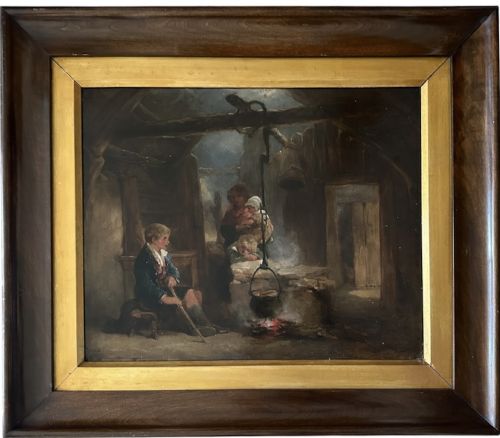
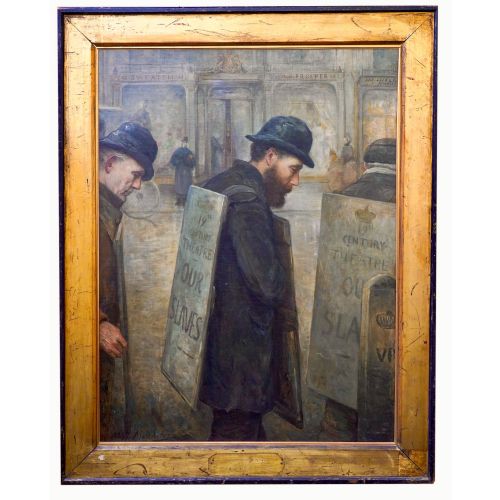
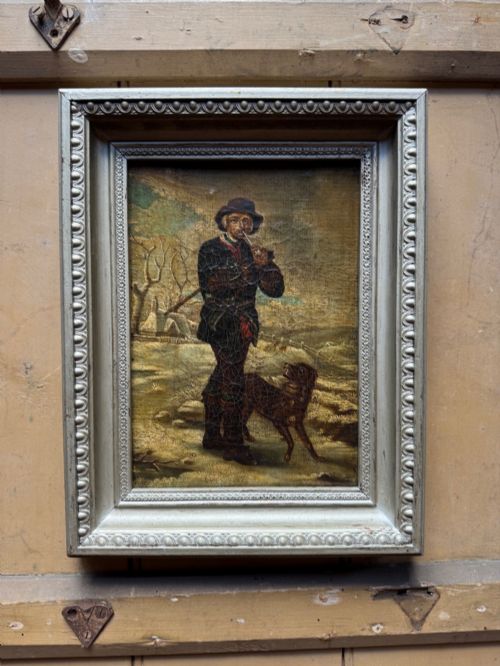
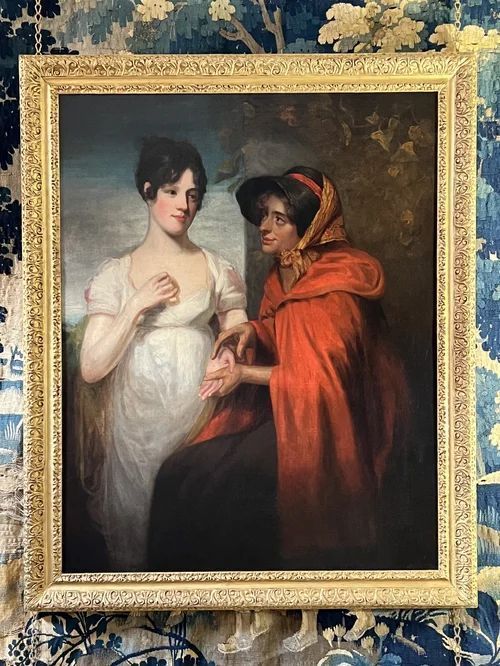
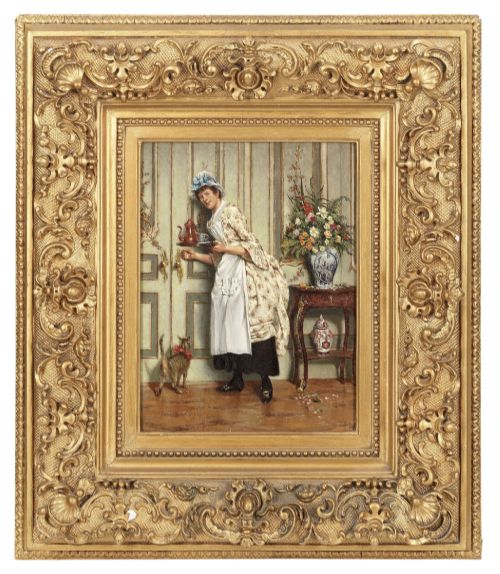
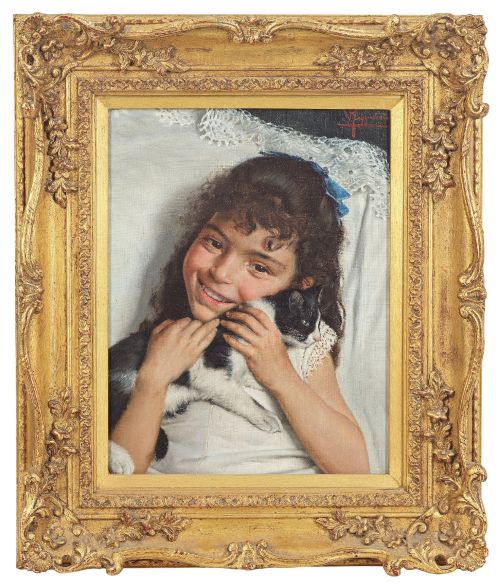
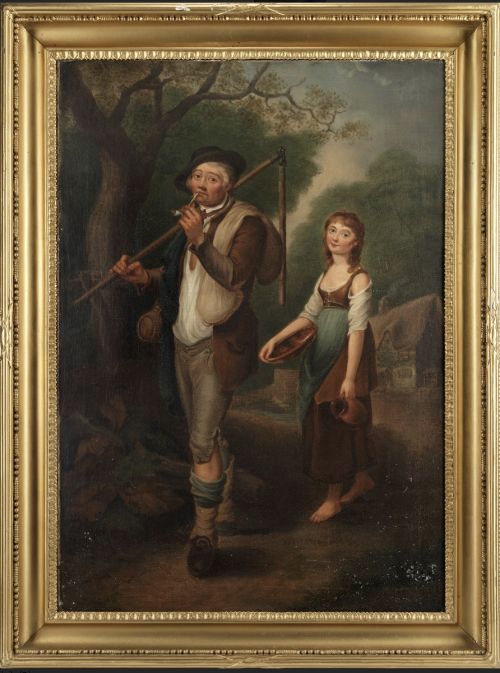
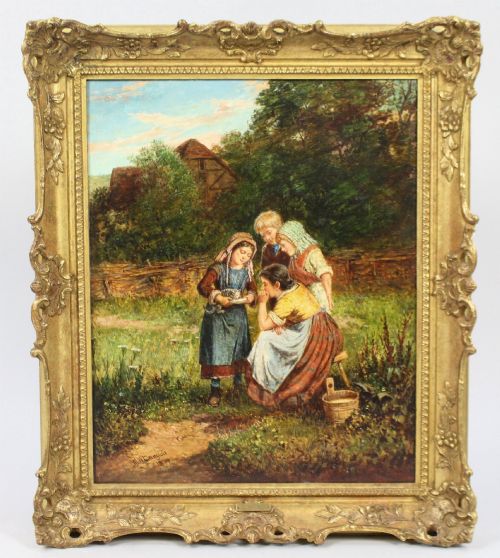
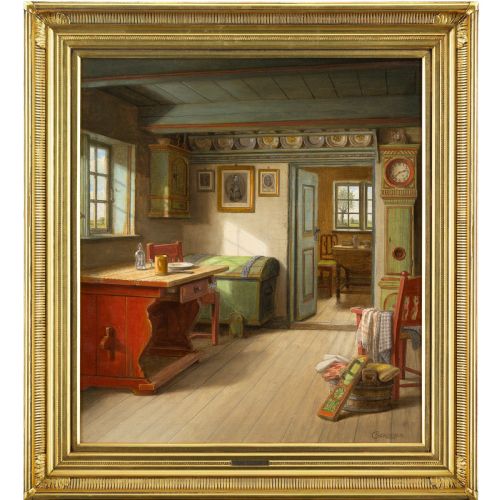
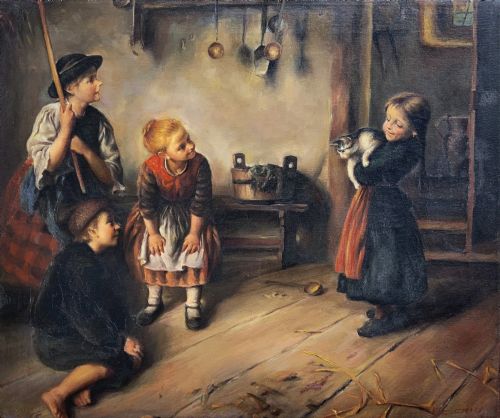
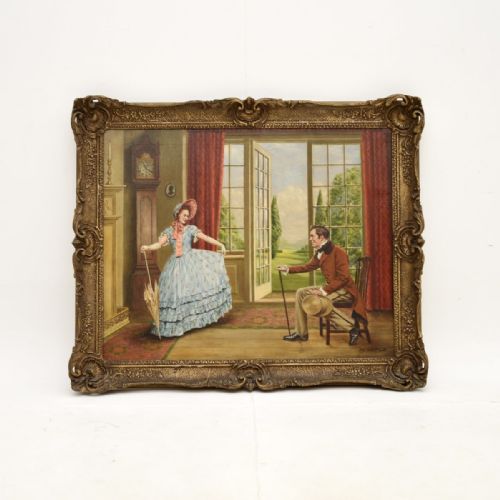
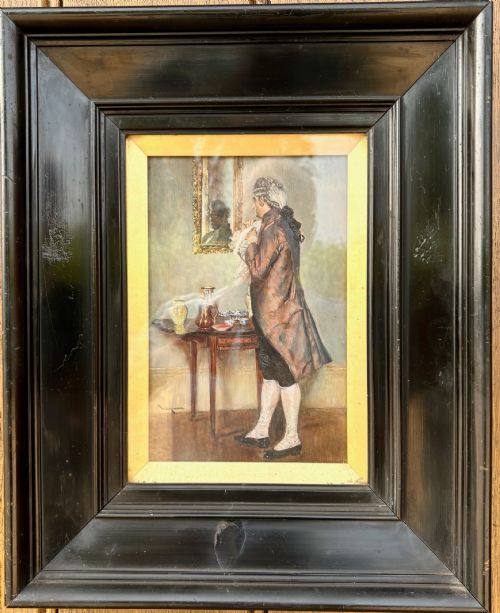
A genre painting canvas depicts scenes of everyday life, domestic interiors, and human narratives rather than grand historical or mythological events. These works capture ordinary people engaged in routine tasks, quiet leisure, or social interactions.
The selections available span from the seventeenth century through the Victorian era into the early twentieth century. Most pieces met here belong to the nineteenth century and the Victorian period, reflecting a widespread appetite for narrative art.
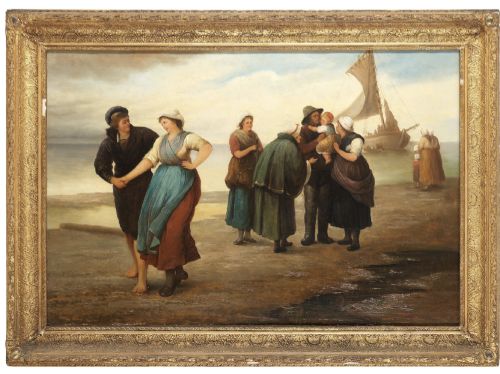
Common subjects include children, animals, tavern interiors, and country house scenes rendered by artists across British, French, Dutch, and Italian schools. Works range from intimate cabinet paintings to monumental social history canvases.
Materials and construction
Painters applied oil paint to stretched canvas or occasionally wood panels, building up layers of pigment to achieve depth and texture. The physical support typically consists of woven textile primed with gesso before the application of colour.
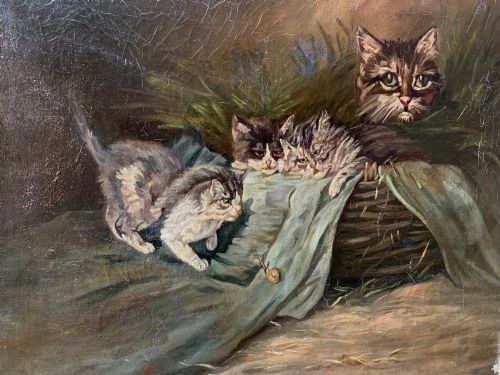
Kittens, piglets, and puppies frequently steal the scene from human subjects in nineteenth-century domestic interiors.
Distinctions in quality
Quality rests upon the artist's ability to render human anatomy, facial expression, and narrative detail with conviction. Finer works display controlled brushwork, nuanced handling of light, and careful composition that draws the viewer into the scene.
The condition of the paint layer and the canvas surface dictates the integrity of the piece. Works that retain their original texture without extensive overpaint or structural damage command greater attention from collectors.
Felix Stone Moscheles·Valentine T. Garland·John Opie·Stephen Samuel Lewin·Vittorio Reggianini·Mark William Langlois·Alfred Lyndon Grace·Howard Helmick·Adelaïde Salles-Wagner·Max Kaltenmoser·George Augustus Holmes·James Hamilton·Joseph Farquharson·Bernard De Hoog·Valdemar Magaard·Renato Moretti·Alfred Arthur Brunel de Neuville·Jacob Akkersdijk·Delapoer Downing·Paul Ehrenberg
The Genre Painting Canvas Glossary
- Genre painting
- Depiction of aspects of everyday life by depicting ordinary people engaged in common activities. This style flourished particularly during the nineteenth century across European art schools.
- Canvas
- A closely woven fabric used as a surface for oil painting, typically stretched over a wooden frame. It remains the primary support medium for the majority of works in this category.
- Giltwood
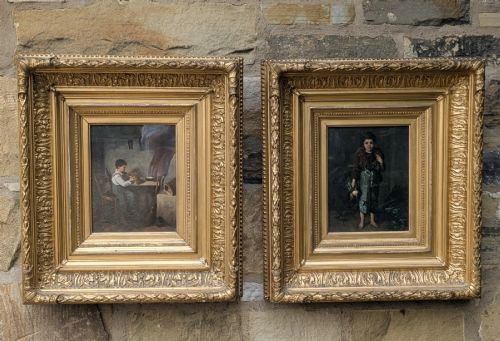
- Wood carved and covered with a thin layer of gold leaf or gold paint. Frames constructed in this manner frequently accompany period oil paintings.
- Gesso
- A plaster-like mixture applied to canvas or wood to prepare the surface for painting. It creates a smooth, stable ground for oil pigments.
Genre Painting Canvas: Frequently Asked Questions
What is a genre painting?
A genre painting portrays aspects of everyday life, featuring ordinary people in domestic settings, rural landscapes, or social gatherings.
Unlike portraiture or historical art, the focus rests on narrative and human activity rather than a specific individual's likeness.
How do I date an antique oil painting?
Dating relies on stylistic evidence, artist signatures, framing methods, and the physical characteristics of the canvas and stretcher.
Examining the canvas weave and the type of pigments can also help establish the approximate period of creation.
Are these paintings signed by the artist?
Many works include a signature, monogram, or inscription applied by the artist, while others remain attributed to specific schools or followers.
Documentation and framing often provide additional context regarding the creator and origin.
How should I care for an oil painting on canvas?
Keep the canvas away from direct sunlight, high humidity, and extreme temperature fluctuations to prevent cracking or warping.
Dust the surface gently with a soft, dry brush and avoid using liquid cleaners on the paint layer.