






Gendje Tribal Carpet
When you handle a genuine gendje tribal carpet, you hold a piece of Caucasian weaving history defined by striking geometric discipline and rich village character.
Gendje Tribal Carpet
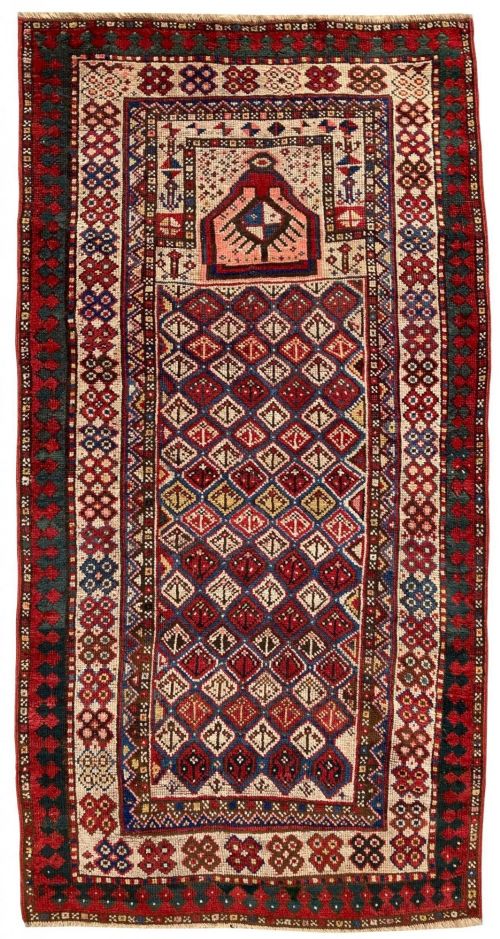
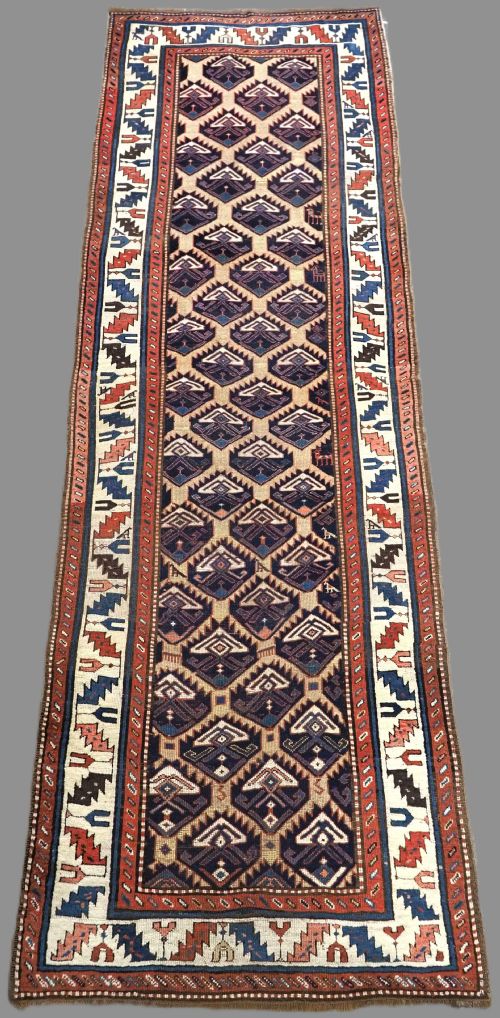
A gendje tribal carpet represents the distinct weaving traditions of the Eastern Caucasus, emerging in various formats from compact prayer rugs to elongated runners. These floor coverings are fundamentally village or tribal pieces rather than urban workshop productions, showing a direct connection to local aesthetic customs.
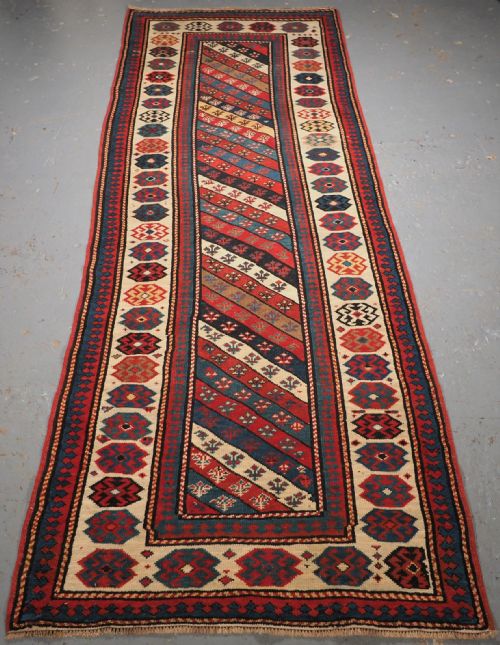
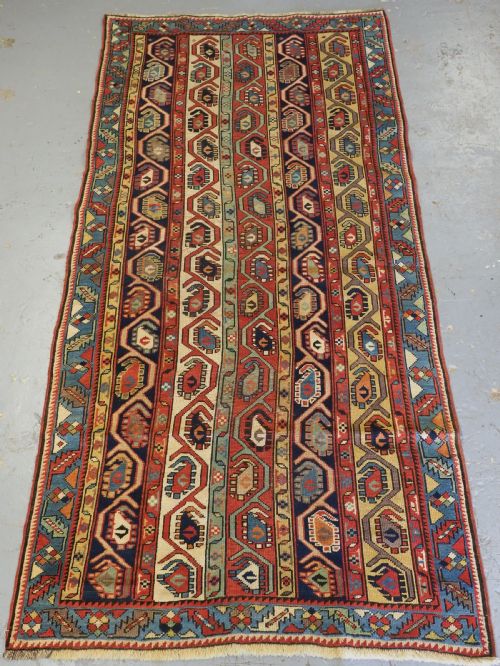
Buyers examining these pieces will most frequently encounter formats featuring structured geometric layouts, including diagonal stripes, floral lattices, and colourful boteh motifs. Examples span the late nineteenth and early twentieth centuries, capturing a period when traditional weaving methods remained entirely hand-produced.
The regional origin places these carpets firmly within the Caucasian tradition, often sharing stylistic overlaps with neighbouring Kazak or Shahsavan weaves. Whether configured as a standard area rug or a narrow hallway runner, each piece brings a dense pile and robust construction suited to active interior spaces.
How they were made
Makers constructed each gendje tribal carpet using hand-spun wool for both the structural foundation and the dense surface pile. This traditional spinning method produces yarn with natural irregularities and varying thickness, which absorbs dye unevenly and creates a subtle, appealing depth across the field.
Weavers relied exclusively on natural dyes to colour the wool, yielding characteristic saturated hues that age gracefully over decades. These organic colorants produce distinctive shades, including the scarce blue ground variants alongside warmer tones, all bound securely within traditional hand-knotted structures.
Gendje Tribal Carpet Retail Price Guide 2026
Typical asking prices for gendje tribal carpet among the pieces listed under this phrase on Sellingantiques today, from the lower quarter to the upper quarter. They describe what is for sale here now, not the wider market.
Among the geometric precision, certain village weavers tucked small representations of horses and people into the wool.
What varies in quality
Quality in a gendje tribal carpet rests upon the precision of the geometric layout and the clarity of the underlying design, whether arranged in diagonal stripes or orderly lattice patterns. Finer examples display a crispness in the repeating motifs that distinguishes them from simpler village work.
The handling of colour also determines the standing of a piece, particularly where unusual backgrounds or scarce dye combinations elevate the visual impact. Furthermore, the overall crispness of folk art pictorial elements, such as horses and people, marks out the most accomplished weaving.
The Gendje Tribal Carpet Glossary
- Boteh
- A stylised almond or pear-shaped motif of Persian origin frequently repeated across Caucasian field designs. This ancient symbol represents a floral spray or a cypress tree.
- Prayer rug
- A smaller format featuring a distinct architectural mihrab or niche design at one end, intended to indicate the direction of prayer. These pieces often serve devotional or decorative functions in domestic spaces.
- Runner
- An elongated narrow format designed for hallways, corridors, or gallery spaces. These pieces repeat central medallions or all-over patterns to draw the eye along a linear path.
- Hand-spun wool
- Sheep fleece prepared and twisted into yarn by hand rather than by industrial machinery. This technique preserves natural lanolin and creates varied texture in the finished pile.
- Natural dye
- Colouring matter derived from plants, insects, or minerals rather than synthetic chemical compounds. These dyes age with a characteristic patina and softness.
Gendje Tribal Carpet: Frequently Asked Questions
How do I identify a gendje carpet?
Look for characteristic Caucasian geometric layouts, such as diagonal stripes, repeating boteh motifs, or floral lattices executed in dense village wool. These rugs often display strong tribal personality through folk art elements like stylised horses and figures.
Examination of the pile reveals hand-spun wool and natural dyes that produce an authentic period patina. The structural integration of these specific design markers separates the regional weave from other nineteenth-century Caucasian types.
Where were these carpets made?
These pieces originate from the Eastern Caucasus, specifically associated with the Gendje region and its surrounding tribal weaving communities. The local makers operated within village traditions distinct from large urban workshops.
Geographically positioned between the Black Sea and the Caspian Sea, the region fostered a shared visual vocabulary with neighbouring Kazak and Shahsavan groups. This geographical context explains the stylistic crossovers found in many period examples.
How should I care for a tribal runner?
Place the runner in a low-to-moderate traffic hallway to distribute wear evenly across the hand-knotted wool pile. Use an appropriate underlay to prevent sliding and reduce friction against the floorboards.
Vacuum gently using a suction-only attachment without a rotating brush bar to protect the wool fibres. Professional cleaning should occur infrequently and only by specialists experienced in antique vegetable-dyed textiles.
What does a prayer niche mean?
The architectural arch or mihrab depicted on prayer rugs directs the user's focus toward a sacred orientation during ritual use. In domestic settings, this distinct design element serves as a compact focal point.
Weavers rendered these arches with stepped geometric contours typical of Caucasian village aesthetics. This format allows collectors to appreciate both the symbolic layout and the compressed field patterns.