





Game Still Life
Game still life paintings capture the rich textures of feathers, fur and larder scenes, offering enduring appeal for traditional and country interiors.
Game Still Life
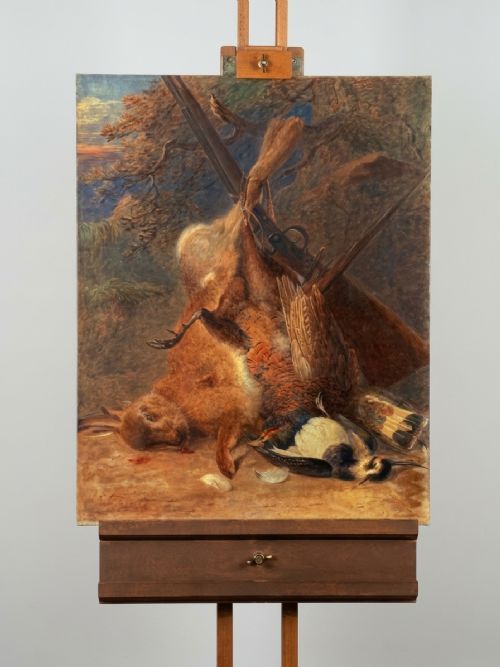
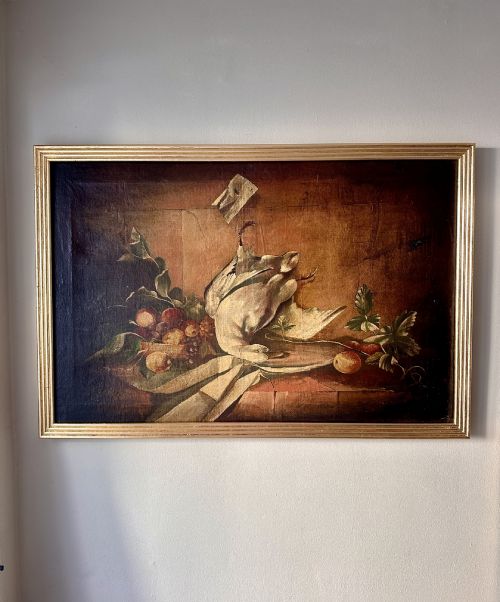
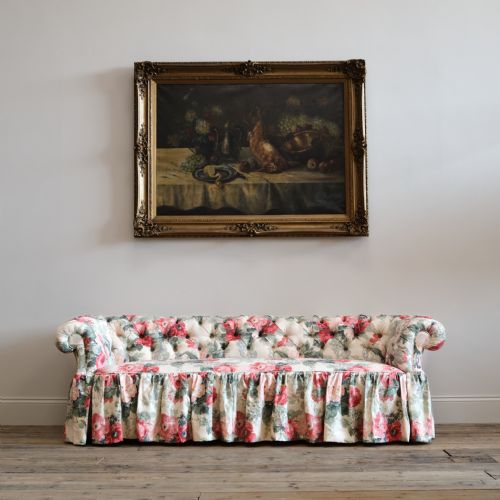
A game still life brings together depictions of hunted birds, hares and larder provisions, capturing centuries of domestic and sporting traditions. These works range from intimate panels to large canvases suited to grand dining rooms and country houses.
The selections available span multiple centuries, with nineteenth-century continental and British examples forming the core of the current offerings. Buyers encounter everything from precise Dutch-influenced realism to looser impressionistic interpretations.
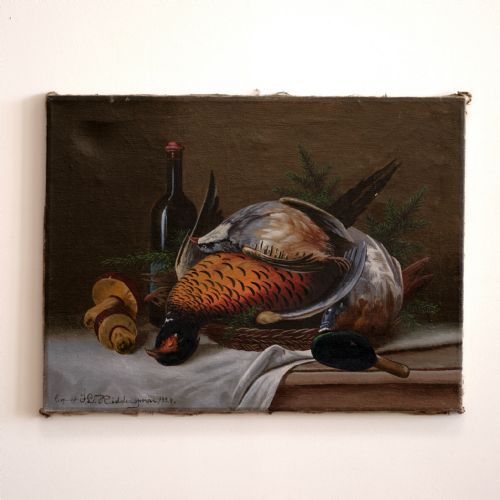
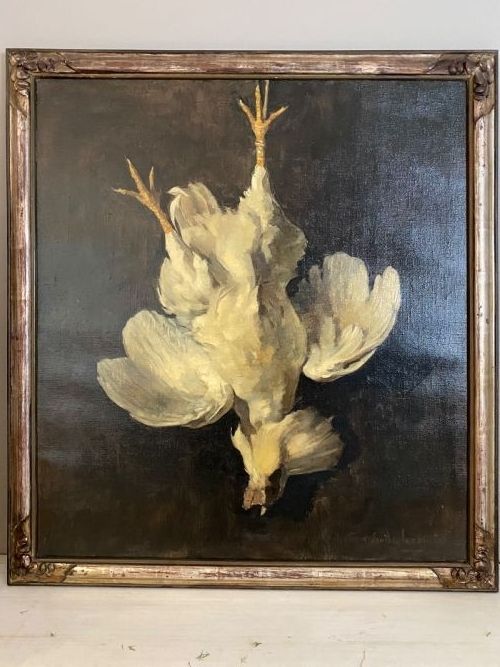
While traditional oil paintings on canvas dominate the selection, watercolors, bodycolors and occasional works on wood panels also appear. The subjects focus closely on hares, pheasants, cockerels and assorted game birds laid out upon tables or hung against neutral walls.
Materials and methods
Artists relied primarily on oil paint applied to stretched canvas or wooden panels, building up rich dark tones and subtle lighting to highlight the plumage and fur of the subjects. Watercolours and bodycolours on paper were also utilised for detailed works on a smaller scale.
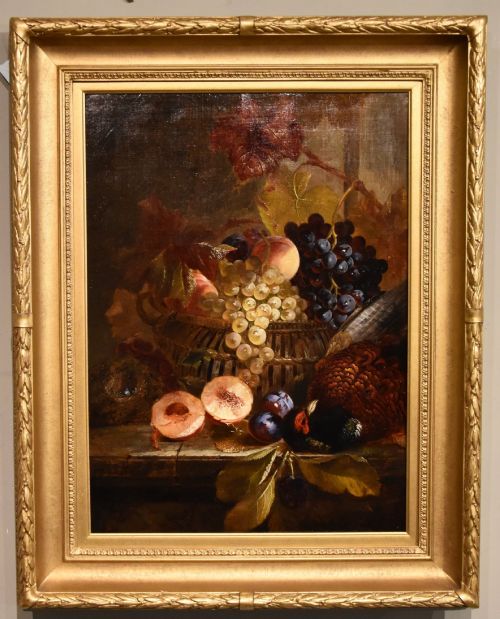
Frames play a significant role in presentation, with original giltwood and carved wood surrounds frequently accompanying nineteenth-century oils to complement the depth of the composition. The physical support often dictates the texture of the surface, with canvas providing a softer weave compared to the rigid grain of oak or timber panels.
The selection includes oil paintings, watercolours and giltwood mirrors dating from the eighteenth to the twentieth centuries.
Assessing quality and execution
Quality rests heavily on the artist's ability to render the tactile surfaces of feathers, fur and metallic vessels with convincing depth and restrained lighting. Stronger compositions command attention through careful balance and tonal harmony rather than mere accumulation of subjects.
The handling of paint distinguishes standard decorative works from masterly compositions, particularly in the delicate rendering of light catching a wing or the moist eye of a hare. Original frames that suit the period and scale of the painting elevate the overall integrity of the piece.
George Sydney Shepherd·Michelangelo Meucci·William Henry Ward·Henri Joseph Pauwels·Emile Lecomte·Ralph Mayers·Charles Thomas Bale·Louisa M Bancroft
The Game Still Life Glossary
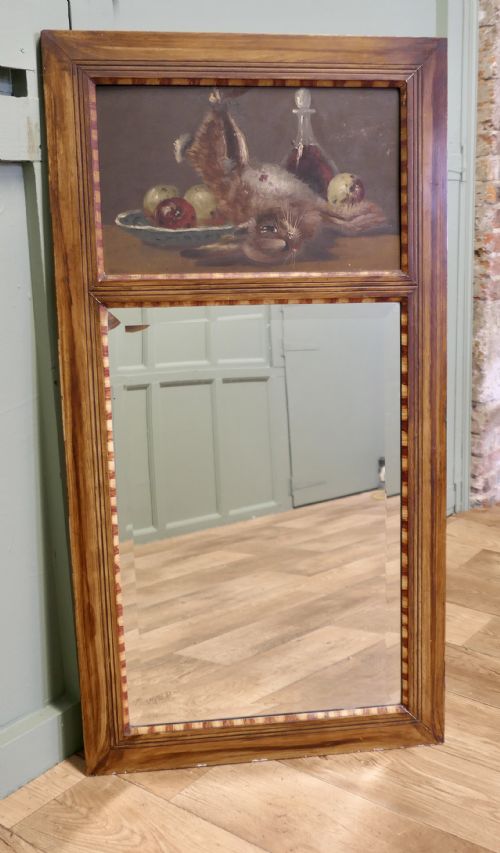
- Trumeau pier mirror
- A decorative wall mirror featuring a painted or carved panel above the glass, often integrated into period interior schemes.
- Bodycolour
- An opaque water-based medium, sometimes called gouache, used to add solid highlights and dense colour saturation to works on paper.
- Trompe l'oeil
- An artistic technique designed to create an optical illusion of three-dimensional space and reality through extreme realism.
- Continental school
- A broad classification for European artists working outside Britain, frequently reflecting regional academies and academic traditions.
- Sporting art
- Depictions of rural pursuits, hunting scenes, game and animals associated with country sports and field traditions.
Game Still Life: Frequently Asked Questions
Where should I hang a game still life?
These works look most at home in dining rooms, libraries or hallways where traditional furnishings complement the dark tones and subject matter. Their rich palettes anchor large wall spaces effectively.
Pairing them with wooden sideboards or period seating enhances the historic character of the room without overwhelming modern lighting.
How do I identify nineteenth-century canvases?
Examine the reverse of the canvas and the stretcher bars for maker stamps, canvas texture and oxidation of the oil pigments. Nineteenth-century works often display characteristic craquelure.
Framing styles and the type of canvas weave also provide reliable clues to the manufacturing period of the painting.
What is the difference between oil and watercolour?
Oil paintings utilise slow-drying pigmented oils on canvas or panel, allowing for deep glazing and rich textures that withstand time well. Watercolours use water-soluble pigments on paper and require protective glass glazing.
Oils generally offer heavier impasto and bolder presence, whereas watercolours present a lighter, more delicate rendering of plumage and detail.
How do I care for antique oil paintings?
Keep paintings away from direct sunlight, extreme temperature fluctuations and high humidity to prevent canvas warping and paint cracking. Dust the surface gently with a soft dry brush.
Avoid using liquid cleaners or attempting amateur restoration on the paint surface or original gilt frames.