





Game Still Life Painting
Game still life painting works best when it captures fur, feather and larder with confident brushwork.
Game Still Life Painting
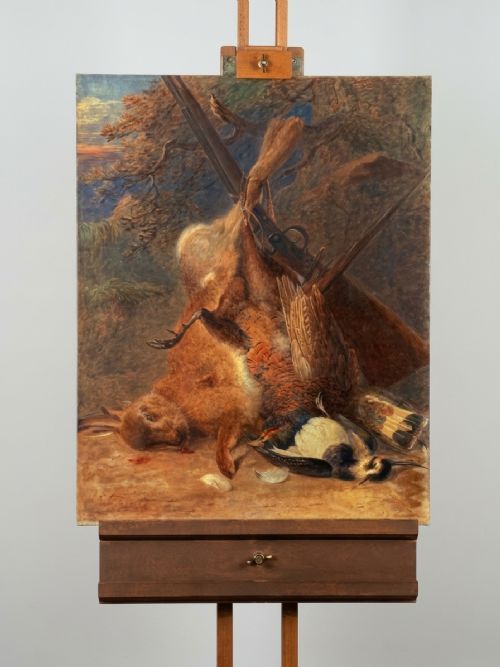
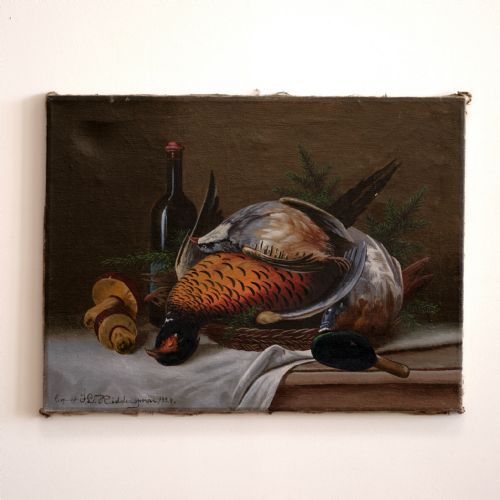
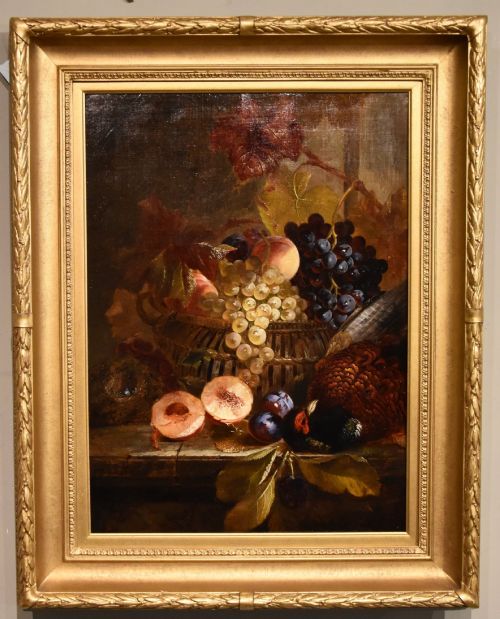
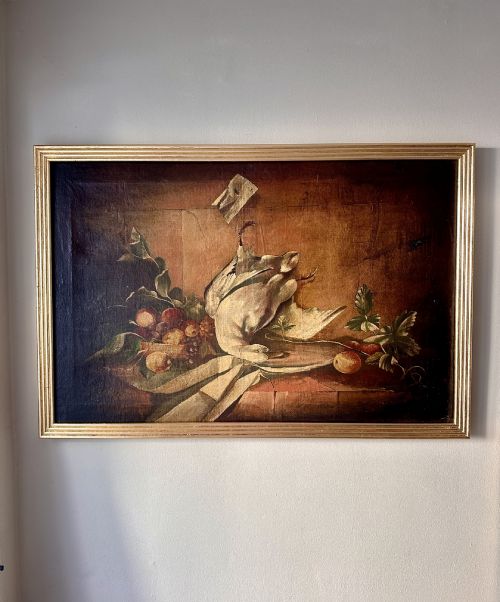
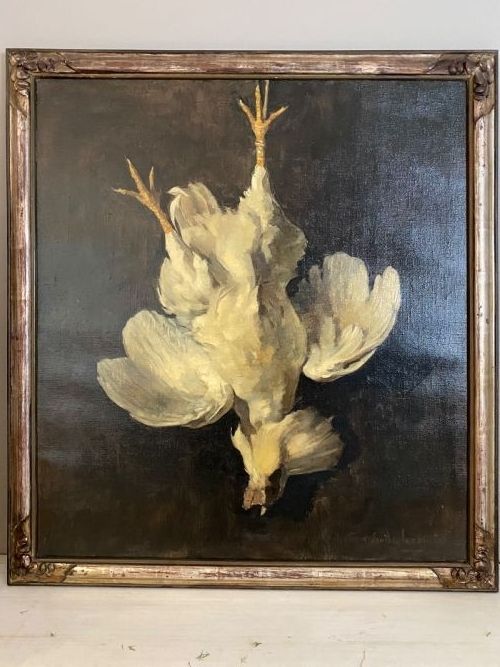
A game still life painting depicts birds, hares and larder scenes, capturing the textures of feathers and fur alongside fruit and vessels. You will frequently encounter nineteenth-century canvases and panels, alongside works from the eighteenth and twentieth centuries.
The selection ranges from continental school compositions to French country pieces and English wood panel works. Certain examples incorporate specific subjects like a hare, a pheasant or a cockerel within a domestic or rural interior.
Materials and construction
Artists worked primarily in oil paint upon canvas or wooden panels, utilising support structures of oak or general wood. Giltwood and gilt wood frames frequently surround these works, providing a traditional decorative border.
Watercolour and bodycolour appear in specific paper works, while oil paint allows for layered depth in depicting the plumage of birds and the surfaces of larder objects.
Represented periods include the eighteenth century, nineteenth century, nineteen-twenty, nineteen-fifty and nineteen-sixty.
Distinctions in quality
Quality rests upon the handling of light across fur and feathers, distinguishing a master's observation from a mechanical record. Compositional balance within the larder setting separates ambitious works from simpler arrangements.
The integration of the frame, whether original giltwood or a later surround, contributes to the overall presence of the piece.
GEORGE SYDNEY SHEPHERD·Michelangelo Meucci·William Henry Ward·Henri Joseph Pauwels·Emile Lecomte·Benjamin Blake·Louisa M Bancroft
The Game Still Life Painting Glossary
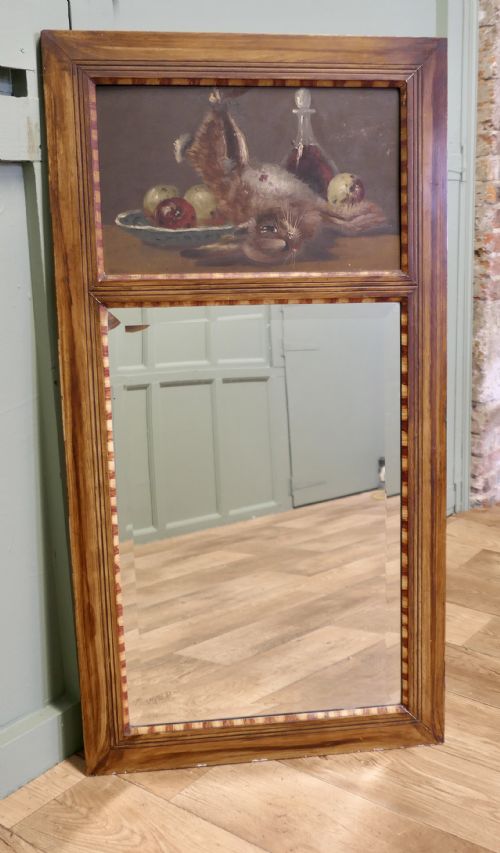
- Trumeau
- A decorative wall mirror or panel, often incorporating a painting above the glass plate. These architectural elements suit traditional interior settings.
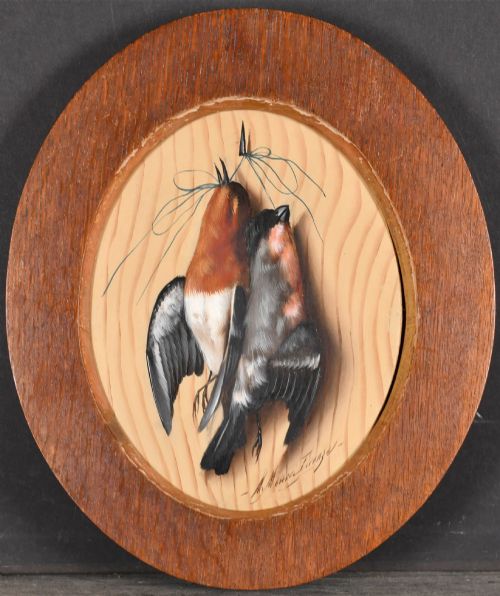
- Trompe l'Oeil
- An artistic technique designed to deceive the eye with realistic three-dimensional depiction. This approach creates convincing illusions of objects hanging flat against a surface.
- Bodycolour
- An opaque water-based medium, also known as gouache, used to add solid highlights. It provides dense colour saturation distinct from transparent watercolour.
- Continental School
- A broad designation for artworks originating from mainland Europe outside Britain. It often denotes specific regional training traditions in nineteenth-century painting.
- Giltwood
- Wood carved and coated with gold leaf or a gold-coloured finish. This material characterises traditional picture frames and architectural mirrors.
Game Still Life Painting: Frequently Asked Questions
How should I hang these paintings?
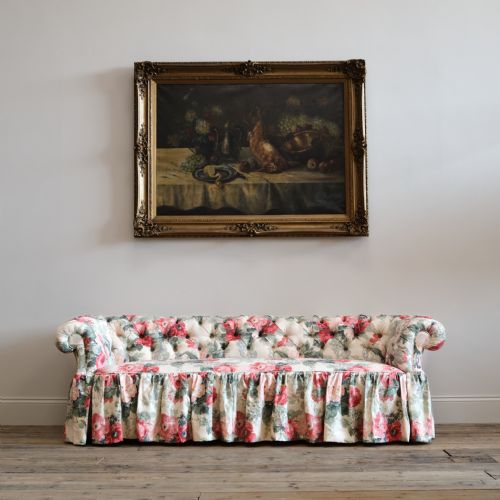
Position them at eye level in dining rooms or studies where traditional larder subjects complement the space. Ensure they avoid direct sunlight to protect the oil or watercolour pigments.
Pair them with wood furniture or giltwood mirrors to echo the materials found in their original frames.
What subjects appear in these works?
Common subjects include hares, pheasants, cockerels, songbirds and fish arranged with fruit and kitchen vessels. Some compositions feature a young man arranging game in a larder.
Others focus closely on a single rabbit or bird against a dark background.
How do I identify eighteenth-century works?
Look for construction details on wood panels and characteristic Dutch school painting conventions. The palette and handling of larder elements typically reflect the period's academic style.
Examine the reverse of the panel or canvas for historical markings or framing evidence.
Are frames usually original?
Many works retain giltwood or gilt wood frames that match the nineteenth-century or earlier period of the painting. Some pieces have undergone re-framing to suit later decorative tastes.
Check the joinery and gilding wear to understand the age of the surrounding frame.