


Brown Game Still Life
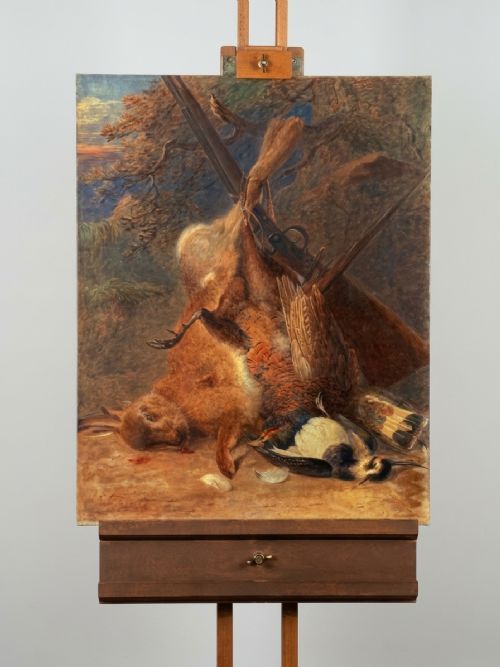
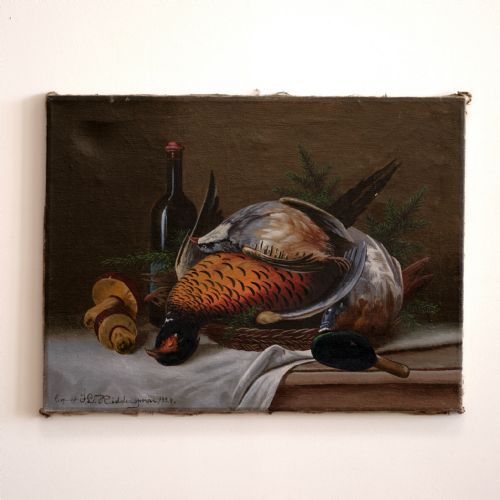
These brown game still life pieces capture the rich textures of hunted birds and hares, bringing traditional country subjects into your interior.
Brown Game Still Life
A brown game still life focuses on hares, pheasants, and songbirds arranged in larder or landscape settings. These works span from the eighteenth century through the mid-twentieth century, capturing traditional sporting and domestic themes.
The selections on this page include nineteenth-century oils and watercolours alongside Dutch School compositions and later twentieth-century interpretations. Many examples utilise traditional canvas or wood panel supports.
Subjects range from grand Victorian canvases associated with circles of painters like Benjamin Blake to smaller mid-century studies of single rabbits and pheasants.
How they were made
Artists built these compositions primarily using oil paint on canvas or wood panels, working up deep earthy palettes to render fur and feathers. Watercolour and bodycolour on paper appear in exhibition-scale works from the nineteenth century.
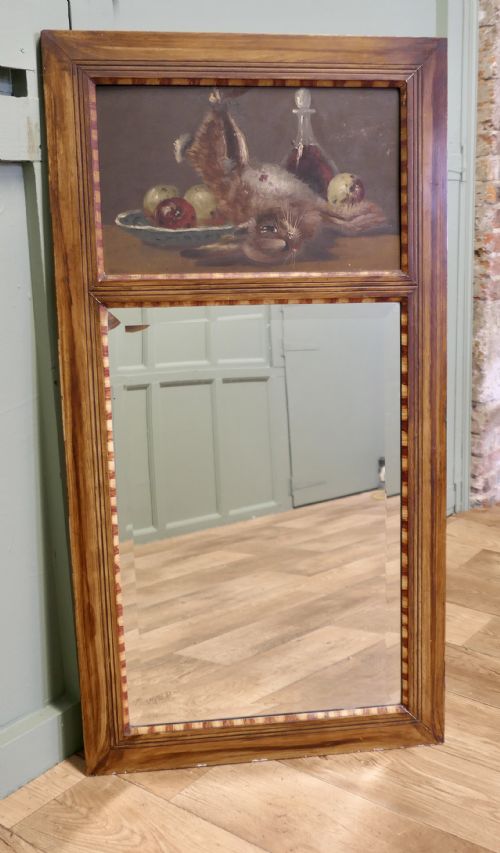
Framing often involves substantial wood surrounds, occasionally integrated into larger architectural elements such as French country trumeau pier mirrors.
Listings feature works spanning the eighteenth, nineteenth, and twentieth centuries, executed in oil, watercolour, and bodycolour on canvas, paper, and wood panel.
What varies in quality
Quality rests in the handling of light across plumage and fur, distinguishing masterly anatomical precision from simpler decorative studies. The depth of the underlying pigment layers dictates the richness of the dark tones.
The distinction between academic nineteenth-century oils and later twentieth-century interpretations lies in the fidelity of the larder details and the presence of named artistic hands.
George Sydney Shepherd·Michelangelo Meucci·Benjamin Blake·Henri Joseph Pauwels
The Brown Game Still Life Glossary
- Larder
- A domestic storage room for game and provisions. Many still life scenes depict game hanging within this architectural context.
- Bodycolour
- Watercolour mixed with white pigment to render it opaque. This technique adds solid highlights to detailed studies of fur and feathers.
- Trumeau
- An architectural mirror panel placed above a mantelpiece or between windows. Some incorporate painted still life artworks within the woodwork.
- Trompe l'oeil
- An artistic technique designed to deceive the eye into perceiving painted objects as three-dimensional reality. It appears in detailed depictions of hanging songbirds.
Brown Game Still Life: Frequently Asked Questions
What periods do these paintings date from?
The works span multiple centuries, beginning with eighteenth-century Dutch School compositions and extending through nineteenth-century Victorian and Italian pieces.
Later examples include early twentieth-century canvases and mid-century studies from nineteen-fifty and nineteen-sixty.
What materials were used for these works?
Painters employed oil paint on both canvas and wood panel to achieve deep, lasting tones for subjects like hares and pheasants.
Watercolour and bodycolour on paper were also utilised for large exhibition pieces framed under glass.
How were game still lifes displayed historically?
These paintings traditionally hung in dining rooms, libraries, and country house larders to celebrate successful hunting seasons and country pursuits.
Larger canvases often served as focal points above sideboards or within architectural wood paneling.
How do Dutch School paintings differ from Victorian ones?
Dutch School examples from the eighteenth century typically emphasise dark, dramatic larder interiors with figures arranging game.
Nineteenth-century Victorian works focus closely on individual subjects like hares and songbirds with greater academic precision.