




Gallery Tray Side Table
These gallery tray side tables combine rigid surface utility with portable folding stands for serving and display across centuries.
Gallery Tray Side Table
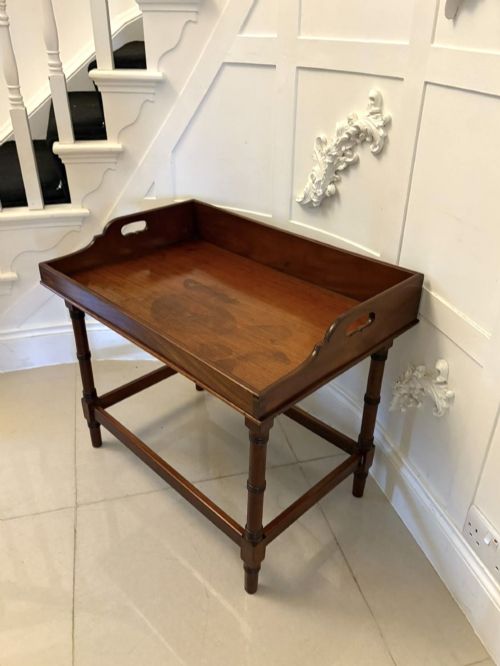
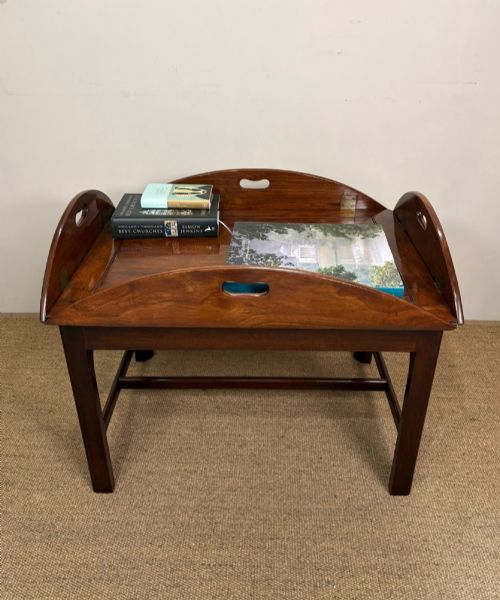
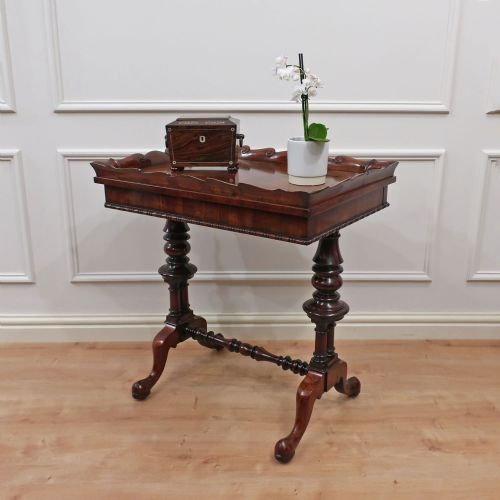
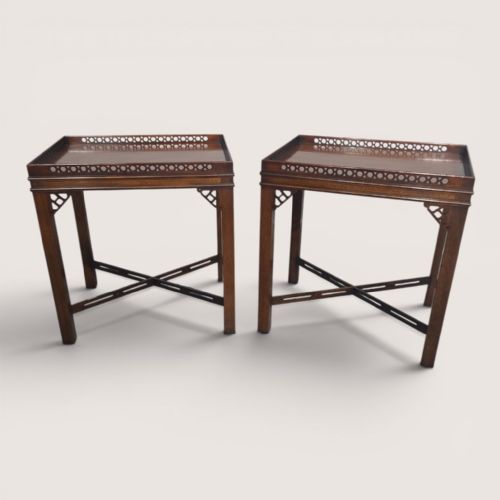
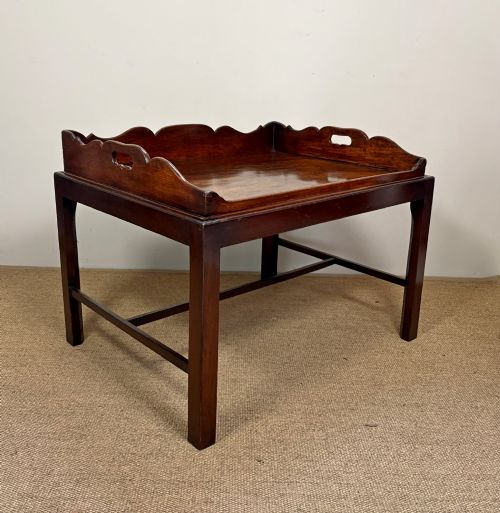
A gallery tray side table functions primarily as a portable serving surface or a stationary lamp stand, drawing on forms from the Georgian, Regency, and Victorian eras. These pieces usually feature a raised rim or gallery to secure items, resting either on a fixed frame or a folding stand.
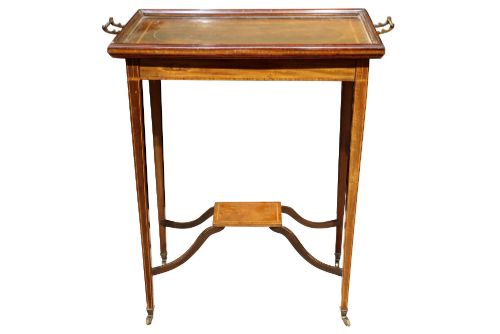
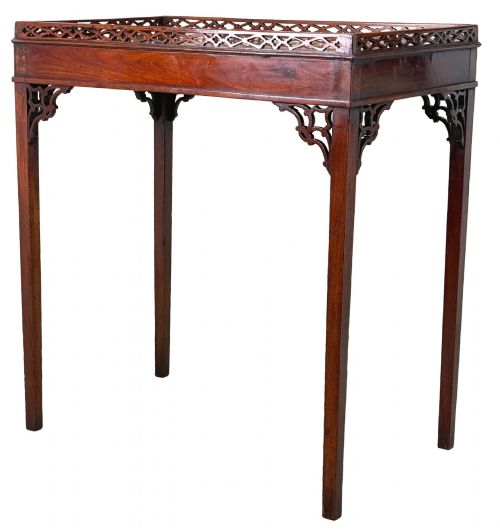
The most common versions met here include mahogany butler's trays on separate stands, alongside occasional tables and silver tables from the eighteenth and nineteenth centuries. Examples span styles from plain oak and walnut designs to elaborate satinwood-inlaid Edwardian pieces.
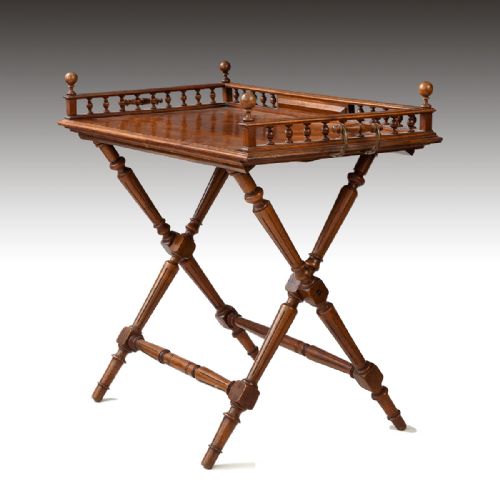
Makers utilised various configurations, including folding frames for easy storage and two-tier structures for additional display space. Whether built as a dedicated tea table or a bedside night table, each piece retains the characteristic raised edge of the tray format.
How they were made
Cabinet makers relied heavily on timber selection, constructing these tables predominantly in mahogany, walnut, rosewood, and oak. Solid woods formed the primary framework, while satinwood provided contrasting inlay and decorative banding.
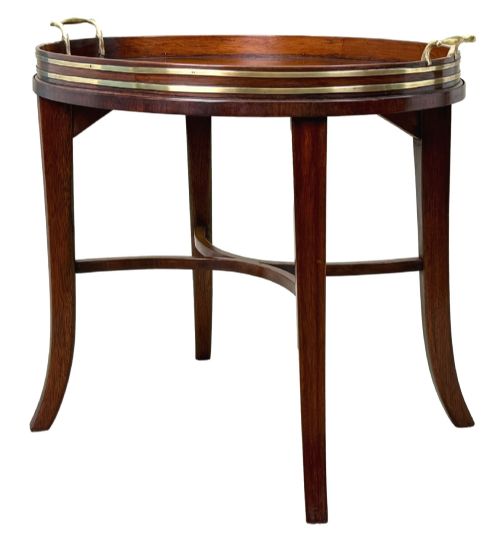
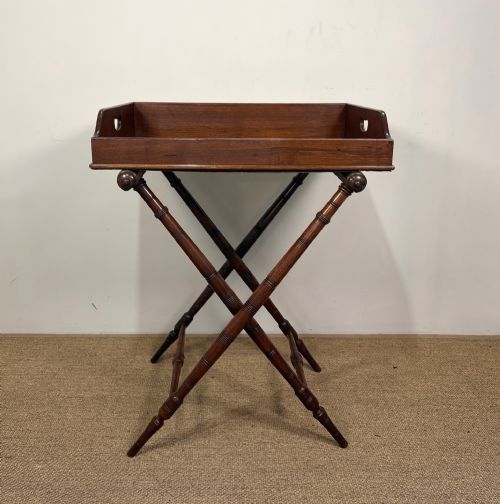
Joinery techniques varied from fixed frames with pegged joints to folding X-frame stands designed to support removable trays. Brass bound decoration and handles frequently reinforced the structural corners and eased transportation.
Listings feature woods spanning mahogany, walnut, oak, rosewood, and satinwood across periods from the eighteenth century to the Edwardian era.
What varies in quality
Quality rests significantly in the crispness of the carving, the selection of timber veneers, and the integrity of the joints between the gallery rim and the tray base. Finer examples display matched grain patterns across the tray surface and robust, well-fitted folding stands.
The presence of secondary woods, patination through age, and specialist hardware such as brass mounts or maker-attributed construction elevate certain pieces above standard utility items.
Gillows·Halls
The Gallery Tray Side Table Glossary
- Gallery
- A raised wooden or brass rim surrounding the edge of a tray or table top to prevent items from sliding off. This feature defines the primary function of the surface.
- Butler's Tray
- A shallow wooden tray, often with hinged sides or recessed handles, designed to lift off its supporting stand. It served practical duties in domestic dining and entertaining.
- Silver Table
- An occasional table with a raised gallery intended for displaying silver or serving afternoon tea. These pieces date prominently from the Georgian period.
- Commode
- A low cabinet or table featuring enclosed storage space beneath the main surface. In earlier periods, these items occasionally incorporated tray tops.
- Patina
- The surface sheen and deep coloration acquired by wood through age, use, and polishing. It serves as an indicator of authenticity and history.
Gallery Tray Side Table: Frequently Asked Questions
What is a gallery tray side table?
It is a versatile piece of furniture featuring a flat surface enclosed by a raised rim, supported by a fixed or folding stand. These items functioned historically for serving tea, holding drinks, or displaying silver.
They bridge the gap between portable trays and permanent occasional tables. Many designs allow the top to lift off completely for independent use.
How do I date a tray table?
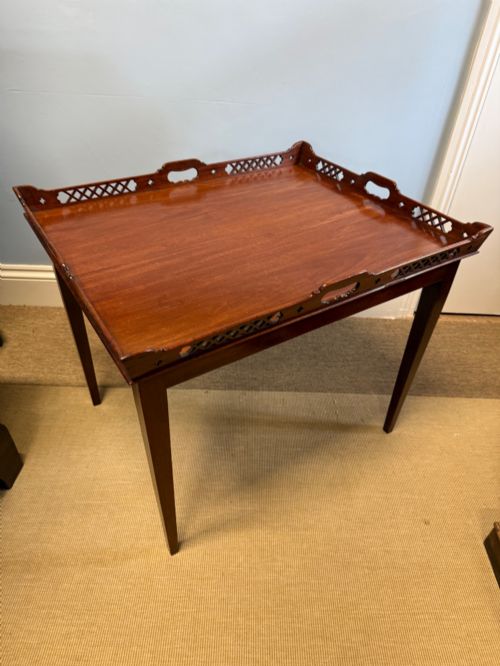
Dating relies on timber choices, construction methods, and stylistic details such as Chippendale fretwork or Edwardian inlay. Georgian and Regency pieces typically show different joinery and wood finishing compared to later revival items.
Hardware components like brass hinges or handles also offer clues to the manufacturing period. Examining the secondary woods beneath the tray reveals construction traits specific to certain decades.
Were these tables used for dining?
They served primarily for portable hospitality tasks, including afternoon tea, holding decanters, and clearing silver from dining rooms. The raised gallery ensured items stayed secure during transport by domestic staff.
Over time, many transitioned into static living room furniture for lamps and books. Their dual nature made them adaptable to various rooms in the house.
How do I care for antique wood?
Maintain the wood by keeping it away from direct heat sources and sudden humidity changes to prevent timber splitting. Regular gentle dusting preserves the natural wax finish and accumulated patina.
Avoid harsh chemical cleaners that strip the historic surface polish. Occasional application of appropriate wax feeds the antique timber safely.