

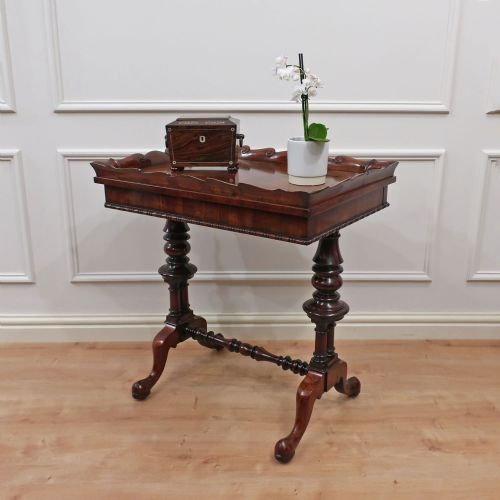
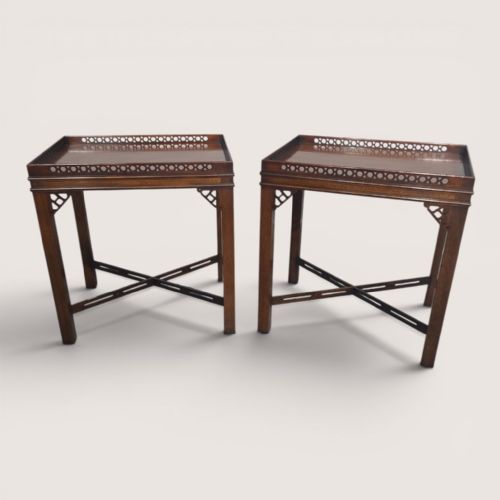
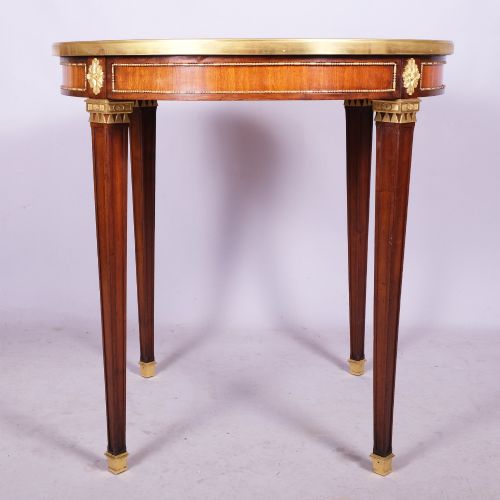
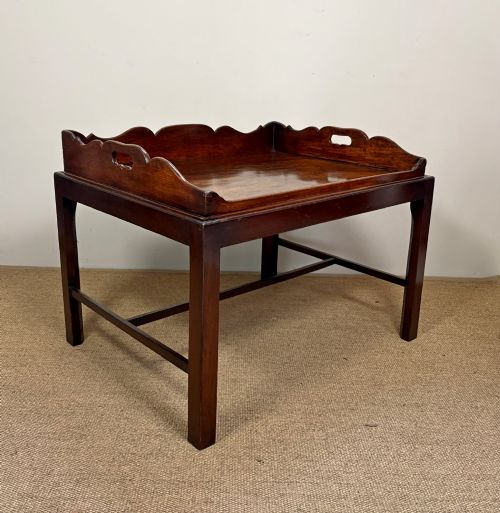



Gallery Top Occasional Table
These gallery top occasional table pieces bring raised borders and compact surfaces to period rooms, offering a practical stage for lamps and tea.
Gallery Top Occasional Table
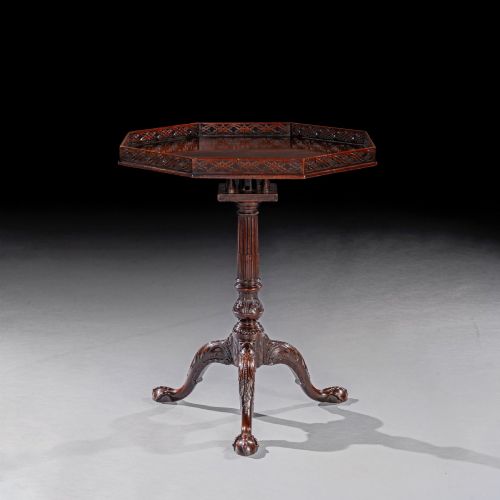
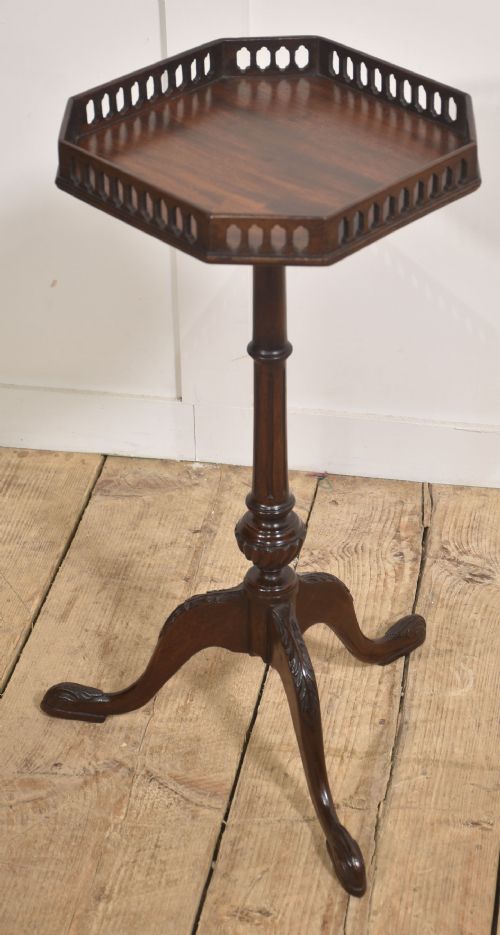
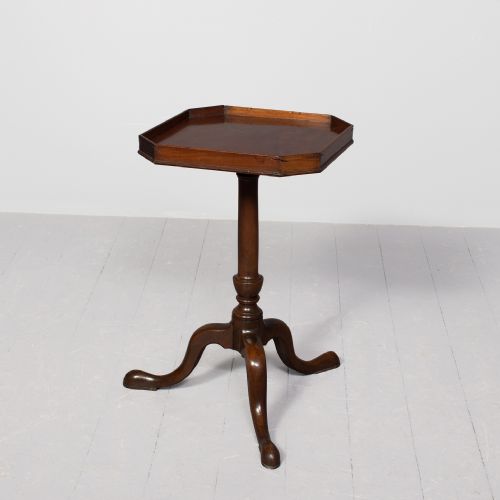
A gallery top occasional table provides a raised rim designed to secure small objects from rolling off the surface. You will frequently encounter mahogany and walnut examples dating from the eighteenth century through to the Edwardian period, often standing on slender tripod legs or folding stands.
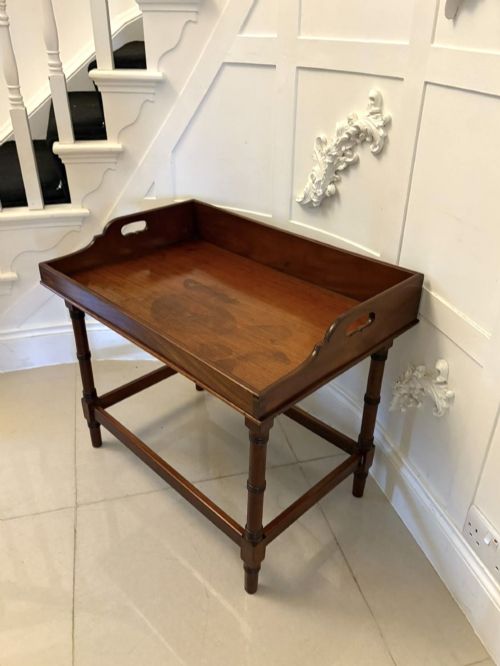
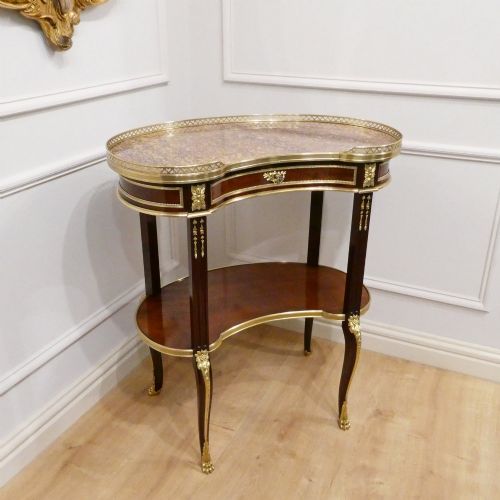
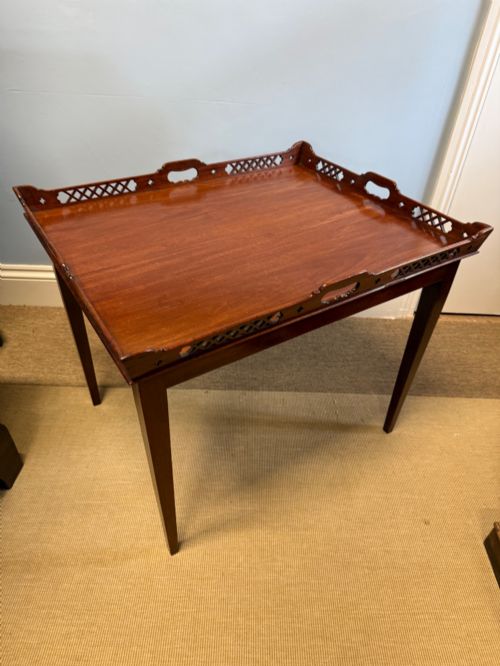
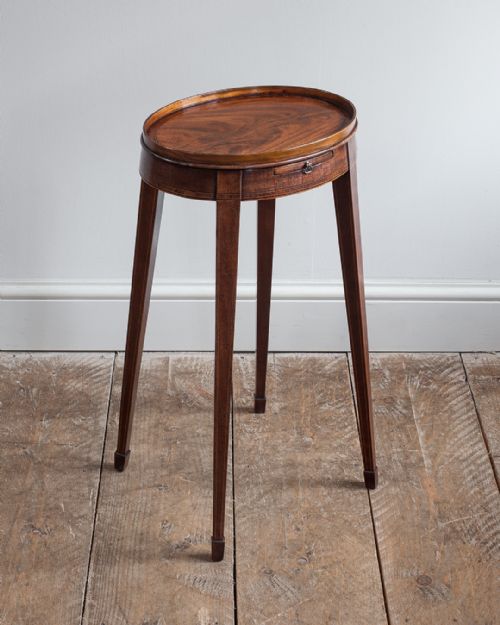
The selection here encompasses versatile forms ranging from traditional butler trays on stands and George III urn stands to circular bouillotte tables topped with marble. These pieces function naturally beside seating or in corners where floor space is limited.
Origins span English workshops and French ateliers, embracing Georgian, Regency, and Louis XVI styles. The shared characteristic remains the raised surround, whether pierced from solid timber or cast in brass and ormolu.
Materials and construction
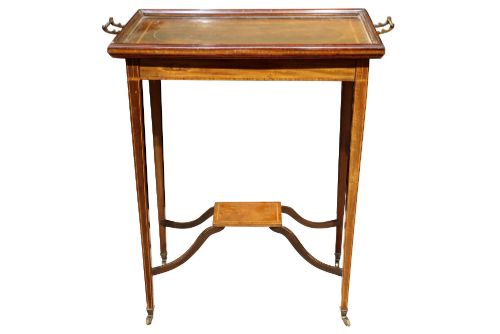
Cabinetmakers constructed these tables using dense timbers such as mahogany, walnut, rosewood, and kingwood, frequently incorporating satinwood stringing and fine inlay. Tops were built either as solid timber slabs with carved or applied galleries, or as removable trays fitted to folding folding wooden stands.
French examples often integrate inset white marble or onyx slabs surrounded by cast gilt bronze or ormolu galleries. Joinery relies on traditional methods, securing tripod bases with birdcage mechanisms or sturdy dowels to handle the daily demands of a side table.
Many a nineteenth-century tea tray simply lifted off its folding stand to serve guests before returning to duty as a table.
Markers of distinction
Quality rests upon the crispness of the timber carving and the integrity of the gallery surrounding the top. Finer examples display pierced wooden frets or meticulously fitted brass rails that sit square and firm without loose joints.
The choice of secondary woods and the precision of the veneer work, particularly on satinwood and kingwood pieces, separate standard production from superior craftsmanship. Balance and stability in lighter tripod and urn stand forms indicate thoughtful proportions.
Gillows·Maison Millet
The Gallery Top Occasional Table Glossary
- Gallery
- A raised border encircling the edge of a table top, designed to prevent items from sliding off. This rim can be pierced timber, solid wood, or metal.
- Bouillotte table
- A small French circular table featuring a raised gallery, traditionally used for card games. These pieces frequently incorporate marble tops and brass candle arms.
- Urn stand
- A tall, slender occasional table designed specifically to hold a tea urn. They often feature pull-out slides and compact tripod bases.
- Tripod table
- A small table supported by a central pillar resting on three spreading feet. This construction allows the table to stand steady on uneven period floors.
Gallery Top Occasional Table: Frequently Asked Questions
What is a gallery top table used for?
These tables served historically for holding tea services, lamps, and small decorative objects within formal reception rooms. The raised rim made them particularly suitable for items that might otherwise slip off.
Today, they function as versatile lamp tables or bedside stands in contemporary interiors. Their compact footprints allow them to fit easily into smaller spaces.
How do I identify a Georgian gallery table?
Georgian examples typically feature rich mahogany timbers, hand-cut dovetails, and subtle patination developed over centuries of use. Look for classic proportions and traditional tripod or pillar supports.
Fittings and galleries on these pieces are constructed from solid timber or fine brass rather than modern substitutes. Maker attributions or period characteristics often confirm the eighteenth-century origin.
Are French and English tables different?
French tables from makers like Maison Millet frequently incorporate luxury materials such as kingwood, ormolu mounts, and inset marble or onyx slabs. They lean towards Louis styles and decorative presence.
English pieces tend to focus on architectural mahogany grain, subtle inlay work, and functional portability, seen clearly in butler trays and urn stands.
How do I care for an antique wood surface?
Maintain timber surfaces by dusting with a soft, dry cloth and avoiding direct sunlight or excessive heat sources. Natural waxes help nourish older polishes without building up residue.
Protect marble or onyx inserts from acidic liquids and spills by using coasters. Gentle handling preserves the original patination and structure of the joints.