
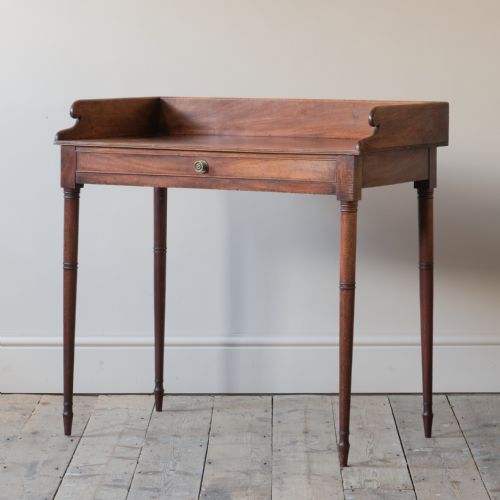
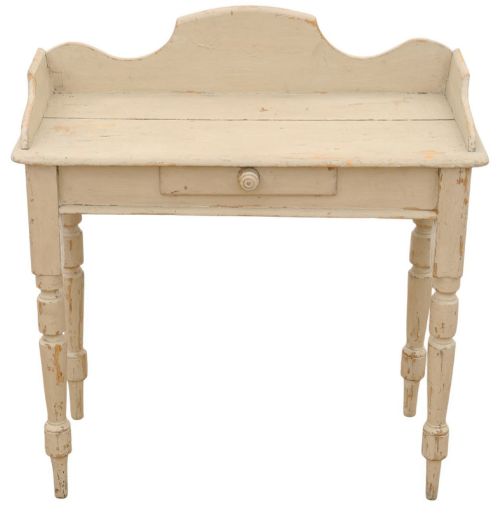
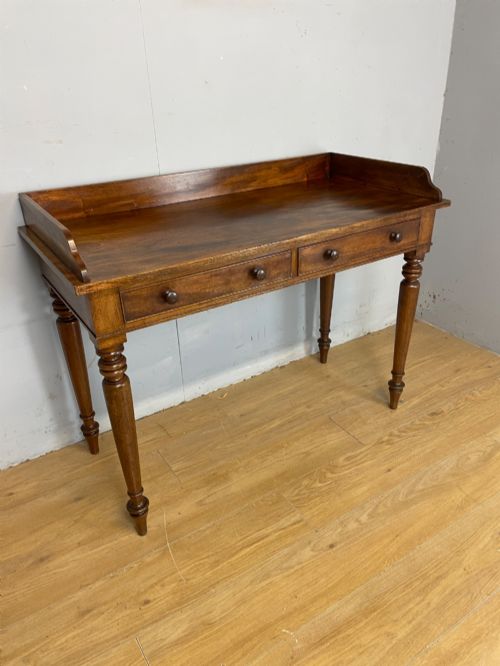
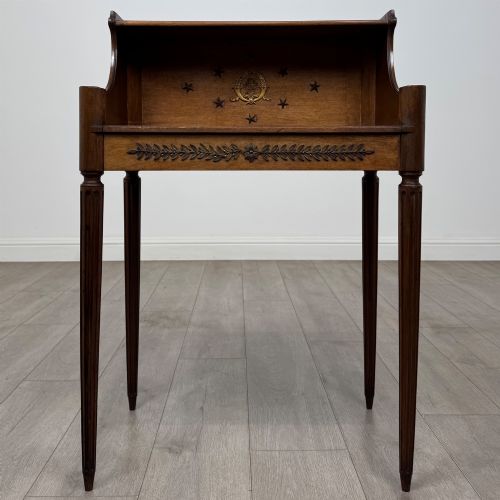




Gallery Back Table
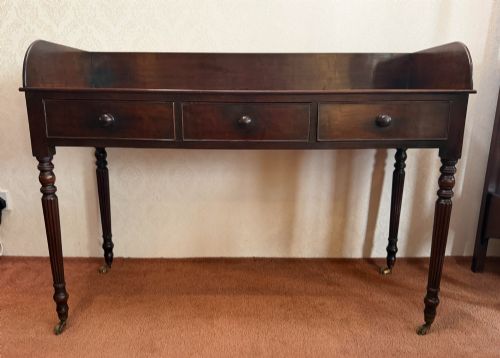
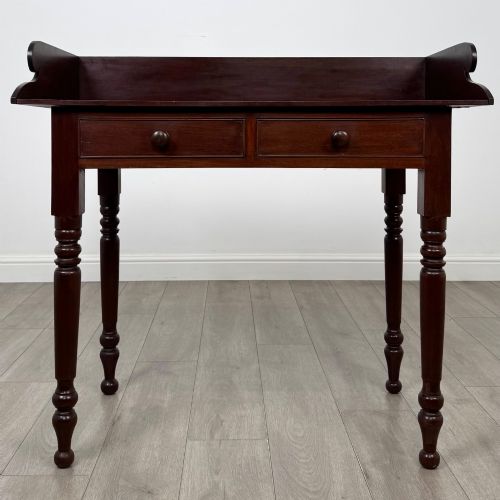
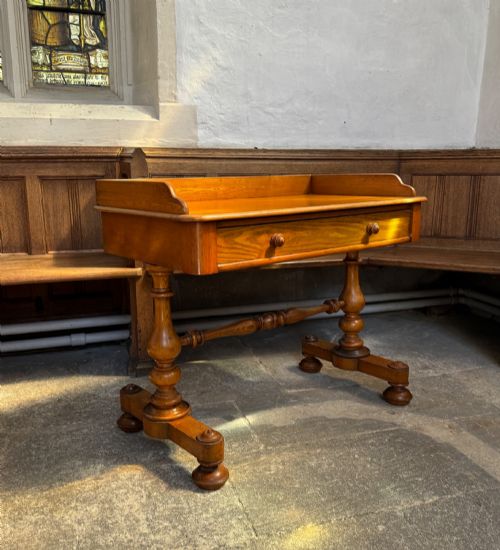
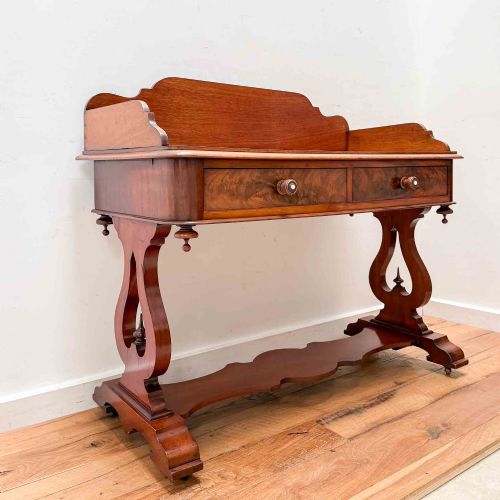
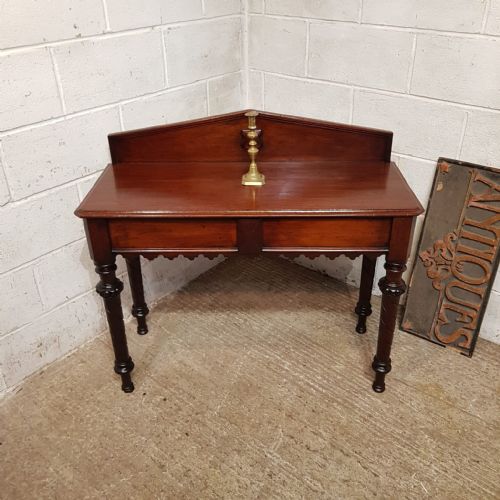
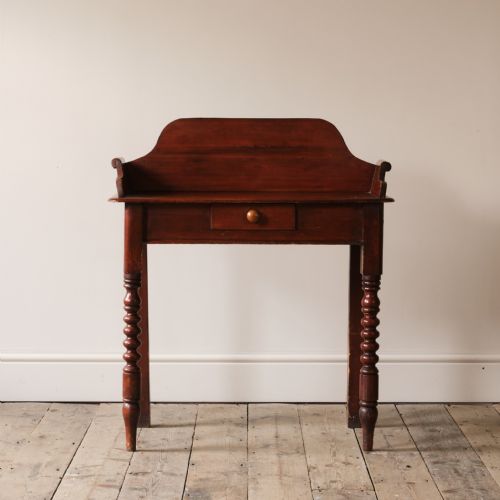
A gallery back table brings a raised upright ledge to surfaces like writing desks, washstands and serving pieces.
Gallery Back Table
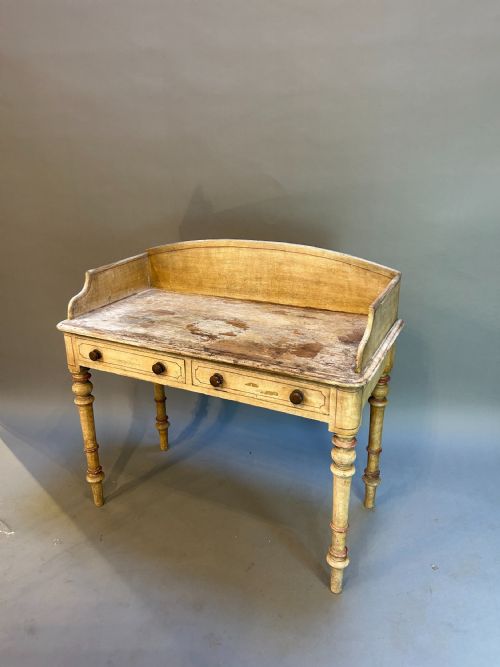
The pieces listed here appear primarily as writing tables, desks, washstands and serving tables. Mahogany and pine dominate the materials, alongside walnut, rosewood and painted finishes.
Victorian examples frequently combine the form with washstands and writing desks, while earlier Georgian and Regency pieces tend towards refined side and serving tables. Edwardian variations include walnut kneehole desks and writing furniture fitted with stationary compartments.
How they were made
Cabinet makers constructed these tables using solid timbers such as mahogany, pine, walnut and oak, often applying flame mahogany veneers to primary display surfaces. Drawer construction typically relied on hand-cut dovetails, while structural framing utilised native softwoods or hardwoods depending on the period.
Surfaces received various treatments, from clear polish and wax to original grain paint finishes and faux marble effects. Leather inset tops appear on writing variations, and specific washstands incorporate tile upstands or marble inserts alongside the wooden gallery back.
Mahogany and pine dominate the materials across these nineteenth and early twentieth century listings.
What varies in quality
Quality rests in the crispness of the timber selection, such as matched flame mahogany veneers, and the structural integrity of the raised gallery itself. Finer examples display precise joinery in the drawer linings and well-executed mouldings around the upstand.
The condition and retention of original surfaces dictate much of the standing, where untouched polish, patination or authentic painted finishes elevate an example. Altered galleries or replaced timber elements reduce the integrity of the piece.
Heal And Sons·Maples·George Hepplewhite·Charles Bevan
The Gallery Back Table Glossary
- Gallery back
- A raised wooden or metal rim or upstand running along the rear and sometimes side edges of a table top. This feature stops papers, toilet articles or serving dishes from falling behind the furniture.
- Kneehole
- A recessed central space beneath a desk or dressing table designed to accommodate the user's legs. It is flanked by pedestals of drawers or cupboards.
- Washstand
- A specialised table or small cabinet built to hold a basin and jug for washing. Many include a tiled or wooden gallery back to protect the wall from splashes.
- Frieze
- The horizontal band or member situated immediately beneath the table top. Drawers are frequently integrated into this section of the piece.
- Patina
- The surface sheen and softening of tone developed by wood through age, handling and polishing over decades. It serves as an indicator of authenticity.
Gallery Back Table: Frequently Asked Questions
What is a gallery back table?
A gallery back table is any table fitted with an elevated barrier along the rear edge to keep objects secure. These range from writing desks and washstands to serving tables.
The raised section can be pierced wood, solid timber, or fitted with tiles and marble depending on the intended function of the furniture.
How were gallery back tables used?
These tables served multiple domestic purposes across different rooms of the house. In bedrooms, washstand versions held basins while the gallery protected walls from water.
In studies and libraries, writing tables utilised the rear ledge to keep stationery and books from slipping off the surface.
How do I date a gallery back table?
Dating relies on combining the timber species, construction methods, and prevailing style of the piece. Georgian and Regency examples often show clean classical lines in mahogany or rosewood.
Victorian and Edwardian versions introduce softer pine, walnut, tiled upstands, and distinct hardware styles that reflect changing domestic fashions.
Are gallery back tables sturdy?
Solid construction using traditional joinery ensures these tables remain robust for daily use. The gallery itself is integrated into the top frame during manufacture.
Care should be taken not to lift heavy pieces by the gallery upstand, as the raised timber is primarily designed to retain items rather than bear weight.